Embark on an immersive neighborhood stroll through the winding heart of Fes el Bali, where the lifeblood of the city is not gold or spice, but water. This self-guided walk explores the ingenious hydraulic engineering that has sustained this medieval metropolis for over a millennium. By following the historical flow of the Oued Fès, you will discover how a complex network of underground channels and public fountains once made Fes the envy of the Islamic world. This walking route highlights the intersection of science, faith, and daily life, tracing a path from the riverbanks to the scholarly heights of the world's oldest university. As you navigate the narrow alleys, you will encounter architectural marvels that owe their existence to the city's ancient water systems. From the rhythmic sounds of the metalworkers in Place Seffarine to the silent, intricate mechanisms of the 14th-century Water Clock at Dar al-Magana, the story of water is everywhere. You will see how the arrival of Andalusian refugees in the 9th century brought sophisticated irrigation techniques that transformed Fes into a lush urban oasis. This explore-at-your-own-pace experience reveals the hidden gems of the medina, including the stunning zellij-tiled Nejjarine Fountain and the spiritual courtyards of the Al-Qarawiyyin, where water serves as a bridge between the physical and the divine. Whether you are a history buff or a fan of ancient engineering, this self-guided adventure offers a unique perspective on the city. You will learn about the social importance of the hammam, the artistic legacy of the woodworkers, and the industrial heritage of the copper smiths. This walking tour Fes allows you to peel back the layers of time, understanding how a city built on a river became a global center of learning and trade. By the end of this neighborhood stroll, you will see the medina not just as a labyrinth of shops, but as a living, breathing machine powered by the ancient waterways of North Africa.
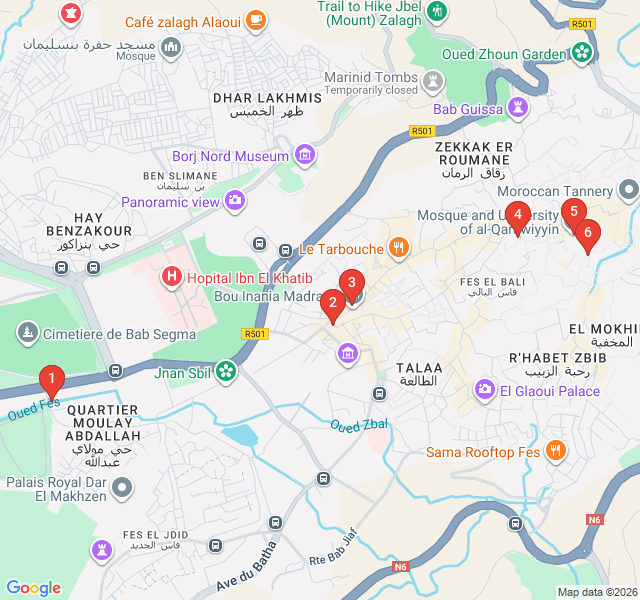
Numbers indicate the order of stops on the tour
Begin your self-guided adventure at the Oued Fès, the primary river that gave birth to this city in the late 8th century. When Idris I founded Fes, he chose this site specifically for its abundant water supply. This river isn't just a body of water; it’s an engineering feat. In the 9th century, Al-Andalus refugees fleeing Cordoba brought with them advanced irrigation and hydraulic knowledge, creating a 'distribution' system that split the river into hundreds of underground channels. These channels, known as 'saqayyat', delivered fresh water to every mosque, hammam, and private home—a level of urban planning that was centuries ahead of European cities at the time.
As you move deeper into the medina, you encounter the Hammam Mernissi. In Fes, water is as much about ritual as it is about survival. The hammam, or public bathhouse, is one of the five essential pillars of every medina neighborhood, alongside the mosque, the school, the fountain, and the bakery. For centuries, these bathhouses were the only place for residents to perform the major ablutions required by faith. The engineering here is fascinating: water was diverted from the main channels into underground boilers heated by sawdust from nearby woodworking shops, showing the incredible recycling and efficiency of the medieval city's design.
Look up at the facade of Dar al-Magana, the 'House of the Clock.' Built in 1357 by the Marinid Sultan Abu Inan Faris, this is one of the most mysterious scientific relics in Morocco. It once housed a complex water clock designed by a 'muwaqqit'—a timekeeper responsible for determining the exact hours for prayer. The clock operated using a system of weights and water-filled vessels that would release brass balls into the thirteen windows you see above. While the exact internal mechanism remains a subject of study and debate among historians today, it stands as a testament to the mathematical and hydraulic genius of 14th-century Fes.
Continue your walking route to the Place Nejjarine, home to perhaps the most beautiful public fountain in the city. In the Fassi tradition, providing water to the thirsty is a high act of charity. This fountain, adorned with exquisite zellij mosaic tilework and carved cedar wood, served as a vital hydration station for travelers and traders arriving at the nearby 'funduq' or traveler's inn. Notice the intricate geometric patterns; they aren't just decorative. They represent the infinite nature of the divine, cooled by the constant, rhythmic trickle of the water that has flowed through these pipes for hundreds of years.
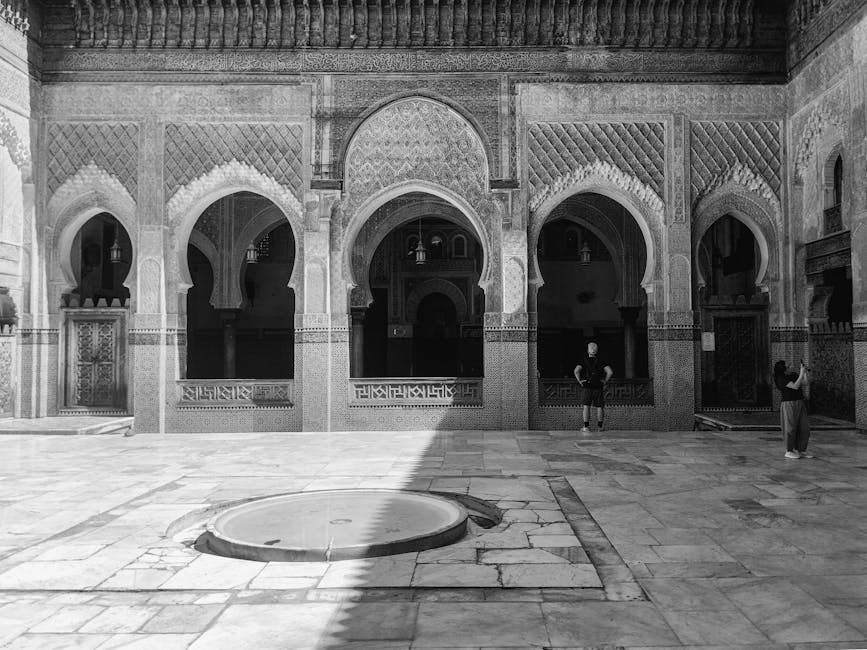
You are now standing near the Al-Qarawiyyin, founded in 859 by Fatima al-Fihri. While it is famed as the oldest continuously operating university in the world, its relationship with water is central to its architecture. Inside the courtyard, which you can glimpse through the doorways, are magnificent marble basins for 'wudu' or ritual washing. The university’s library once held ancient manuscripts on astronomy and engineering that helped perfect the very water systems you’ve been tracking. The green-tiled roofs collect rainwater, and the courtyard is designed to stay cool even in the height of the Moroccan summer, thanks to the thermal properties of the stone and the presence of water.
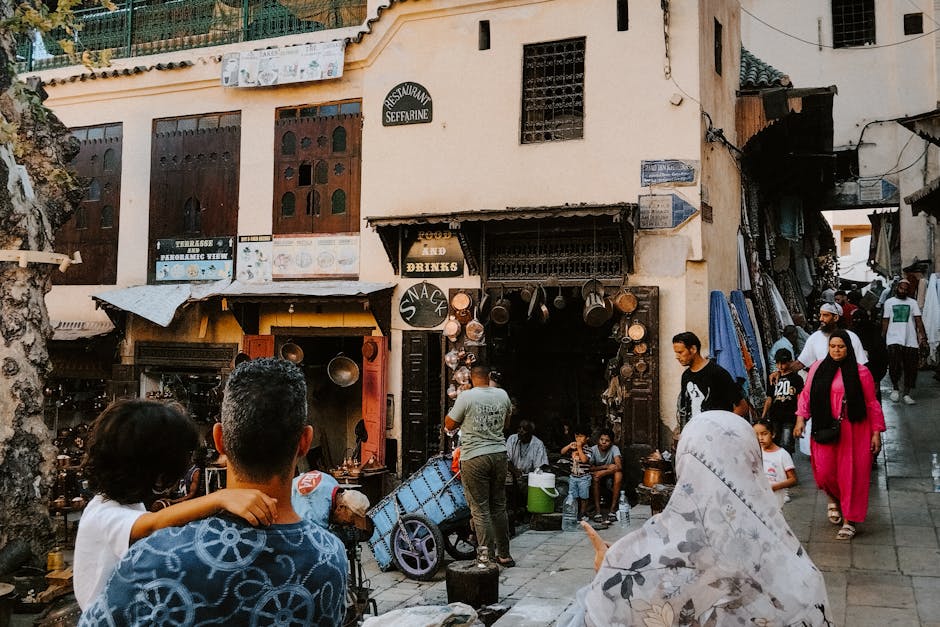
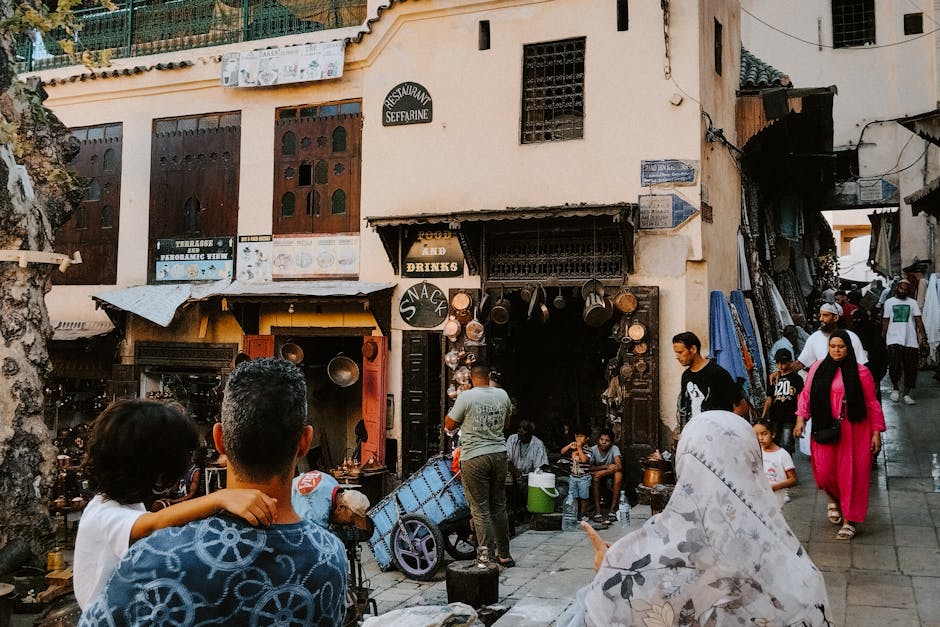
Your neighborhood stroll concludes at Place Seffarine, the square of the coppersmiths. Listen to the rhythmic clanging of hammers against metal—this sound has echoed here for centuries. This square is significant to our water theme because it is here that many of the city's copper pipes, vessels, and buckets were traditionally crafted. The large copper vats you see being hammered were essential for the hammams and kitchens of the city. Water from the river passes directly beneath this square, powering the industrial life of the medina. It’s the perfect place to sit, perhaps with a mint tea, and reflect on how this ancient element continues to shape the sounds and soul of Fes.
Download Zigway to experience "Andalusia to Africa: The Great Waterways of Fes" with AI-powered audio narration. Walk at your own pace while stories unfold around you.
 Moderate
Fes, Morocco
Taste your way through the medieval medina of Fes. Discover ancient spice markets, hidden street eats, and the evolution of Moroccan flavors.
 Easy
EasyFes, Morocco
Explore the French-era boulevards and Art Deco gems of Fes on this self-guided walk through the vibrant Ville Nouvelle neighborhood.
 Challenging
Fes, Morocco
Ascend the northern hills of Fes for a breathtaking sunset walk overlooking the world's largest car-free urban space and ancient royal ruins.
 Easy
EasyFes, Morocco
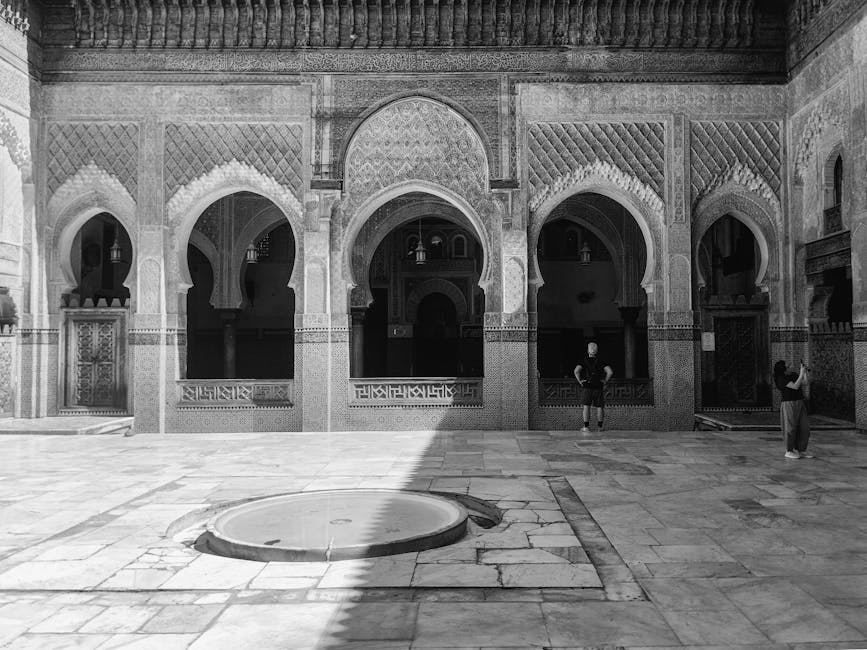
Discover the architectural wonders of Fes. Explore medieval madrasas and sacred sites on this self-guided walk through the ancient medina.
 Easy
EasyNairobi, Kenya
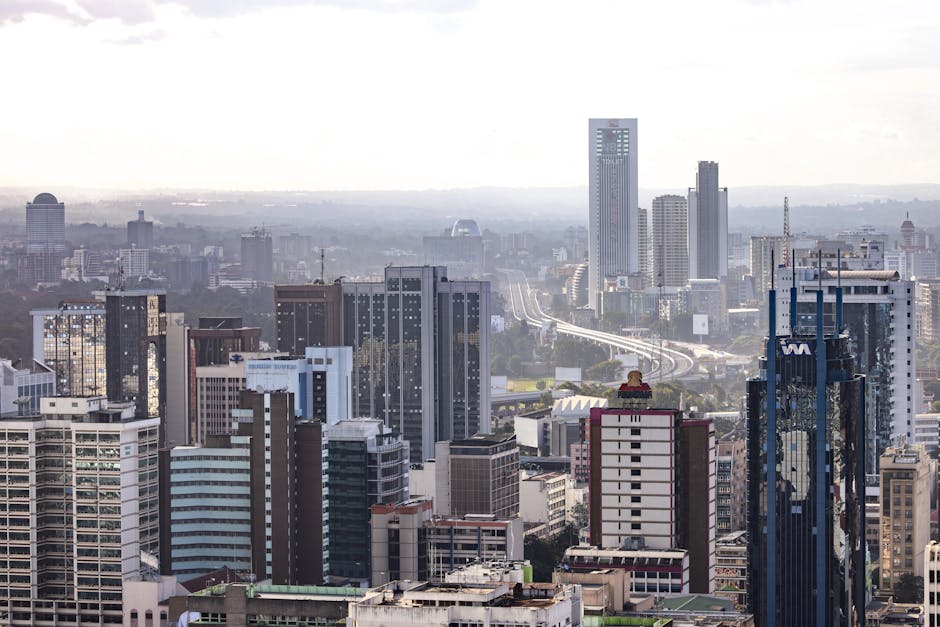
Explore Nairobi's architectural evolution from colonial-era landmarks to iconic Brutalist skyscrapers on this historic self-guided walking route.
 Easy
EasyNairobi, Kenya
Discover Nairobi's iconic skyline on this self-guided architecture walk through the CBD’s most famous modernist and Brutalist landmarks.
 Easy
EasySalzburg, Austria
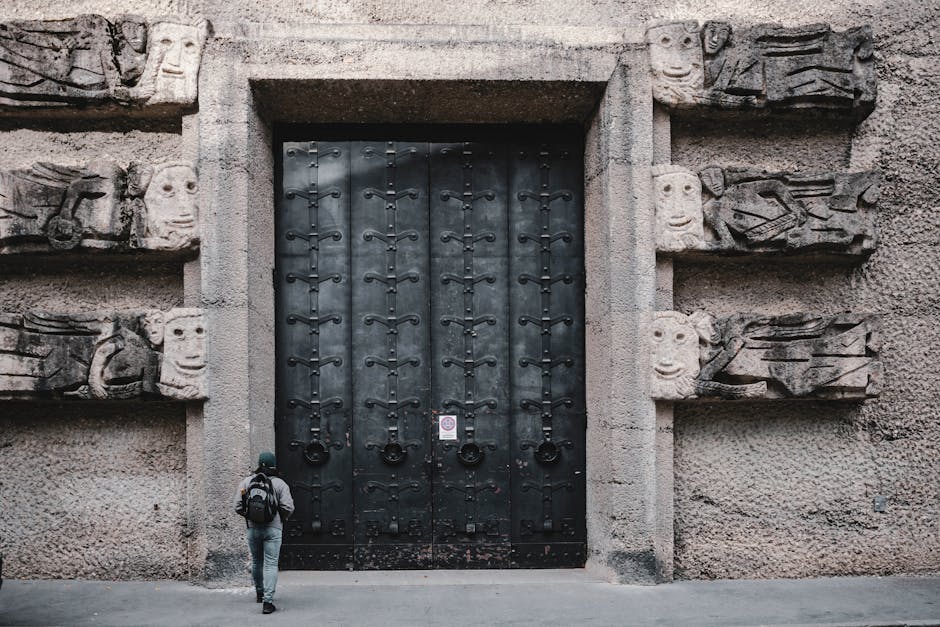
Discover the 'Rome of the North' on this self-guided walk through the Baroque squares and monumental legacy of Salzburg’s Prince-Archbishops.
 Easy
EasyGothenburg, Sweden
Discover Gothenburg’s 17th-century Dutch foundations, historic canals, and military fortifications on this self-guided architectural walk.
 Challenging
Marrakech, Morocco
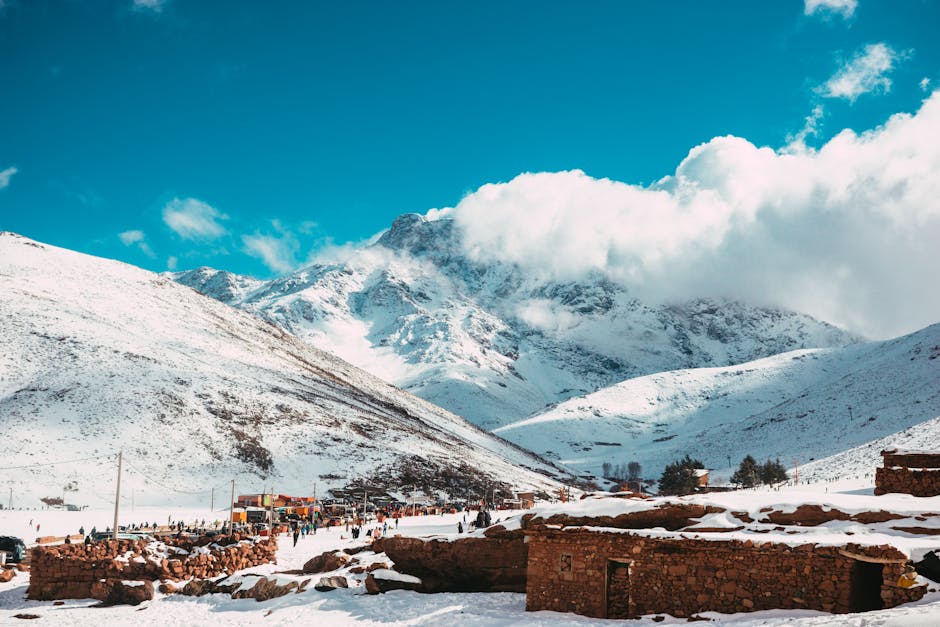
Discover the 'Sabatu Rijal' on this self-guided spiritual walk through the Medina's historic shrines and hidden Sufi landmarks.
 Easy
EasyMarrakech, Morocco
Follow the footsteps of Yves Saint Laurent through Marrakech's iconic gardens and colonial landmarks on this elegant self-guided fashion walk.
 Easy
EasyMarrakech, Morocco
Discover the stylish side of the Red City on this self-guided walk through Marrakech's premier design concept stores and contemporary art galleries.
 Easy
EasyMarrakech, Morocco
Discover the intricate art and hidden history of Marrakech's historic doors and riads on this self-guided architectural walk through Mouassine.
