Step away from the polished facades of Mitte and dive into the raw, creative energy of Wedding. This neighborhood stroll captures the essence of Berlin’s 'Red Wedding'—a district defined by its industrial past, working-class grit, and a modern-day renaissance that has turned factory floors into art studios. Your walking route follows the winding path of the Panke River, a hidden green artery that connects historic sites of resistance with cutting-edge cultural centers. This self-guided adventure offers a unique perspective on the city, far from the typical tourist trails. The journey begins at the Anti-Kriegs-Museum, a poignant reminder of pacifist efforts during the interwar period. From here, you will explore the heart of the district at Leopoldplatz, where grand 19th-century architecture meets the bustling daily life of one of Berlin's most diverse communities. As you transition toward the Panke River, the scenery shifts from urban density to tranquil waterside paths. One of the standout experiences of this walking tour Berlin is discovering the silent green Kulturquartier, a former crematorium that has been masterfully repurposed into a world-class venue for music and art. Its octagonal structure and lush grounds exemplify the city's ability to find beauty in the unconventional. Continuing along the river, the route brings you to the Gerichtshöfe and Uferhallen, massive industrial complexes that now house hundreds of artists. These spaces are the beating heart of Wedding’s creative scene, offering a glimpse into the ongoing struggle to preserve affordable workspace in a changing city. Whether you are a fan of industrial heritage, contemporary art, or simply looking for a peaceful nature walk through an authentic Berlin neighborhood, this route provides an immersive look at a district in flux. Discover at your own pace how Wedding remains stubbornly itself while embracing a vibrant, artistic future. It is a quintessential experience for those seeking a deeper understanding of Berlin's layered history and modern identity. **Note:** This area is known for its ever-changing character. Street art, pop-up venues, and temporary exhibitions may differ from what's described. That's part of the adventure - you might discover something entirely new!
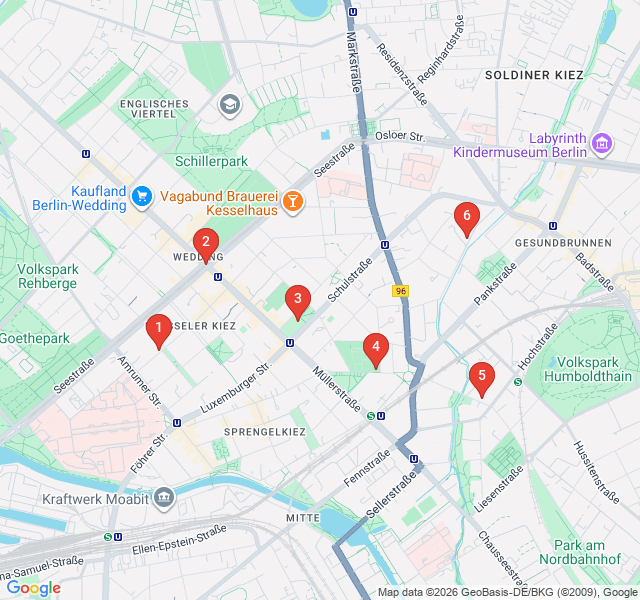
Numbers indicate the order of stops on the tour
Start exploring with Zigway at the world’s first anti-war museum. Founded in 1923 by the pacifist Ernst Friedrich, this small but powerful space was destroyed by the Nazis in 1933 and re-established decades later. The museum houses a sobering collection of photographs, documents, and artifacts illustrating the horrors of war and the struggle for peace. One of the most evocative features is the original air-raid shelter in the basement, which provides a chilling, tangible connection to the experience of Berliners during World War II. As you walk through the exhibits, consider how this site laid the groundwork for Wedding’s long-standing reputation as a center for social and political activism.
As you move toward the station, you are standing in the heart of 'Red Wedding.' This nickname dates back to the Weimar Republic when the district was a stronghold for the Communist and Social Democratic movements. The architecture here is a mix of traditional Berlin 'Mietskasernen' (tenement blocks) and post-war reconstruction. Look for the traces of the neighborhood's industrial roots; this area was once dominated by massive factories like AEG. Today, the vibe is decidedly more eclectic, with a mix of traditional German pubs, international grocery stores, and a growing student population. This intersection is the perfect place to observe the unpolished, authentic character that makes Wedding so different from the gentrified areas of Prenzlauer Berg.
Leopoldplatz is the social center of Wedding. It is dominated by two distinct churches: the Alte Nazarethkirche, designed by Karl Friedrich Schinkel, and the larger Neue Nazarethkirche. The square is a microcosm of the neighborhood's diversity and social challenges. On market days, the space transforms into a vibrant hub of local commerce. While it has a reputation for being a bit rough around the edges, it remains a vital community space. Take a moment to appreciate the scale of the square before heading toward the quieter, greener side of the district. The transition from this bustling urban plaza to the upcoming riverside path highlights the many faces of Wedding.
This stop is perhaps the most unique site in the district. The silent green Kulturquartier is housed in the former Wedding Crematorium, the first of its kind in Berlin, built in 1911. After it was decommissioned, the site was sensitively transformed into a cultural campus. The centerpiece is the stunning octagonal domed hall, which now hosts concerts and events. The surrounding grounds are peaceful and house a lovely café and the Arsenal Institute for Film and Video Art. This space is a perfect example of Berlin’s talent for creative reuse, turning a place once associated with mourning into a sanctuary for contemporary thought and artistic expression.
Enter the world of the Berlin 'Hinterhof' (courtyard). The Gerichtshöfe is one of the largest artist courtyard complexes in Germany. Since the 1980s, these former industrial buildings have been home to over 70 studios. As you wander through the interconnected courtyards, you might catch glimpses of painters, sculptors, and photographers at work. The brickwork and industrial windows are typical of Berlin's late 19th-century manufacturing boom. While many studios are private, the sheer scale of the complex is a testament to the city's enduring status as a magnet for creatives. Please note that access to specific studios depends on individual artist schedules and occasional 'Open Studio' events.
Your neighborhood stroll concludes at Uferhallen, a massive former workshop for Berlin’s public transport buses. Today, it is a sprawling artist colony and exhibition space. The site has been at the center of intense local debates regarding urban development and the protection of artistic spaces. Walking through the complex, you’ll see large-scale installations and a variety of creative disciplines represented. It sits right on the bank of the Panke River, providing a scenic end to the walk. This site embodies the 'Industrial Renaissance' of Wedding—taking the massive physical infrastructure of the 20th century and repurposing it for the cultural needs of the 21st.
Download Zigway to experience "Wedding’s Industrial Renaissance: Panke River Walk" with AI-powered audio narration. Walk at your own pace while stories unfold around you.
 Easy
EasyBerlin, Germany
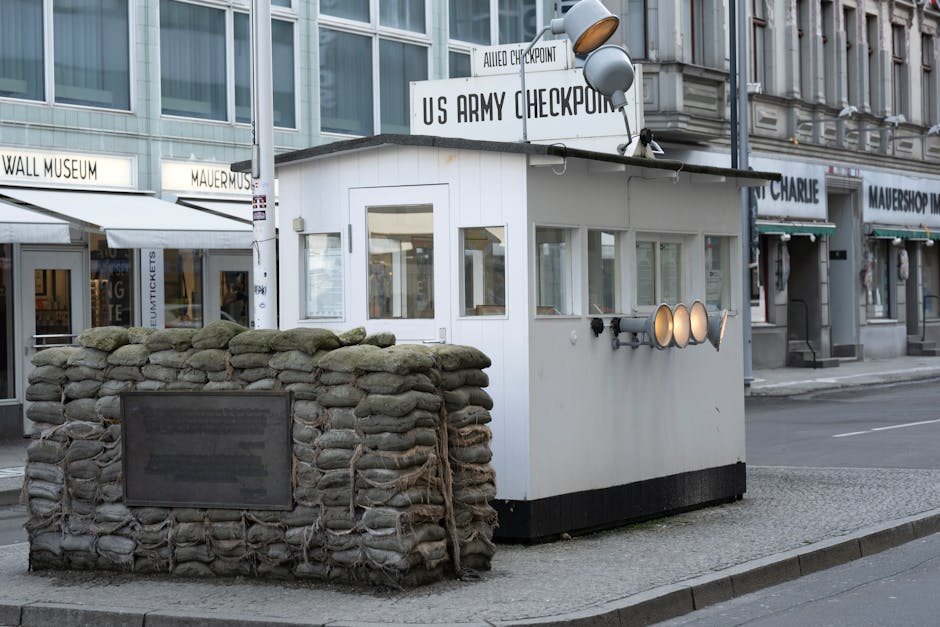
Explore the sites of Nazi power and the memorials that honor its victims on this self-guided walk through Berlin's historic Wilhelmstraße district.
 Moderate
Berlin, Germany
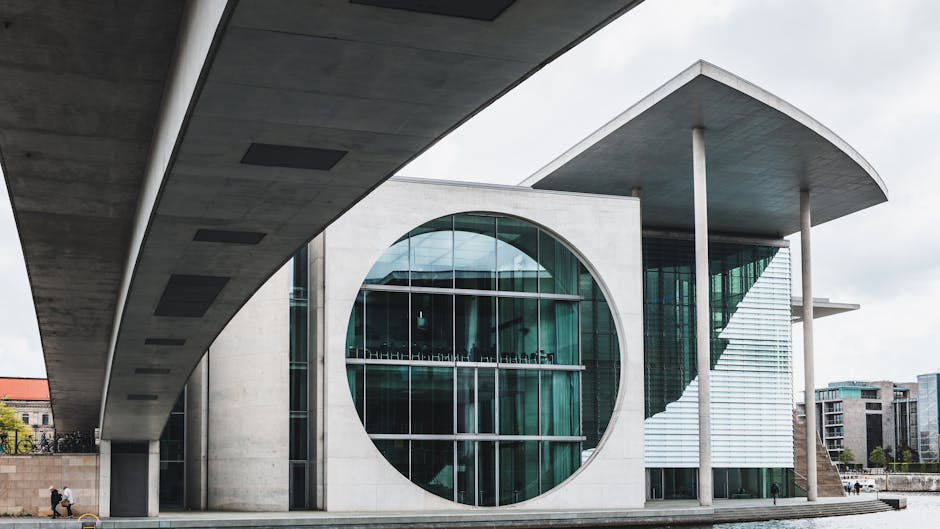
Explore Berlin’s 'Green Heart' on a self-guided walk through royal history, Cold War memorials, and serene lakeside gardens.
 Moderate
Berlin, Germany
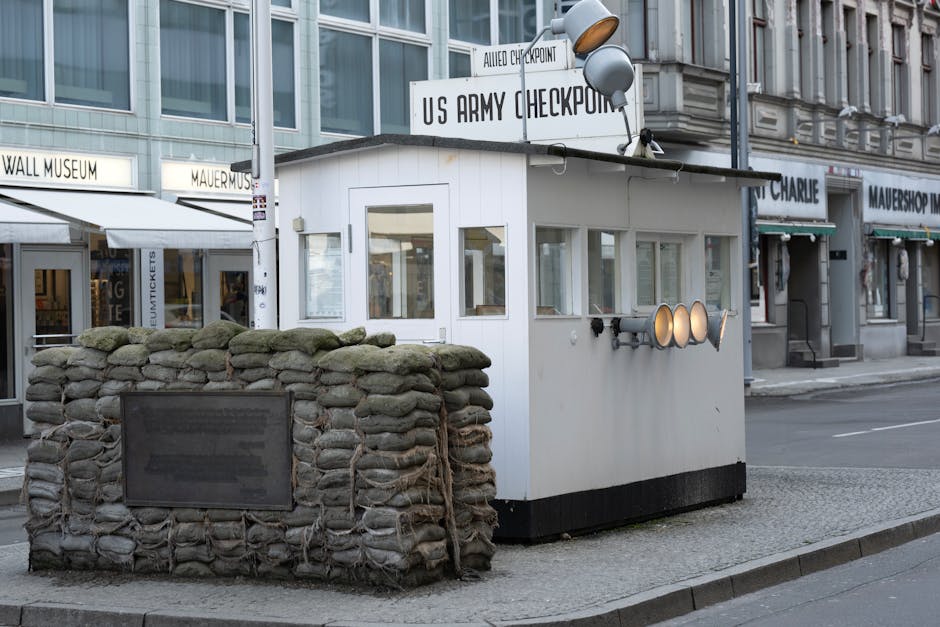
Discover the legacy of the Berlin Wall on this self-guided walk from historic ghost stations to the vibrant street art and cafes of Mauerpark.
 Easy
EasyBerlin, Germany
Discover the soul of 1920s Berlin on a self-guided walk through Charlottenburg’s iconic literary cafes, historic theaters, and artistic landmarks.
 Moderate
Gdansk, Poland
Discover Zaspa, a massive open-air gallery where grey housing blocks are transformed by over 60 monumental murals. Explore at your own pace.
 Moderate
Nairobi, Kenya
Discover the creative soul of Nairobi on this self-guided walk through the city's premier art galleries, markets, and artisan workshops.
 Moderate
Nairobi, Kenya
Discover Nairobi's lush side on this self-guided walk through botanical gardens, historic memorials, and vibrant local markets.
 Easy
EasyKrakow, Poland
Discover Krakow’s creative soul in Zabłocie, exploring industrial heritage, contemporary art museums, and avant-garde architecture at your own pace.
 Easy
EasyMunich, Germany
Explore Munich's creative heartbeat in Werksviertel-Mitte. Discover vibrant street art, upcycled containers, and rooftop sheep on this urban stroll.
 Moderate
Munich, Germany
Discover river surfing, iconic Greek temples, and Bavarian beer culture on this scenic self-guided walk through Munich's English Garden.
 Easy
EasyMunich, Germany
Discover Munich's culinary heart on this self-guided walk through the vibrant Viktualienmarkt and its legendary food stalls.
 Easy
EasyMunich, Germany
Explore the majestic gardens and hidden pavilions of the Wittelsbach summer residence on this peaceful, self-guided walking route in Munich.
