Step back into the Belle Époque of Mexico City with this self-guided walk through Santa María la Ribera, the city's first planned suburban neighborhood. Developed in the late 19th century during the Porfiriato—the era of President Porfirio Díaz—this neighborhood was designed for the capital's growing elite who wished to escape the crowded city center. Today, it remains a treasure trove of eclectic architecture, blending French influence, Moorish revival, and Mexican nationalism. This walking route invites you to explore a side of the city often overlooked by the standard tourist circuit, where quiet streets are lined with fading mansions and vibrant community life. Your independent journey begins at the striking Museo Universitario del Chopo, an iron-and-glass marvel that looks more like a Victorian factory than a Mexican museum. From there, you will weave through streets that showcase the architectural experimentation of the early 1900s, including the stunning Parroquia Josefina. The heart of the stroll is the Alameda de Santa María, a lush park that hosts the neighborhood's crown jewel: the Kiosko Morisco. This intricate, pomegranate-red pavilion is one of the most photographed structures in the city and serves as a testament to Mexico's 19th-century desire to project a cosmopolitan image on the world stage. As you continue your neighborhood stroll, you will encounter the Museo del Instituto de Geología, where the interior is as much a work of art as the scientific specimens it houses. The route concludes with a transition into the world of traditional Mexican flavors. Whether you are an architecture enthusiast, a history buff, or a traveler seeking the 'real' Mexico City, this route offers a peaceful and profound look at the capital's architectural evolution and its enduring local spirit. Discover at your own pace the stories hidden in the wrought-iron balconies and the grand stone facades of Santa María la Ribera.
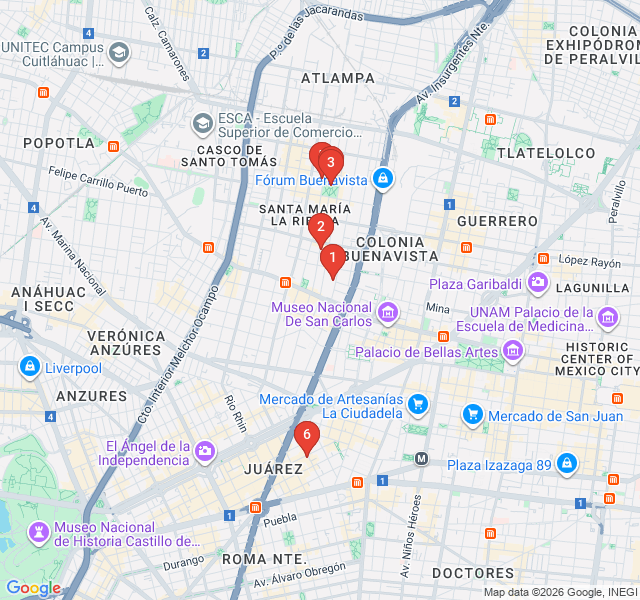
Numbers indicate the order of stops on the tour
Start exploring at this extraordinary iron-and-glass structure. Originally built in Germany and shipped to Mexico in pieces, it was assembled here in 1902 to serve as a pavilion for a commercial exposition. Its soaring towers and industrial aesthetic earned it the nickname 'The Crystal Palace of Mexico.' After serving as a Natural History museum for decades, it is now a hub for contemporary art. Notice the intricate metalwork—this was the height of Porfirian modernity, reflecting the era's obsession with European industrial progress. It stands as a stark, beautiful reminder of the neighborhood's transition from an elite suburb to a cultural sanctuary.
As you walk toward the neighborhood's center, you will encounter this architectural curiosity. Built in the early 20th century, the Parroquia Josefina is a prime example of the eclectic style popular during the Porfiriato. Unlike the heavy Baroque cathedrals of the historic center, this church features a lighter, almost Gothic-inspired verticality mixed with Romanesque elements. It was established by the Josephites, a religious order that played a significant role in the spiritual life of the local community. The facade’s intricate stonework and the quiet dignity of its interior provide a glimpse into the domestic and religious life of the families who first settled this 'modern' colony.
You are now standing before the most iconic landmark in Santa María la Ribera. The Kiosko Morisco is a masterpiece of Moorish Revival architecture, designed by engineer José Ramón Ibarrola. Interestingly, it wasn't built for this park; it represented Mexico at the 1884 World's Industrial and Cotton Centennial Exposition in New Orleans. Made entirely of cast iron, it spent years in the Alameda Central before being moved here in 1910. Look closely at the geometric patterns and the vibrant red and gold details. It represents a time when Mexico was searching for a unique national identity by blending exotic international styles with local pride.
Take a moment to soak in the atmosphere of this historic park. The Alameda de Santa María has been the social heart of the neighborhood since its founding in 1861. Unlike the more touristy parks in Roma or Condesa, this space remains a bastion of local life. You might see seniors dancing, families enjoying ice cream, or musicians practicing under the trees. The park is surrounded by some of the neighborhood's finest Porfirian mansions, many of which have been lovingly restored while others wear a poetic patina of age. It is the perfect place to appreciate the slow, residential pace of life that defines this district.
Facing the park is a grand Neoclassical building that looks like a palace. This is the Geology Museum, inaugurated in 1906. Even if you aren't a fan of rocks, the interior is unmissable. The lobby features a magnificent double-sweep staircase and large stained-glass windows depicting mining scenes. Don't miss the central hall, which houses a massive mammoth skeleton found in the Valley of Mexico. The walls are adorned with ten large-scale landscape paintings by the famous Mexican artist José María Velasco. This museum was a flagship project of the Porfirian government, intended to showcase Mexico's scientific prowess and natural wealth to the world.
To conclude your self-guided adventure, head south to explore the deep roots of Mexican flavors. While this location is a short distance from the main park, it represents the modern resurgence of traditional Mexican cacao culture. Unlike commercial chocolate, the treats here are crafted using ancient techniques and heirloom cacao beans sourced directly from Southeast Mexico. It is a sensory experience that connects the history of the land with the present day. Sip on a traditional water-based cacao drink or sample artisanal bars as you reflect on the architectural and cultural layers of the city you've discovered today. It is a sweet, authentic end to your neighborhood stroll.
Download Zigway to experience "Santa María la Ribera’s Porfirian Past" with AI-powered audio narration. Walk at your own pace while stories unfold around you.
 Easy
EasyMexico City, Mexico
Explore Mexico City's most glamorous district on this self-guided walk through Polanco's luxury boutiques, lush parks, and iconic art museums.
 Easy
EasyMexico City, Mexico
Explore the Art Deco architecture and gourmet food scene of Roma Norte on this self-guided neighborhood stroll through Mexico City’s creative heart.
 Easy
EasyMexico City, Mexico
Explore the epic murals of Rivera, Orozco, and Siqueiros on this self-guided walking route through the heart of Mexico City’s historic center.
 Moderate
Mexico City, Mexico
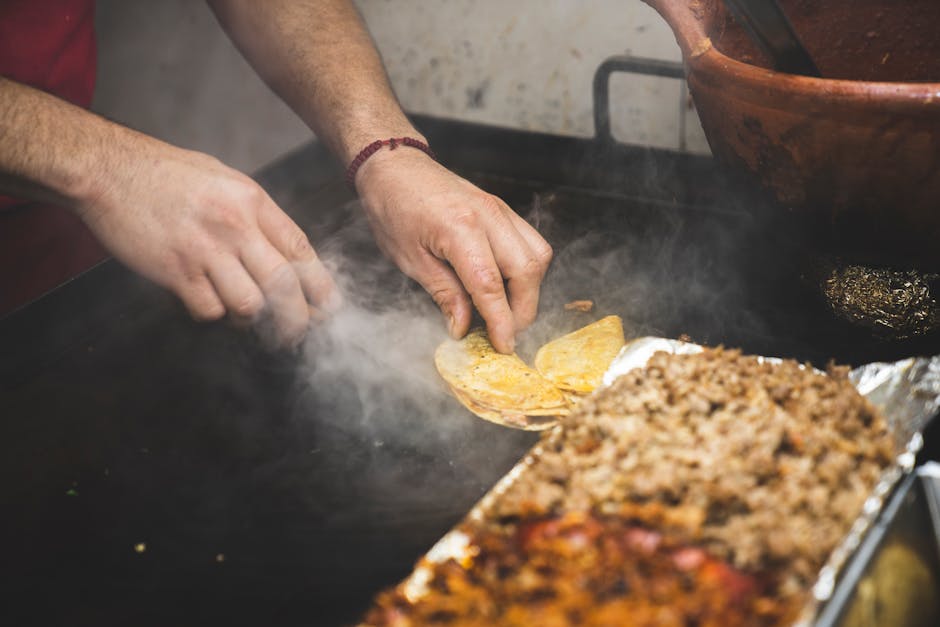
Taste the legendary tacos and cantina culture of Narvarte on this self-guided walk through Mexico City's most authentic foodie neighborhood.
 Easy
EasyHelsinki, Finland
Discover Helsinki's oldest neighborhood on this self-guided audio walk through Kruununhaka’s historic streets, hidden courtyards, and scenic shores.
 Easy
EasyKrakow, Poland
Explore the prestigious Jagiellonian University district, featuring Neo-Gothic architecture, Baroque churches, and Krakow's hidden scholarly gems.
 Easy
EasyGdansk, Poland
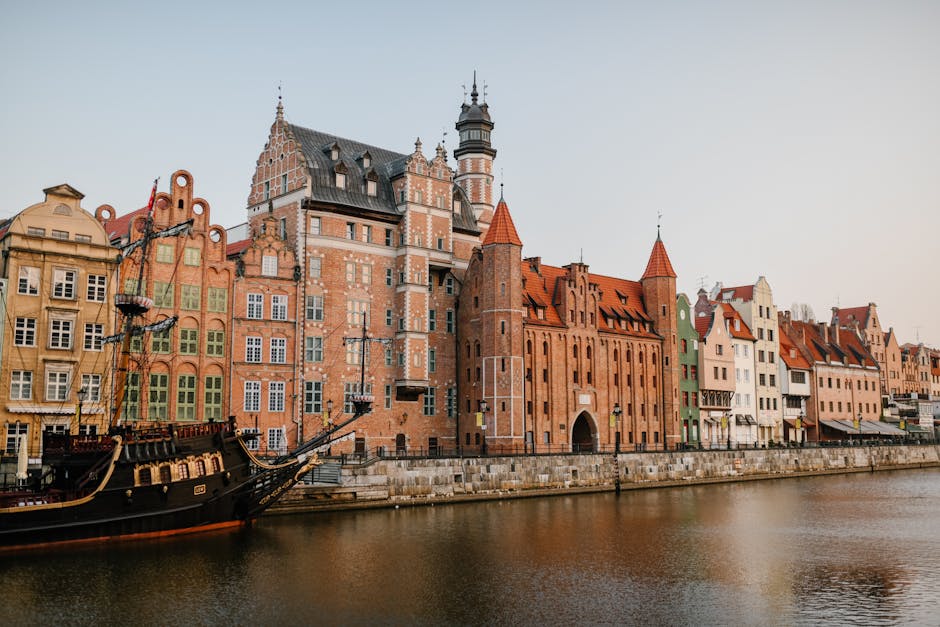
Discover the 'Baltic Gold' on this self-guided walk through Gdansk's historic mills, massive cathedrals, and the magical Mariacka Street.
 Easy
EasyWarsaw, Poland
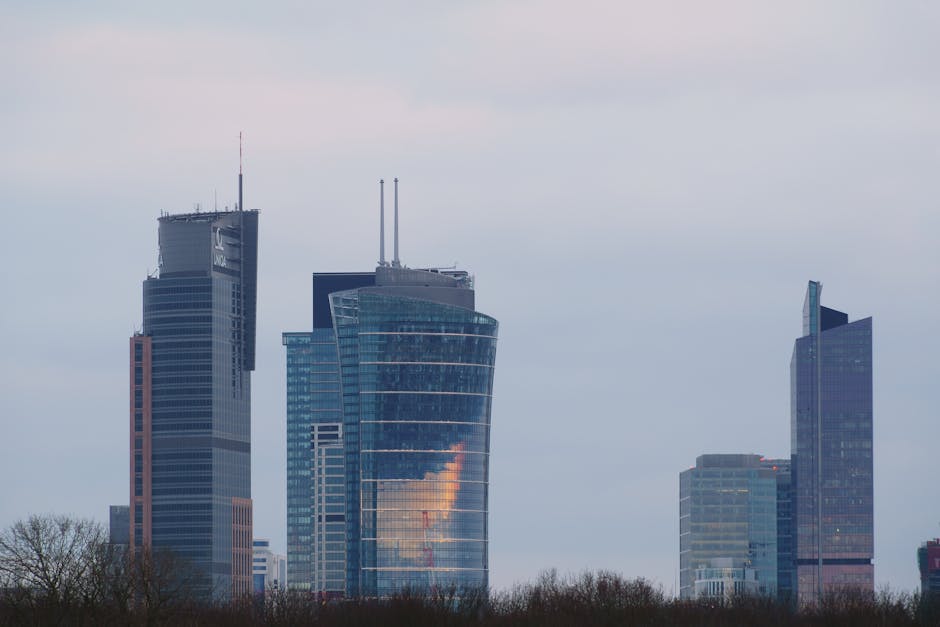
Discover the hidden courtyards and grand pre-war architecture of Warsaw's most atmospheric neighborhood on this self-guided stroll.
 Easy
EasyOaxaca, Mexico
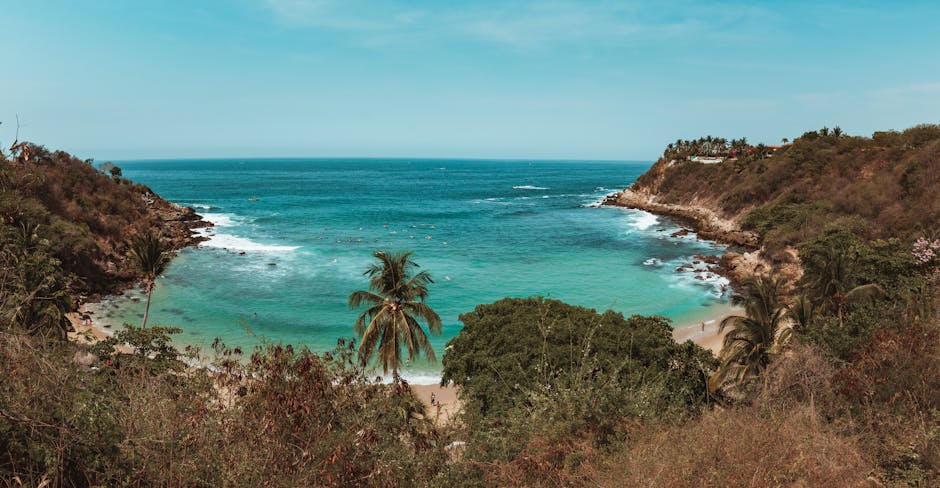
Explore Oaxaca’s oldest barrio on this self-guided walk through colonial aqueducts, colorful streets, and traditional artisan workshops.
 Easy
EasyOaxaca, Mexico
Explore Oaxaca's vibrant modern art scene, from revolutionary printmaking collectives to world-class contemporary museums, at your own pace.
 Moderate
Oaxaca, Mexico
Explore the heights of Oaxaca on this self-guided walk, featuring panoramic city views, cultural landmarks, and the iconic Cerro del Fortín.
 Easy
EasyOaxaca, Mexico
Explore Oaxaca's 'Green City' at your own pace. Discover Baroque masterpieces and the vibrant Zócalo on this self-guided neighborhood stroll.
