Step into the honey-colored limestone world of Regency England with a self-guided walk through Bath, the city that served as both a home and a profound inspiration for Jane Austen. This walking route invites you to explore the elegant crescents and bustling thoroughfares where the author lived, socialized, and set some of her most memorable scenes. Bath is not merely a backdrop in Austen’s work; it is a character in its own right, exerting a social pressure and architectural charm that shaped the lives of her protagonists in 'Northanger Abbey' and 'Persuasion'. As you wander, you will see the very streets where Anne Elliot rekindled her romance and Catherine Morland experienced the thrills of her first social season. Beginning in the heart of the city at the historic Pump Room, this neighborhood stroll takes you through the epicenter of 18th-century high society. You will traverse the fashionable shopping district of Milsom Street, where Austen’s characters frequently admired the latest London styles, and visit the Jane Austen Centre to understand the author’s personal connection to the city. The journey also leads you to the 'Gravel Walk,' a secluded path known as a 'Lovers' Lane' during the Regency era, providing a quiet contrast to the grand Assembly Rooms where the elite gathered for music and dance. This self-guided adventure is designed for those who appreciate the intersection of literature and history. By following this walking route, you can immerse yourself in the atmospheric details of the Georgian era at your own pace. Discover the residence at 4 Sydney Place where Jane lived for several years, and look out over the Sydney Gardens where she often enjoyed morning walks. Whether you are a devoted 'Janeite' or a lover of classical architecture, this experience offers a deep dive into the romantic and social complexities of Austen’s Bath, revealing the real-life locations that continue to capture the imagination of readers worldwide.
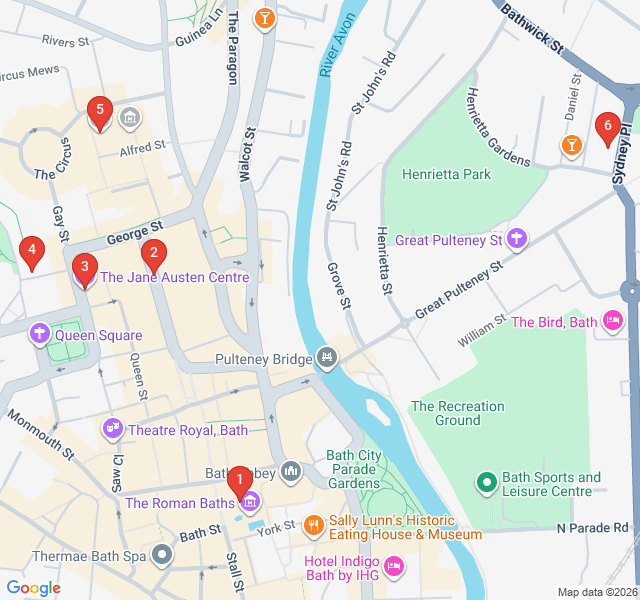
Numbers indicate the order of stops on the tour
Welcome to the social epicenter of Regency Bath. During Jane Austen's time, the Pump Room was where everyone who was anyone gathered to see and be seen. Visitors came here to 'take the waters' from the hot springs, believed to have curative properties. In 'Northanger Abbey', Jane describes Catherine Morland’s arrival here, noting the dense crowds and the ritual of social observation. As you look at the grand windows and neoclassical columns, imagine the rustle of silk dresses and the murmur of gossip. The atmosphere today remains remarkably preserved, reflecting the same elegance that greeted Austen when she visited. This was a place of strict etiquette, where a misplaced glance or an improper introduction could define one’s social standing for an entire season.
Milsom Street was, and still is, the height of fashion in Bath. In the early 19th century, it was lined with milliners, glovers, and drapers. Jane Austen frequently mentions this street in her novels; it is where Anne Elliot meets her friends and where various characters duck into shops to avoid unwanted acquaintances or the rain. The architecture here is a masterclass in Georgian symmetry. Take a moment to notice the upper stories of the buildings, which have remained largely unchanged for two centuries. For Austen, Milsom Street represented the commercial pulse of the city and the vanity of the upper classes, serving as a backdrop for chance encounters that often drove her plots forward.
Located in a beautiful Georgian townhouse, this center is dedicated to the author’s life in Bath between 1801 and 1806. While Jane didn't live in this specific house, it is typical of the lodgings her family occupied. The permanent exhibition explores how the city’s social scene impacted her writing. It was during her years in Bath that she experienced the highs of social whirls and the lows of financial uncertainty following her father's death. You can see a lifelike waxwork of Jane, created based on forensic evidence and descriptions from her family, providing a rare 'face-to-face' encounter with the author. The center serves as a bridge between the fictional worlds she created and the reality of her daily life in this neighborhood.
This narrow, tree-lined path may seem unassuming, but it is one of the most romantic locations in English literature. Known in the Regency era as a 'Lovers' Lane,' it provided a rare opportunity for private conversation away from the prying eyes of the main streets. This is the exact setting for the climactic reconciliation between Anne Elliot and Captain Wentworth in 'Persuasion'. As they walk along this path toward the Royal Crescent, they finally speak the truths that have been suppressed for eight years. The walk skirts the edge of the Royal Victoria Park and offers a peaceful, shaded route that feels worlds away from the city center, much as it did for the characters in Austen’s final completed novel.
If the Pump Room was for morning gossip, the Assembly Rooms were for evening splendor. This was where the great balls took place. The Ball Room, the Tea Room, and the Octagon were the stages for the elaborate dances Jane Austen so frequently described. Standing under the massive Whitefriars crystal chandeliers, you can almost hear the music of a quadrille. For a young woman in the Regency era, the Assembly Rooms were a place of high stakes; a successful night could lead to a marriage proposal, while a lack of partners was a social disaster. Austen herself attended many balls here, and her sharp observations of the dancers' behavior provided endless material for her witty social critiques.
The walk concludes at 4 Sydney Place, the house where Jane Austen lived with her parents and sister, Cassandra, from 1801 to 1804. Unlike some of her other temporary lodgings, this was a stable home for the family. From these windows, Jane would have looked out toward Sydney Gardens, which she famously enjoyed for their labyrinth and public breakfasts. Living here put her at the edge of the city, offering a blend of social access and natural beauty. While she was not particularly prolific as a writer during her years in Bath—perhaps due to the distractions of city life—the memories and observations she gathered here were essential for the novels she would later revise and publish. It is a quiet, residential spot that brings the author's personal history into sharp focus.
Download Zigway to experience "Jane Austen's Regency Romance" with AI-powered audio narration. Walk at your own pace while stories unfold around you.
 Easy
EasyBath, United Kingdom
Uncover Roman ruins and Gothic spires on this self-guided audio walk through the historic heart of Bath. Explore at your own pace.
 Easy
EasyBath, United Kingdom
Uncover the eerie secrets and dark history of Bath on this self-guided audio walk through haunted theaters and historic Victorian cemeteries.
 Easy
EasyBath, United Kingdom
Explore Bath's industrial-heritage on this self-guided walk along the Kennet & Avon Canal, from engineering marvels to tranquil garden escapes.
 Moderate
Bath, United Kingdom
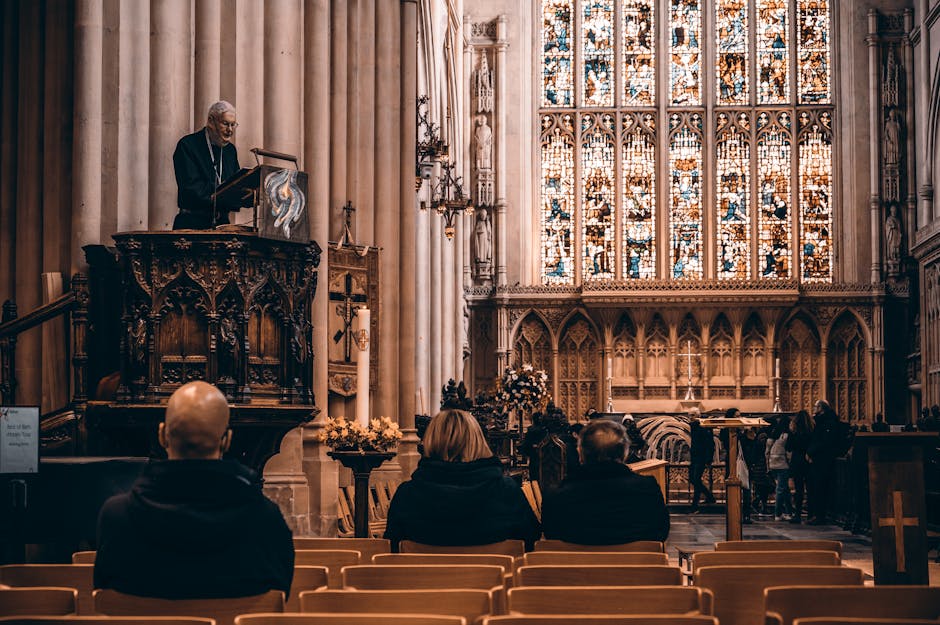
Escape the crowds and ascend the hills of Bath on this self-guided walk featuring panoramic views, historic follies, and hidden Victorian cemeteries.
 Easy
EasyNairobi, Kenya
Explore Nairobi's architectural evolution from colonial-era landmarks to iconic Brutalist skyscrapers on this historic self-guided walking route.
 Easy
EasyNairobi, Kenya
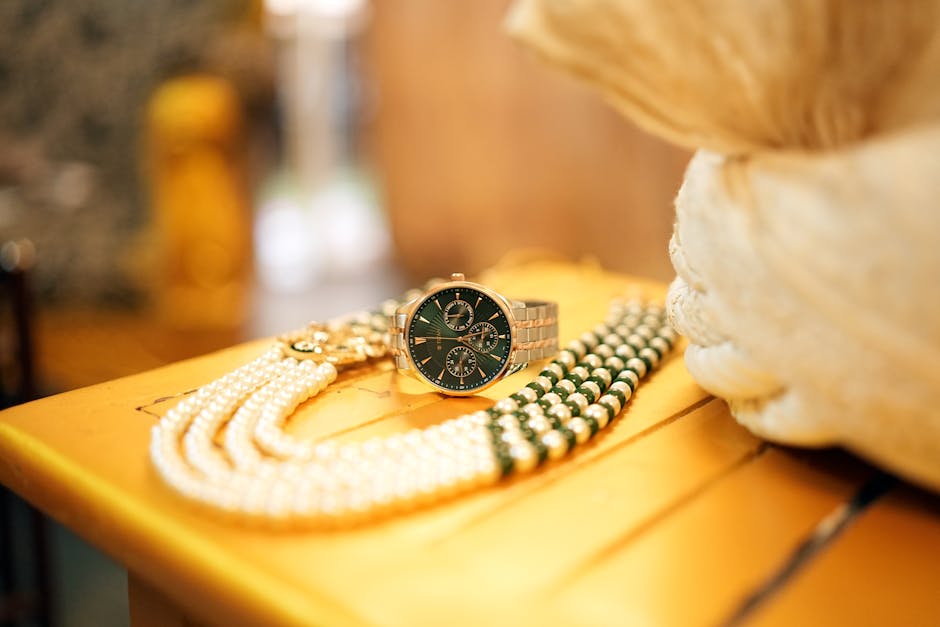
Discover Nairobi's iconic skyline on this self-guided architecture walk through the CBD’s most famous modernist and Brutalist landmarks.
 Easy
EasyKrakow, Poland
Explore the prestigious Jagiellonian University district, featuring Neo-Gothic architecture, Baroque churches, and Krakow's hidden scholarly gems.
 Easy
EasyKrakow, Poland
Explore the historic heart of Kazimierz on this self-guided walk through synagogues, ancient cemeteries, and vibrant squares.
 Easy
EasyEdinburgh, United Kingdom
Explore Edinburgh's historic Royal Mile at your own pace, from the heights of the Castle to the royal Palace of Holyroodhouse.
 Easy
EasyEdinburgh, United Kingdom
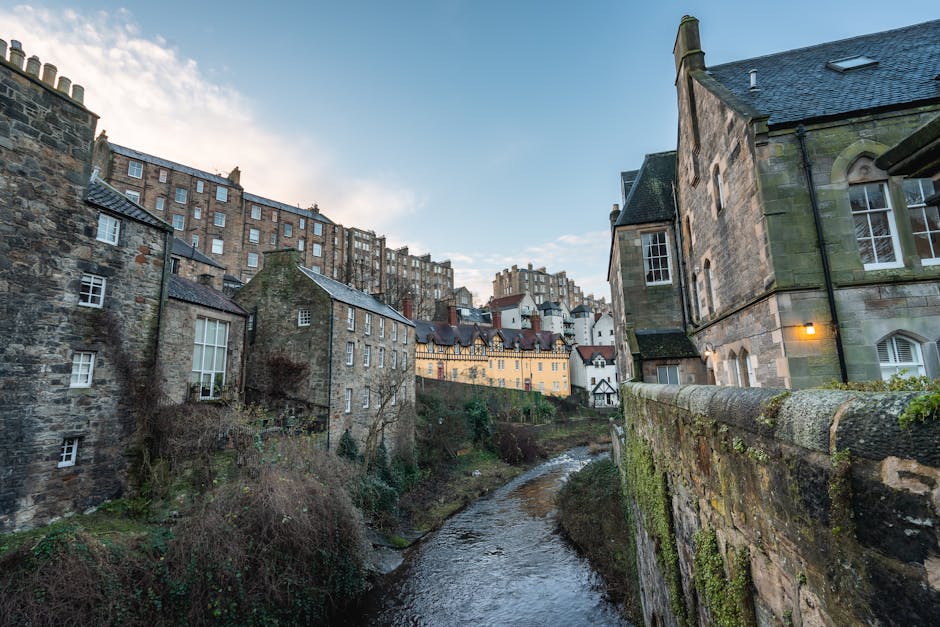
Capture the magic of Edinburgh on this self-guided stroll through the fairy-tale Dean Village, floral Circus Lane, and the scenic Water of Leith.
 Easy
EasyEdinburgh, United Kingdom
Explore Edinburgh's creative soul on this self-guided walk from historic museums to the stylish galleries and boutiques of the West End.
 Challenging
Edinburgh, United Kingdom
Ascend an ancient volcano and discover royal history on this challenging self-guided walk through Edinburgh's iconic Holyrood Park.
