Step back into the 14th and 15th centuries, a time when Bruges was the beating heart of European commerce. This self-guided walk invites you to explore the Hanseatic Quarter, a neighborhood once teeming with wealthy international merchants, bankers, and diplomats. While the famous Belfry and Markt often steal the spotlight, this neighborhood stroll reveals the sophisticated architecture and the financial engines that truly built the city's legendary wealth. Throughout the route, you will discover how Bruges became a global marketplace where the Hanseatic League of German towns met the seafaring traders of the Mediterranean. This neighborhood is a living testament to the city's Golden Age, featuring some of the oldest and most prestigious buildings in Northern Europe. From the world's first 'friet' museum housed in a 14th-century merchant lodge to the quiet squares where the world's most powerful guilds once gathered, this walking route offers a deep dive into the history and architecture of a bygone era. You will see the toll houses where taxes were collected, the statues of legendary painters who called this district home, and the ornate facades of foreign consulates. This audio walk is designed for those who want to escape the main tourist crowds and experience the authentic, aristocratic side of Bruges. Discover at your own pace how money, art, and power converged in these cobblestone streets. Whether you are a fan of medieval logistics or simply appreciate stunning Gothic and Renaissance design, this exploration of the Hanseatic Quarter provides a comprehensive look at the commercial legacy that earned Bruges its place as a UNESCO World Heritage site. This independent journey is perfect for travelers who prefer to uncover the layers of a city's past without following a rigid schedule.
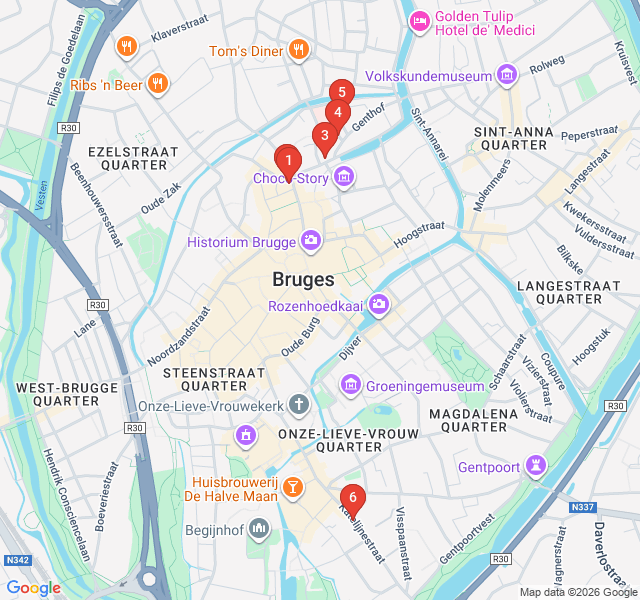
Numbers indicate the order of stops on the tour
Begin your self-guided adventure at the Frietmuseum, which occupies the Saaihalle, one of the most significant buildings in Bruges. While it now celebrates the history of the Belgian fry, the building itself dates back to 1399. It served as the lodge for Genoese merchants, making it the oldest preserved merchant house in the city. Notice the elegant Gothic facade and the intricate stonework. In the 14th century, this was a hub for Mediterranean traders who brought luxury goods like silk and spices to the North. The transition from a merchant palace to a museum dedicated to potatoes is a quirky example of how Bruges repurposes its historic fabric. This site perfectly illustrates the intersection of high-stakes international trade and local Flemish culture.
Standing before the Saaihalle, you are looking at the architectural blueprint of Bruges' commercial success. The name refers to 'saai' or serge, a type of lightweight wool cloth that was a major export. This building served as a warehouse and a meeting point for the Genoese, who were among the first to establish a permanent presence in the city. The architecture here is a blend of residential comfort and commercial utility, featuring high windows to let in light for inspecting goods. This was effectively a 15th-century consulate. Imagine the conversations held here in various languages, negotiating exchange rates and shipping routes that connected the Baltic Sea to the Mediterranean.
The Tolhuis, or Old Toll House, was the financial gateway to the city. Built in the late 15th century by the powerful Luxembourg family, this was where every merchant arriving by boat had to stop and pay duties on their cargo. The architecture is distinctly late-Gothic, with a beautiful porch where the tax collectors sat. Next to it once stood the Great Crane, a massive medieval machine used to unload wine barrels and crates from the ships in the canal. This spot was the literal 'point of entry' for the wealth of Bruges. The Tolhuis reminds us that the city's beauty was funded by a very efficient and sometimes ruthless system of maritime taxation.
Welcome to the Woensdagmarkt, or Wednesday Market. This square was the heart of the German Hanseatic community. In the center, you will see the statue of Hans Memling, one of the great Flemish Primitives. The Hanseatic merchants were not just businessmen; they were major patrons of the arts, commissioning works from masters like Memling and Jan van Eyck. The square is surrounded by houses that once belonged to wealthy traders from Lübeck and Hamburg. It’s a quieter space than the main market square, offering a more intimate look at how the medieval elite lived. The proximity to the canals allowed for easy transport of goods directly to the merchants' doorsteps.
As you move through the quarter, you find the convent of the Zwartzusters, or Black Sisters. Their presence in the merchant district was vital. These nuns were dedicated to nursing the sick, particularly during the frequent outbreaks of the plague that often arrived on merchant ships. While the merchants brought gold and spices, they also inadvertently brought disease. The Black Sisters provided the social safety net for a city that was densely populated and constantly in flux. Their austere brick convent provides a stark contrast to the ornate merchant palaces nearby, reminding us of the human cost and the religious devotion that existed alongside the pursuit of profit.
The final stop is the site of the Municipal Academy, historically linked to the Poortersloge or Burgher's Lodge. This was the exclusive club for the city's elite, the 'Poorters'. It was here that the 'White Bear' fraternity held their tournaments and banquets. The building features a small statue of a bear in a niche, known as the 'Bear of Bruges,' which legend says was the first inhabitant of the forest that became the city. The transition of these spaces into academies of art in later centuries reflects Bruges' shift from a commercial powerhouse to a center of cultural preservation and artistic education. Your self-guided walk ends here, at the crossroads of civic pride and creative legacy.
Download Zigway to experience "Merchants and Money: The Hanseatic Quarter Walk" with AI-powered audio narration. Walk at your own pace while stories unfold around you.
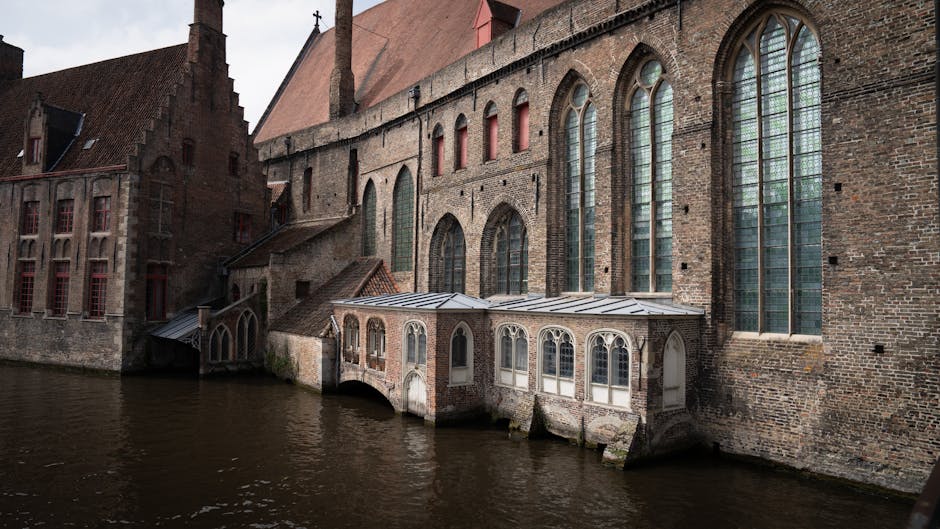 Easy
EasyBruges, Belgium
Discover the most iconic canal views in Bruges on this scenic self-guided audio walk through the historic "Venice of the North".
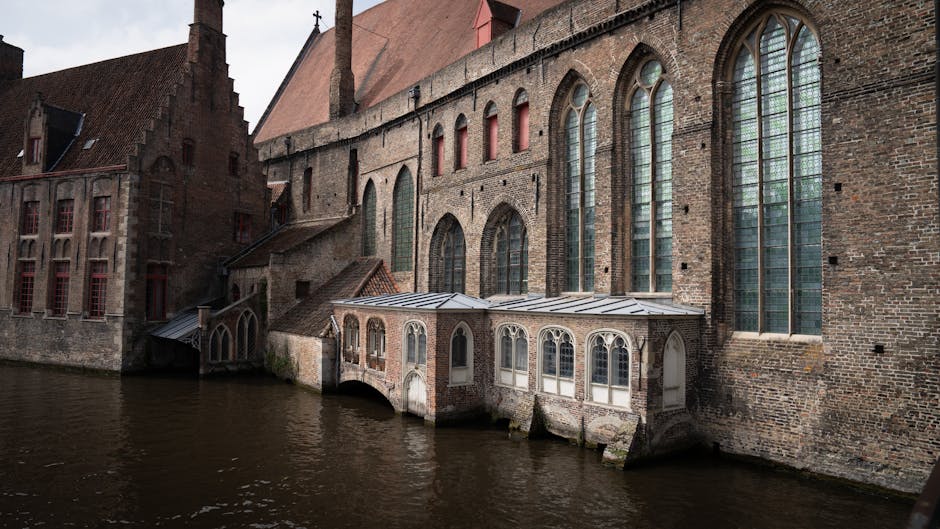 Easy
EasyBruges, Belgium
Discover the tranquil almshouses and hidden courtyards of Bruges on this peaceful self-guided audio walk through the historic St. Anna district.
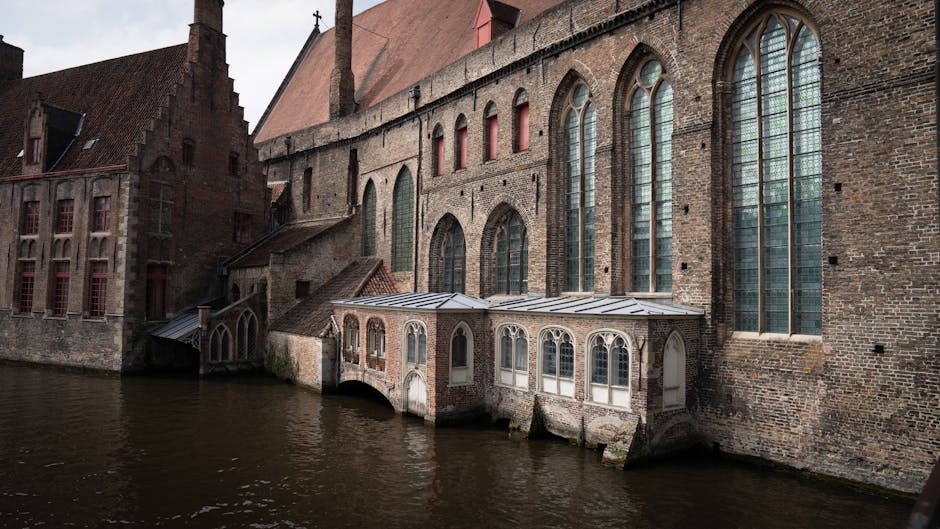 Moderate
Bruges, Belgium
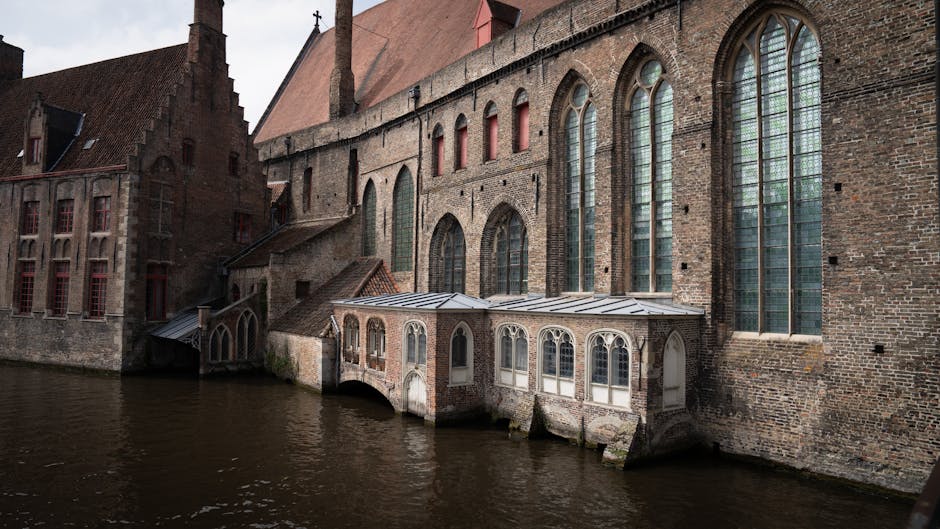
Discover the artistic soul of Bruges, from world-class Flemish Primitive paintings to the delicate traditions of handmade lace in the St. Anna district.
 Easy
EasyBruges, Belgium
Discover the artisanal secrets of Bruges' world-class chocolatiers on this delicious self-guided walking route through the medieval center.
 Easy
EasyGothenburg, Sweden
Discover Gothenburg’s 17th-century Dutch foundations, historic canals, and military fortifications on this self-guided architectural walk.
 Easy
EasyNairobi, Kenya
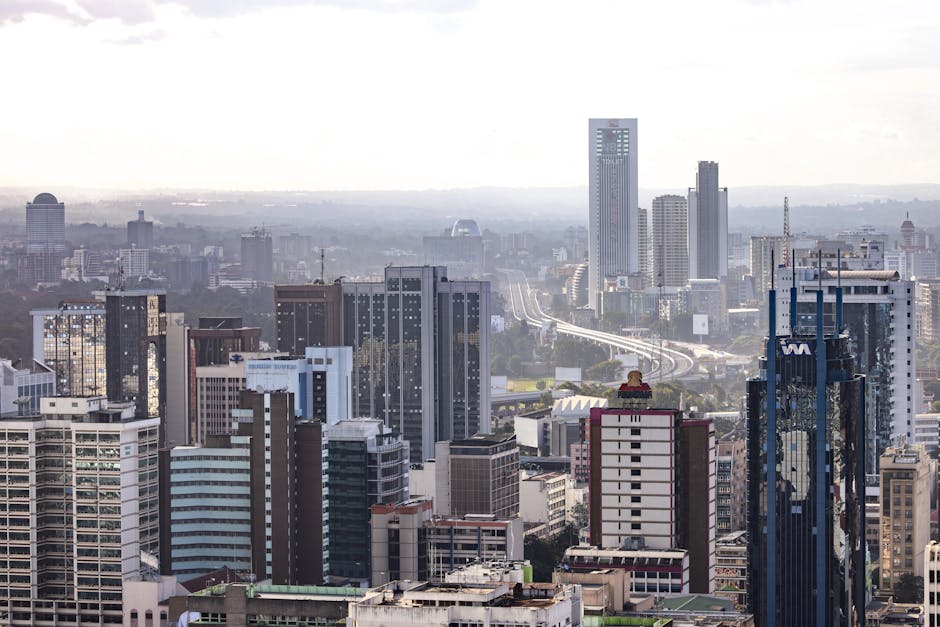
Explore Nairobi's architectural evolution from colonial-era landmarks to iconic Brutalist skyscrapers on this historic self-guided walking route.
 Easy
EasyNairobi, Kenya
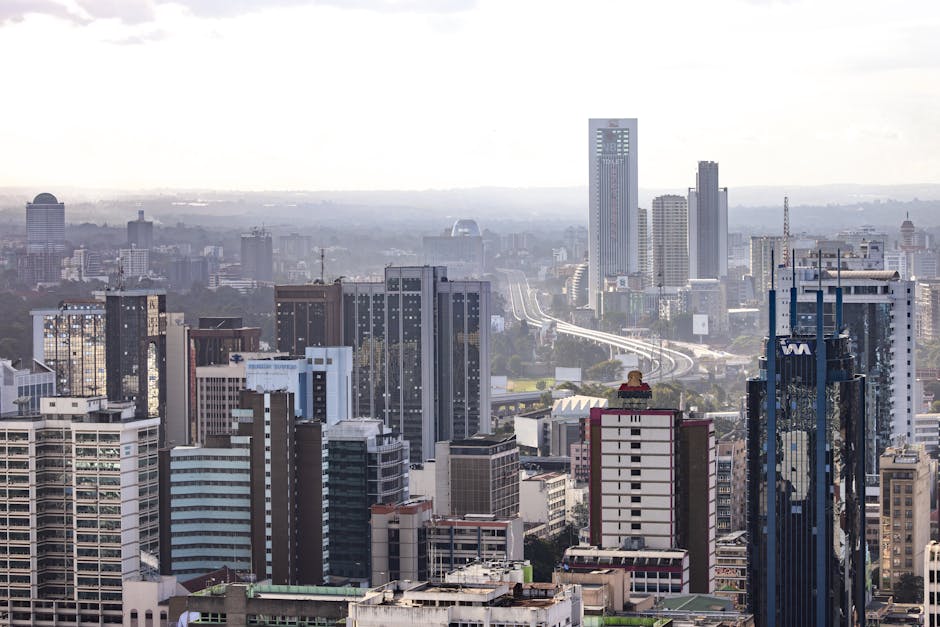
Discover Nairobi's iconic skyline on this self-guided architecture walk through the CBD’s most famous modernist and Brutalist landmarks.
 Easy
EasyKrakow, Poland
Explore the prestigious Jagiellonian University district, featuring Neo-Gothic architecture, Baroque churches, and Krakow's hidden scholarly gems.
 Easy
EasyBrussels, Belgium
Discover the colorful world of Belgian comics on this independent walking route through the creative streets and murals of central Brussels.
 Moderate
Brussels, Belgium
Explore the majestic Royal Quarter, from Art Nouveau gems to the King's Palace and the iconic views of Mont des Arts on this self-guided walk.
 Moderate
Brussels, Belgium
Explore Brussels' industrial heart and artistic rebirth on this self-guided walk through Molenbeek and the Canal district's iconic landmarks.
 Moderate
Brussels, Belgium
Discover Brussels' Art Nouveau masterpieces at your own pace, from Victor Horta's UNESCO sites to the flamboyant Maison Saint-Cyr.
