Antwerp’s Eilandje district, or 'The Little Island,' is a masterclass in urban transformation. Once a gritty industrial port that had fallen into neglect, it has been reborn as the city’s most vibrant architectural playground. This self-guided walk takes you through a landscape where 19th-century warehouses stand alongside futuristic glass monoliths, all set against the backdrop of the historic docks. This neighborhood stroll captures the transition from Antwerp’s golden age of shipping to its modern identity as a global design capital. You will begin at the iconic MAS (Museum aan de Stroom), a towering structure of red sandstone and curved glass that serves as the neighborhood's anchor. From here, the route winds past the historic Nassaubrug and into the heart of the old docks, where the Felix Pakhuis showcases how industrial heritage can be repurposed for modern life. The walk highlights the dramatic contrast between the old harbor basins, commissioned by Napoleon, and the cutting-edge Red Star Line Museum, which tells the poignant story of millions who departed these shores for America. The journey concludes at the Havenhuis, a breathtaking architectural masterpiece designed by Zaha Hadid. This walking route is perfect for those who love photography, maritime history, and seeing how old spaces find new souls. Throughout this self-guided adventure, you can explore the docks at your own pace, stopping for a coffee by the water or lingering to admire the way the light hits the Scheldt river. It is an essential experience for anyone looking to understand the soul of modern Antwerp, far beyond the traditional medieval center. This self-guided walk offers a deeper look at the city's relationship with the sea and its bold vision for the future, making it a standout walking tour Antwerp has to offer for architecture enthusiasts.
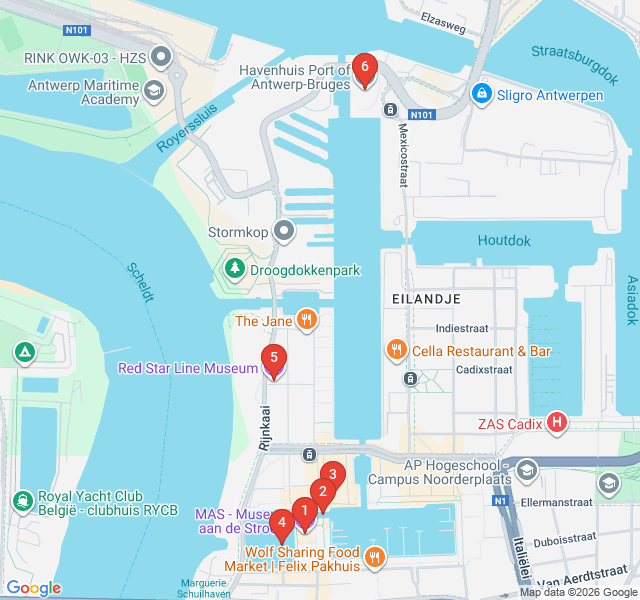
Numbers indicate the order of stops on the tour
Standing 60 meters tall, the MAS is more than just a museum; it is a 'vertical city.' Designed by the Dutch firm Neutelings Riedijk, its facade features hand-cut red sandstone from India and giant curved glass panels. As you walk around the base, look for the thousands of tiny silver hands—the symbol of Antwerp—embedded in the stone. The building’s design mimics the stacking of traditional harbor warehouses. While the museum inside chronicles Antwerp’s history as a global crossroads, the building itself sparked the entire Eilandje revival when it opened in 2011. It serves as a bridge between the historic city center and the industrial docks you are about to explore.
This historic swing bridge is a reminder of the mechanical ingenuity required to keep a 19th-century port running. The Nassaubrug connects the Willemdok and the Bonapartedok, allowing ships to pass through while keeping the city connected. As you stand here, you can feel the transition from the modern MAS area into the more rugged, historic dockland atmosphere. The bridge is part of a series of iron structures that once defined the movement of the port. It is a perfect spot to observe the leisure boats that now occupy the docks where massive merchant vessels once unloaded their cargo from across the globe.
The Felix Pakhuis is perhaps the finest example of industrial repurposing in the Eilandje. Originally built in 1860 as a warehouse for bulk goods like coffee, grain, and tobacco, it survived a devastating fire and years of neglect. Today, it houses the city archives and a vibrant food hall. Notice the central 'indoor street' that runs through the building; this was originally designed to allow for the safe transport of goods under cover. The brickwork and heavy timber beams have been meticulously preserved, creating a space where the city's past records are stored within a shell of its commercial history.
This dock carries the name of Napoleon Bonaparte, who ordered its construction in 1811. He envisioned Antwerp as a 'pistol pointed at the heart of England,' intended to be a massive naval base. While his military dreams faded, the dock laid the foundation for Antwerp's growth as a world-class commercial port. Today, the water is much calmer, often serving as a mooring site for historic ships. The dock marks the oldest part of the port expansion and offers a wide-angle view of the MAS, illustrating how the neighborhood has evolved from a Napoleonic naval hub to a modern cultural destination.
Between 1873 and 1934, over two million passengers boarded the Red Star Line steamers here, seeking a new life in North America. This museum is located in the original historic sheds where emigrants were screened and their luggage disinfected. It is a place of deep emotional resonance, telling stories of hope, fear, and the search for the American Dream. The modern tower added to the building is shaped like a ship's funnel, offering a view over the Scheldt river—the last sight many emigrants had of Europe. It stands as a testament to Antwerp's role as a gateway to the world.
The Havenhuis, or Port House, is the crowning jewel of the Eilandje’s architectural revival. Designed by the late Zaha Hadid, it consists of a shimmering, diamond-shaped glass structure perched atop a heritage fire station. The design evokes the hull of a ship and the facets of a diamond, referencing Antwerp’s twin legacies. It is a bold statement of the port's future as a global leader in innovation. Standing beneath this massive structure, you can see how the glass panels reflect the sky and the water, changing appearance throughout the day. It is the perfect place to conclude your exploration of Antwerp's maritime evolution.
Download Zigway to experience "From Docks to Design: The Eilandje Revival" with AI-powered audio narration. Walk at your own pace while stories unfold around you.
 Easy
EasyAntwerp, Belgium
Taste your way through Antwerp's history on this self-guided walk featuring world-class beer, fries, and chocolate in the historic center.
 Easy
EasyAntwerp, Belgium
Discover Antwerp’s printing revolution and literary heritage on this self-guided walk through the city's historic center and UNESCO sites.
 Easy
EasyAntwerp, Belgium
Discover how a gritty railway yard became Antwerp's most vibrant green space on this self-guided industrial heritage walk.
 Moderate
Antwerp, Belgium
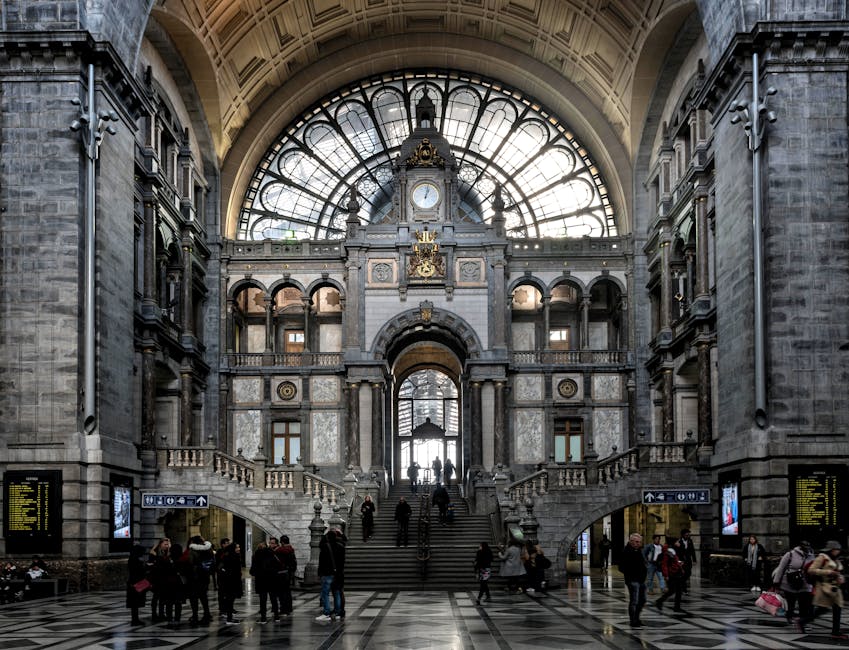
Discover the Baroque masterpieces and Gothic heights of Antwerp’s historic churches on this immersive self-guided audio walk through the city center.
 Moderate
Gothenburg, Sweden
Discover Gothenburg’s maritime soul on this self-guided walk from the historic Central Station to the scenic riverfront at Stenpiren.
 Easy
EasyGothenburg, Sweden
Explore Gothenburg's maritime soul on this self-guided walk from historic shipyards to sleek modern piers and iconic industrial landmarks.
 Moderate
Vienna, Austria
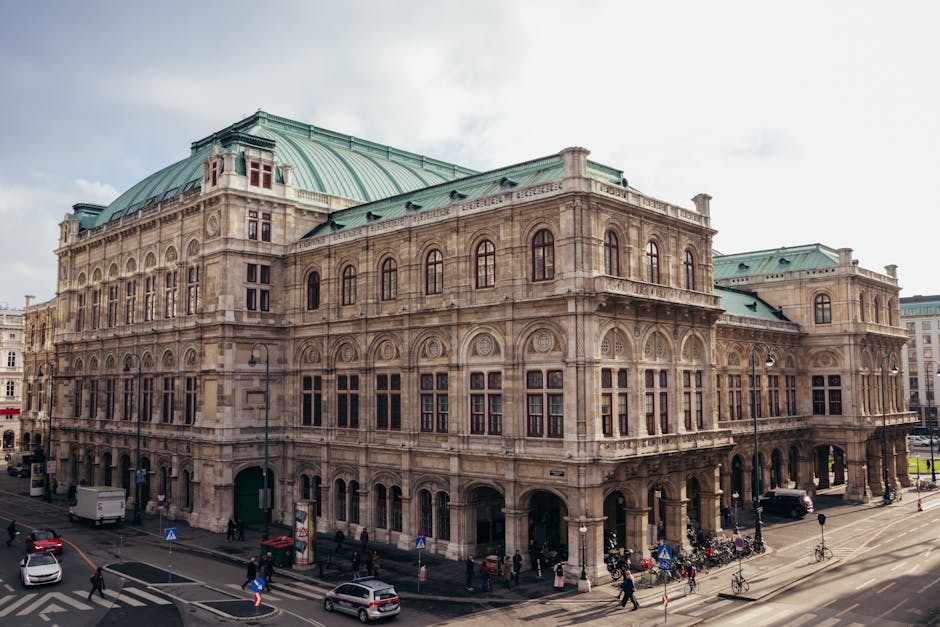
Follow the footsteps of Mozart and Strauss through Vienna’s historic center on this self-guided walk through the city's rich musical history.
 Easy
EasyGdansk, Poland
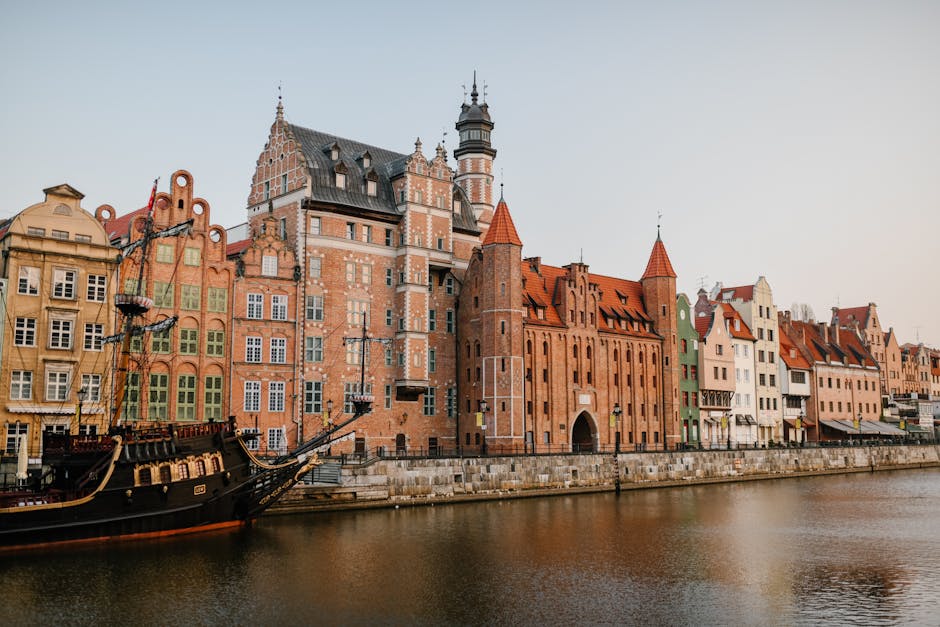
Discover the 'Baltic Gold' on this self-guided walk through Gdansk's historic mills, massive cathedrals, and the magical Mariacka Street.
 Easy
EasyBrussels, Belgium
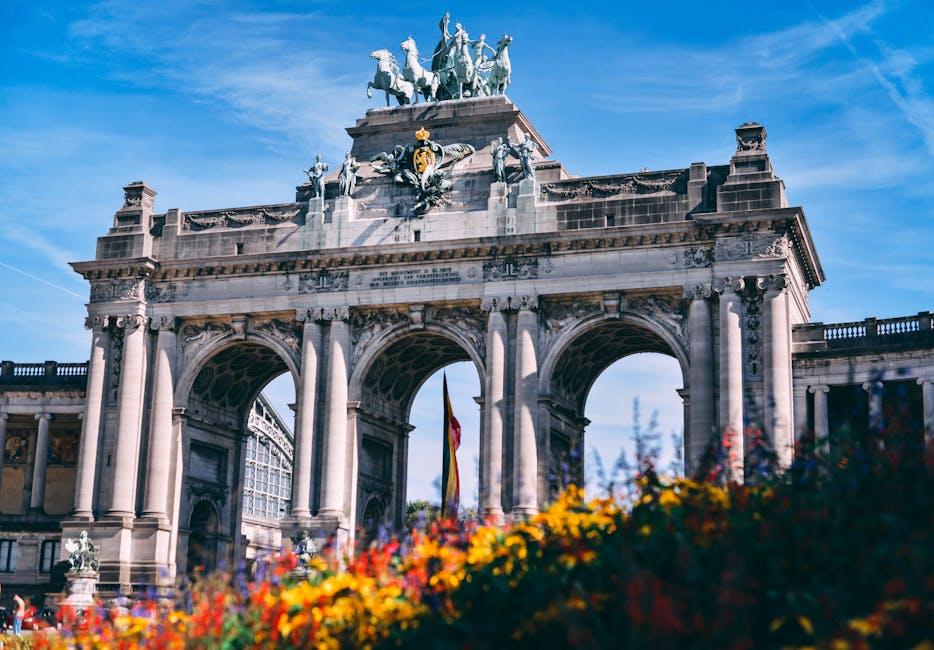
Discover the colorful world of Belgian comics on this independent walking route through the creative streets and murals of central Brussels.
 Moderate
Brussels, Belgium
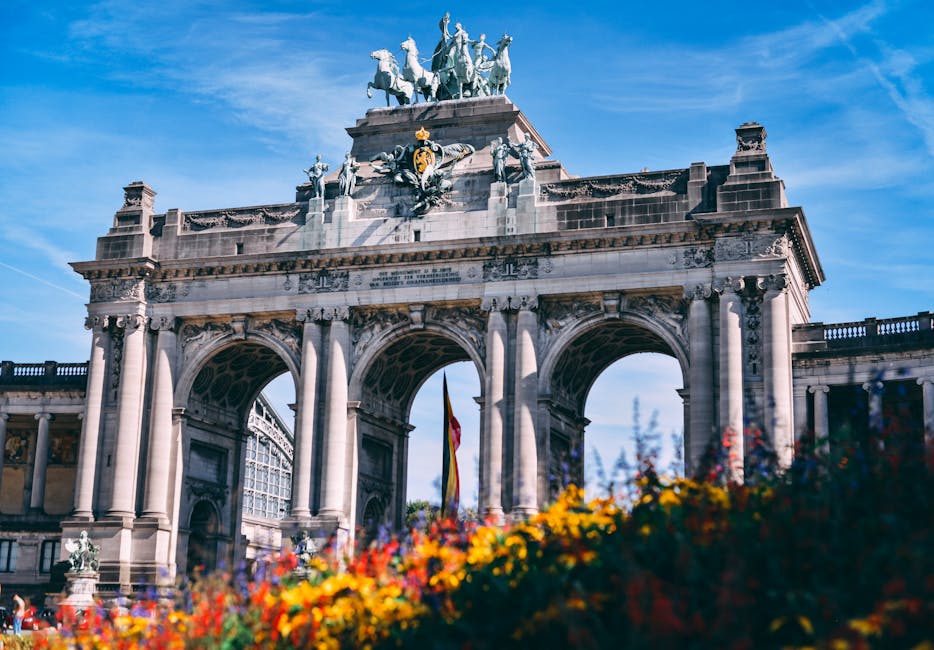
Explore the majestic Royal Quarter, from Art Nouveau gems to the King's Palace and the iconic views of Mont des Arts on this self-guided walk.
 Moderate
Brussels, Belgium
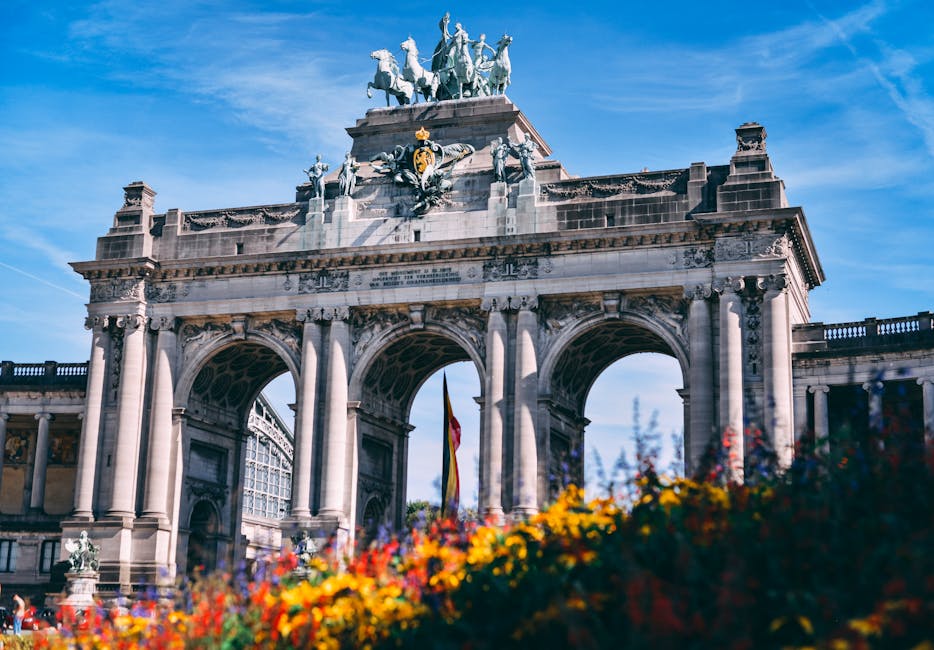
Explore Brussels' industrial heart and artistic rebirth on this self-guided walk through Molenbeek and the Canal district's iconic landmarks.
 Moderate
Brussels, Belgium
Discover Brussels' Art Nouveau masterpieces at your own pace, from Victor Horta's UNESCO sites to the flamboyant Maison Saint-Cyr.
