Antwerp in the 17th century was a city of soaring ambition, and at its heart stood a man whose brushstrokes defined an era. Peter Paul Rubens was more than just a painter; he was a diplomat, a collector, and the most influential Baroque artist of northern Europe. This self-guided walk invites you to step into the Golden Age of Antwerp, tracing the path of the 'Prince of Painters' from his grand residence to the majestic churches that house his most celebrated masterpieces. As you explore the historic center, you will see how Rubens’ influence transformed the city’s skyline and cultural identity. This walking route provides a deep dive into the art and history of Flanders, allowing you to discover the stories behind the canvas at your own pace. You will encounter the soaring Cathedral of Our Lady, where Rubens’ colossal altarpieces still command the space, and the hidden gems of the Jesuit and Dominican orders, which reflect the height of Baroque architectural splendor. Beyond the art, this neighborhood stroll offers a glimpse into the life of a man who moved effortlessly between the worlds of royalty and craftsmanship. Whether you are an art aficionado or a curious traveler, this self-guided adventure through Antwerp’s narrow alleys and grand squares reveals a city that remains a living gallery dedicated to its favorite son. This walking tour Antwerp is designed for those who want to immerse themselves in the 1600s without the constraints of a rigid schedule. By following this curated path, you experience the same light and atmosphere that inspired the Flemish masters. Use this walking tour Antwerp to unlock the secrets of the Baroque period and witness how one man’s vision turned a mercantile hub into a global capital of art.
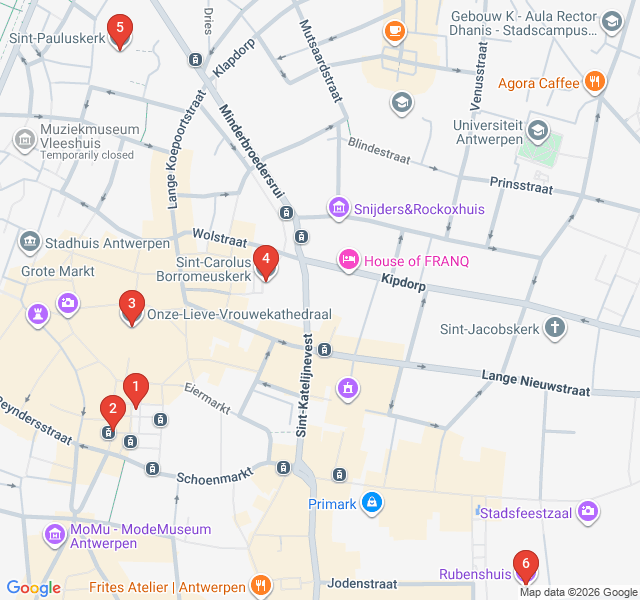
Numbers indicate the order of stops on the tour
Start your journey at the feet of the master himself. This bronze statue of Peter Paul Rubens was unveiled in 1843 to commemorate the 200th anniversary of his death. Notice how he is depicted: not just as a painter with a palette, but as a nobleman and diplomat, wearing a sword and expensive robes. This reflects his high social standing; Rubens was knighted by both King Philip IV of Spain and King Charles I of England. Standing here in the heart of the city, he remains the symbolic guardian of Antwerp’s artistic soul. Take a moment to look around the square, which serves as the perfect introduction to the grandeur of the Flemish Baroque era.
Groenplaats, or 'Green Square,' has a layered history. Long ago, it served as the city’s main cemetery until Emperor Joseph II of Austria banned burials within city walls in the late 18th century. Today, it is one of Antwerp's most vibrant social hubs. From here, you get a breathtaking view of the Cathedral of Our Lady’s spire, a masterpiece of Brabantine Gothic architecture. Rubens would have walked across this space many times, as it connects his home to the city's most important religious and civic buildings. It’s a place where the medieval layout of the city meets the 17th-century Baroque spirit that Rubens helped cultivate.
The Cathedral of Our Lady is the spiritual home of Rubens’ art. Inside this UNESCO World Heritage site, you can find four of his most famous works: 'The Raising of the Cross,' 'The Descent from the Cross,' 'The Resurrection of Christ,' and 'The Assumption of the Virgin Mary.' These massive triptychs were designed specifically for these spaces, using dramatic lighting and muscular figures to evoke deep emotion—a hallmark of the Baroque style. As you admire the architecture, imagine the impact these vibrant, life-sized paintings had on 17th-century worshippers who lived in a world of much more muted colors. The cathedral serves as a testament to the power of art to inspire awe.
Often called the 'Rubens Church,' the Sint-Carolus Borromeuskerk is the ultimate expression of Jesuit Baroque in the Low Countries. Rubens wasn’t just a painter here; he acted as an architect and decorator, designing the tower and the stunning facade you see before you. He also painted 39 ceiling pieces for the church, though tragically most were destroyed in a fire caused by lightning in 1718. Look closely at the high altar; it features a unique mechanism that allows the large paintings to be rotated depending on the liturgical season. This church embodies the Counter-Reformation spirit, using beauty and drama to draw people back to the Catholic faith.
St Paul's Church is a hidden treasure located near the old docks. While the exterior is Gothic, the interior is a Baroque wonderland. It houses works by the 'Big Three' of Antwerp painting: Rubens, Van Dyck, and Jordaens. Don't miss the 'Calvary,' an extraordinary 18th-century garden outside the church featuring over 60 life-sized statues depicting the path to the crucifixion. Rubens contributed several paintings to this church, including the 'Dispute on the Holy Sacrament.' The church survived a massive fire in 1968 thanks to local residents and 'ladies of the night' from the nearby red-light district who helped carry the priceless artworks to safety.
We conclude our walk at the Rubenshuis, the very place where the master lived, worked, and died. Rubens bought this property in 1610 and renovated it into an Italian-style palazzo, inspired by the villas he saw in Rome and Genoa. The house served as his studio, where he and his assistants produced hundreds of paintings for the royal courts of Europe. Walk through the inner courtyard to see the ornate portico he designed, which connects the living quarters to the studio. Even from the outside, the building communicates Rubens’ immense wealth and his desire to bring the classical beauty of the Italian Renaissance to his northern home.
Download Zigway to experience "The Master's Palette: Rubens' Baroque Antwerp" with AI-powered audio narration. Walk at your own pace while stories unfold around you.
 Easy
EasyAntwerp, Belgium
Taste your way through Antwerp's history on this self-guided walk featuring world-class beer, fries, and chocolate in the historic center.
 Moderate
Antwerp, Belgium
Explore Antwerp's Eilandje district on this self-guided walk, where historic docks meet futuristic architecture and maritime legends.
 Easy
EasyAntwerp, Belgium
Discover Antwerp’s printing revolution and literary heritage on this self-guided walk through the city's historic center and UNESCO sites.
 Easy
EasyAntwerp, Belgium
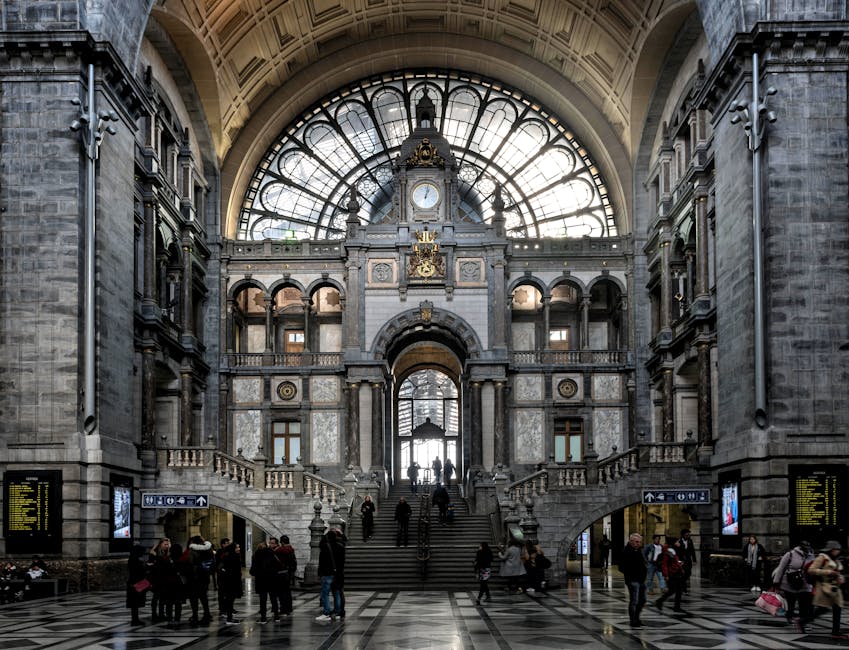
Discover how a gritty railway yard became Antwerp's most vibrant green space on this self-guided industrial heritage walk.
 Easy
EasySalzburg, Austria
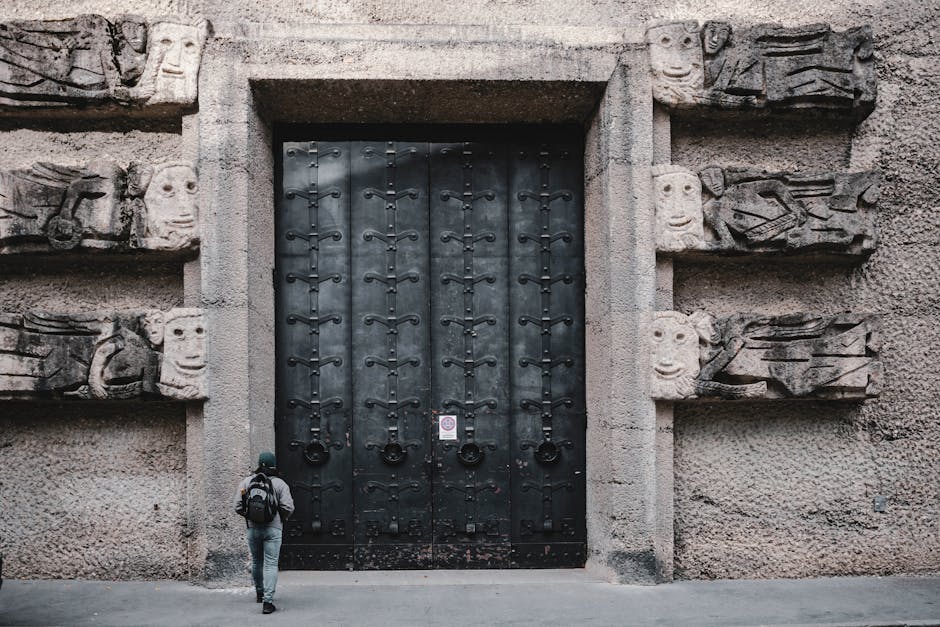
Discover the 'Rome of the North' on this self-guided walk through the Baroque squares and monumental legacy of Salzburg’s Prince-Archbishops.
 Easy
EasyNairobi, Kenya
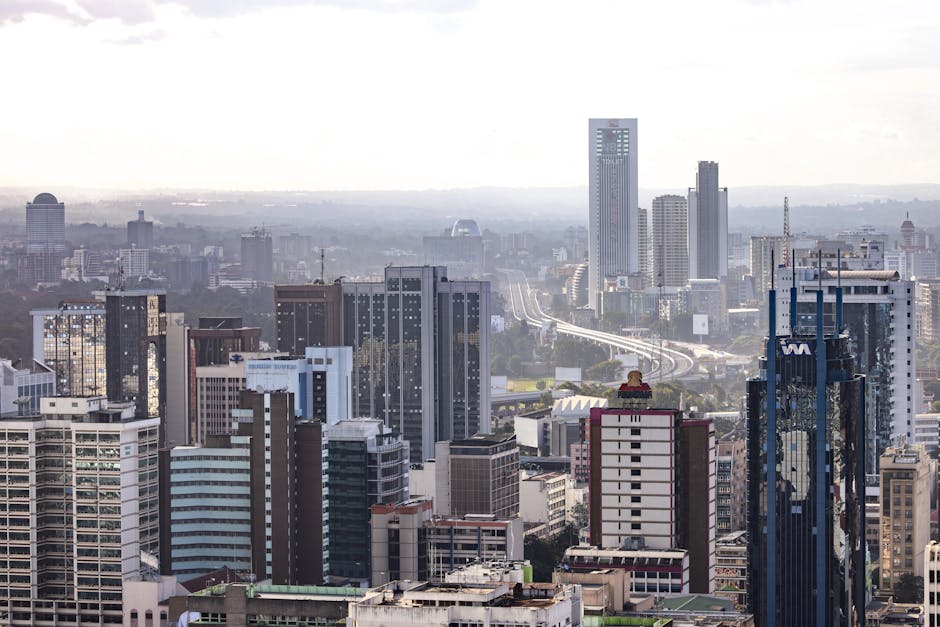
Explore Nairobi's architectural evolution from colonial-era landmarks to iconic Brutalist skyscrapers on this historic self-guided walking route.
 Easy
EasyNairobi, Kenya
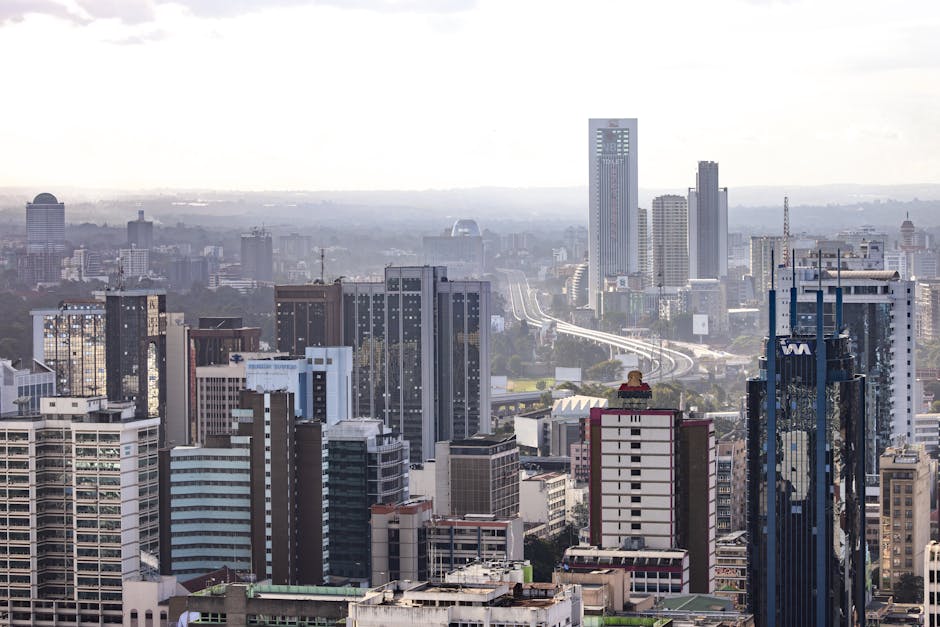
Discover Nairobi's iconic skyline on this self-guided architecture walk through the CBD’s most famous modernist and Brutalist landmarks.
 Easy
EasyKrakow, Poland
Explore the historic heart of Kazimierz on this self-guided walk through synagogues, ancient cemeteries, and vibrant squares.
 Easy
EasyBrussels, Belgium
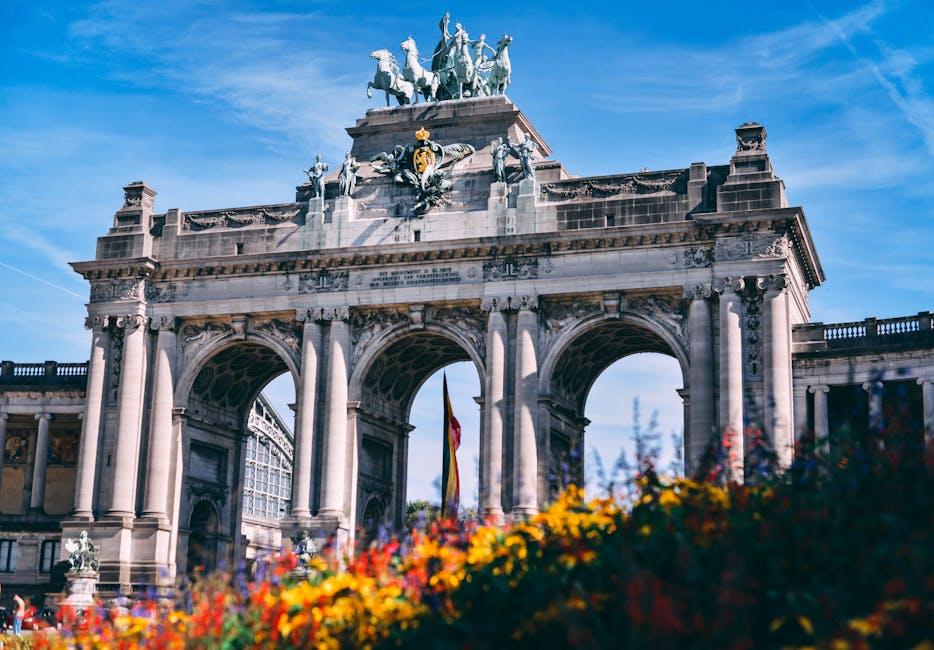
Discover the colorful world of Belgian comics on this independent walking route through the creative streets and murals of central Brussels.
 Moderate
Brussels, Belgium
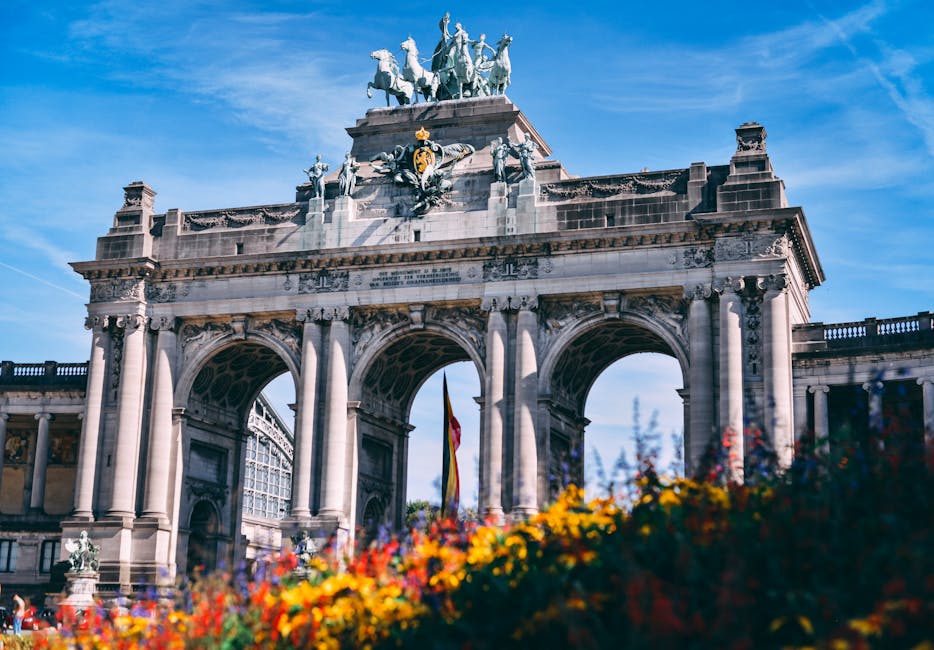
Explore the majestic Royal Quarter, from Art Nouveau gems to the King's Palace and the iconic views of Mont des Arts on this self-guided walk.
 Moderate
Brussels, Belgium
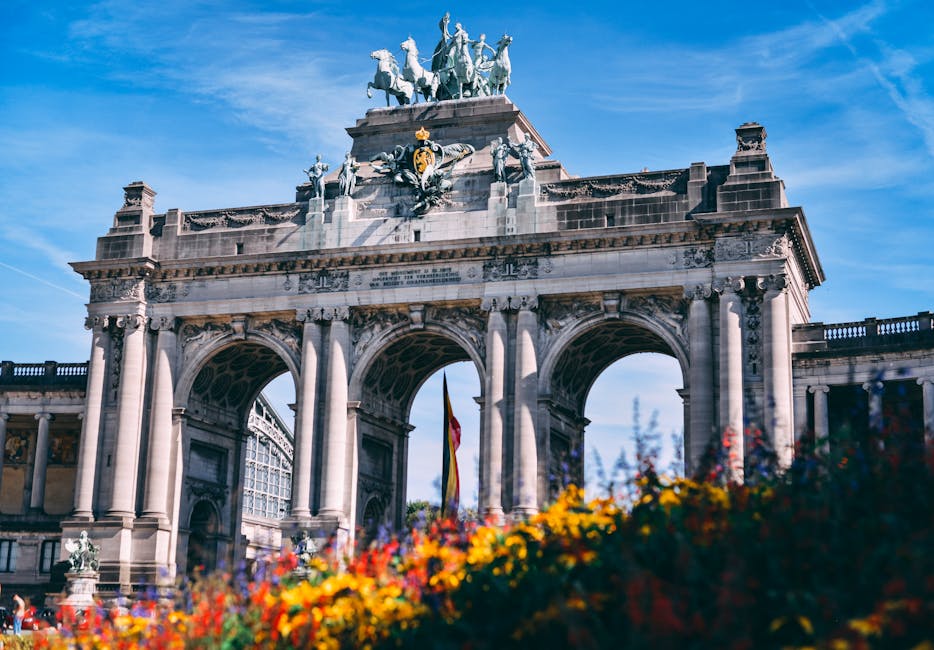
Explore Brussels' industrial heart and artistic rebirth on this self-guided walk through Molenbeek and the Canal district's iconic landmarks.
 Moderate
Brussels, Belgium
Discover Brussels' Art Nouveau masterpieces at your own pace, from Victor Horta's UNESCO sites to the flamboyant Maison Saint-Cyr.
