Amsterdam is often celebrated for its winding canals and Golden Age masterpieces, but beneath the surface lies a profound intellectual legacy waiting to be uncovered. This self-guided walk invites you to explore the literary soul of the city, weaving through the historic Centrum district where philosophers, poets, and revolutionaries once gathered to debate the ideas that shaped the modern world. Starting at the heart of the city’s book culture, the Spui, you will discover how Amsterdam became a sanctuary for free speech and independent publishing centuries ago. The route takes you past legendary independent bookshops that remain vibrant hubs of local culture today, offering a glimpse into the city's enduring love affair with the written word. Along the way, you will encounter historic cafes where the city's intellectual elite once shared drinks and ideas, and grand canal houses that served as retreats for scholars and thinkers. One of the highlights is a visit to a 17th-century mansion known for its unique facade, which now houses a library dedicated to human wisdom. The journey concludes at the birthplace of one of the Netherlands' most influential authors, whose work challenged the foundations of colonial power. This walking route is perfect for anyone who wants to see beyond the typical tourist attractions and connect with the stories and characters that define Amsterdam's unique character. Whether you are a dedicated bibliophile or simply curious about the history of ideas, this neighborhood stroll offers a peaceful and enlightening way to experience the city at your own pace. By choosing this independent travel experience, you can linger as long as you like over a rare find at a book stall or soak in the atmosphere of a centuries-old brown cafe. Experience the quiet charm of the canals through the eyes of the writers who lived here and discover why Amsterdam remains a global capital of literature and free thought.
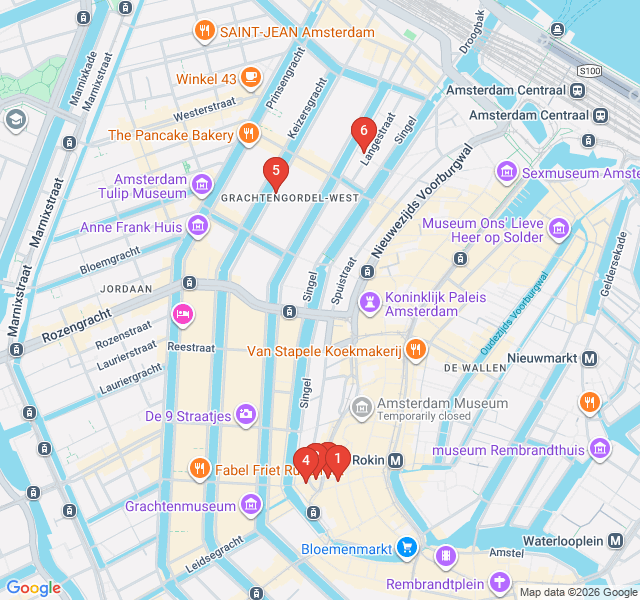
Numbers indicate the order of stops on the tour
Welcome to the Spui, the intellectual heart of Amsterdam. Every Friday, this square transforms into a haven for bibliophiles as the weekly book market takes place. Since the early 1990s, professional booksellers from across the Netherlands have gathered here to sell rare editions, vintage prints, and second-hand treasures. The Spui itself has a long history as a center for political protest and cultural gathering. As you walk among the stalls, notice the statue of 'Het Lieverdje' nearby, which was a focal point for the Provos, a 1960s counter-culture movement. This market represents Amsterdam's long-standing tradition of valuing the written word and the accessibility of information.
Just steps away from the market is the American Book Center, often cited as one of the most beautiful bookshops in the world. This family-owned business has been a staple of the city's English-speaking community since the 1970s. Inside, the architecture is as fascinating as the collection, featuring tree trunks integrated into the shelving and a layout that encourages wandering. It serves as a modern testament to Amsterdam's international character and its role as a bridge between different cultures and languages. It is a perfect example of how the city’s literary scene continues to thrive in the digital age.
Across the square stands the Athenaeum Boekhandel, one of the most prestigious independent bookstores in the Netherlands. Founded in 1966, it is housed in a stunning Art Nouveau building. This shop is famous for its curated selection of academic works, international magazines, and literature. For decades, it has been the go-to spot for Amsterdam’s scholars and students. The 'Nieuwscentrum' next door is particularly noted for its vast array of global periodicals. This stop highlights the city's commitment to independent retail and its intellectual curiosity, maintaining an atmosphere of deep-seated literary tradition.
To truly understand the literary life of Amsterdam, one must visit a 'brown cafe,' and Cafe Hoppe is one of the most iconic. Established in 1670, this former jenever distillery became a legendary gathering place for journalists, writers, and politicians in the 20th century. The floors are still covered in sand, a traditional Dutch practice to absorb spills and dirt. Imagine the heated debates and literary gossip that have echoed off these dark wood walls over the centuries. It is a place where the barrier between the elite and the everyday citizen dissolves over a glass of beer, embodying the Dutch concept of 'gezelligheid' or cozy social connection.
As you move toward the Keizersgracht, you will find the 'House with the Heads,' a magnificent 17th-century mansion. The facade is adorned with six busts representing classical deities, but local legend often associates them with more mysterious stories. Today, this building houses the Embassy of the Free Mind, a museum and library dedicated to the history of hermetic philosophy and free thought. In the 1600s, this house was a sanctuary for scholars like Comenius. It stands as a symbol of Amsterdam’s history as a safe haven for those whose ideas were considered too radical for the rest of Europe.
Our final stop is the Multatuli Museum, located in the very house where Eduard Douwes Dekker was born in 1820. Writing under the pseudonym Multatuli—Latin for 'I have suffered much'—he penned 'Max Havelaar,' a novel that exposed the injustices of Dutch colonial rule in Indonesia. The book is considered one of the most important works in Dutch literary history, often credited with changing the country's colonial policy. This small museum honors his legacy and the power of literature to effect social change. It is a fitting end to our walk, reminding us that words have the power to reshape the world.
Download Zigway to experience "The Writer’s Route: Literary Landmarks of Amsterdam" with AI-powered audio narration. Walk at your own pace while stories unfold around you.
 Easy
EasyAmsterdam, Netherlands
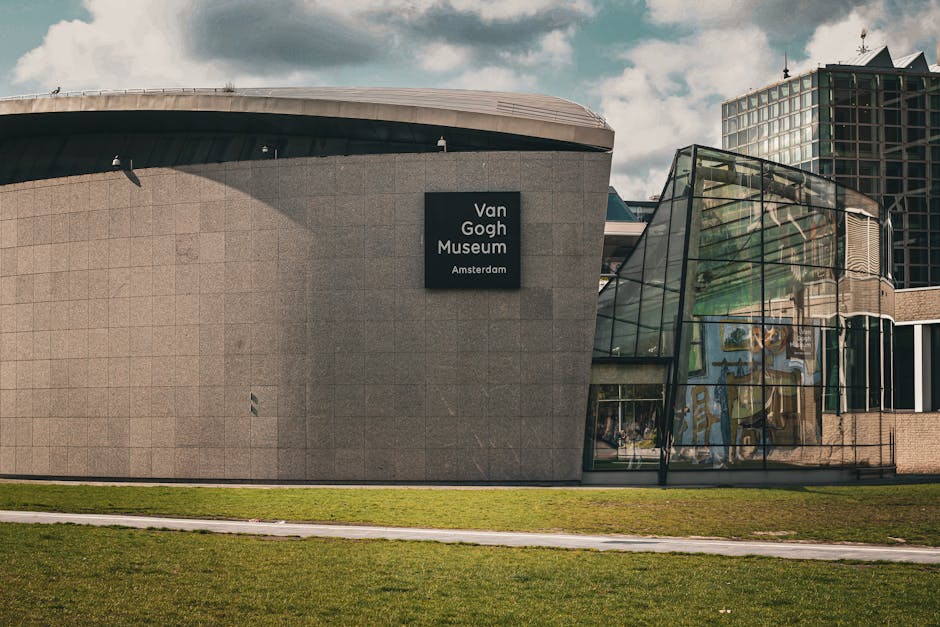
Discover Amsterdam's cultural heart on this self-guided walk from the iconic Museumplein to the serene blooming gardens of Vondelpark.
 Easy
EasyAmsterdam, Netherlands
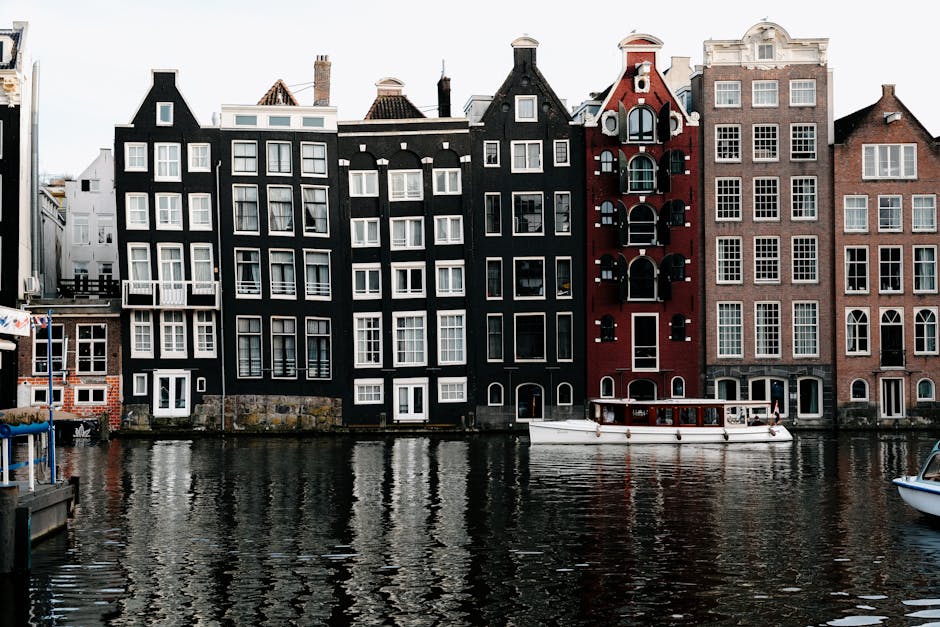
Capture the magic of Amsterdam with this self-guided photography walk across the iconic bridges and scenic banks of the Amstel River.
 Easy
EasyAmsterdam, Netherlands
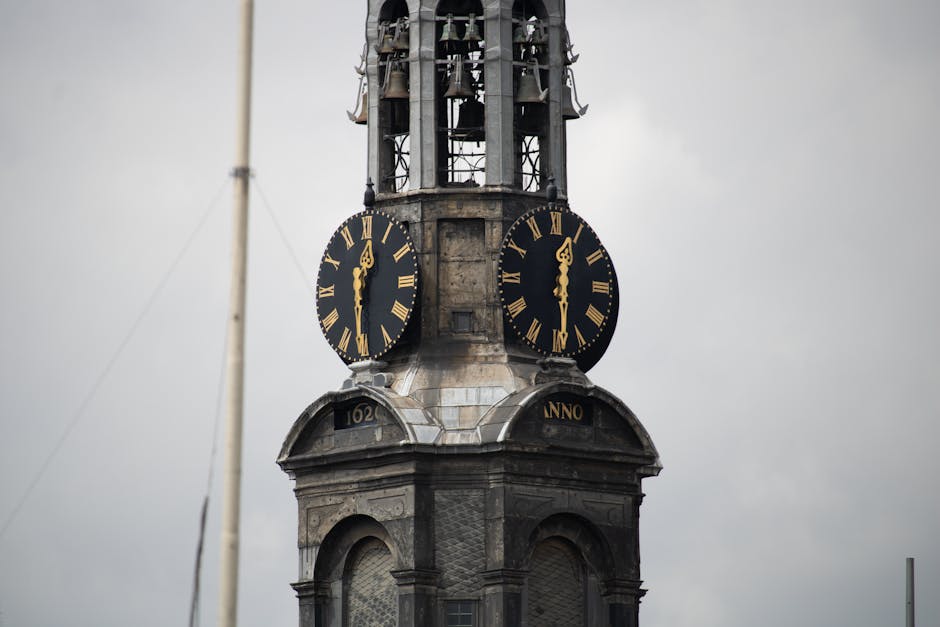
Discover the opulent 17th-century mansions and rich history of Amsterdam's famous Canal Belt on this self-guided architectural walking route.
 Easy
EasyAmsterdam, Netherlands
Explore Amsterdam’s hidden history on this self-guided walk through clandestine churches, medieval courtyards, and grand basilicas.
 Easy
EasyKrakow, Poland
Explore the prestigious Jagiellonian University district, featuring Neo-Gothic architecture, Baroque churches, and Krakow's hidden scholarly gems.
 Easy
EasyNairobi, Kenya
Discover Nairobi’s literary soul on this self-guided walk through historic libraries, iconic bookshops, and cultural centers in the heart of the CBD.
 Easy
EasyWarsaw, Poland
Discover the hidden courtyards and grand pre-war architecture of Warsaw's most atmospheric neighborhood on this self-guided stroll.
 Easy
EasyWarsaw, Poland
Follow the life of Fryderyk Chopin through Warsaw’s historic center. See where he lived, studied, and where his heart remains today.
 Easy
EasyRotterdam, Netherlands
Explore Rotterdam’s cultural heart on this self-guided walk through world-class museums, modernist villas, and futuristic architectural landmarks.
 Easy
EasyRotterdam, Netherlands
Capture Rotterdam's iconic skyline and historic bridges on this scenic self-guided photography walk along the Maas River and Noordereiland.
 Moderate
Rotterdam, Netherlands
Explore Rotterdam’s lush side through secret gardens, historic harbors, and the elegant 19th-century Shipping Quarter on this self-guided walk.
 Easy
EasyRotterdam, Netherlands
Explore Rotterdam's neon-lit streets and vibrant nightlife at your own pace with this independent audio walk through the city's coolest districts.
