Rising high above the Mediterranean, the hill of Montjuïc serves as Barcelona's green lung and a witness to its complex history. This self-guided walk invites you to explore a landscape where military fortifications meet avant-garde architecture and lush Mediterranean flora. Known as the 'Jewel of the City,' Montjuïc has undergone several transformations, most notably for the 1929 International Exposition and the 1992 Olympic Games. This neighborhood stroll offers a perfect balance between serene nature and grand historical monuments, providing some of the most spectacular vistas in Catalonia. On this walking route, you will discover how a site once used for defense and surveillance became a hub for art, sport, and leisure. You will traverse gardens that were once amusement parks and stand where athletes from around the world competed for gold. The route is designed to capture the essence of Barcelona's outdoor lifestyle, emphasizing the city's relationship with the sea and its constant reinvention. Whether you are interested in the dark tales of the 17th-century fortress or the engineering marvels of the Magic Fountain, this walking tour Barcelona explores the diverse layers of the hill. As you navigate the winding paths and terraced gardens, you will experience the tranquility that locals cherish, far removed from the bustling crowds of the Gothic Quarter. This self-guided experience ensures you can linger at the viewpoints or explore the museums at your own pace, making it an ideal choice for those who want to see Barcelona from a different perspective. This walking tour Barcelona is a journey through time, from the ancient roots of the city to its modern, vibrant identity.
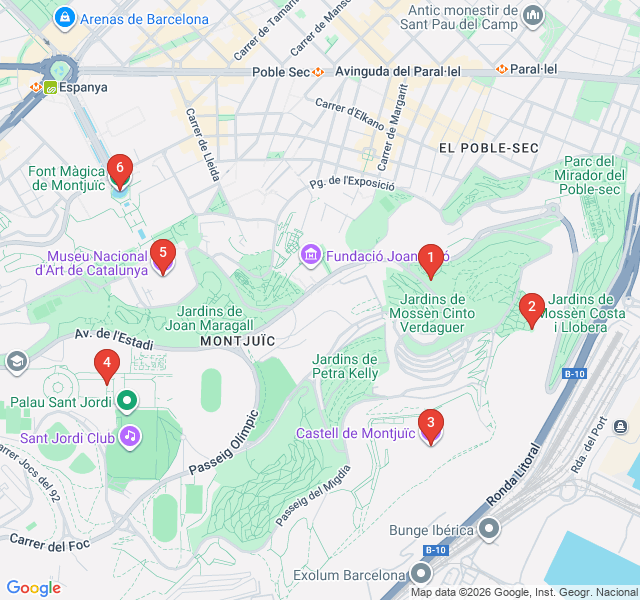
Numbers indicate the order of stops on the tour
Welcome to the Jardins de Joan Brossa, a place where nature and playfulness intersect. These gardens sit on the site of a former amusement park that entertained locals for decades until 1998. Today, it is a lush Mediterranean oasis filled with cedar, pine, and cypress trees. As you wander the paths, look for the sculptures honoring traditional Catalan culture and the poet Joan Brossa. The garden is designed to feel like a forest in the heart of the city, offering a peaceful start to your ascent. It is a testament to Barcelona's commitment to reclaiming urban space for public relaxation and ecological health.
The Mirador de l'Alcalde is perhaps one of the most beautiful balconies in the city. Designed in the 1960s, this multi-level terrace offers a stunning perspective of the Port Vell and the coastal skyline. Notice the intricate floor mosaics beneath your feet; they were created using recycled materials like glass bottles, ceramic shards, and iron gears, designed by artist Joan Josep Tharrats. The sound of the ornamental waterfall adds a refreshing atmosphere to the heat of the day. From here, you can see the Columbus Monument and the twin towers of the Olympic Port, framing the Mediterranean horizon perfectly.
Standing at the highest point of the hill, Montjuïc Castle is a 17th-century military fortress with a somber and significant history. While it offers breathtaking 360-degree views today, it once served as a prison and a site of executions during the Spanish Civil War and the Francoist regime. The current star-shaped structure dates back to the 1750s. Walk along the ramparts to see the heavy artillery and look down into the moat, which has been transformed into beautiful flower gardens. This site represents the complex relationship between the city and the central government throughout the centuries, evolving from a symbol of repression to a public cultural space.
The Olympic Ring, or Anella Olímpica, was the heart of the 1992 Summer Olympics, an event that put modern Barcelona on the global map. The centerpiece is the Estadi Olímpic Lluís Companys, originally built for the 1929 Expo but completely renovated for the games. Nearby, you will see the striking white telecommunications tower designed by Santiago Calatrava, which looks like an athlete holding the Olympic torch. This area showcases the city's ability to blend historic sites with futuristic design. The vast open plaza and the Palau Sant Jordi arena continue to host major international sporting events and concerts, maintaining the Olympic spirit.
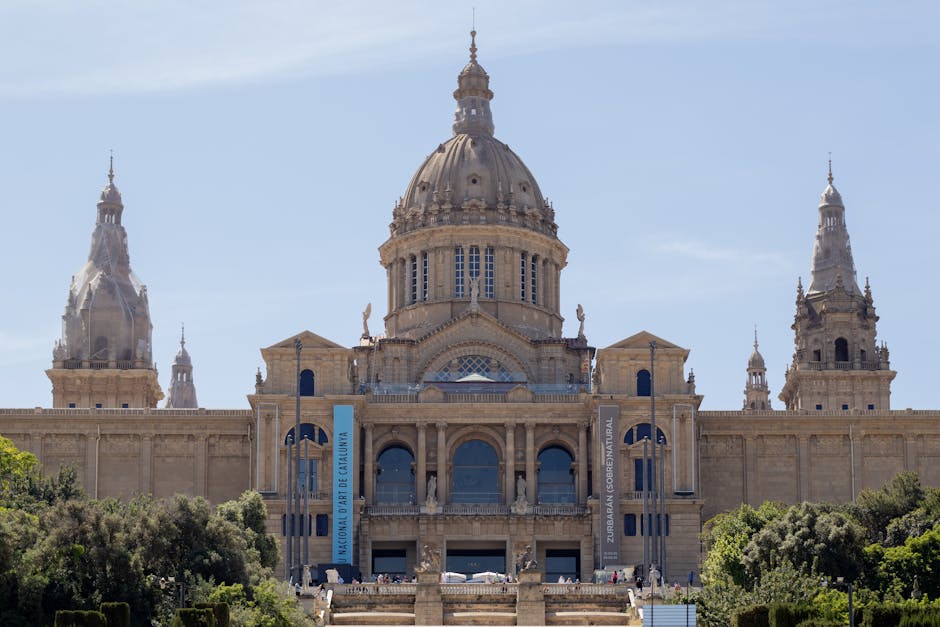
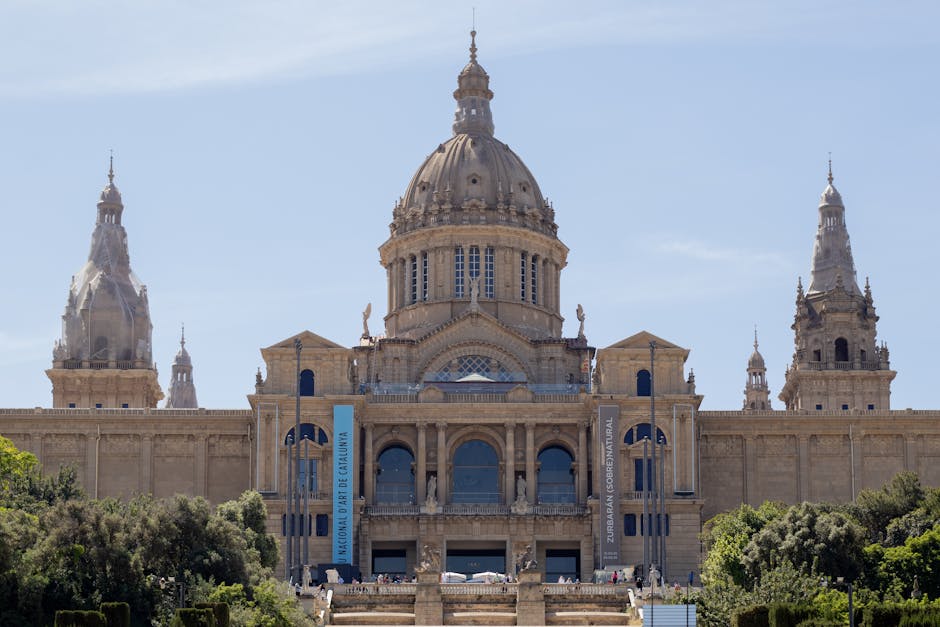
Housed in the majestic Palau Nacional, the Museu Nacional d'Art de Catalunya is a masterpiece of Neo-Baroque architecture. Built for the 1929 International Exposition, this palace was intended to be a temporary structure but was so beloved that it became a permanent fixture of the skyline. Inside, it holds one of the world's most significant collections of Romanesque church paintings, rescued from crumbling chapels in the Pyrenees. Even if you don't go inside, the steps leading up to the museum offer an iconic view down the Avinguda de la Reina Maria Cristina toward Plaça d'Espanya and the distant Tibidabo mountain.
Your journey ends at the Magic Fountain, a spectacular display of water, light, and music. Designed by Carles Buïgas for the 1929 Exposition, it was a feat of engineering for its time, requiring over 3,000 workers to complete in less than a year. The fountain uses a complex system of pumps and filters to create thousands of combinations of color and movement. While the music and light shows are the main draw in the evenings, the fountain is an impressive monument during the day. It sits at the base of the grand staircase, serving as the ceremonial entrance to the hill you have just explored.
Download Zigway to experience "Montjuïc Heights: Gardens and Vistas" with AI-powered audio narration. Walk at your own pace while stories unfold around you.
 Moderate
Barcelona, Spain
Explore the elegant 'village' of Sarrià, where Gothic monasteries and Gaudí's hidden gems meet charming local markets and narrow streets.
 Moderate
Barcelona, Spain
Discover the revolutionary history and haunting scars of the Spanish Civil War on this self-guided walk through Barcelona's historic streets.
 Easy
EasyBarcelona, Spain
Discover the architectural wonders of Barcelona's Golden Square on this self-guided stroll through Eixample's most luxurious Modernista streets.
 Easy
EasyBarcelona, Spain
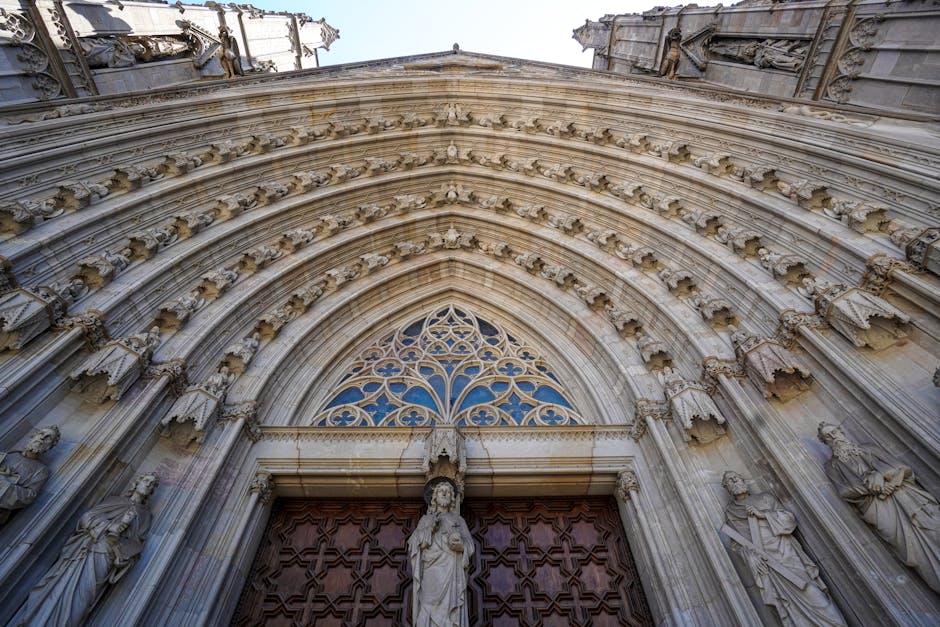
Uncover 2,000 years of history on this self-guided walk through Barcelona's Gothic Quarter, from Roman ruins to haunting medieval squares.
 Moderate
Krakow, Poland
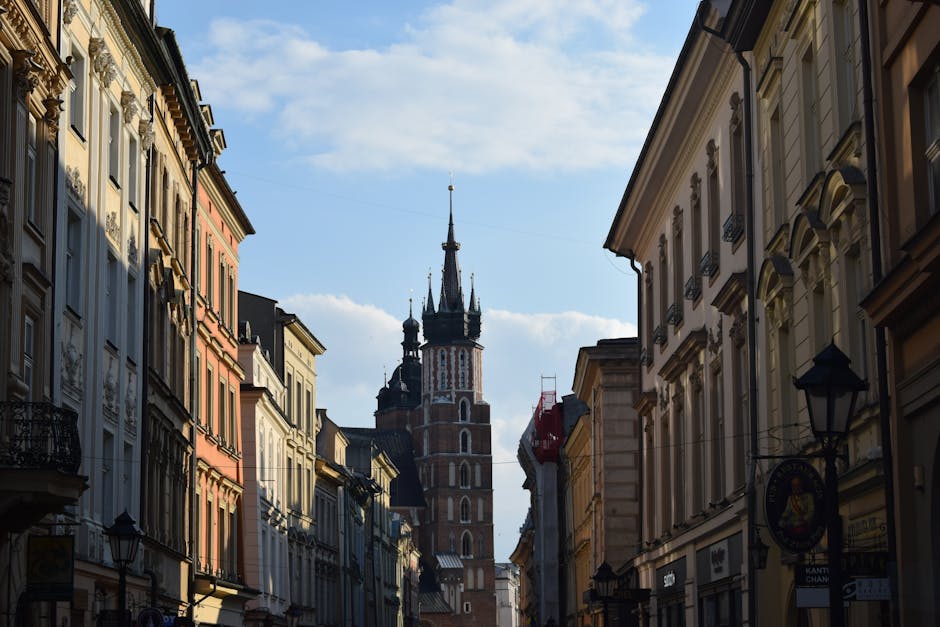
Discover Krakow’s stunning skyline and riverside charm on this self-guided audio walk through scenic viewpoints and historic mounds.
 Easy
EasyGdansk, Poland
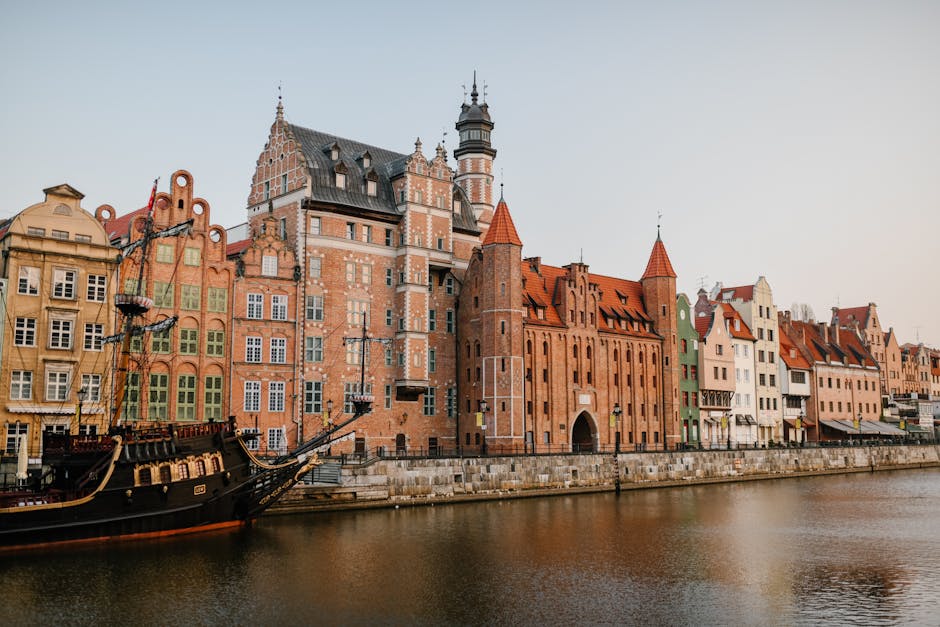
Discover the 'Baltic Gold' on this self-guided walk through Gdansk's historic mills, massive cathedrals, and the magical Mariacka Street.
 Easy
EasyWarsaw, Poland
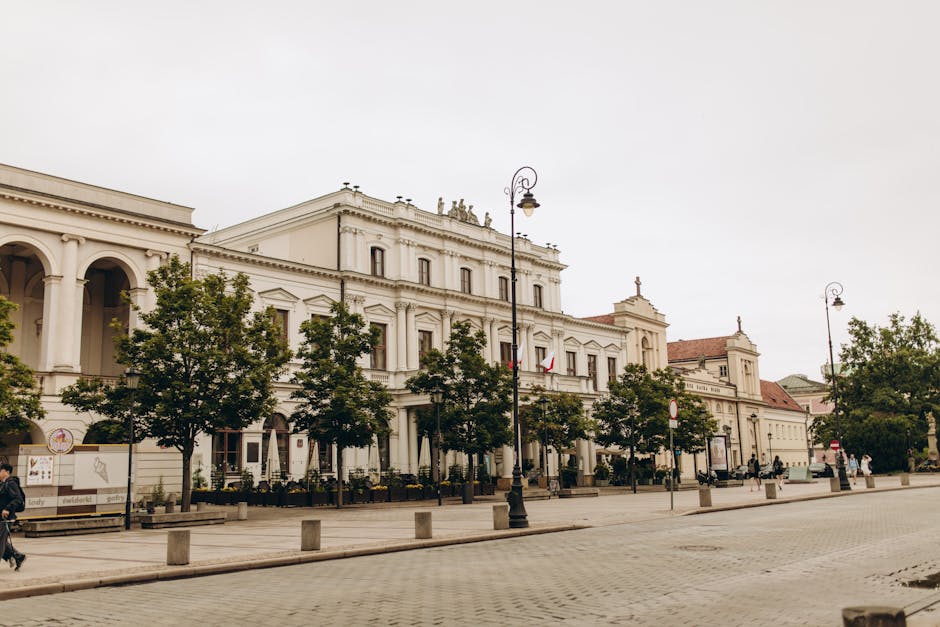
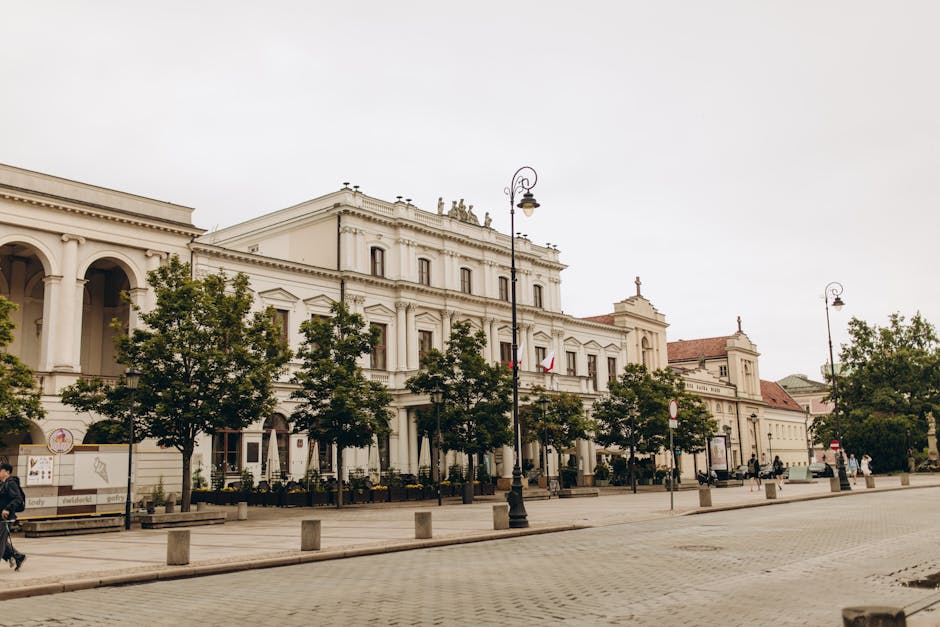
Explore Warsaw's scenic riverfront, rooftop gardens, and industrial-chic architecture on this self-guided stroll through the Powiśle district.
 Easy
EasyWarsaw, Poland
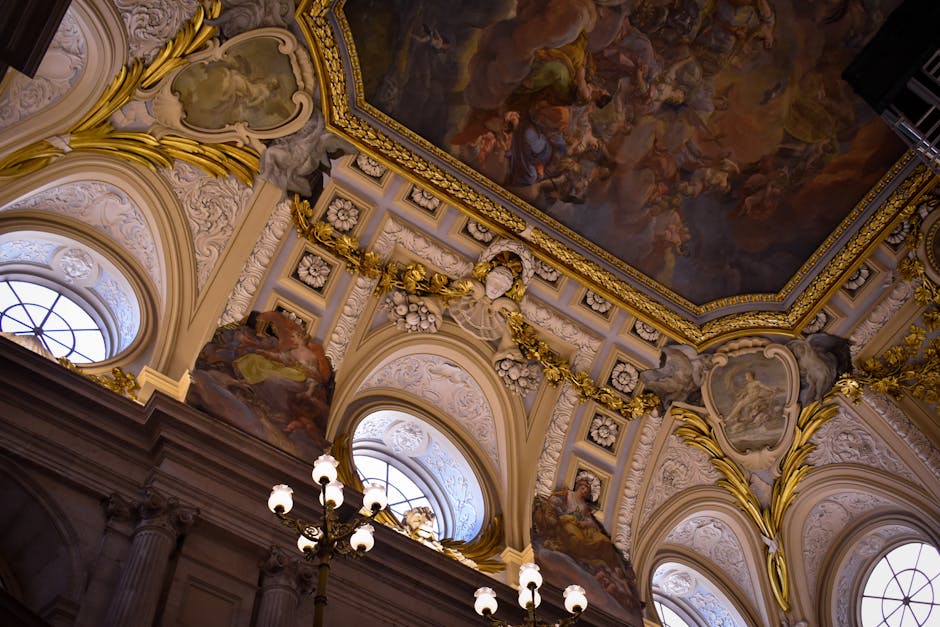
Discover Warsaw's intellectual heart through historic campuses, peaceful parks, and the stunning rooftop gardens of the University Library.
 Easy
EasyMadrid, Spain
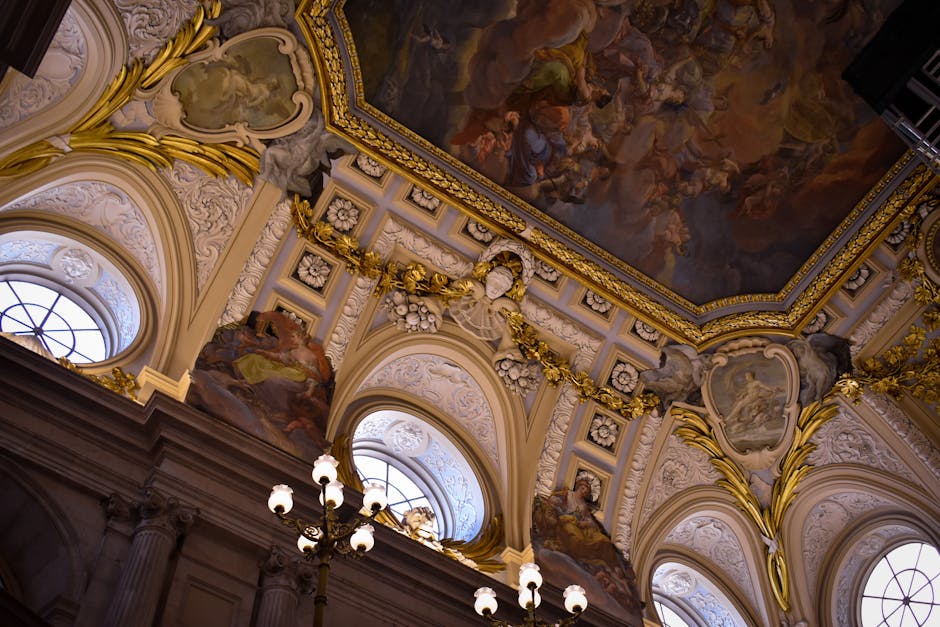
Explore Madrid's 'Landscape of Light' on this self-guided walk through the world-renowned Golden Triangle of Art, from Cibeles to the Reina Sofía.
 Moderate
Madrid, Spain
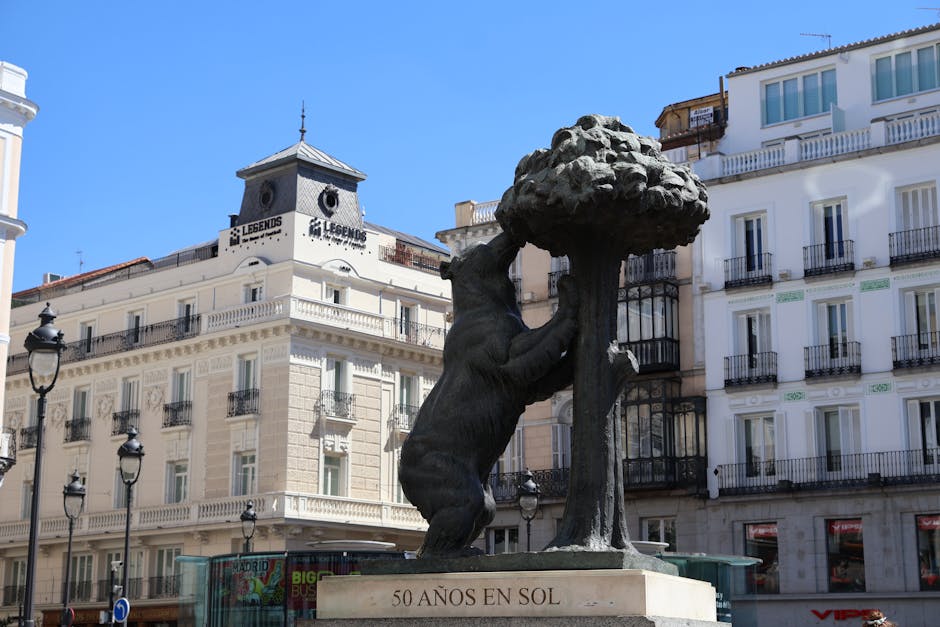
Explore Madrid's most diverse neighborhood on this self-guided walk through street art, historic markets, and multicultural squares.
 Easy
EasyMadrid, Spain
Explore the royal legacy and medieval alleys of Madrid's historic Habsburg district on this immersive self-guided walk through the city's heart.
 Easy
EasyMadrid, Spain
Discover the rebellious spirit of Malasaña on this self-guided walk through Madrid's best street art, historic squares, and counter-culture hubs.
