Step back in time to explore the multilayered history of Valencia’s Ciutat Vella with this self-guided walk through the city's most significant religious and architectural landmarks. Your journey begins at the very spot where the Romans founded 'Valentia' over two thousand years ago, before leading you through a tapestry of Gothic, Baroque, and Renaissance styles. This walking route is designed for those who want to uncover the secrets of the Holy Grail and the defensive prowess of medieval Spain at their own pace. As you navigate the cobblestone streets, you will encounter the spiritual heart of the city at the Plaça de la Mare de Déu and the awe-inspiring Valencia Cathedral. This cathedral is not just a masterpiece of Mediterranean Gothic architecture; it is also the home of the Santo Cáliz, a vessel many believe to be the true Holy Grail. Beyond the religious monuments, this walking route Valencia offers provides a deep dive into the civil history of the region. You will see the formidable Torres de Serranos, once the primary gate to the city, standing as a testament to Valencia's medieval might. Whether you are interested in the transition from Roman ruins to Christian basilicas or simply want to admire the intricate masonry of the Micalet bell tower, this self-guided adventure provides the context you need. Unlike a traditional guided tour Valencia might offer, this audio-enhanced stroll allows you to pause for a café con leche or spend extra time photographing the ornate frescoes of the Basilica without a fixed schedule. It is a perfect introduction for first-time visitors seeking to understand how Valencia’s identity was forged through centuries of conquest, faith, and artistic evolution.
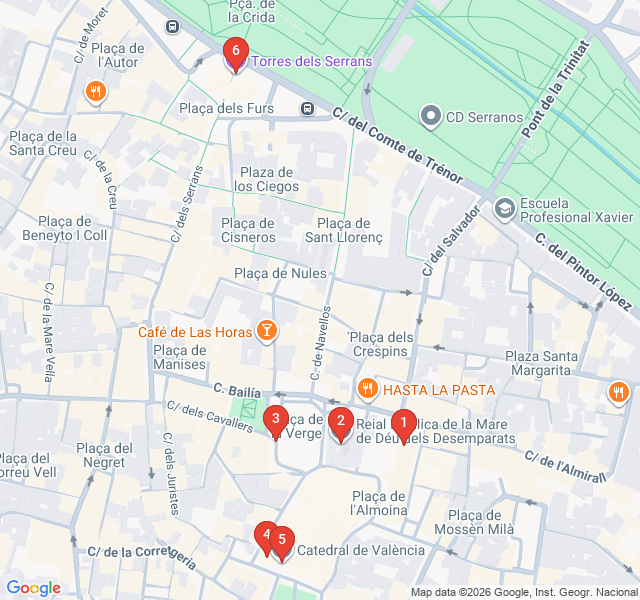
Numbers indicate the order of stops on the tour
Welcome to the birthplace of Valencia. Below your feet lies the original Roman city of Valentia, founded in 138 BC. This museum is unique because its glass floor allows you to peer directly onto the ancient Roman forum, baths, and streets. After the Roman era, this site served as a Visigothic cemetery and later an Islamic neighborhood. The name 'Almoina' refers to the 'Alms' house that stood here in the 14th century, which provided food for the poor. It is a physical timeline of the city’s evolution, showing how each civilization literally built upon the ruins of the previous one.
This Baroque basilica is dedicated to the patron saint of Valencia, the Virgin of the Forsaken. Built in the 17th century, it was one of the first Spanish churches to feature an oval floor plan. Look up at the magnificent dome; the frescoes here were painted by Antonio Palomino and are considered a masterpiece of Spanish Baroque art. The statue of the Virgin is uniquely positioned leaning forward, a tradition stemming from its original placement over the coffered lids of the deceased in the hospital of the 'forsaken' for which it was named.
You are standing in the spiritual and civic heart of Valencia. This square occupies what was once the Roman Forum. Notice the impressive fountain in the center: the central figure represents the Turia River, while the eight surrounding female figures represent the main irrigation canals that feed the Valencian plains. This square is also the site of the Water Tribunal, the oldest legal institution in Europe, which has met every Thursday at noon for over a thousand years to settle irrigation disputes among local farmers.
The Micalet is the iconic octagonal bell tower of Valencia Cathedral. Completed in 1424, it stands as a prime example of Valencian Gothic architecture. The tower is 51 meters high—exactly equal to its circumference. If you choose to climb the 207 steps of the spiral staircase, you will be rewarded with the best panoramic views of the city. The name 'Micalet' comes from the largest bell, 'Miquel,' which was blessed on St. Michael’s Day. For centuries, its chimes regulated the daily life and irrigation schedules of the entire city.
Valencia Cathedral is a fascinating architectural puzzle, blending Romanesque, Gothic, Renaissance, and Baroque styles. While the exterior doors show these varying influences, the interior holds the city's greatest treasure: the Holy Chalice. Located in a dedicated chapel, this agate cup is dated to the 1st century BC and is recognized by the Vatican as a likely candidate for the vessel used at the Last Supper. Don't miss the high altar, which hides stunning Renaissance frescoes that were only rediscovered in 2004 during a restoration project.
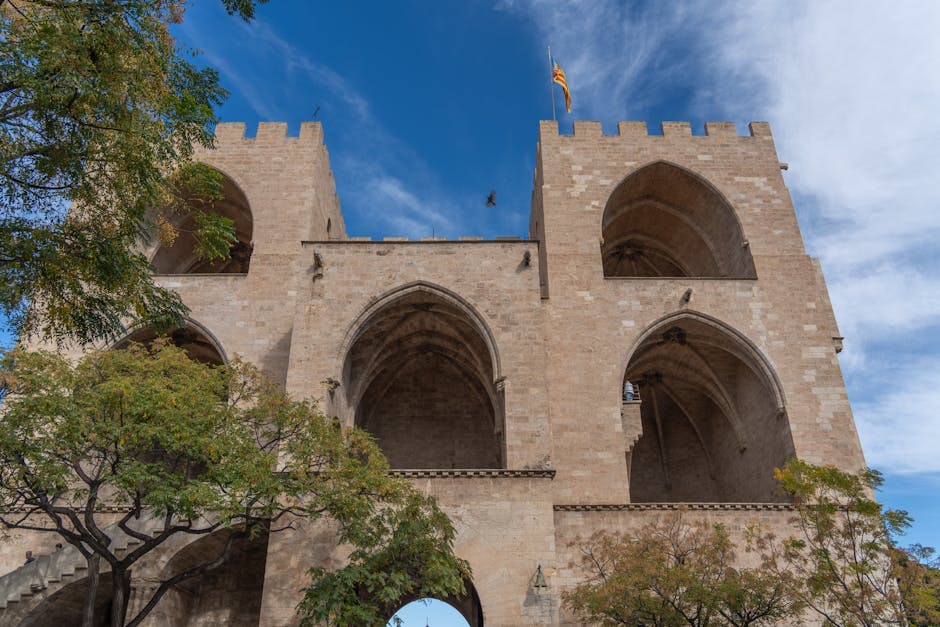
To conclude your walk, walk north to the Torres de Serranos. These massive twin towers were built in the late 14th century as part of the city's defensive walls. They are one of the best-preserved examples of Gothic military architecture in Europe. While they were built to defend the city, they also served as a triumphal arch for official entries of kings and ambassadors. Later, they even served as a prison for the nobility. Today, they mark the entrance to the old town and offer a fantastic vantage point over the Turia Gardens, the dry riverbed that now serves as Valencia's green lung.
Download Zigway to experience "Gothic Grandeur and the Holy Grail" with AI-powered audio narration. Walk at your own pace while stories unfold around you.
 Easy
EasyValencia, Spain
Discover Valencia's 'Sistine Chapel' and ornate Baroque palaces on this self-guided walk through the historic Ciutat Vella.
 Easy
EasyValencia, Spain
Explore Valencia’s oldest quarter where ancient medieval gates meet world-class street art on this self-guided neighborhood stroll.
 Moderate
Valencia, Spain
Discover Valencia's medieval heritage on a self-guided walk through ancient gates, historic monuments, and the scars of Napoleonic battles.
 Easy
EasyValencia, Spain
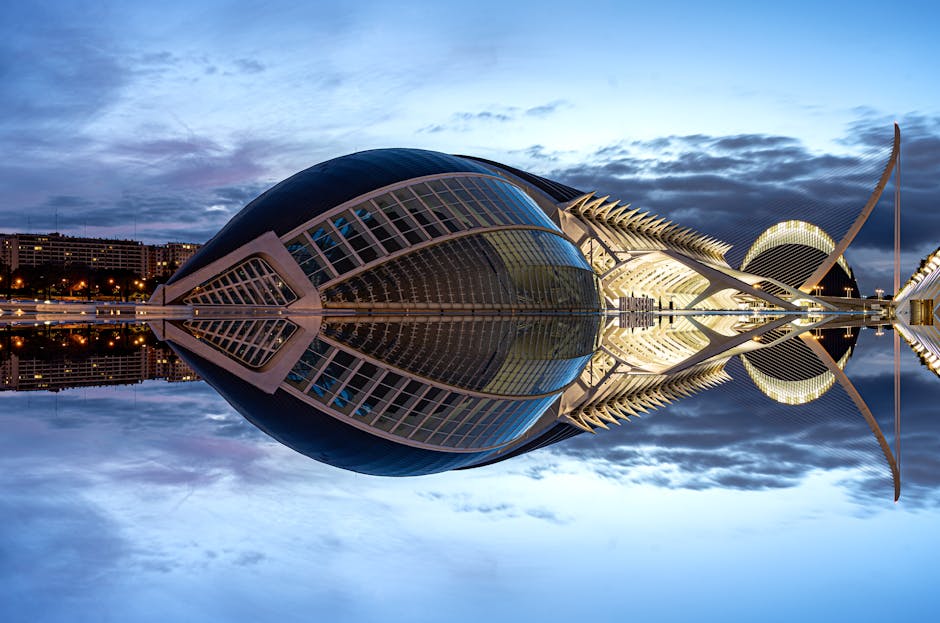
Explore Ruzafa, Valencia's bohemian heart. Discover vibrant markets, street art, and eclectic cafes at your own pace on this self-guided stroll.
 Easy
EasySalzburg, Austria
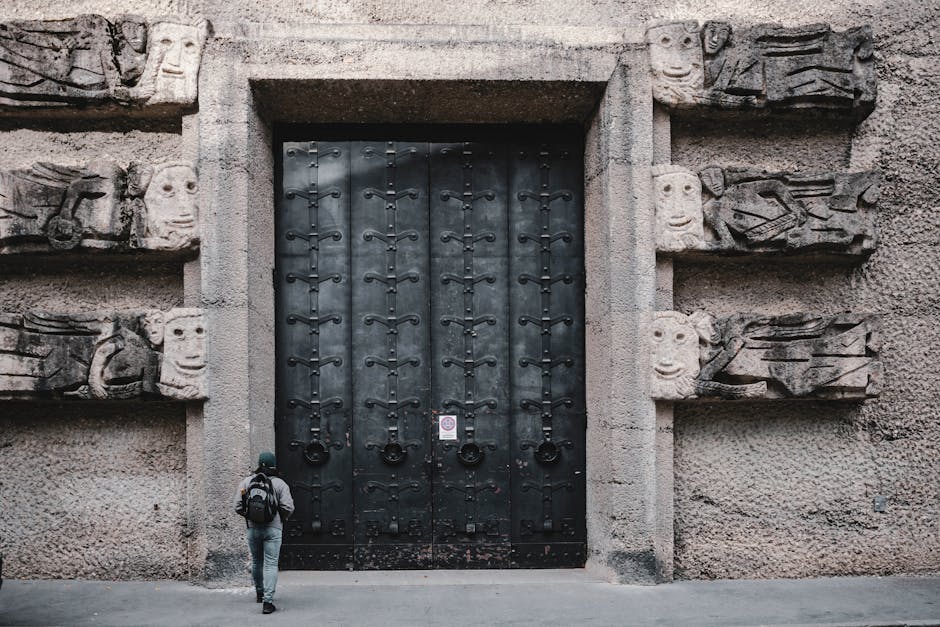
Discover the 'Rome of the North' on this self-guided walk through the Baroque squares and monumental legacy of Salzburg’s Prince-Archbishops.
 Easy
EasyGothenburg, Sweden
Discover Gothenburg’s 17th-century Dutch foundations, historic canals, and military fortifications on this self-guided architectural walk.
 Easy
EasyNairobi, Kenya
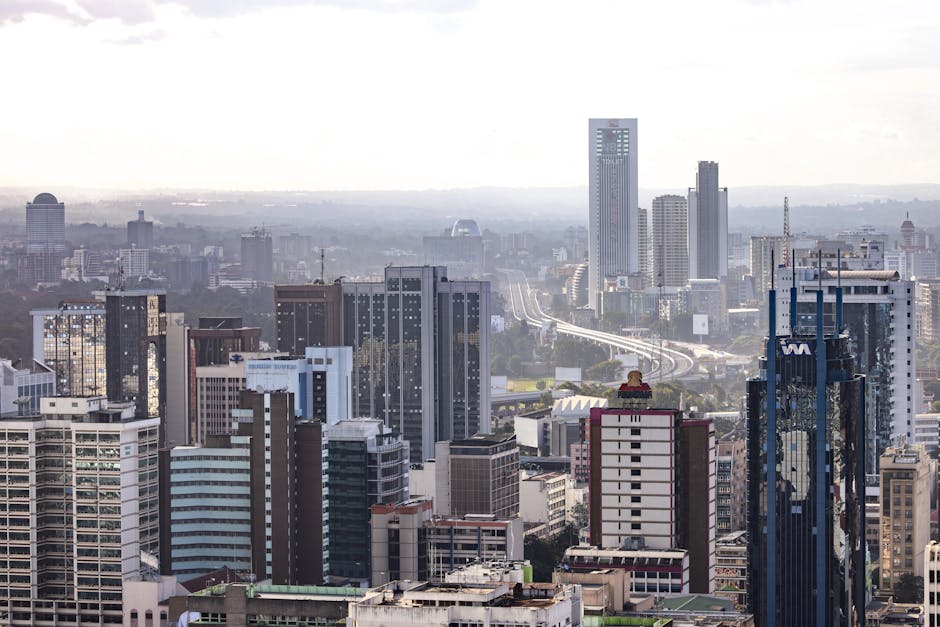
Explore Nairobi's architectural evolution from colonial-era landmarks to iconic Brutalist skyscrapers on this historic self-guided walking route.
 Easy
EasyNairobi, Kenya
Discover Nairobi's iconic skyline on this self-guided architecture walk through the CBD’s most famous modernist and Brutalist landmarks.
 Moderate
Barcelona, Spain
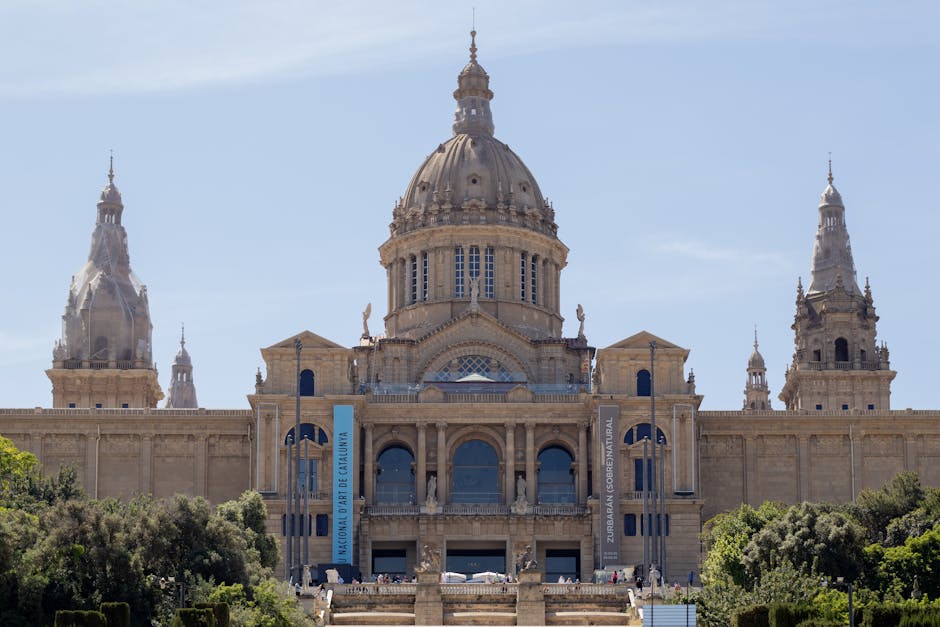
Explore the elegant 'village' of Sarrià, where Gothic monasteries and Gaudí's hidden gems meet charming local markets and narrow streets.
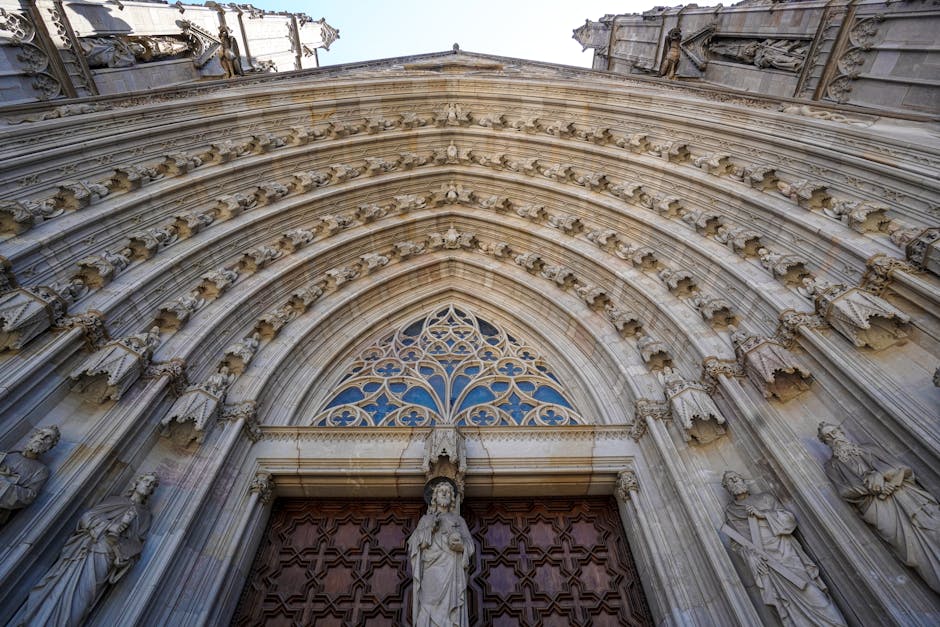 Moderate
Barcelona, Spain
Discover the revolutionary history and haunting scars of the Spanish Civil War on this self-guided walk through Barcelona's historic streets.
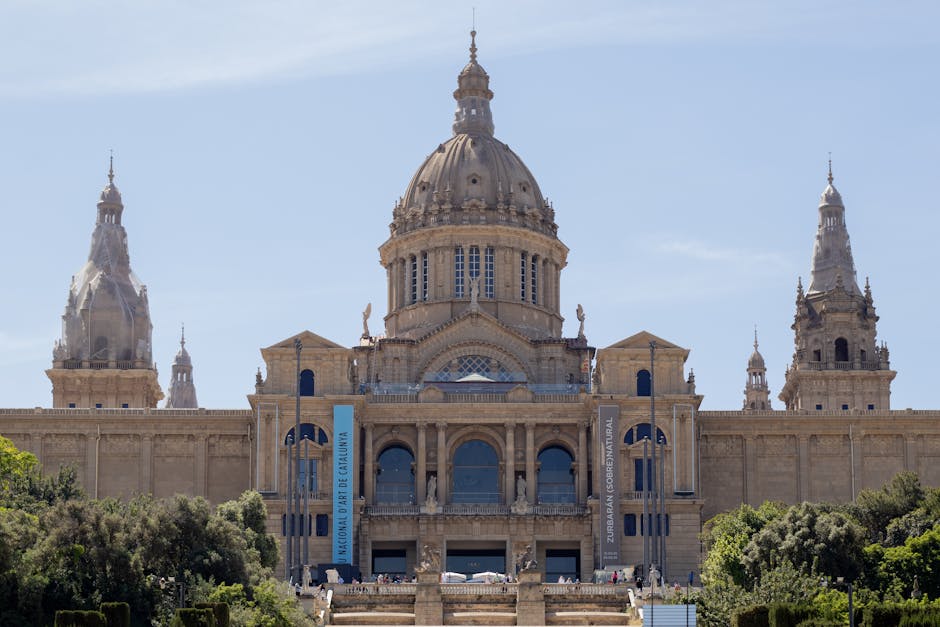 Easy
EasyBarcelona, Spain
Discover the architectural wonders of Barcelona's Golden Square on this self-guided stroll through Eixample's most luxurious Modernista streets.
 Challenging
Barcelona, Spain
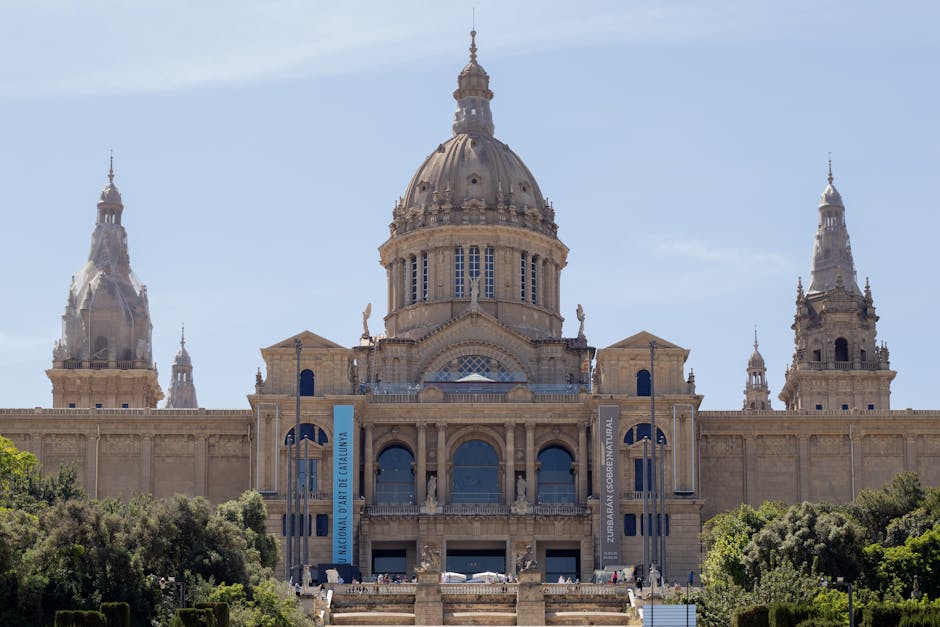
Explore Montjuïc’s lush gardens, historic fortress, and iconic Olympic venues on this scenic self-guided walk with panoramic Mediterranean views.
