Busan’s Jung-gu district is the beating heart of the city’s maritime history and its legendary culinary scene. This self-guided walk through Nampo-dong and the surrounding markets offers an immersive journey into the flavors and stories that defined post-war South Korea. As you navigate these vibrant streets, you are retracing the steps of refugees and merchants who transformed this port area into a bustling commercial hub. The air here is thick with the scent of sizzling griddles and salty sea breezes, creating an atmosphere that is uniquely Busan. This neighborhood stroll takes you through the neon-lit BIFF Square, where the city’s cinematic legacy is etched into the pavement, and into the narrow, winding alleys of Changseon-dong, where traditional glass noodles are served on tiny plastic stools. You will discover the resilience of the local people at Gukje Market, a place born of necessity after the Korean War, and witness the modern energy of Gwangbok-ro Fashion Street. One of the best ways to experience a walking tour Busan style is to eat your way through the landscape, and this route ensures you don't miss the iconic Ssiat Hotteok or the famous Busan fish cakes. For those looking for a panoramic view, the route also includes a steady ascent to Yongdusan Park, providing a moment of peace above the urban frenzy. This is not just a food tour; it is a historical exploration of how Busan grew from a refugee camp into a global maritime powerhouse. Whether you are a first-time visitor or a returning traveler, this walking tour Busan route provides the flexibility to linger over a spicy bowl of tteokbokki or browse for vintage treasures at your own pace. The journey ends at the Bupyeong Kkangtong Market, a place where international influences and local traditions collide in a spectacular display of street food creativity. Prepare your appetite and your curiosity for an unforgettable independent adventure. **Note:** This area is known for its ever-changing character. Street art, pop-up venues, and temporary exhibitions may differ from what's described. That's part of the adventure - you might discover something entirely new!
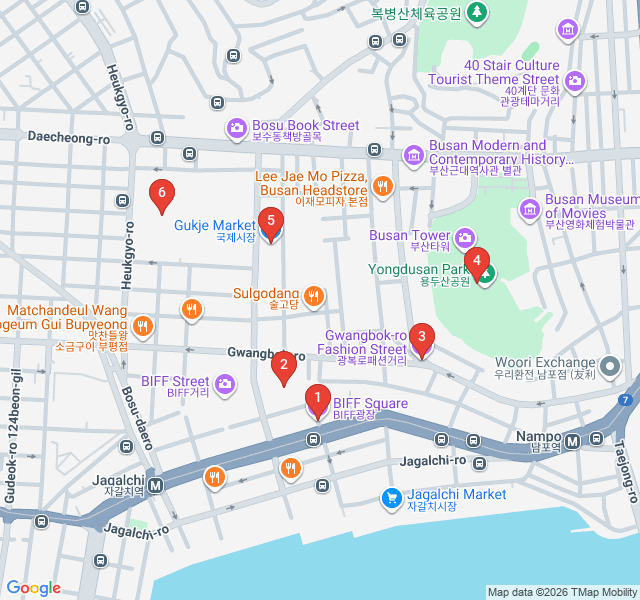
Numbers indicate the order of stops on the tour
Welcome to BIFF Square, the symbolic heart of the Busan International Film Festival. While the main festival events have moved to the Haeundae district, this area remains a monument to cinema. Look down at the pavement to find handprints of legendary directors and actors from around the world. However, for many, the real stars here are the food stalls. This is the birthplace of Ssiat Hotteok—a sweet, chewy pancake stuffed with sunflower seeds, pumpkin seeds, and brown sugar. The stalls here are legendary, often with long lines that move surprisingly fast. Grab a paper cup of this local treat and soak in the neon lights and cinematic history that surrounds you.
Tucked away from the main thoroughfare is Changseon-dong Meogjja-golmok, or 'Let's Eat' Alley. This narrow passage is a time capsule of Busan’s street food culture. You’ll see rows of vendors sitting on low stools, serving up bowls of Bibim Dangmyeon—spicy glass noodles mixed with pickled radish, fish cakes, and chives. This dish is a local specialty that originated during difficult economic times because it was cheap and filling. The seating is intimate, often just a plastic stool on the street, offering a front-row seat to the bustling market life. It is the perfect place to experience the 'Jeong' or the warm, communal spirit of the local vendors.
As you transition from the traditional alleys, you emerge onto Gwangbok-ro Fashion Street. This is Busan's version of Myeong-dong in Seoul, a bright, modern shopping district filled with international brands and local boutiques. The name 'Gwangbok' means 'restoration of light,' commemorating Korea's independence from colonial rule in 1945. Throughout the year, this street transforms; in December, it hosts a massive Christmas Tree Festival, and in spring, it is decorated with colorful lanterns. It’s a great place to observe the contrast between Busan's gritty port history and its contemporary, trend-setting present. Keep an eye out for the various public art sculptures that line the pedestrian-friendly walkway.
To find a bit of perspective, follow the long outdoor escalator up to Yongdusan Park. The park is named 'Yongdu' because the mountain is said to resemble a dragon's head emerging from the sea to protect the city from invaders. At the center stands the Busan Tower, a 120-meter landmark offering panoramic views of the harbor. During the Korean War, this hill was covered in shantytowns built by refugees; today, it is a peaceful green space featuring a massive floral clock and a statue of Admiral Yi Sun-sin, Korea’s naval hero. It provides a necessary breath of air and a stunning vantage point to see the massive ships in the port below.
Descend back toward the sea to enter Gukje Market, which literally translates to 'International Market.' Established by refugees during the Korean War, this was once the only place to find imported goods smuggled from the nearby US military bases or the port. It is a sprawling labyrinth divided into sections: tools, clothing, kitchenware, and vintage goods. Fans of Korean cinema might recognize specific storefronts from the blockbuster film 'Ode to My Father,' which chronicled the history of the market. While the goods have modernized, the layout remains a confusing, wonderful maze where you can find anything from traditional hanbok to high-tech rice cookers. It is the soul of Busan's resilience.
Just across the road is Bupyeong Kkangtong Market, famously known as 'Tin Can Market.' The name comes from the abundance of canned goods sold here after the war. Today, it is most famous for its food. This is the place to try Busan Eomuk (fish cakes), which are considered the best in Korea due to the city's proximity to fresh fish. If you are here in the evening, the central aisle transforms into a vibrant night market with stalls selling everything from scotch eggs to Vietnamese pho and fried milk. It’s a sensory overload of steam, smells, and shouting vendors—a perfect finale to your exploration of Busan’s culinary heart.
Download Zigway to experience "Taste of the Port: Nampo-dong Street Food Safari" with AI-powered audio narration. Walk at your own pace while stories unfold around you.
 Easy
EasyBusan, South Korea
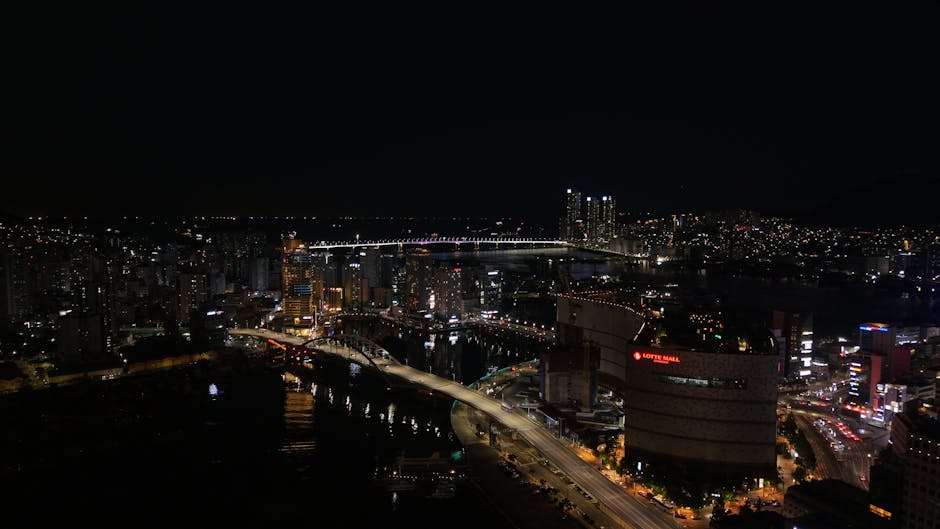
Explore Busan’s industrial-chic transformation. Discover hidden roasteries, redbrick alleys, and 'Newtro' culture in Jeonpo at your own pace.
 Easy
EasyBusan, South Korea
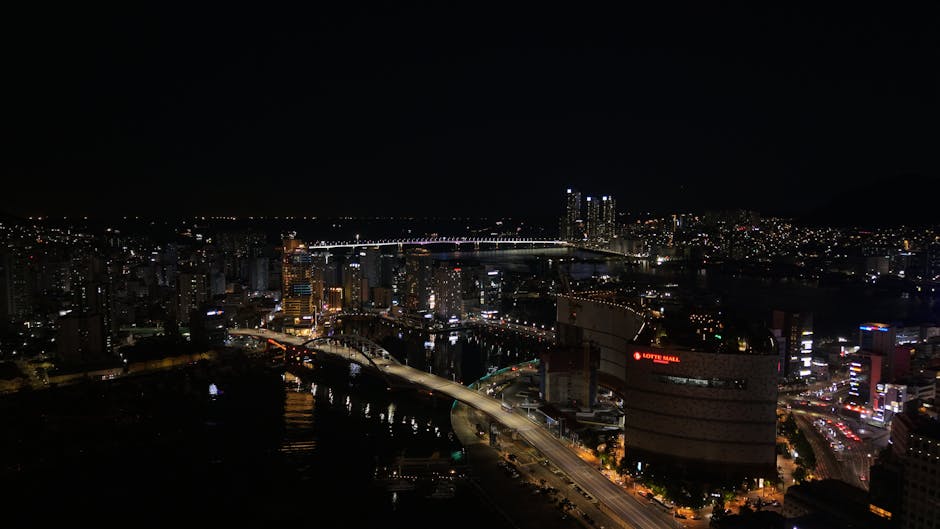
Discover the resilient heart of Busan through historic museums, the legendary Bosu-dong Book Alley, and the vibrant streets of Jung-gu.
 Easy
EasyBusan, South Korea
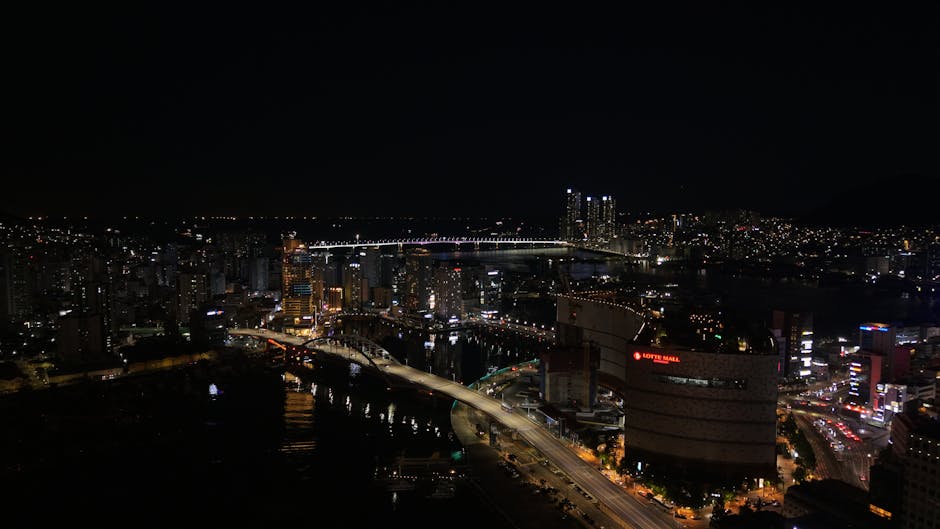
Discover Busan’s futuristic skyline, record-breaking malls, and avant-garde architecture on this self-guided walk through Centum City.
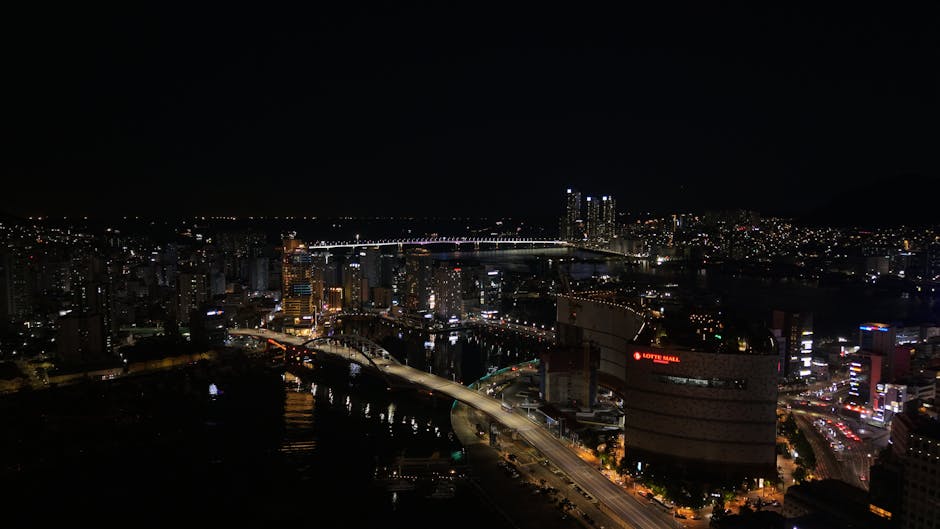 Moderate
Busan, South Korea
Explore the rugged shipyards, cliffside villages, and world-class coffee culture of Yeongdo Island on this independent audio walk through Busan.
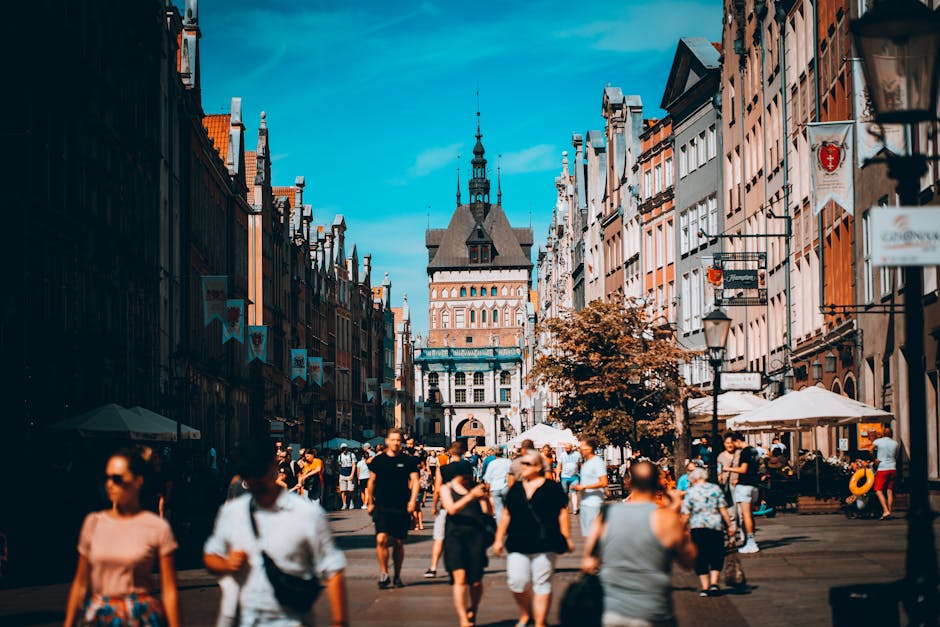 Easy
EasyGdansk, Poland
Taste the history of the Baltic. Explore Gdansk's culinary heritage from medieval markets to gold-flecked liqueurs on this self-guided walk.
 Moderate
Nairobi, Kenya
Taste your way through Nairobi's Westlands on this self-guided walk featuring street snacks, cultural landmarks, and hidden foodie gems.
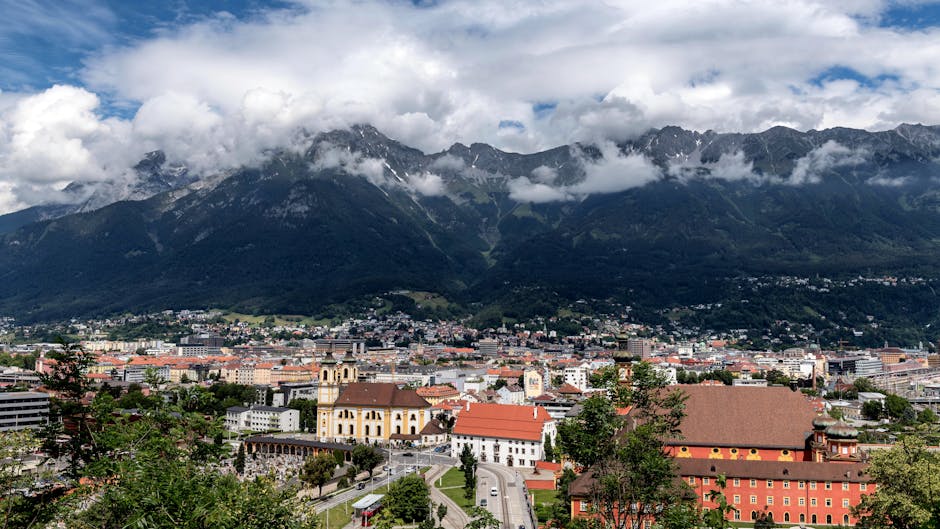 Easy
EasyInnsbruck, Austria
Discover the flavors of Tyrol on this self-guided stroll through Innsbruck’s historic Old Town and vibrant market hall.
 Easy
EasyGothenburg, Sweden
Discover Gothenburg’s maritime flavors on this self-guided walk through historic market halls and iconic seafood landmarks.
 Moderate
Seoul, South Korea
Explore the royal grandeur of Gyeongbokgung and the winding traditional alleys of Bukchon Hanok Village at your own pace.
 Challenging
Seoul, South Korea
Scale Seoul's iconic peak on this self-guided walk featuring historic city walls, panoramic viewpoints, and the famous love locks of N Seoul Tower.
 Easy
EasySeoul, South Korea
Discover Seoul's soul on a self-guided walk through historic hanok villages, traditional craft markets, and serene Buddhist temples.
 Easy
EasySeoul, South Korea
Discover 'Hip-jiro,' where gritty industrial alleys hide Seoul's trendiest secret cafes and vibrant nighttime beer culture on this self-guided walk.
