Step away from the neon lights of Bourbon Street and discover the soul of the Crescent City through its private spaces and historic facades. New Orleans is a city where the architecture tells a story of survival, fire, and a blend of cultures that exists nowhere else in North America. On this self-guided walk, you will explore the intricate layers of the French Quarter, focusing on the Creole influence that defines its physical character. This neighborhood stroll isn't just about the grand monuments; it's about the quiet alleyways and the glimpses of lush, tropical courtyards hidden behind heavy wooden doors. Starting at the site of the former Spanish seat of government, the route leads you through the heart of the original colonial city. You will see the transition from Spanish colonial administration buildings to the refined townhouses of Royal Street, famous for their ornate ironwork balconies. The journey highlights the unique 'raised cottage' style at Madame John’s Legacy and the literary atmosphere of Pirates Alley, where the ghosts of writers and rebels seem to linger. As you move toward the Mississippi River, the walk explores the symmetrical beauty of Jackson Square and the austere, neoclassical elegance of the Old Ursuline Convent, the oldest building in the Mississippi Valley. This walking route New Orleans provides is designed for those who want to understand the 'why' behind the city's unique look—from the fire-resistant brick structures built after the Great Fires of the 18th century to the way Caribbean trade influenced local building materials. Whether you are a first-time visitor or a frequent traveler to the city, this self-guided adventure offers a deeper appreciation for the architectural heritage and the hidden gems that many tourists simply walk past. Enjoy the freedom to linger in a quiet alley or stop for a coffee while uncovering the secrets of Creole design at your own pace.
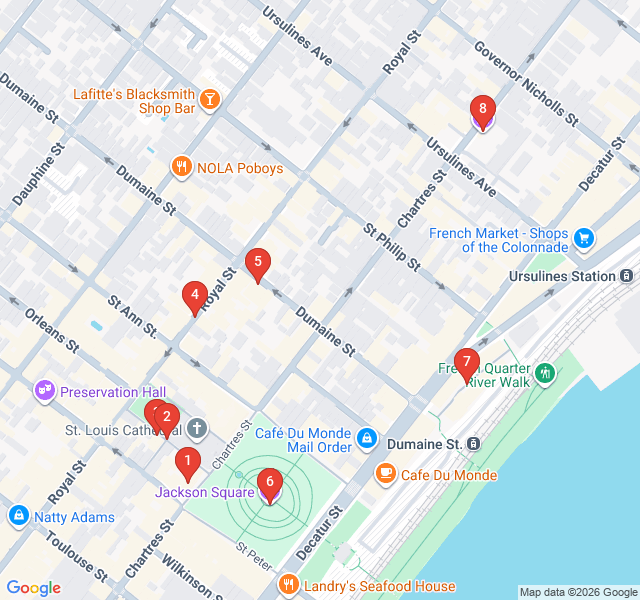
Numbers indicate the order of stops on the tour
Start your self-guided walk at the Cabildo, the site of the former Spanish colonial city hall. Completed in 1799, this building replaced an earlier structure destroyed in the Great New Orleans Fire of 1794. Notice the heavy arches on the ground floor and the distinctive mansard roof, which was actually added later in the 1840s. It was inside these walls that the Louisiana Purchase was signed in 1803, doubling the size of the United States. The architecture reflects the Spanish desire for fireproof masonry after the city had been nearly leveled twice by flames. Today, it serves as a museum, preserving the artifacts of the state's complex colonial history.
Tucked between the St. Louis Cathedral and the Cabildo, Pirates Alley is one of the most photographed spots in the city. Despite its name and the local legends of pirates like Jean Lafitte meeting here, the alley was likely named for its proximity to the church and the city jail. The flagstone paving and narrow dimensions evoke the feel of an old European city. As you walk through, you'll feel a significant drop in temperature compared to the open square, a testament to how the narrow streets of the French Quarter were designed to provide shade and channel breezes from the river.
Located halfway down Pirates Alley, this charming building was once the residence of Nobel Prize winner William Faulkner. In 1925, Faulkner lived here while writing his first novel, 'Soldiers' Pay.' Today, it houses one of the most beautiful independent bookstores in America. Look up at the building's facade; it is a classic example of a French Quarter townhouse with its narrow footprint and tall windows designed for ventilation. The interior still maintains the intimate, residential feel of a 19th-century home, offering a quiet sanctuary from the bustling streets just a few steps away.
Turn onto Royal Street, the French Quarter's premier residential and commercial thoroughfare. While Bourbon Street is for partying, Royal Street is for admiring architecture. This area is famous for its 'iron lace'—the intricate wrought and cast-iron balconies that hang over the sidewalks. These balconies weren't just for decoration; they served as outdoor living rooms, allowing residents to catch the air while staying out of the sun. Note the difference between the early wrought iron, which is thinner and more geometric, and the later Victorian cast iron, which features lush floral and grape-leaf patterns.
This building at 632 Dumaine Street is one of the few surviving examples of French colonial architecture in the city. Unlike the brick townhouses you’ve seen, this is a 'raised cottage,' built with a ground floor of brick and a wooden upper floor. It survived the Great Fire of 1794 because it was situated just far enough away from the wind's path. The name comes from a fictional character in a George Washington Cable story, but the real history is in its construction: the high foundation protected the living quarters from the frequent flooding of the Mississippi River.
Return toward the river to Jackson Square, originally known as the Place d'Armes. This was the center of colonial life, where the military paraded and public executions took place. The square is a masterpiece of urban design, flanked by the symmetrical Pontalba Buildings—the oldest continuously rented apartment buildings in the U.S. In the center stands the statue of Andrew Jackson, hero of the Battle of New Orleans. The square offers the best view of the St. Louis Cathedral, the oldest continuously active cathedral in the United States, with its three distinctive spires.
Located within the French Market complex, Dutch Alley is a pedestrian walkway that showcases the city’s connection to the river and trade. While much of the French Market has been modernized, this alleyway retains an industrial, communal feel. It was named for Mayor Ernest 'Dutch' Morial and features local art and performance spaces. Look for the 'New Orleans Jazz National Historical Park' visitor center here. This area represents the 'back' of the French Quarter, where the formal architecture of the townhouses gives way to the functional structures used for commerce and the busy port.
Concluding our self-guided adventure is the Old Ursuline Convent. Completed in 1752, it is the oldest building in the Mississippi Valley and the only intact survival of the French colonial period in New Orleans. Its architecture is remarkably different from the rest of the Quarter—it is a formal, austere French Neoclassical design that looks like it belongs in the French countryside. The convent served as a school, an orphanage, and a hospital. The thick walls and small windows were designed to keep the interior cool and protected, standing as a silent witness to the city's transformation over nearly three centuries.
Download Zigway to experience "Hidden Courtyards and Creole Architecture" with AI-powered audio narration. Walk at your own pace while stories unfold around you.
 Easy
EasyNew Orleans, United States
Explore the legendary restaurants and historic flavors of the New Orleans French Quarter on this delicious self-guided audio walk.
 Moderate
New Orleans, United States
Discover vibrant murals, iconic folk art, and industrial charm on this self-guided walking route through New Orleans' artistic Bywater district.
 Easy
EasyNew Orleans, United States
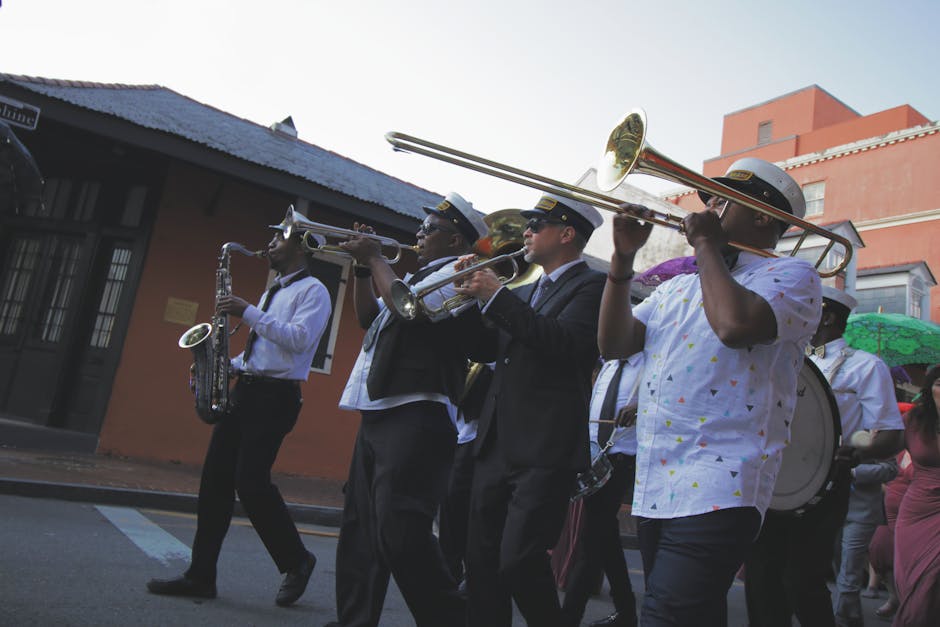
Discover the soul of New Orleans on this self-guided walk through the iconic jazz clubs and vibrant art markets of Frenchmen Street.
 Easy
EasyNew Orleans, United States
Explore the eerie history and supernatural legends of the French Quarter on this independent audio walk through New Orleans' most haunted corners.
 Easy
EasyKrakow, Poland
Explore the prestigious Jagiellonian University district, featuring Neo-Gothic architecture, Baroque churches, and Krakow's hidden scholarly gems.
 Easy
EasyNairobi, Kenya
Explore Nairobi's architectural evolution from colonial-era landmarks to iconic Brutalist skyscrapers on this historic self-guided walking route.
 Easy
EasyNairobi, Kenya
Discover Nairobi's iconic skyline on this self-guided architecture walk through the CBD’s most famous modernist and Brutalist landmarks.
 Easy
EasySalzburg, Austria
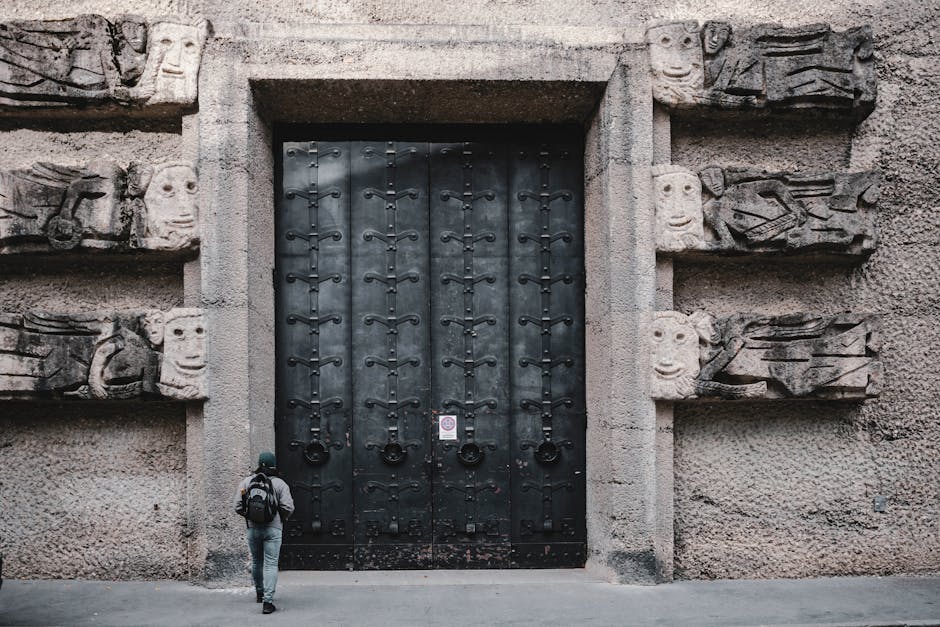
Discover the 'Rome of the North' on this self-guided walk through the Baroque squares and monumental legacy of Salzburg’s Prince-Archbishops.
 Easy
EasyNew York City, United States
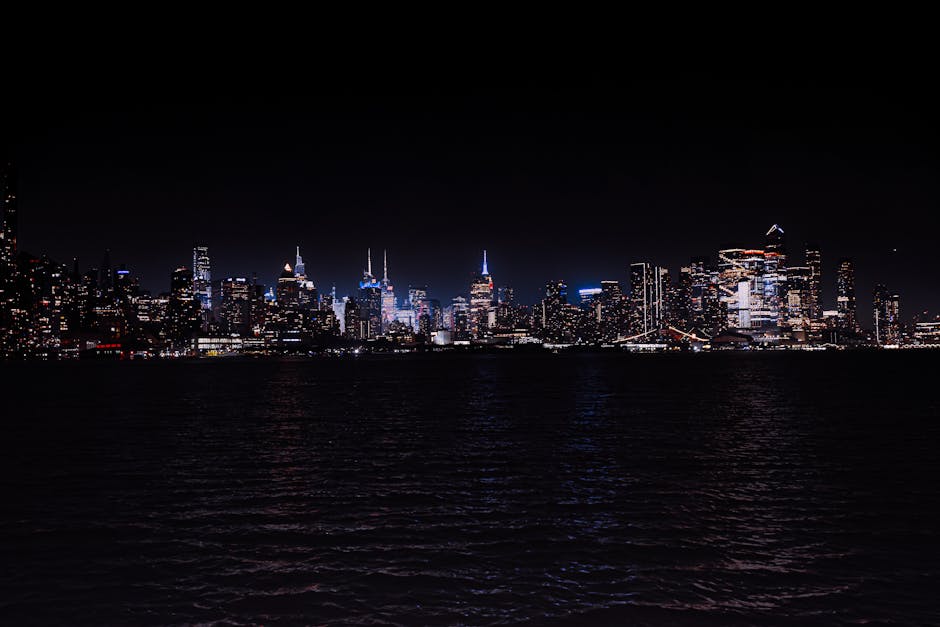
Explore the golden age of Manhattan architecture on this self-guided walk through Midtown's iconic Art Deco skyscrapers and historic landmarks.
 Easy
EasyNew York City, United States
Discover the literary legends, jazz haunts, and revolutionary history of Greenwich Village on this immersive self-guided walking route.
 Easy
EasyNew York City, United States
Explore Manhattan's transformation on this self-guided walk from the High Line to Hudson Yards.
 Easy
EasyNew York City, United States
Discover the world's finest cast-iron architecture and the evolution of fashion on this self-guided walking route through NYC's iconic SoHo district.
