Rising from the cold blue waters of the Baltic Sea, the Suomenlinna Sea Fortress stands as a silent sentinel over Helsinki. Known historically as the 'Gibraltar of the North,' this UNESCO World Heritage site is a sprawling maritime labyrinth of bastions, tunnels, and historic residences. This self-guided walk invites you to explore the complex history of an island that has served under three different flags: Swedish, Russian, and Finnish. As you begin your journey with a short ferry ride from the mainland, the skyline of Helsinki fades, replaced by the rugged granite walls and green embankments of the fortress. This walking route is designed for those who wish to uncover the layers of Finnish identity through its military architecture and hidden natural beauty. You will encounter everything from a church that doubles as a lighthouse to a preserved World War II submarine tucked away in a dry dock. Beyond the fortifications, the route leads through serene 18th-century gardens and past centuries-old barracks that now house a vibrant local community. This neighborhood stroll captures the essence of Suomenlinna, offering a blend of grand historical narratives and quiet, tucked-away corners. Whether you are marvelling at the massive stone blocks of the King’s Gate or wandering through the English-style Piper’s Park, you are engaging with a landscape that has shaped the fate of Northern Europe. This independent explore allows you to move at your own pace, soaking in the maritime atmosphere and the echoes of soldiers and shipbuilders who once called these islands home. While many visitors stick to the main paved paths, this route ensures you see the iconic landmarks while also discovering the hidden gems that make Suomenlinna a favorite for locals and travelers alike. It is a perfect way to experience a walking tour Helsinki offers through its most unique district, providing a deep dive into the maritime history that defines this coastal capital.
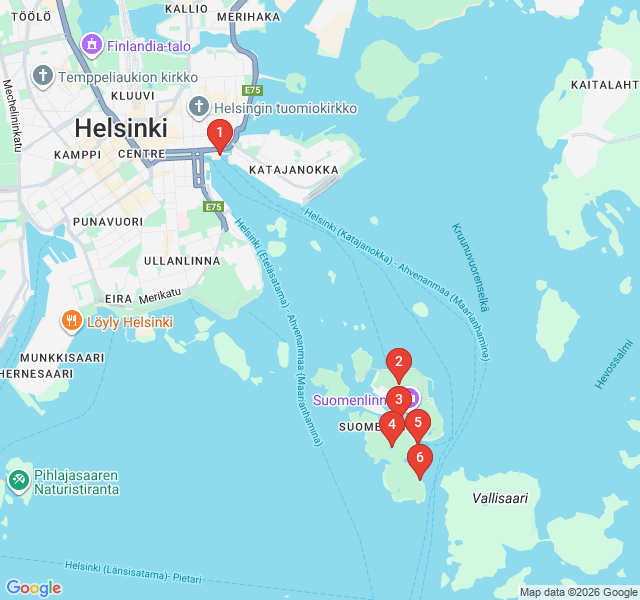
Numbers indicate the order of stops on the tour
The journey begins even before you set foot on the island. The HSL ferry from Helsinki’s Market Square offers a stunning perspective of the city's South Harbour. As the boat maneuvers through the archipelago, you can see the imposing granite walls of the fortress growing larger. This short 15-minute crossing has been the primary lifeline for the island's residents and soldiers for decades. Historically, these waters were vital for the defense of the Swedish Empire against Russian expansion. Take a moment to look back at the white domes of Helsinki Cathedral and the red brick of Uspenski Cathedral, symbols of the city’s dual heritage, as you transition from the modern capital to this historic maritime stronghold.
Built in 1854 during the Russian era, this building originally served as an Eastern Orthodox garrison church, complete with five onion domes. After Finland gained independence, it was converted into a Lutheran church, and its architecture was simplified to the minimalist structure you see today. However, its most fascinating feature is hidden in the steeple. The church also functions as a lighthouse, flashing a Morse code signal for the letter 'H' (for Helsinki) to guide ships safely through the Gulf of Finland. It is one of only a few churches in the world that serves this dual purpose, standing as a beacon of both spiritual and maritime safety.
Housed in a beautiful 250-year-old building, this site represents the social and domestic side of life in the fortress. While the island is known for its military might, it has always been a place where people lived, worked, and socialized. The building itself is a testament to the longevity of the island's stone architecture, surviving centuries of political shifts. It is named after the Adlerfelt family, who were prominent figures in the Swedish military history of the fortress. Today, the area surrounding this building serves as a reminder of how historic spaces can be repurposed for modern community life while still preserving their original architectural integrity and charm.
Designed in the late 18th century, Piper’s Park is a rare example of an English-style landscape garden in Finland. It was created by Axel von Fersen the Younger, a Swedish nobleman, to provide a touch of elegance and tranquility amidst the harsh military environment. The park features winding paths, a small pond, and views that look out over the sea. Historically, this was a place where officers and their families would promenade, far removed from the grit of the barracks. The flora here is distinct from the mainland, benefiting from the unique maritime microclimate of the islands, making it a peaceful sanctuary for a quiet moment during your walk.
Resting in a dry dock, the Vesikko is a poignant relic of World War II. Launched in 1933, it served the Finnish Navy during the Winter War and the Continuation War. After the 1947 Paris Peace Treaty, Finland was forbidden from maintaining a submarine fleet, and all other Finnish submarines were scrapped. Vesikko was spared and restored as a museum piece. Walking alongside its hull, you can imagine the cramped and dangerous conditions the crew of 20 men faced while patrolling the Baltic. It remains one of the few examples of a pre-WWII German-designed Type II submarine still in existence, offering a rare look at mid-century naval engineering.
This is the iconic symbol of Suomenlinna. The King’s Gate was built between 1753 and 1754 as the ceremonial entrance to the fortress. It was constructed on the very spot where King Adolf Frederick of Sweden anchored his ship while inspecting the construction of the site. The gate is made of local granite and decorated with marble plaques inscribed with the fortress’s purpose. One famous inscription by the fortress's founder, Augustin Ehrensvärd, reminds visitors: 'Posterity, stand here on your own foundation, and do not rely on outside help.' It is a powerful concluding stop that looks out toward the open sea, marking the boundary of the fortress and the start of the vast Baltic horizon.
Download Zigway to experience "Suomenlinna Sea Fortress Expedition" with AI-powered audio narration. Walk at your own pace while stories unfold around you.
 Moderate
Helsinki, Finland
Explore Helsinki's bohemian heart. Discover historic saunas, granite churches, and the vibrant local life of the Kallio neighborhood at your own pace.
 Easy
EasyHelsinki, Finland
Discover Helsinki's oldest neighborhood on this self-guided audio walk through Kruununhaka’s historic streets, hidden courtyards, and scenic shores.
 Easy
EasyHelsinki, Finland
Discover Helsinki's stunning Art Nouveau architecture and maritime history on this self-guided neighborhood stroll through Katajanokka.
 Easy
EasyHelsinki, Finland
Explore Helsinki's imperial past on this self-guided stroll through the grand Neoclassical landmarks of the Kruununhaka district.
 Moderate
Gothenburg, Sweden
Discover Gothenburg’s maritime soul on this self-guided walk from the historic Central Station to the scenic riverfront at Stenpiren.
 Moderate
Vienna, Austria
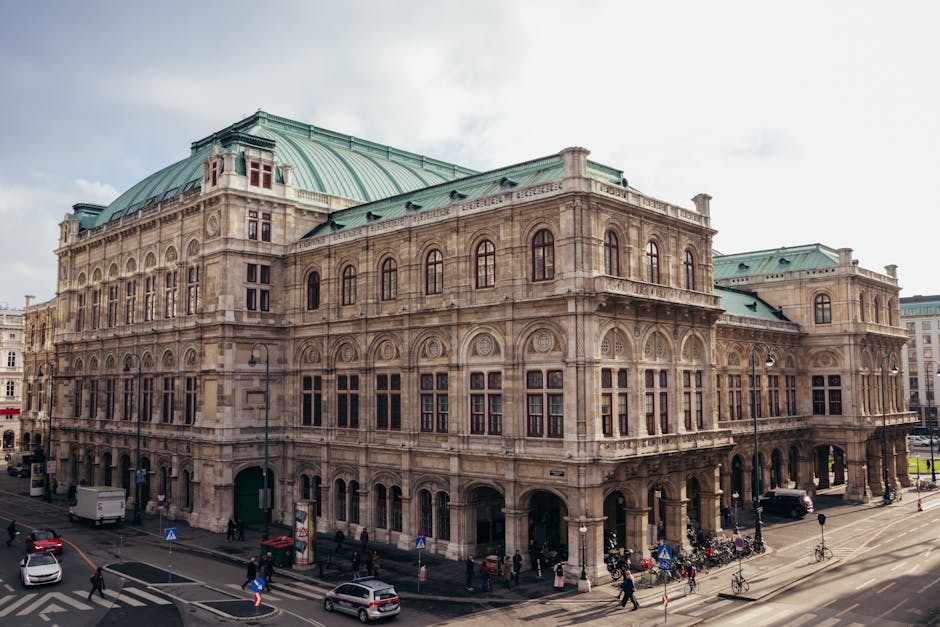
Follow the footsteps of Mozart and Strauss through Vienna’s historic center on this self-guided walk through the city's rich musical history.
 Moderate
Warsaw, Poland
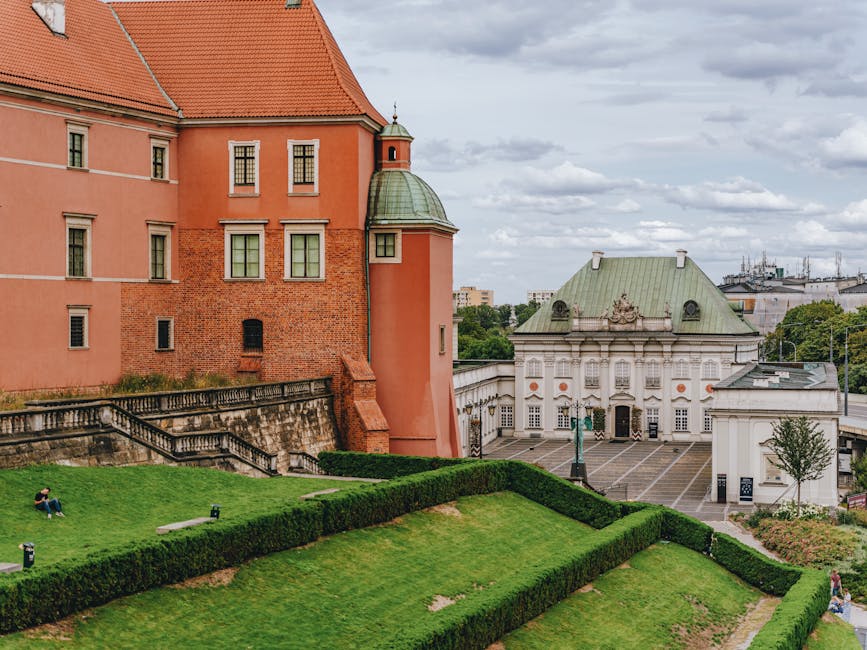
Explore the resilient spirit of Warsaw's Muranów district on this self-guided walk through the history and landmarks of the former Jewish Ghetto.
 Easy
EasyInnsbruck, Austria
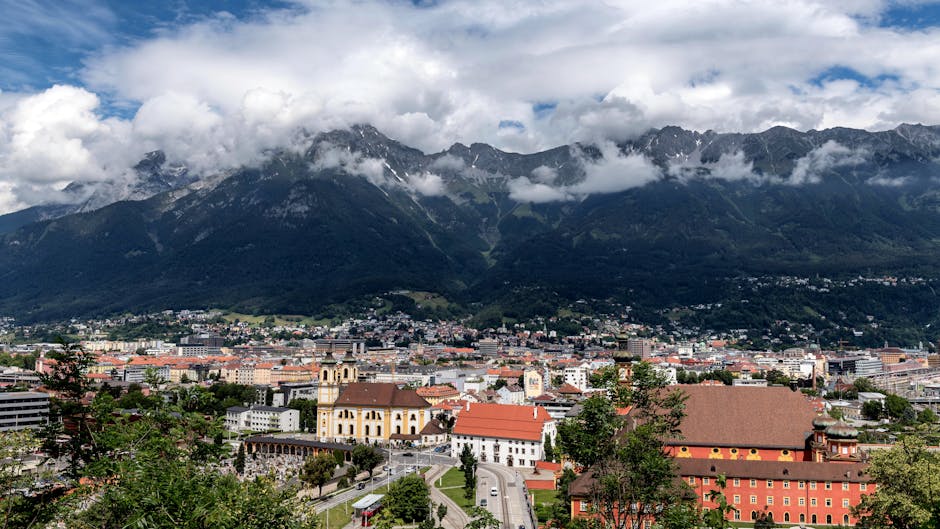
Uncover the myths and legends of Innsbruck on this self-guided walk through the historic Altstadt and beyond.
