Step into the long shadows of Old Quebec, a city where the stones of New France whisper secrets of a darker age. This self-guided walk invites you to explore the chilling legends and tragic history hidden behind the city's beautiful stone facades. As you traverse the cobblestone streets of the Upper Town, you will encounter the spirits of governors, the echoes of prisoners, and the grim legacy of the executioner. This neighborhood stroll is not just a lesson in architecture; it is an immersion into the folklore that has shaped the soul of Quebec for over four centuries. Your journey begins at the Cathedral of the Holy Trinity, where a mysterious 'Lady in White' is said to roam. From there, the walking route leads you to the iconic Fairmont Le Château Frontenac. While many admire its towers, few know the story of the Count of Frontenac, whose ghost is rumored to haunt the halls waiting for a bride who never arrived. As you continue your self-guided adventure, the atmosphere shifts from regal to somber at the Morrin Centre. Once a Victorian-era prison, this site witnessed the harsh realities of colonial justice and public executions. This audio walk also explores the literary and cultural transformations of the city at the Maison de la littérature, housed in a former church, before delving into the folklore of haunted inns and the residence of the city’s official executioner. Whether you are a history buff or a fan of the supernatural, this experience allows you to explore independently and at your own pace. Discover the hidden gems of Quebec City that most travelers overlook while enjoying a walking tour Quebec City enthusiasts recommend for its atmospheric depth. By the time you reach the end of this neighborhood stroll, you will see the 'Gibraltar of North America' in a hauntingly different light. This is one of the most evocative ways to travel through the past, making it a must-do walking tour Quebec City visitors should experience after dusk.
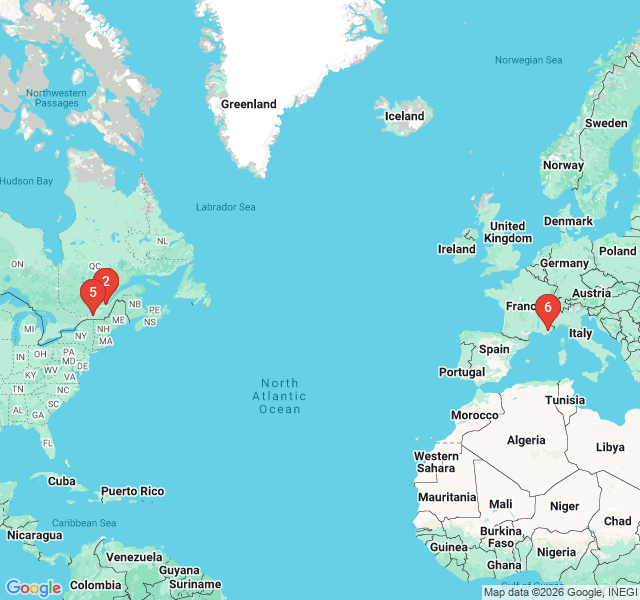
Numbers indicate the order of stops on the tour
Welcome to the first Anglican cathedral built outside the British Isles. While its neoclassical architecture is stunning, the cathedral holds a more spectral claim to fame. For generations, visitors and clergy have reported sightings of a 'Lady in White'—a veiled figure often seen sitting in the pews or disappearing into the walls. Legend suggests she was a woman buried within the church's foundations during a time of crisis, or perhaps a grieving soul searching for a lost love. As you stand before this historic site, imagine the early 19th-century congregation and the secrets they might have carried into the afterlife. The cathedral remains a cornerstone of the English presence in Quebec, but its shadows belong to the city's older, darker myths.
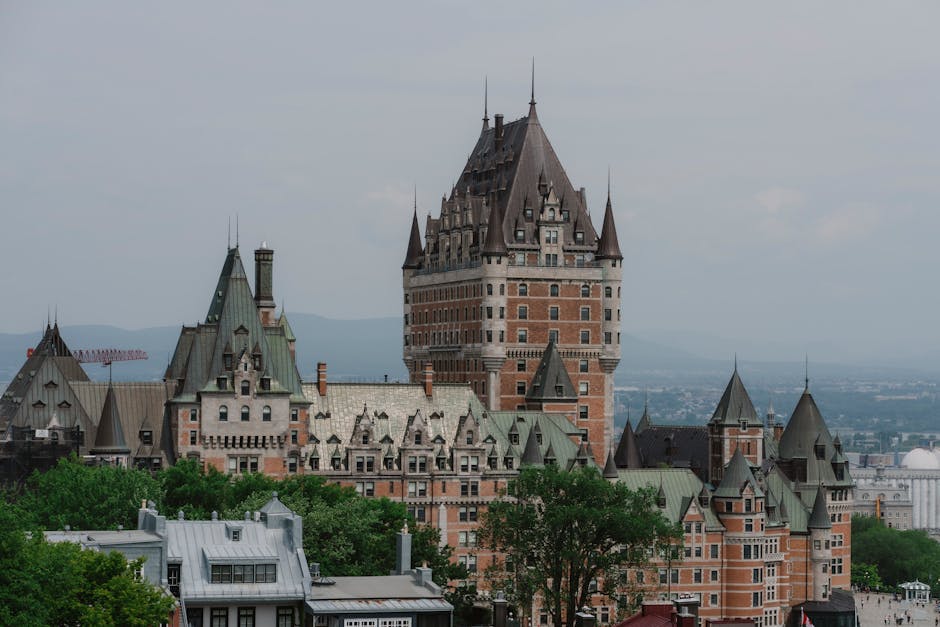
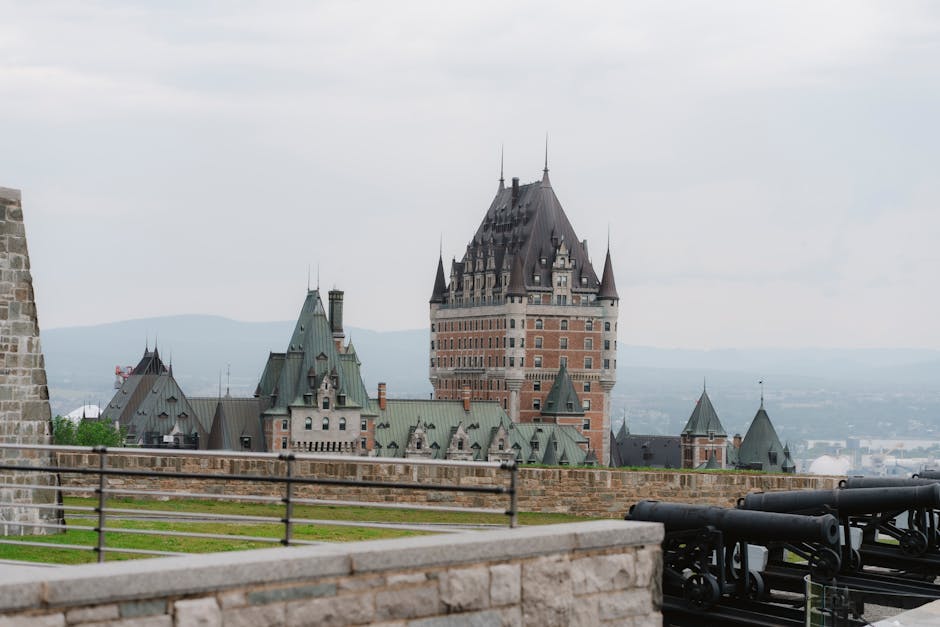
Behold the most photographed hotel in the world. But behind its grand copper roofs lies a tale of eternal longing. The hotel is named after Louis de Buade, Count of Frontenac, the formidable governor of New France. It is said that Frontenac died in 1698 while waiting for his beloved fiancée to return from France. Guests have reported seeing a man in 17th-century garb wandering the corridors of the tower, searching for her. His presence is a reminder of the city's deep roots and the intense passions of its founders. Take a moment to look up at the windows; you might just catch a glimpse of the Count watching over his beloved city from the beyond.
This elegant building currently houses a beautiful English-language library, but its past is far grimmer. In the early 1800s, this was the Quebec City Gaol. Conditions were notoriously brutal: overcrowded cells, freezing temperatures, and public hangings conducted right outside the front doors. If you look closely at the masonry, you can still find iron rings used to chain prisoners. The spirits of those who suffered here are said to linger in the basement cells. The transition from a place of punishment to a place of learning is a testament to the city's evolution, yet the Morrin Centre never quite shakes the heavy atmosphere of its judicial history.
This striking building is a masterpiece of adaptive reuse. Originally the Wesley Church, it now serves as a vibrant literary hub. However, the conversion of sacred spaces often leaves 'echoes.' Locals have long spoken of strange noises and cold spots within the library stacks, perhaps the remnants of the Methodist congregation that once worshipped here. The juxtaposition of the modern white interior against the gothic arched windows creates a surreal environment. It is a place where the stories of the living meet the silence of the past, making it a perfect stop on our exploration of Quebec’s literary and spiritual history.
Though the most famous inn of this name sits in Montreal, the spirit of the old stone inns in Quebec City carries the same haunting weight. Many of these historic buildings housed travelers, soldiers, and merchants who brought with them tales of the 'feu follet'—will-o'-the-wisps—and spectral hitchhikers. In the flickering candlelight of a 17th-century tavern, stories were told of a little girl who perished in a fire, her spirit still seeking warmth by the hearth. As you walk past these ancient stone walls, imagine the flickering shadows of the past and the travelers who never checked out of their lodgings.
Our final stop brings us to the legacy of the executioner. In New France, the role of the 'Bourreau' was a lonely and shunned existence. Often, the position was filled by a criminal who chose the job over his own death sentence. The executioner lived on the fringes of society, performing the grim tasks that others wouldn't dare. Jean Rattier, one of the city's most famous executioners, lived with the weight of his office for years. Standing near the old walls where the executioner's house once stood, you can almost feel the social isolation and the chilling finality of his work. It is a somber end to our walk, reminding us that even in a city as beautiful as Quebec, history has a sharp edge.
Download Zigway to experience "Dark Tales and Haunted Corners of Old Quebec" with AI-powered audio narration. Walk at your own pace while stories unfold around you.
 Easy
EasyQuebec City, Canada
Explore the artistic soul of Quebec City. Discover Gilded Age architecture, iconic murals, and open-air art in the elegant Montcalm neighborhood.
 Moderate
Quebec City, Canada
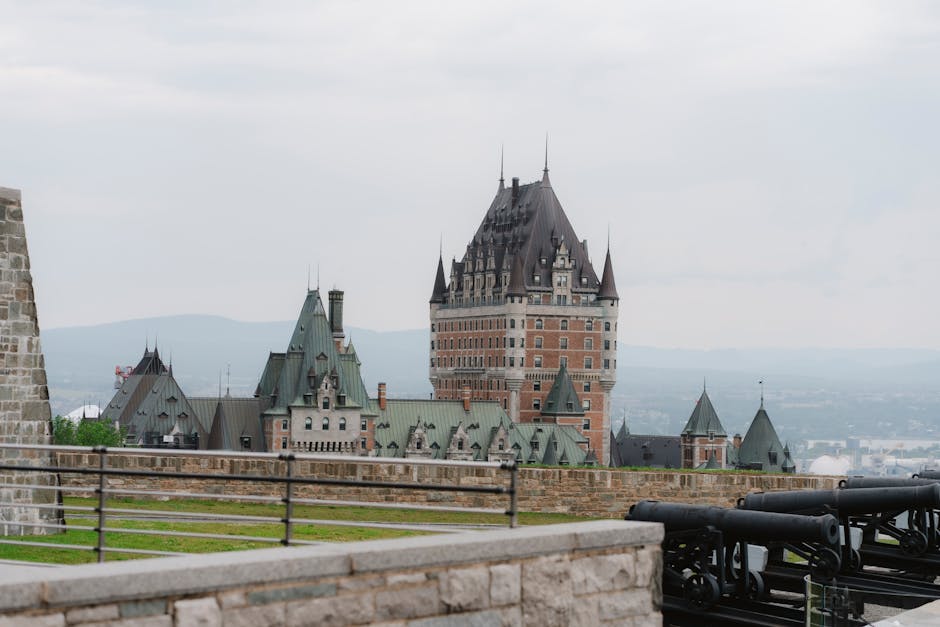
Explore North America's only remaining fortified city walls on this self-guided walk through Quebec City's iconic military history and stone gates.
 Easy
EasyQuebec City, Canada
Explore the creative soul of Saint-Roch on this self-guided walk featuring street art, craft breweries, and secret gardens.
 Easy
EasyQuebec City, Canada
Discover the sacred heart of Old Quebec. Explore historic cathedrals, hidden cloisters, and the legacy of the city's founding religious orders.
 Easy
EasyNairobi, Kenya
Explore Nairobi's architectural evolution from colonial-era landmarks to iconic Brutalist skyscrapers on this historic self-guided walking route.
 Easy
EasyNairobi, Kenya
Discover Nairobi's iconic skyline on this self-guided architecture walk through the CBD’s most famous modernist and Brutalist landmarks.
 Moderate
Vienna, Austria
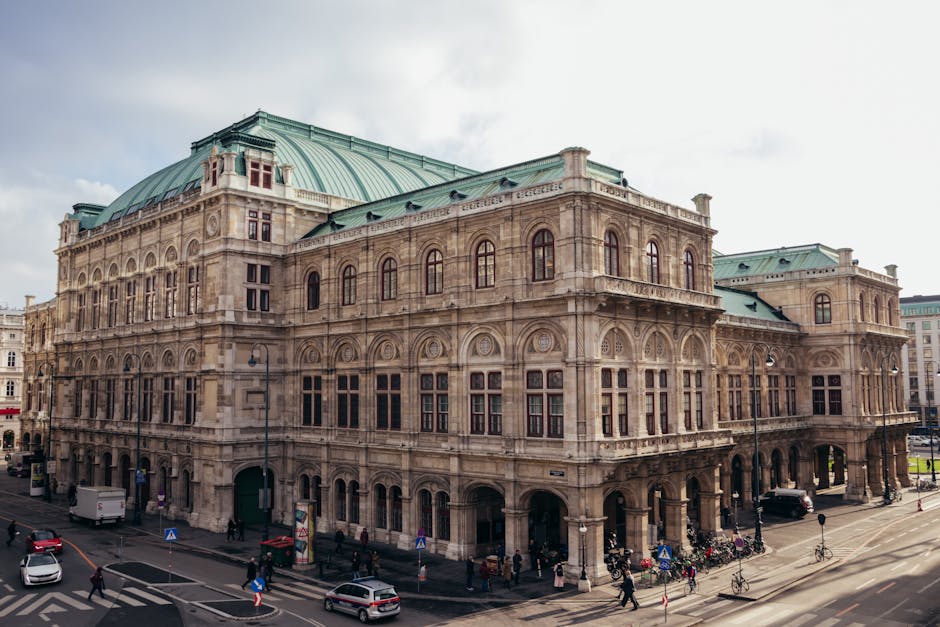
Discover the noir world of The Third Man and Cold War Vienna on this atmospheric self-guided audio walk through the historic Innere Stadt.
 Easy
EasyKrakow, Poland
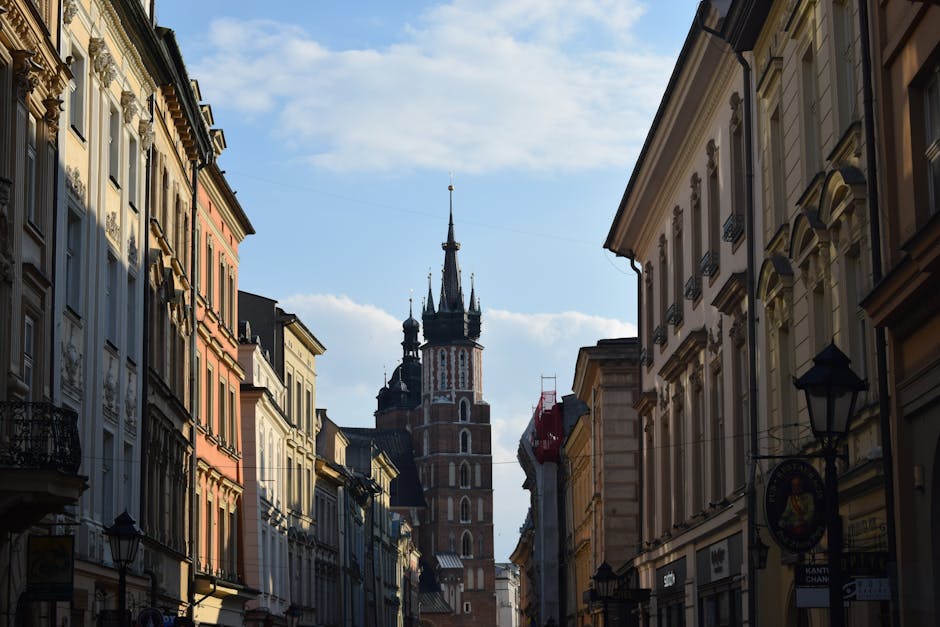
Uncover Krakow's legendary past on this self-guided walk from literary monuments to the fire-breathing Wawel Dragon.
 Challenging
Toronto, Canada
Explore Toronto's crown jewel with this self-guided walk through High Park’s hidden gardens, historic lodges, and scenic waterfront trails.
 Easy
EasyToronto, Canada
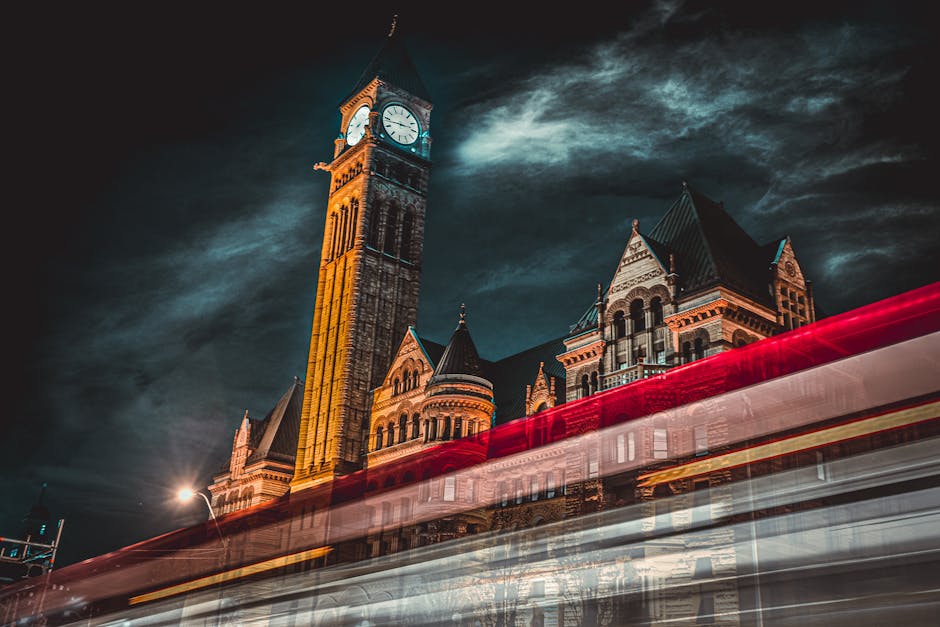
Explore Toronto's iconic skyline on this self-guided walk through the Financial District's historic stone halls and golden glass towers.
 Easy
EasyToronto, Canada
Explore North America's largest collection of Victorian homes and peaceful green spaces on this self-guided stroll through Toronto's Cabbagetown.
 Easy
EasyToronto, Canada
Explore Yorkville’s transformation from 1960s hippie haven to Toronto’s premier luxury district on this self-guided audio walk.
