Bath’s Upper Town is a masterclass in urban planning, where 18th-century visionaries transformed a sleepy spa town into a playground for the Georgian elite. This self-guided walk invites you to explore the architectural triumphs of the John Woods—father and son—whose obsession with classical symmetry and Roman design defined the city’s iconic look. From the perfectly proportioned Queen Square to the breathtaking sweep of the Royal Crescent, you’ll discover why Bath remains a UNESCO World Heritage site and a favorite backdrop for period dramas like Bridgerton. As you wander through these honey-hued streets, you’ll notice the intricate details: the carved emblems on The Circus, the elegant simplicity of Brock Street, and the expansive greenery of Royal Victoria Park. This is more than just a neighborhood stroll; it is an immersion into the history of high society and the evolution of English Palladianism. Whether you are a photography enthusiast looking for the perfect golden hour shot or a history buff eager to trace the footsteps of Jane Austen, this walking route offers a flexible, independent way to experience the city's most prestigious landmarks. Along the way, you can pause to admire the uniform facades or peek into the lush communal gardens that once served as private retreats for the aristocracy. This walking tour Bath highlights the grandeur of the 1700s while allowing you to enjoy the modern tranquility of its public parks. For those seeking a comprehensive walking tour Bath experience, this route captures the essence of the city's Golden Age without the need for a fixed schedule. Explore independently and let the stones of Bath tell their story.
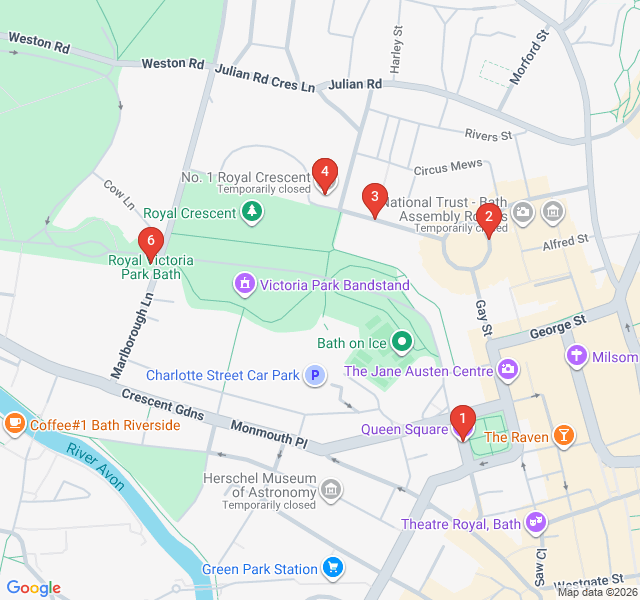
Numbers indicate the order of stops on the tour
Welcome to the starting point of your self-guided adventure. Queen Square was the first major development by John Wood the Elder, completed in 1736. Look at the north side; it was designed to look like one massive palatial mansion, even though it contains separate houses. This was a revolutionary concept in English urban planning. The square was named after Queen Caroline, wife of George II, and the central obelisk was erected by the famous dandy Beau Nash. As you walk around, notice the uniform Bath stone—a limestone that gives the city its distinctive honey-colored glow. This square set the standard for the elegance that would eventually define the entire Upper Town.
Arriving at The Circus, you are standing in one of the most significant architectural sites in Europe. John Wood the Elder designed this circle of houses, drawing inspiration from the Roman Colosseum, though he flipped the design so the ornate columns face inward. Look closely at the friezes above the doors; there are over 500 unique carvings representing arts, sciences, and freemasonry symbols. Sadly, Wood died just five days after the first stone was laid, leaving his son, John Wood the Younger, to complete the project. The three segments of the circle create a perfect acoustic echo in the center, which was originally a paved area without the giant plane trees you see today.
As you walk down Brock Street, you are traversing the literal and symbolic bridge between the two greatest works of the Wood family. This street connects The Circus to the Royal Crescent. While it may seem like a simple transit route, pay attention to the doorways and fanlights. This street was built by John Wood the Younger to provide a grand approach to his masterpiece. Many of the houses here have served as residences for famous figures throughout history, including musicians and artists who flocked to Bath during its 18th-century heyday as a fashionable spa resort. The perspective at the end of the street offers your first glimpse of the Crescent's scale.
Before you lies the Royal Crescent, perhaps the most famous street in the United Kingdom. Built between 1767 and 1774, this sweeping arc of 30 houses was the first of its kind. While the front facades are perfectly uniform with their 114 Ionic columns, the backs of the houses are a chaotic jumble of different heights and styles—the residents were allowed to build the rears however they pleased, as long as the front remained symmetrical. House Number 1, on the far right, is now a museum that shows how a typical Georgian household functioned, from the grand drawing rooms to the servant quarters below stairs.
Step out onto the grass to fully appreciate the scale of this landmark. Notice the sunken wall that separates the private lawn from the public park—this is called a 'ha-ha.' It was designed to keep livestock out of the residents' view without the need for an unsightly fence that would break the horizon. This spot is a favorite for photographers and has appeared in countless films and television shows, most recently serving as the home of the Featherington family in the Netflix series Bridgerton. Take a moment here to enjoy the view across the valley; this vista has remained largely unchanged for over 250 years.
This walking route concludes in Royal Victoria Park. Opened in 1830 by an 11-year-old Princess Victoria, this was the first park to carry her name—though she famously never returned to Bath after hearing a disparaging comment about her ankles during the opening ceremony. The park spans 57 acres and offers a wonderful contrast to the rigid geometry of the Georgian streets. From here, you can see the Great Dell, a former quarry turned into an arboretum, or simply look back for one of the best views of the Royal Crescent rising above the trees. It is the perfect place to relax and reflect on the grandeur of Bath's architectural heritage.
Download Zigway to experience "Georgian Grandeur and The Royal Crescent" with AI-powered audio narration. Walk at your own pace while stories unfold around you.
 Easy
EasyBath, United Kingdom
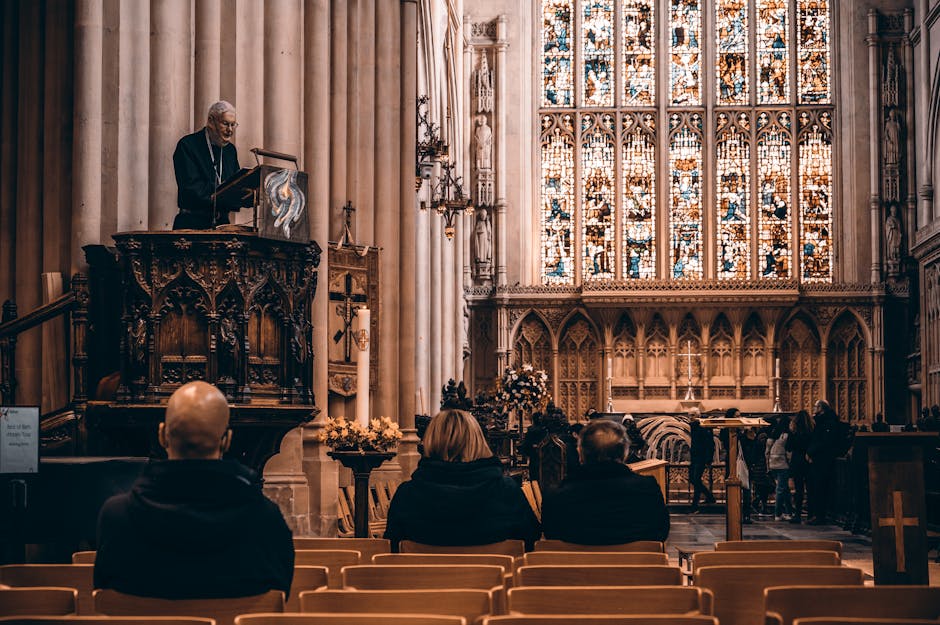
Uncover Roman ruins and Gothic spires on this self-guided audio walk through the historic heart of Bath. Explore at your own pace.
 Easy
EasyBath, United Kingdom
Uncover the eerie secrets and dark history of Bath on this self-guided audio walk through haunted theaters and historic Victorian cemeteries.
 Easy
EasyBath, United Kingdom
Explore Bath's industrial-heritage on this self-guided walk along the Kennet & Avon Canal, from engineering marvels to tranquil garden escapes.
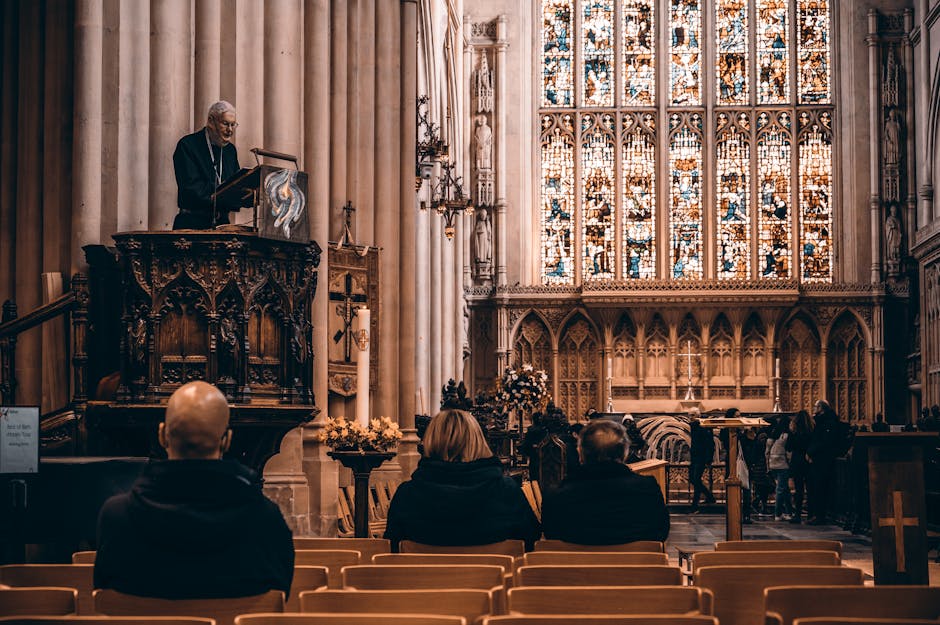 Moderate
Bath, United Kingdom
Escape the crowds and ascend the hills of Bath on this self-guided walk featuring panoramic views, historic follies, and hidden Victorian cemeteries.
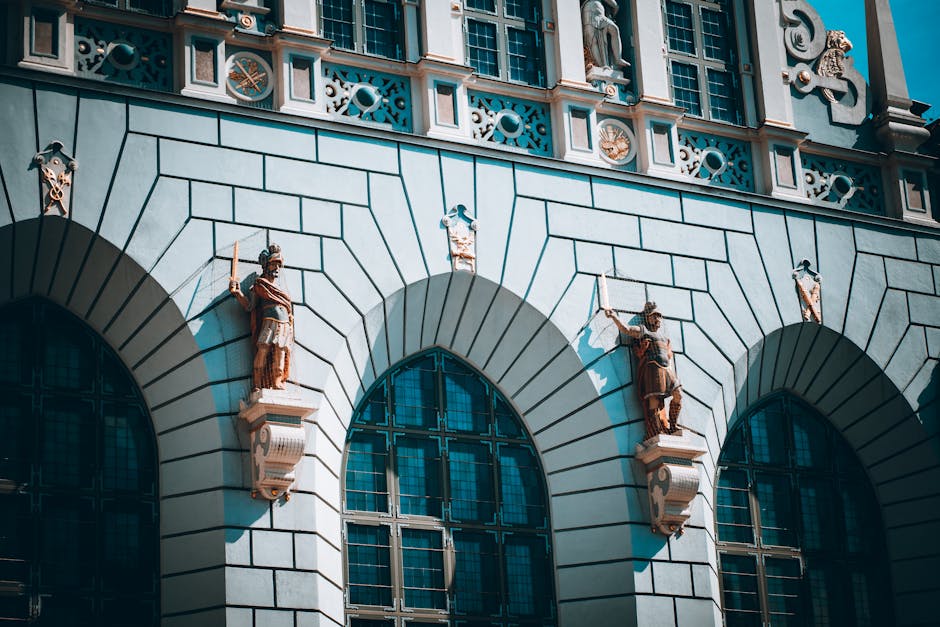 Easy
EasyGdansk, Poland
Discover the opulent Royal Way of Gdansk at your own pace. Explore Hanseatic history, gilded architecture, and the iconic Neptune's Fountain.
 Easy
EasyNairobi, Kenya
Discover Nairobi's iconic skyline on this self-guided architecture walk through the CBD’s most famous modernist and Brutalist landmarks.
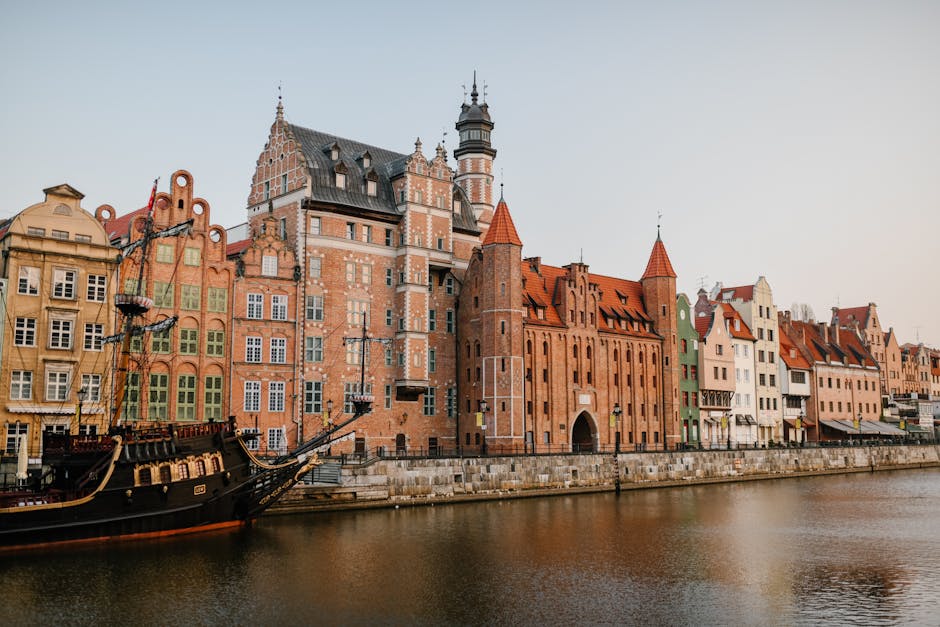 Easy
EasyGdansk, Poland
Discover the 'Baltic Gold' on this self-guided walk through Gdansk's historic mills, massive cathedrals, and the magical Mariacka Street.
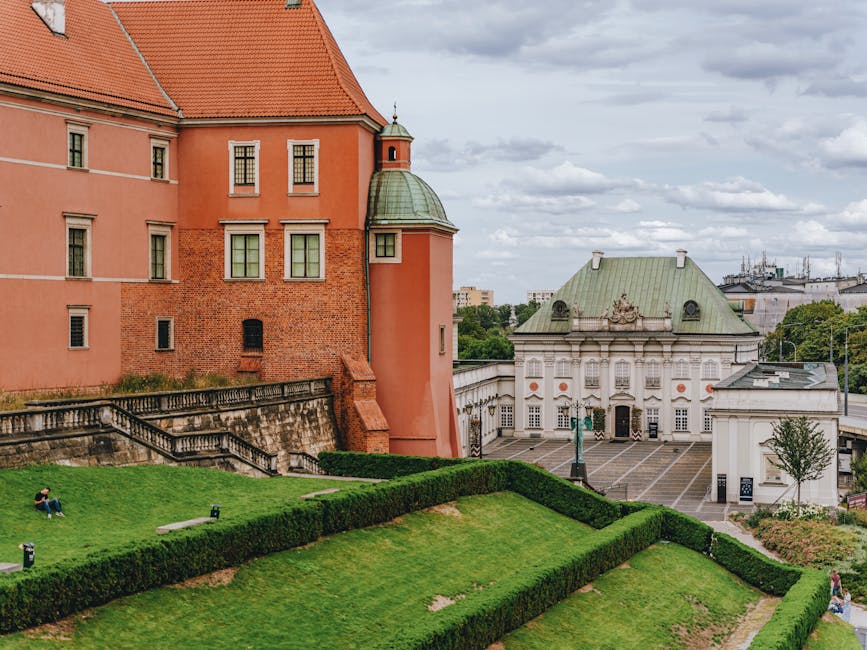 Easy
EasyWarsaw, Poland
Explore the miracle of Warsaw's reconstructed Old Town on this self-guided walk through royal squares, medieval walls, and heroic monuments.
 Easy
EasyEdinburgh, United Kingdom
Explore Edinburgh's historic Royal Mile at your own pace, from the heights of the Castle to the royal Palace of Holyroodhouse.
 Easy
EasyEdinburgh, United Kingdom
Capture the magic of Edinburgh on this self-guided stroll through the fairy-tale Dean Village, floral Circus Lane, and the scenic Water of Leith.
 Easy
EasyEdinburgh, United Kingdom
Explore Edinburgh's creative soul on this self-guided walk from historic museums to the stylish galleries and boutiques of the West End.
 Challenging
Edinburgh, United Kingdom
Ascend an ancient volcano and discover royal history on this challenging self-guided walk through Edinburgh's iconic Holyrood Park.
