Step into the "Golden Age" of one of Europe’s most prosperous maritime hubs. This self-guided walk through the heart of Gdansk takes you along the Trakt Królewski, or the Royal Way, where the wealth of the Hanseatic League is etched into every gilded facade and ornate gable. For centuries, this was the path taken by visiting Polish monarchs, greeted by the city’s elite amidst a display of architectural splendor that rivaled the greatest capitals of Europe. Begin your self-guided adventure at the Main Town Hall, a towering testament to the city’s historical autonomy and economic might. As you explore independently, you will traverse the Long Market, a space that served as both a bustling marketplace and a stage for public life. The route highlights the intricate Mannerist and Renaissance styles that define the city's unique aesthetic, often described as a "Northern Venice." Discover at your own pace as you encounter the legendary Neptune's Fountain and the opulent Artus Court, once the exclusive club for the city’s wealthiest merchants. This walking route is more than just a history lesson; it is a journey through a city that was meticulously rebuilt from the ashes of World War II to reclaim its former glory. By following this neighborhood stroll, you gain a deeper appreciation for the resilience and artistic spirit of the local people. Whether you are captivated by the symbolism of the Golden Gate or the domestic elegance of Uphagen’s House, this experience offers a comprehensive look at the "Glories of the Golden Age." This is widely considered a must-see walking tour Gdansk offers to those who want to understand the intersection of trade, politics, and art. While some might look for a traditional guided tour Gdansk provides, this self-guided walk allows for a more personal connection with the cobblestone streets and hidden details of the Main City.
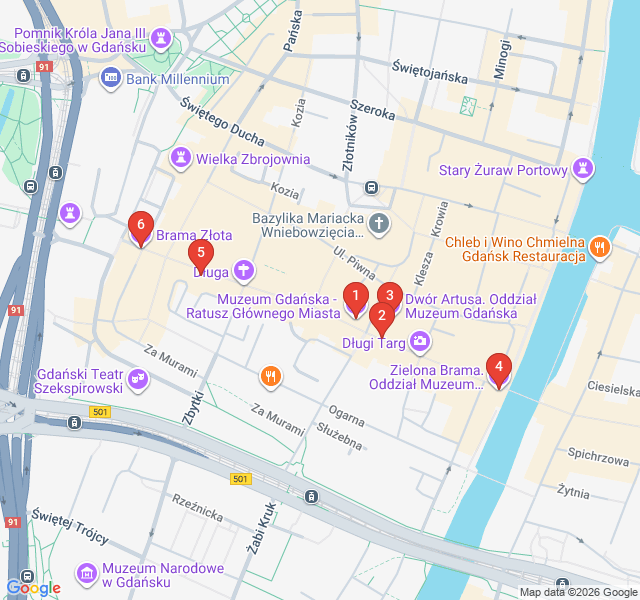
Numbers indicate the order of stops on the tour
Standing before the Main Town Hall, you are looking at the former seat of power for one of the richest cities in the Hanseatic League. Originally built in the 14th century and later expanded in the Gothic-Renaissance style, its 80-meter spire is crowned with a golden figure of King Sigismund II Augustus. This building was the nerve center of Gdansk's political life, housing the Red Room, often compared to the Doge's Palace in Venice for its opulence. After the devastation of 1945, it was painstakingly restored, serving as a symbol of the city's indomitable spirit. Take a moment to look up at the intricate clock and the carillon, which still rings out over the Long Market today.
Just a few steps from the Town Hall stands the most famous landmark in Gdansk: Neptune's Fountain. Erected in 1633, this bronze masterpiece was designed to show the world that Gdansk was a city of the sea. Legend has it that Neptune was so annoyed by people throwing gold coins into his fountain that he struck the water with his trident, shattering the gold into the tiny flakes now found in the local herbal liqueur, Goldwasser. The fountain's Mannerist design, featuring sea monsters and shells, reflects the international artistic influences that flowed into the city through its busy port. It remains the most popular meeting point for locals and travelers alike.
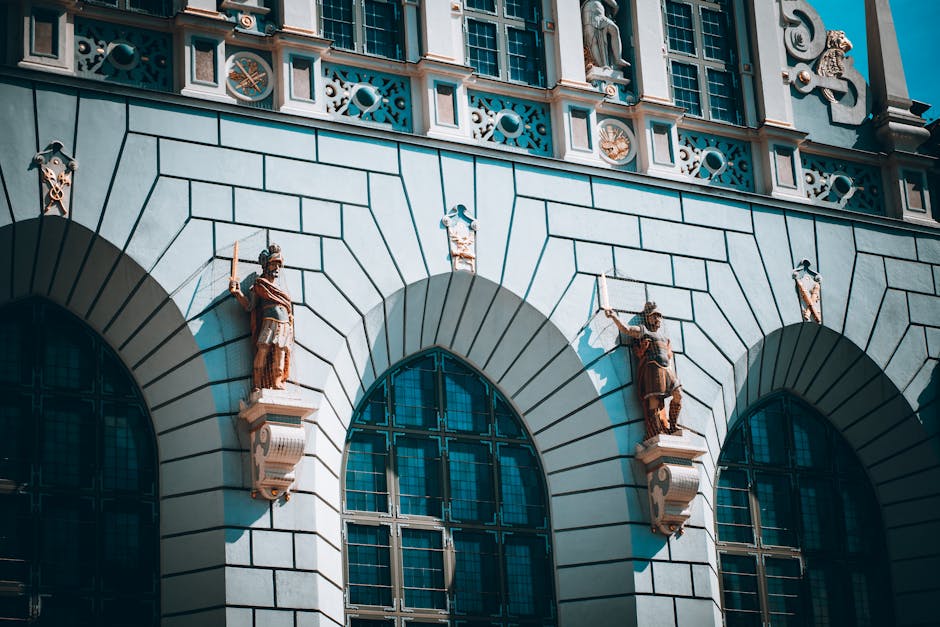
Behind Neptune’s Fountain lies Artus Court, the legendary meeting place for the city’s merchant elite. Named after King Arthur to evoke the ideals of chivalry and equality, it served as a social hub where the wealthy gathered to drink, trade, and discuss politics. The interior, which you can visit independently, houses the world’s largest tiled stove—nearly 11 meters tall and decorated with 520 individual tiles. The facade itself is a masterpiece of Dutch Mannerism, adorned with statues of ancient heroes and symbols of justice. It was here that the 'white beer' of Gdansk was served, and where the city's most important international guests were entertained.
Walk toward the Motława River to find the Green Gate, the eastern terminus of the Royal Way. Despite its name, it is a massive four-arched building inspired by the Antwerp City Hall. It was built between 1568 and 1571 to serve as the formal residence for visiting Polish monarchs. Interestingly, most kings found the gate too drafty and preferred to stay in the more comfortable merchant houses nearby. Today, the gate houses a branch of the National Museum and once served as the office of Nobel Peace Prize winner Lech Wałęsa. Passing through its arches rewards you with a stunning view of the Long Bridge and the famous medieval Crane.
Heading back toward the Golden Gate, you will find Uphagen’s House at Długa 12. This is one of the very few 18th-century merchant townhouses in Europe that has been preserved with its original layout. Johann Uphagen, a wealthy city councilor, purchased the house in 1775 and stipulated in his will that the interior should never be changed. This 'time capsule' provides an intimate look into the domestic life of the Gdansk elite, from the ornate drawing rooms to the functional kitchens. The narrow, deep structure of the house is typical of the limited space available within the city walls, where residents were taxed based on the width of their street-facing facade.
Your journey concludes at the Golden Gate, the triumphal arch that serves as the symbolic entrance to the city. Built in 1612, it replaced a medieval gate to better reflect the city’s wealth. Look up to see eight allegorical statues. On the west side, they represent the aspirations of a city: Peace, Freedom, Wealth, and Fame. On the east side, facing the town, they represent civic virtues: Agreement, Justice, Piety, and Prudence. The inscription above the arch reads, in Latin: 'In concord small states grow, in discord great ones fall.' It is a fitting reminder of the unity that allowed Gdansk to thrive as a bridge between cultures for over a millennium.
Download Zigway to experience "The Royal Way: Glories of the Golden Age" with AI-powered audio narration. Walk at your own pace while stories unfold around you.
 Moderate
Gdansk, Poland
Discover the bohemian soul of Gdańsk. Explore the literary landmarks of Günter Grass, Prussian villas, and the trendy cafes of historic Wrzeszcz.
 Easy
EasyGdansk, Poland
Discover the monastic heritage, world-famous organs, and lush botanical gardens of Oliwa on this peaceful self-guided neighborhood stroll.
 Easy
EasyGdansk, Poland
Taste the history of the Baltic. Explore Gdansk's culinary heritage from medieval markets to gold-flecked liqueurs on this self-guided walk.
 Moderate
Gdansk, Poland
Discover the origins of WWII in Gdansk on this self-guided walk through heroic last stands, massive museums, and strategic hilltop fortifications.
 Easy
EasyWarsaw, Poland
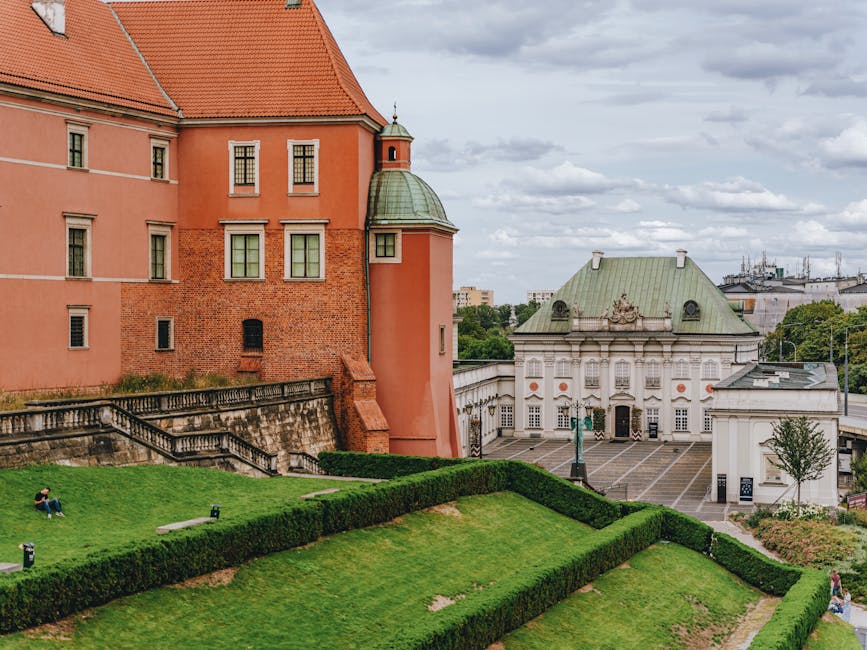
Explore the miracle of Warsaw's reconstructed Old Town on this self-guided walk through royal squares, medieval walls, and heroic monuments.
 Easy
EasyNairobi, Kenya
Discover Nairobi's iconic skyline on this self-guided architecture walk through the CBD’s most famous modernist and Brutalist landmarks.
 Easy
EasySalzburg, Austria
Discover the 'Rome of the North' on this self-guided walk through the Baroque squares and monumental legacy of Salzburg’s Prince-Archbishops.
 Easy
EasyGothenburg, Sweden
Explore Gothenburg's elegant academic district, featuring grand 19th-century stone architecture and the iconic cultural hub of Götaplatsen.
 Easy
EasyKrakow, Poland
Explore the prestigious Jagiellonian University district, featuring Neo-Gothic architecture, Baroque churches, and Krakow's hidden scholarly gems.
 Easy
EasyKrakow, Poland
Explore Krakow's hidden nightlife with this self-guided walk through medieval cellars, jazz clubs, and bohemian bars in the Old Town and Kazimierz.
 Easy
EasyKrakow, Poland
Discover Krakow’s creative soul in Zabłocie, exploring industrial heritage, contemporary art museums, and avant-garde architecture at your own pace.
 Easy
EasyKrakow, Poland
Explore the historic heart of Kazimierz on this self-guided walk through synagogues, ancient cemeteries, and vibrant squares.
