Gdansk is a city where history is etched into every brick, but no era left a deeper scar than the autumn of 1939. This self-guided walk invites you to explore the very ground where World War II began. Unlike a standard walking tour Gdansk experience, this route allows you to linger at the sites of heroic last stands and modern monuments at your own pace. You will begin at the site of the Polish Post Office, where a handful of postal workers held off the SS for fifteen hours, a story of incredible bravery that set the tone for the resistance to come. As you navigate this walking route, you will encounter the striking Museum of the Second World War. Its bold, leaning architecture is a landmark of the modern skyline, housing one of the most comprehensive collections of wartime history on the planet. This neighborhood stroll through the northern edge of the Old Town connects the dots between the political tensions of the Free City of Danzig and the eventual devastation and rebirth of the city. You will also ascend the heights of Góra Gradowa, a strategic military point for centuries, offering a panoramic view that helps you visualize the city's wartime geography. This history-focused exploration isn't just about dates and battles; it's about the human experience in a city that was the flashpoint for a global conflict. By following this walking tour Gdansk itinerary independently, you have the flexibility to visit the extensive museum exhibits or simply reflect at the moving memorials. The journey concludes near the waterfront, where you can look toward the horizon of Westerplatte, the peninsula where the first shots of the war were fired. It is a profound travel experience for those looking to understand the resilience of the Polish spirit.
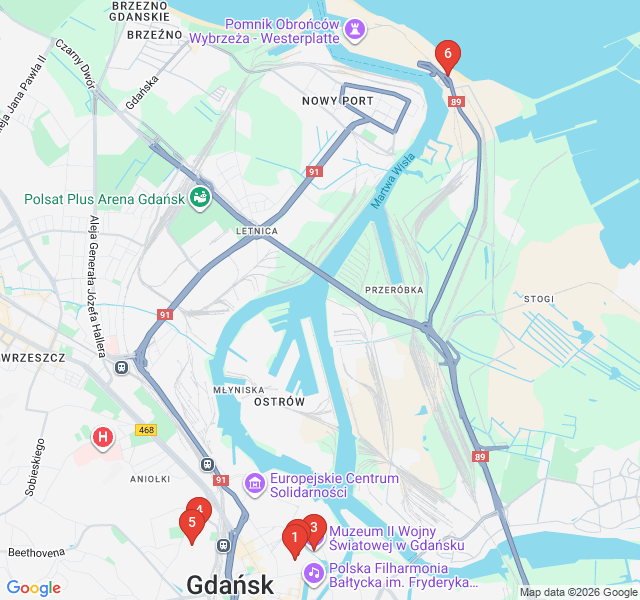
Numbers indicate the order of stops on the tour
You are standing at one of the most significant addresses in 20th-century history. In 1939, Gdansk was the 'Free City of Danzig,' a semi-autonomous city-state with a majority German population. This building was a sovereign Polish enclave. On September 1st, at the same moment the first shells hit Westerplatte, the German police and SS units attacked this post office. Roughly 50 Polish employees, armed only with light weapons, defended this building for 15 hours against armored cars and artillery. The museum inside tells their individual stories, documenting the bravery of ordinary civilians who became the first resistance fighters of the war.
Just outside the post office stands this striking stainless steel monument, unveiled in 1979 on the 40th anniversary of the outbreak of the war. Notice the dynamic, almost explosive form of the sculpture. It depicts a dying postal worker handing a rifle to Nike, the Greek goddess of victory. The names of the defenders are listed here, many of whom were executed shortly after the surrender. It is a powerful symbol of Polish defiance. The site is often adorned with candles and flowers, reflecting its continued importance to the local community as a place of national mourning and pride.
This massive, leaning red tower is one of the most ambitious museums dedicated to WWII in the world. The architecture itself is symbolic: the building is divided into three zones representing the past (underground), the present (the plaza), and the future (the tower). The main exhibition is located 14 meters below ground to emphasize the 'hell of war.' While you could spend hours here, take a moment to appreciate the scale. The museum doesn't just focus on the military history of 1939, but the civilian experience across the globe, making it a profound stop on your history-themed stroll through Gdansk.
To reach this point, you'll take a short walk uphill to one of the best vantage points in the city. Góra Gradowa has been a military stronghold since at least the 14th century. During the Napoleonic era and both World Wars, its height made it a critical defensive position. From here, you can see the famous Gdansk Shipyards to the north and the spire of St. Mary’s Church to the south. The large Millennium Cross that stands here now was erected in 2000, but the bunkers and earthworks around you are silent witnesses to the city's long history of siege and defense.
Located on the site of former military forts, Hevelianum is now a science and heritage center. During WWII, these brick fortifications and underground tunnels were utilized by German forces as air-raid shelters and storage facilities. As you walk through the complex, you can see how 19th-century military engineering was adapted for modern warfare. The name honors Johannes Hevelius, the famous astronomer from Gdansk, blending the city's scientific achievements with its martial past. It is a peaceful area today, but the thick walls remind us of the city's former status as a fortified 'Festung' or fortress.
Your walk concludes at the waterfront. This pier is the primary boarding point for the water tram and ferries heading to Westerplatte. Looking out toward the mouth of the Motława River, you are following the path the German battleship Schleswig-Holstein took before it opened fire on the Polish transit depot in 1939. This spot connects the city center's history to the battlefield at the coast. From here, you can choose to continue your adventure by boat to Westerplatte or turn back toward the heart of the Old Town for a well-earned break at one of the riverside cafes.
Download Zigway to experience "Shadows of 1939: WWII in Gdansk" with AI-powered audio narration. Walk at your own pace while stories unfold around you.
 Moderate
Gdansk, Poland
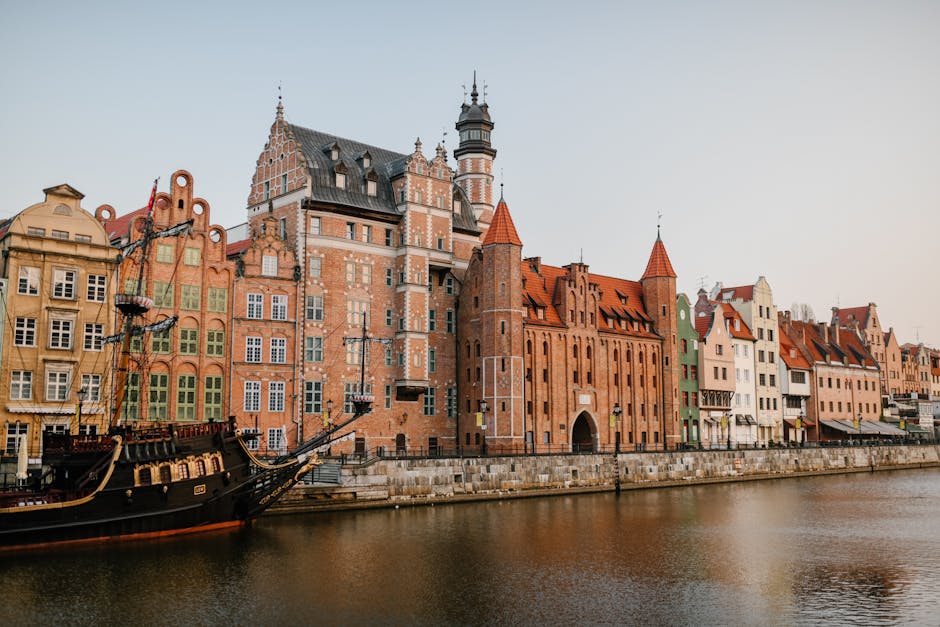
Discover the bohemian soul of Gdańsk. Explore the literary landmarks of Günter Grass, Prussian villas, and the trendy cafes of historic Wrzeszcz.
 Easy
EasyGdansk, Poland
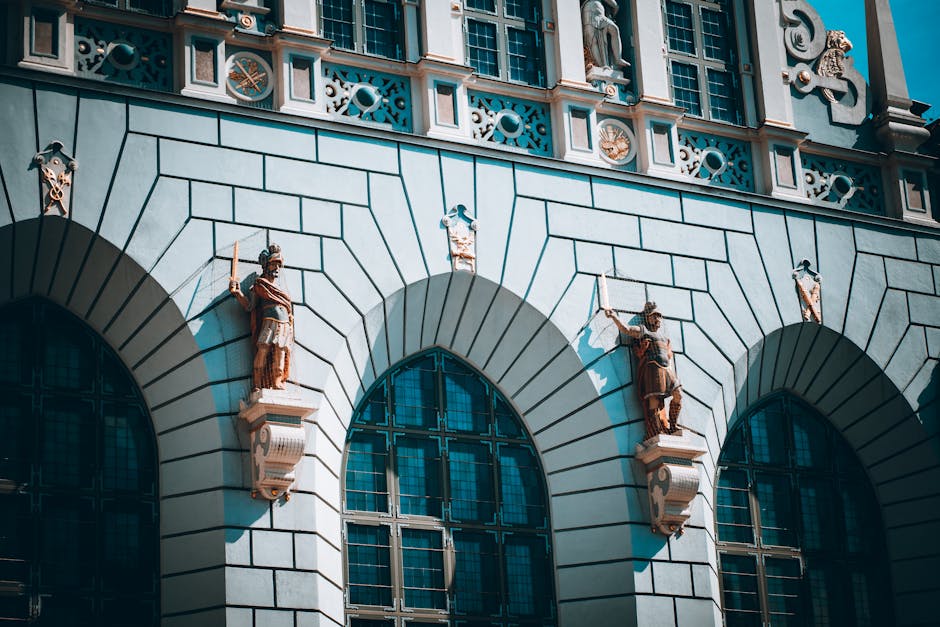
Discover the opulent Royal Way of Gdansk at your own pace. Explore Hanseatic history, gilded architecture, and the iconic Neptune's Fountain.
 Easy
EasyGdansk, Poland
Discover the monastic heritage, world-famous organs, and lush botanical gardens of Oliwa on this peaceful self-guided neighborhood stroll.
 Easy
EasyGdansk, Poland
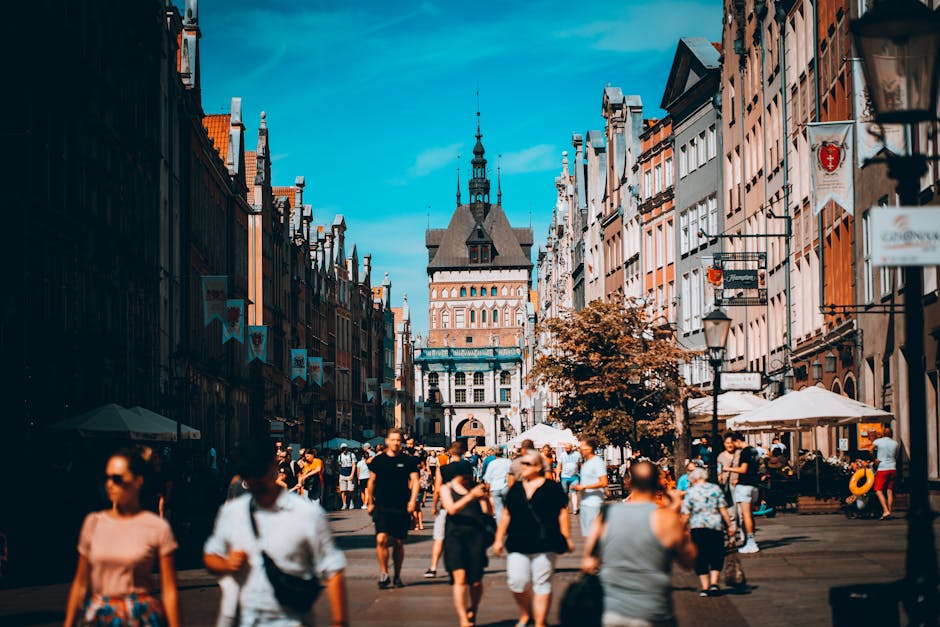
Taste the history of the Baltic. Explore Gdansk's culinary heritage from medieval markets to gold-flecked liqueurs on this self-guided walk.
 Moderate
Warsaw, Poland
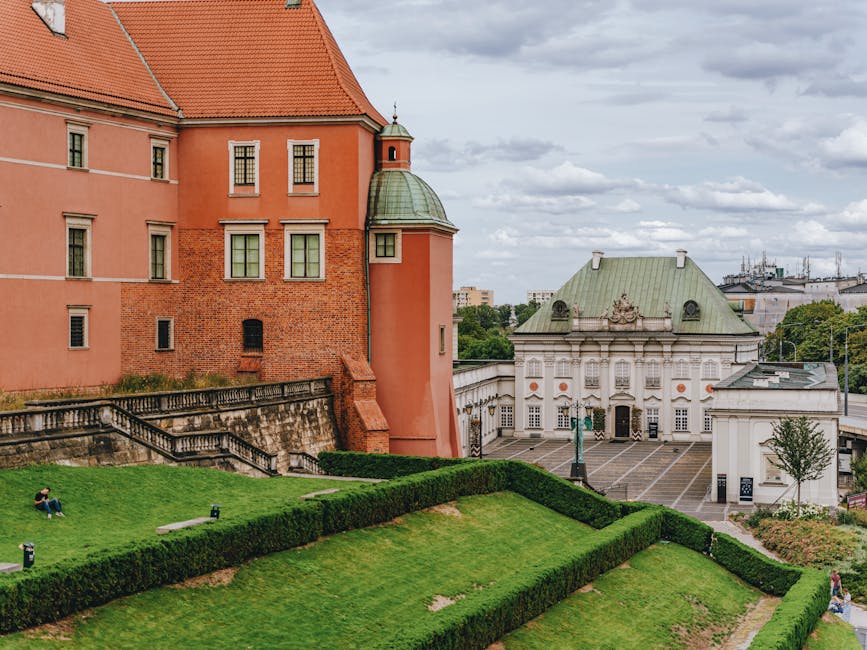
A powerful self-guided walk through Warsaw's WWII history, tracking the 1944 Uprising from ruined skyscrapers to solemn memorials.
 Moderate
Warsaw, Poland
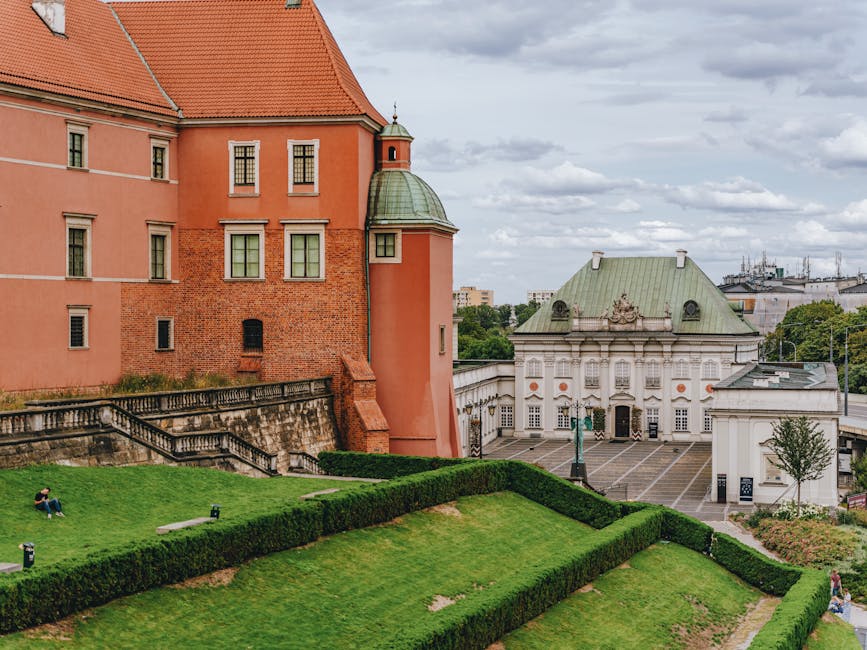
Explore the resilient spirit of Warsaw's Muranów district on this self-guided walk through the history and landmarks of the former Jewish Ghetto.
 Easy
EasyNairobi, Kenya
Discover Nairobi’s literary soul on this self-guided walk through historic libraries, iconic bookshops, and cultural centers in the heart of the CBD.
 Moderate
Vienna, Austria
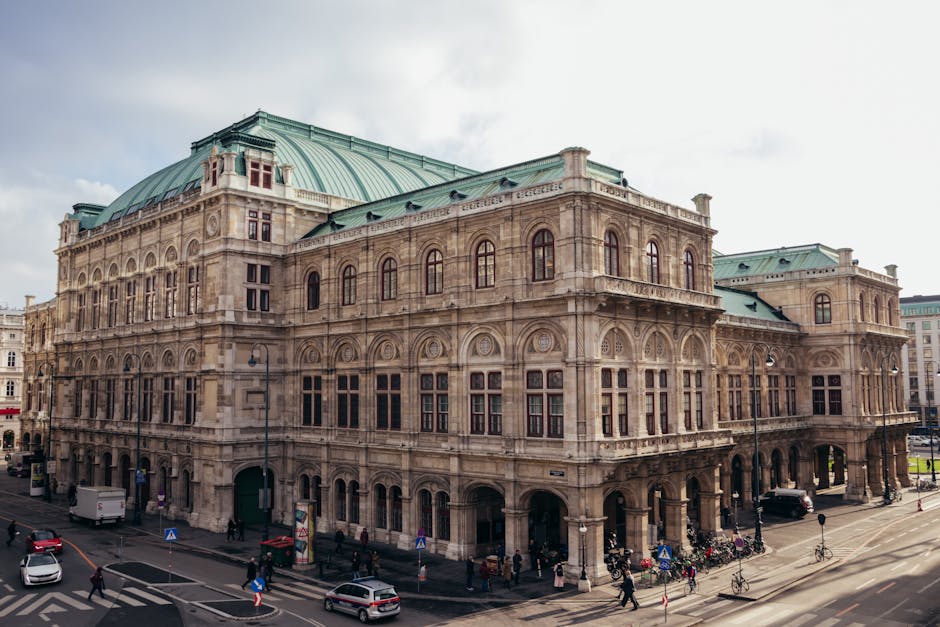
Discover the noir world of The Third Man and Cold War Vienna on this atmospheric self-guided audio walk through the historic Innere Stadt.
 Easy
EasyKrakow, Poland
Explore the prestigious Jagiellonian University district, featuring Neo-Gothic architecture, Baroque churches, and Krakow's hidden scholarly gems.
 Easy
EasyKrakow, Poland
Explore Krakow's hidden nightlife with this self-guided walk through medieval cellars, jazz clubs, and bohemian bars in the Old Town and Kazimierz.
 Easy
EasyKrakow, Poland
Discover Krakow’s creative soul in Zabłocie, exploring industrial heritage, contemporary art museums, and avant-garde architecture at your own pace.
 Easy
EasyKrakow, Poland
Explore the historic heart of Kazimierz on this self-guided walk through synagogues, ancient cemeteries, and vibrant squares.
