Stretching along the southern bank of the River Thames, the South Bank is the beating heart of London’s cultural scene. This self-guided walk invites you to explore a landscape where the weight of history meets the sharp edges of modern creativity. From the steel spans of the Millennium Bridge to the rotating silhouette of the London Eye, this neighborhood stroll offers some of the most iconic views in the world. As you navigate the riverside path, you will encounter the legacies of William Shakespeare, the industrial transformation of a former power station into a world-class art gallery, and the vibrant energy of a thousand-year-old market. This route is designed for those who want to experience the city at their own pace, moving from the serenity of the river to the bustling activity of urban squares. The South Bank is unique because it manages to feel both historic and perpetually new. You can stand beside the ruins of a medieval palace before walking past the brutalist concrete of the Southbank Centre. This walking route is particularly suited for those interested in photography, as the skyline changes dramatically with the shifting light of the London sky. You will find yourself constantly stopping to capture the juxtaposition of old and new, from the dome of St. Paul’s Cathedral across the water to the sleek skyscrapers of the City. Whether you are a first-time visitor or a long-term resident, this self-guided adventure provides a fresh perspective on London’s most famous waterfront. This is not a traditional walking tour London experience with a rigid schedule; instead, it is a flexible journey through a neighborhood that has defined London’s leisure and artistic life for centuries. Explore independently and discover why this riverside stretch remains the city’s favorite playground.
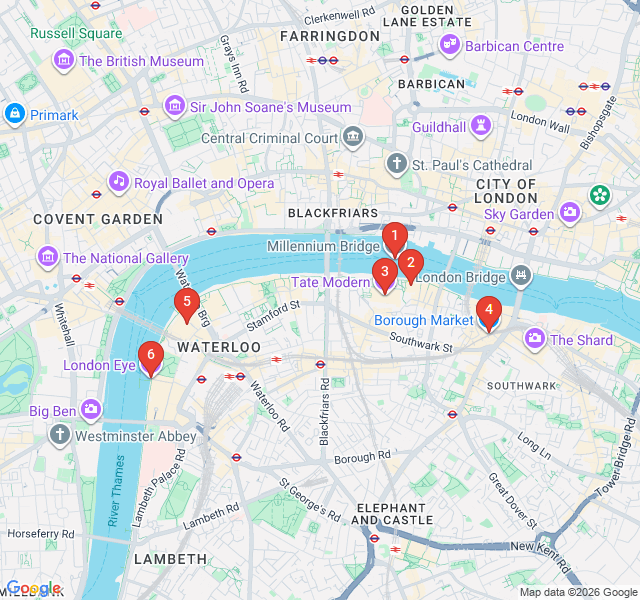
Numbers indicate the order of stops on the tour
Begin your exploration on the Millennium Bridge, London’s first new pedestrian bridge across the Thames in over a century. Opened in 2000, it famously earned the nickname 'The Wobbly Bridge' due to unexpected lateral vibrations caused by pedestrians. Though it was quickly fixed, the name stuck. From the center of the span, you have a perfectly framed view of St. Paul's Cathedral. This bridge connects the financial district of the City with the cultural hub of the South Bank, symbolizing the transition between London's corporate power and its artistic soul. Take a moment to look down at the small 'chewing gum' paintings on the metal floor, created by local artists.
Just a short walk from the bridge stands Shakespeare's Globe, a magnificent reconstruction of the 1599 playhouse where the Bard’s greatest works were performed. This project was the dream of American actor Sam Wanamaker, who spent decades ensuring the building was as authentic as possible, using traditional oak timber and the only thatched roof allowed in London since the Great Fire of 1666. While the original Globe stood about 750 feet away, this version captures the raw, energetic atmosphere of Elizabethan theater. It serves as a reminder that the South Bank was once London’s 'pleasure district,' home to theaters, bear-pitting, and taverns that operated outside the strict laws of the City.
Housed in the former Bankside Power Station, the Tate Modern is a masterpiece of industrial repurposing. The building's massive central chimney still dominates the skyline. Inside, the vast Turbine Hall hosts large-scale installations that challenge our perceptions of space and art. The gallery is home to works by Picasso, Warhol, and Dalí, but the architecture itself is just as compelling as the collection. The switch from generating electricity to generating ideas reflects the 20th-century transformation of the South Bank from an industrial wasteland into a premier cultural destination. Be sure to explore the Blavatnik Building for unique angles of the surrounding neighborhood.
Step away from the river for a moment into the bustling atmosphere of Borough Market. There has been a market on this site for at least a thousand years, making it one of London’s oldest and most famous food hubs. Under the Victorian ironwork and beneath the rumbling railway tracks, you will find everything from artisanal cheeses to international street food. This stop highlights the sensory side of London culture. It is a place where local heritage meets global flavors. The market has survived fires, bridge reconstructions, and the Blitz, remaining a constant in the lives of Londoners. It is an ideal spot to grab a snack before continuing your riverside walk.
As you continue west, you enter the Southbank Centre, a massive complex dedicated to the arts. The centerpiece is the Royal Festival Hall, built for the 1951 Festival of Britain to provide a sense of optimism following World War II. The architecture here is a prime example of brutalism—characterized by raw concrete and bold geometric shapes. While controversial to some, these buildings represent a democratic vision for the arts, offering free exhibitions, public spaces, and world-class performances. Don’t miss the undercroft area, which has served as the unofficial home of London’s skateboarding community for decades, adding a layer of gritty, local energy to the polished cultural venues.
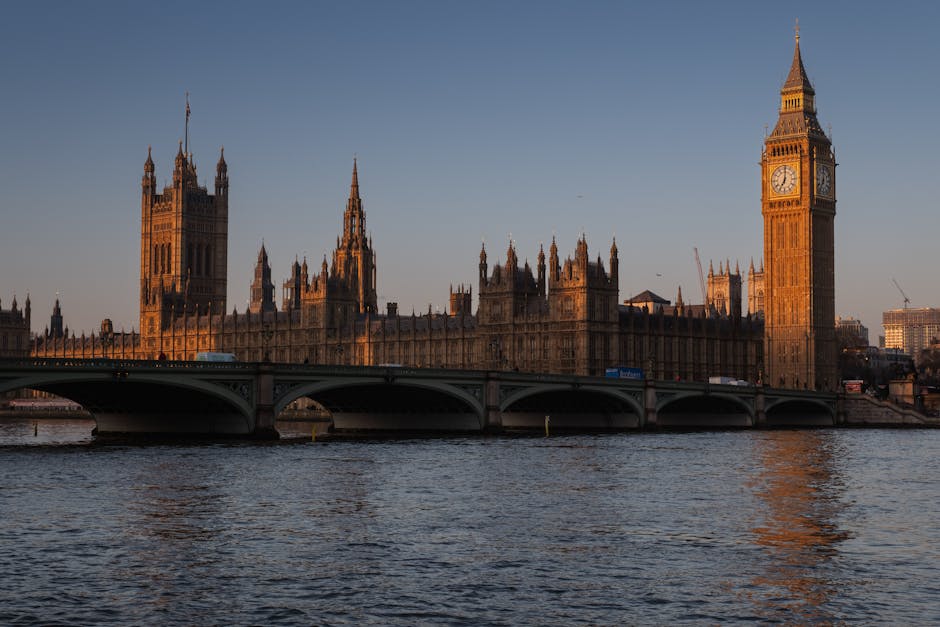
Your journey concludes at the London Eye, also known as the Millennium Wheel. When it was erected in 1999, it was intended to be a temporary structure, but its immense popularity made it a permanent fixture of the London skyline. Standing at 135 meters tall, it was the world's tallest observation wheel for several years. It represents the modern era of the South Bank—a feat of engineering that offers a 360-degree view of the city. From here, you can see the Houses of Parliament and Big Ben directly across the water, marking the end of your transition from the historic East to the political West of central London.
Download Zigway to experience "Southbank Riverside: Culture & Skyline Views" with AI-powered audio narration. Walk at your own pace while stories unfold around you.
 Easy
EasyLondon, United Kingdom
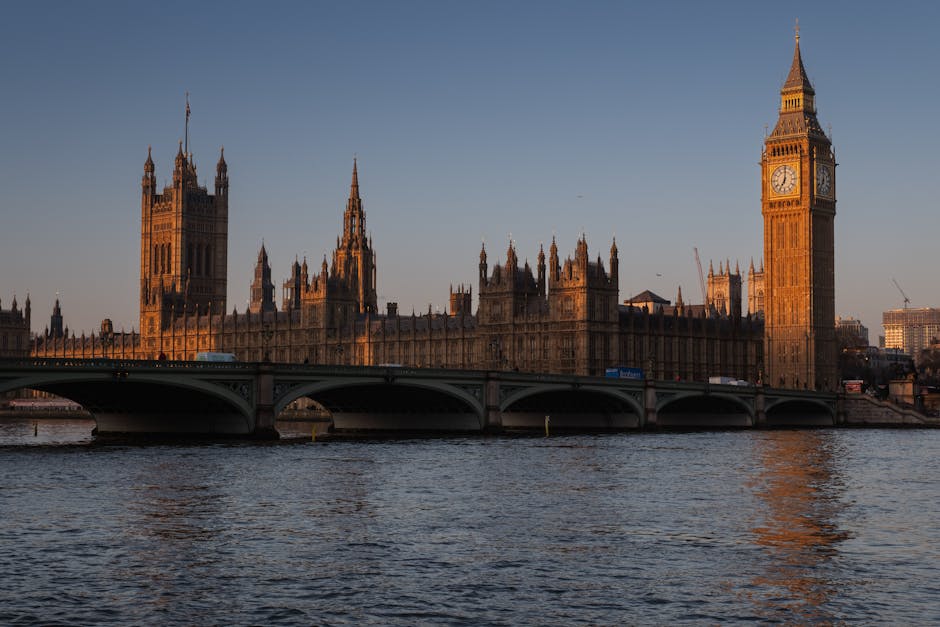
Explore the heart of British royalty and politics on this self-guided walk from the gates of St James's Palace to the iconic chimes of Big Ben.
 Easy
EasyLondon, United Kingdom
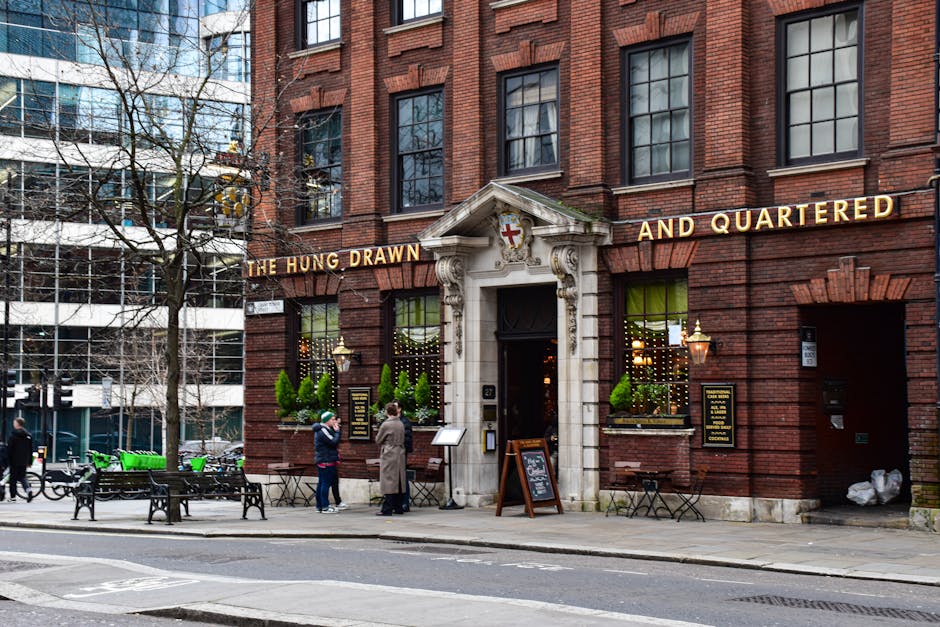
Explore the neon glow of Soho and the magic of Theatreland on this self-guided audio walk through London's most vibrant nightlife districts.
 Moderate
London, United Kingdom
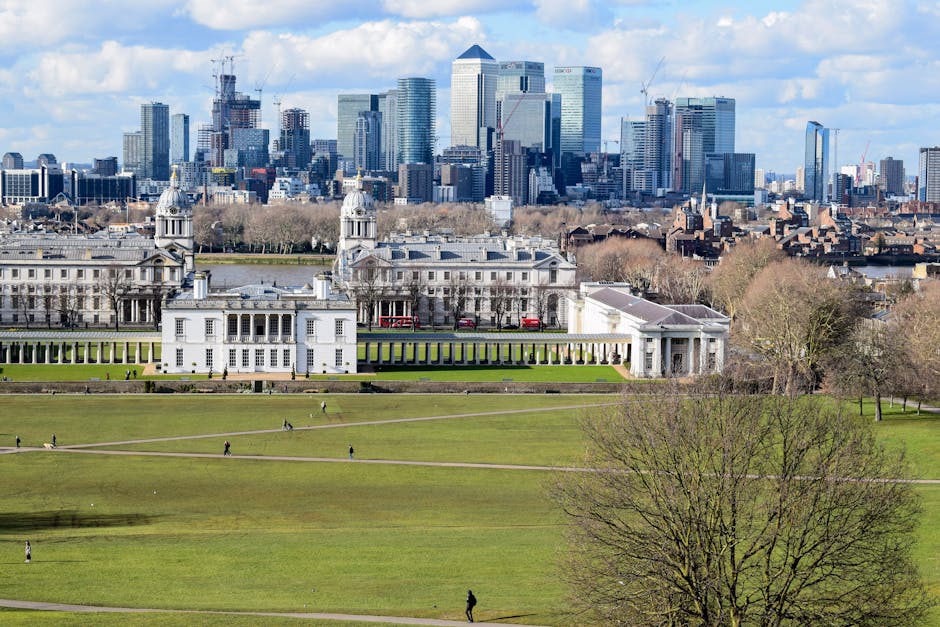
Follow the tranquil Regent’s Canal from the bustle of Camden Market to the serene, leafy waters of Little Venice on this scenic self-guided walk.
 Easy
EasyLondon, United Kingdom
Explore London’s dark history on this self-guided walk through Smithfield, covering the Great Fire, plague pits, and legendary execution sites.
 Easy
EasyGdansk, Poland
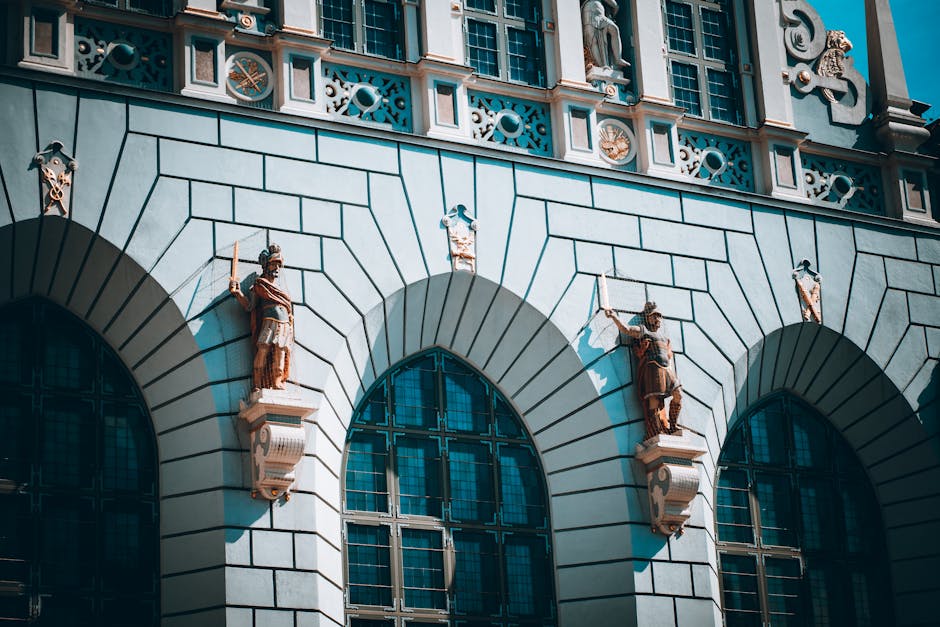
Discover the opulent Royal Way of Gdansk at your own pace. Explore Hanseatic history, gilded architecture, and the iconic Neptune's Fountain.
 Easy
EasyGdansk, Poland
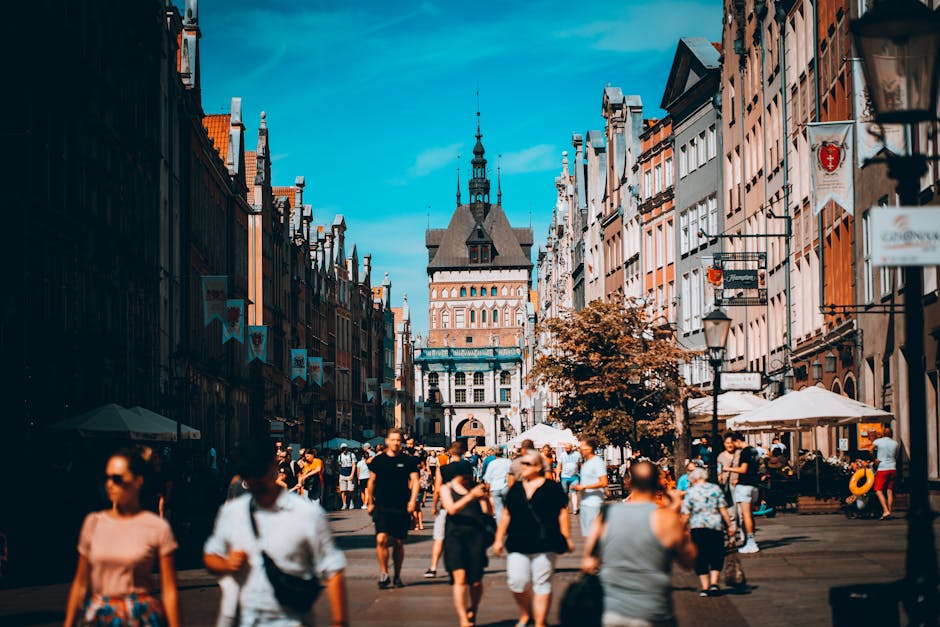
Taste the history of the Baltic. Explore Gdansk's culinary heritage from medieval markets to gold-flecked liqueurs on this self-guided walk.
 Moderate
Gothenburg, Sweden
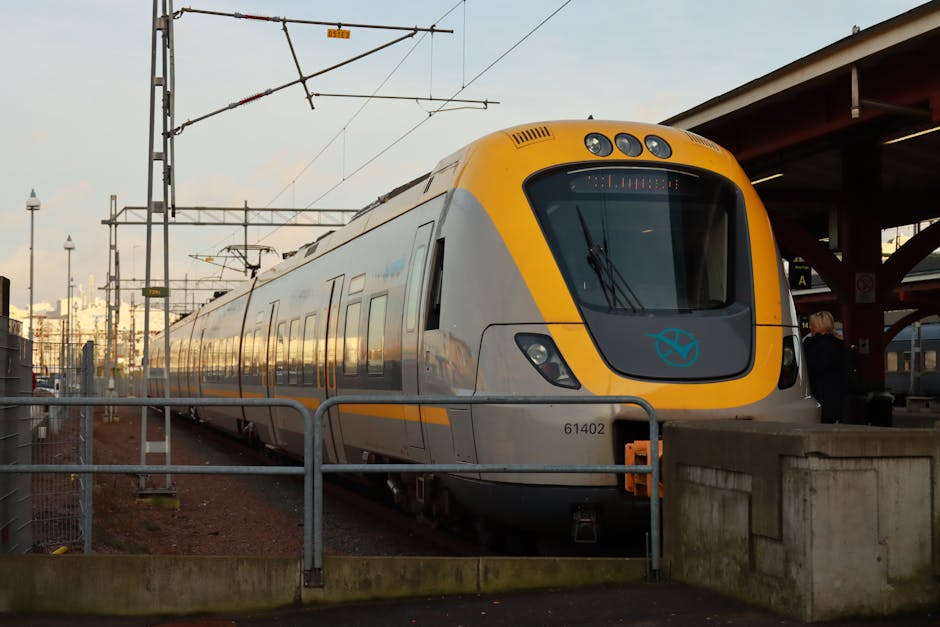
Discover Gothenburg’s maritime soul on this self-guided walk from the historic Central Station to the scenic riverfront at Stenpiren.
 Easy
EasyNairobi, Kenya
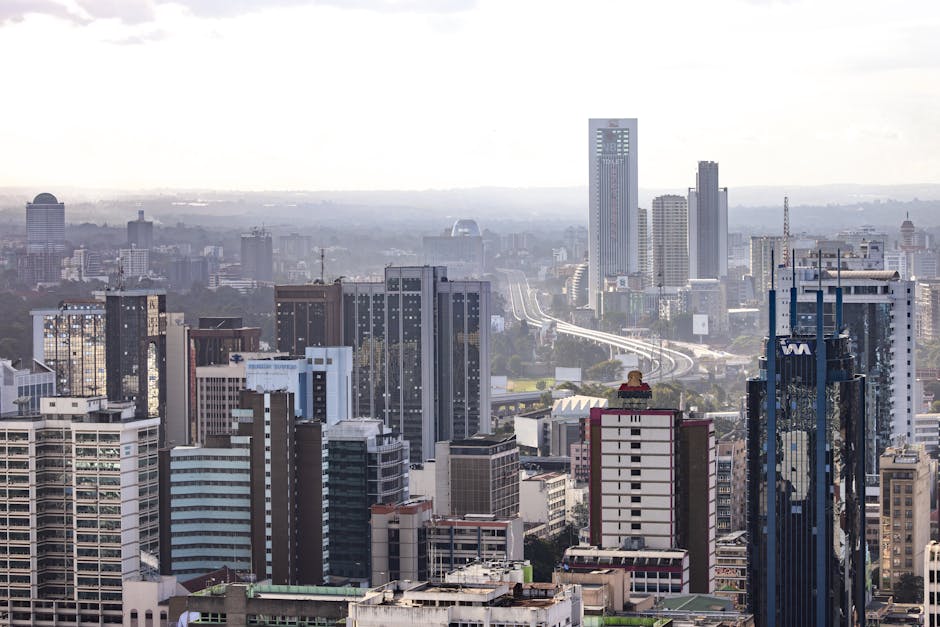
Discover Nairobi's iconic skyline on this self-guided architecture walk through the CBD’s most famous modernist and Brutalist landmarks.
 Easy
EasyEdinburgh, United Kingdom
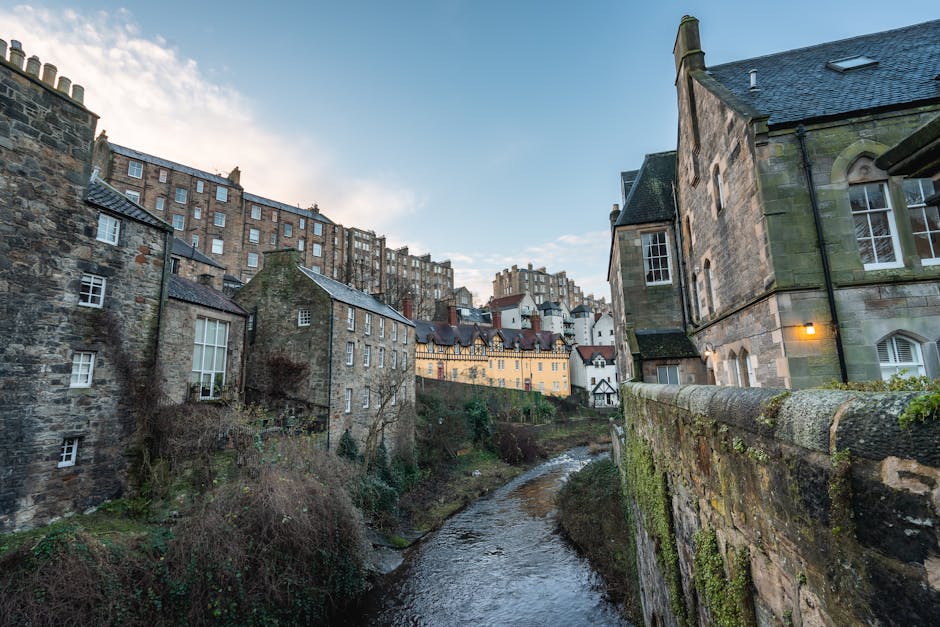
Explore Edinburgh's historic Royal Mile at your own pace, from the heights of the Castle to the royal Palace of Holyroodhouse.
 Easy
EasyEdinburgh, United Kingdom
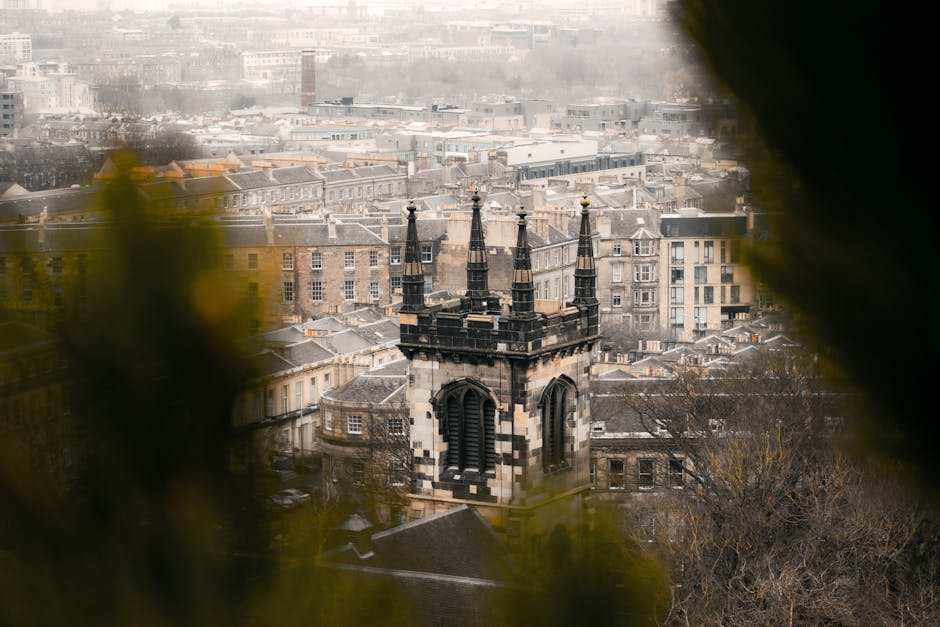
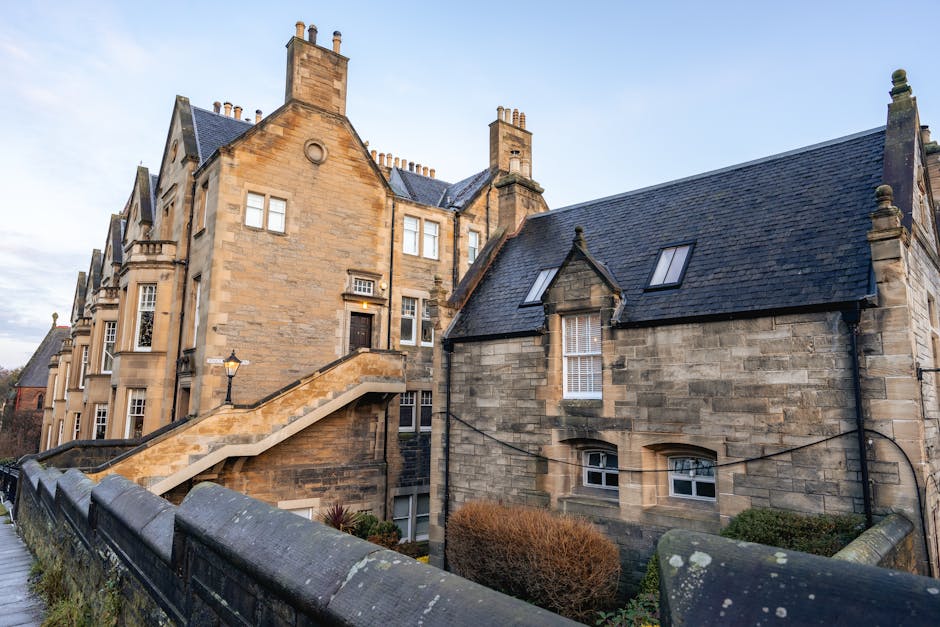
Capture the magic of Edinburgh on this self-guided stroll through the fairy-tale Dean Village, floral Circus Lane, and the scenic Water of Leith.
 Easy
EasyEdinburgh, United Kingdom
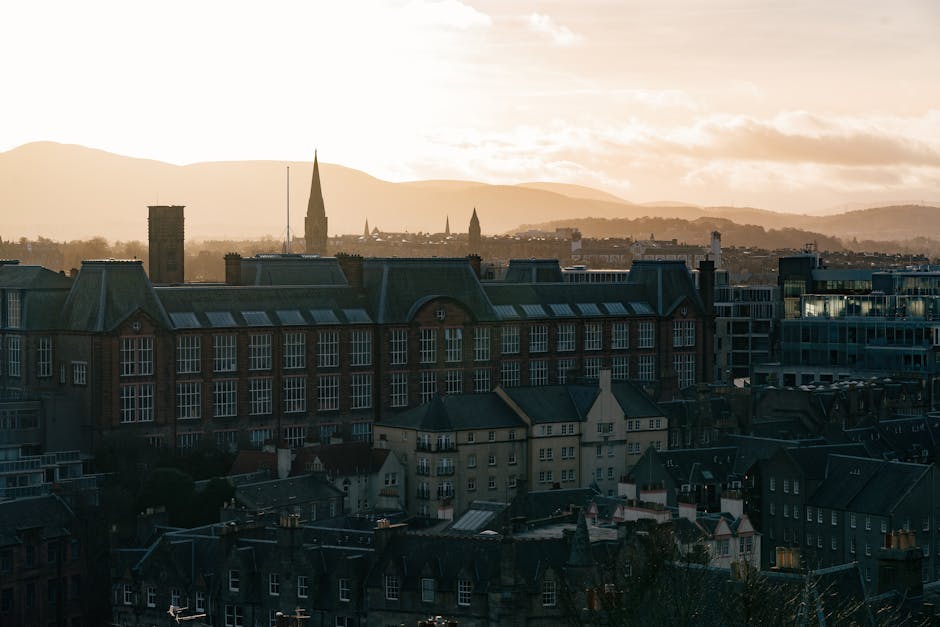
Explore Edinburgh's creative soul on this self-guided walk from historic museums to the stylish galleries and boutiques of the West End.
 Challenging
Edinburgh, United Kingdom
Ascend an ancient volcano and discover royal history on this challenging self-guided walk through Edinburgh's iconic Holyrood Park.
