Step into a world where steam engines and steel tracks transformed a medieval stronghold into a global transportation hub. York is often celebrated for its Roman and Viking roots, but its 19th-century identity as a 'Railway City' is equally foundational to its modern character. This self-guided walk explores the Railway Quarter, a district defined by Victorian ambition, architectural grandeur, and the echoes of the Industrial Revolution. As you traverse this neighborhood stroll, you will discover how the arrival of the iron horse reshaped the city's landscape, moving from the massive engineering halls of the National Railway Museum to the elegant curves of the historic station. This walking route York offers a unique perspective on the city's growth, highlighting the individuals like George Hudson and George Leeman who gambled fortunes on the future of rail. Beyond the tracks, the route showcases the somber beauty of the North Eastern Railway War Memorial and the opulent hospitality of the Victorian era at The Milner York. It is a journey that bridges the gap between the ancient stone of Micklegate Bar and the high-speed innovation that continues to define York today. Explore independently and at your own pace, taking time to admire the intricate ironwork and grand facades that tell the story of a city that refused to be left behind by the modern world. Whether you are a history enthusiast or an architecture lover, this self-guided adventure reveals the hidden stories etched into the bricks and rails of York's industrial heart.
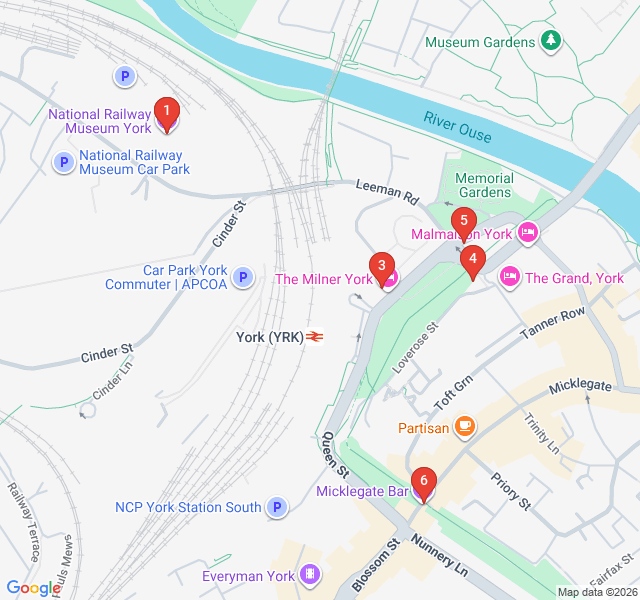
Numbers indicate the order of stops on the tour
Begin your exploration at the largest railway museum in the world. This site isn't just a collection of old trains; it is a monument to the engineering marvels that changed the world. Stand in the Great Hall and you are surrounded by giants, from the record-breaking Mallard—the fastest steam locomotive ever built—to the opulent royal carriages that served Queen Victoria. The museum occupies former motive power depots, placing you right in the heart of York's working rail history. As you wander through the exhibits, consider how these massive machines shrank distances and connected the North of England to the rest of the world. It is the perfect starting point to understand the scale of York's railway ambition.
Exit the museum and head toward the current York Railway Station. When this structure opened in 1877, it was the largest station in the world. Its most striking feature is the dramatic curve of the platforms and the soaring iron-ribbed roof, designed by Thomas Prosser and William Peachey. The curve was a necessity of the track layout but resulted in one of the most beautiful Victorian interior spaces in Britain. Notice the intricate 'spandrels'—the decorative metalwork in the corners of the roof arches. This station was a cathedral of the industrial age, designed to impress travelers the moment they arrived in the city. It remains a bustling hub, bridging York’s historic past with its high-speed present.
Just outside the station stands The Milner York, originally known as the Royal Station Hotel. Built in 1878 using the same yellow Scarborough brick as the station, this grand building was designed to provide luxury accommodation for the new class of wealthy rail travelers. In the mid-19th century, the railway brought a new kind of tourism to York, and this hotel was the pinnacle of that movement. Its expansive gardens once offered a tranquil escape from the soot and noise of the steam engines. Admire the Victorian Italianate architecture and imagine the porters scurrying between the station and the lobby with heavy steamer trunks, catering to the elite of the British Empire.
A short walk from the hotel brings you to a site of quiet reflection. This memorial was designed by the celebrated architect Sir Edwin Lutyens, who also designed the Cenotaph in London. It commemorates the 2,236 employees of the North Eastern Railway who gave their lives during the First World War. The railway was vital to the war effort, transporting troops and supplies, and its workers were often on the front lines of logistics. The memorial features a 54-foot high obelisk and a screen wall inscribed with names. It serves as a poignant reminder that the 'Steam and Steel' era was built and maintained by a community that sacrificed deeply during the early 20th century.
Near the city walls, you will find the statue of George Leeman. While George Hudson was known as the 'Railway King' of York, Leeman was the man who saved the city's railway reputation. Hudson’s reign ended in financial scandal, but Leeman, a lawyer and politician, stepped in to lead the North Eastern Railway into its most prosperous era. He served as chairman of the railway and three times as Lord Mayor of York. This statue, erected in 1885, depicts him in his mayoral robes. He represents the civic pride and the steady, professional management that ensured York remained the railway capital of the North long after the initial speculative bubble had burst.
Finish your walking route at Micklegate Bar, the traditional royal entrance to the city. For centuries, this was the most important of York’s four main gateways, where the heads of traitors were once displayed on spikes. The arrival of the railway in 1839 forced the city to literally break through its walls; new arches were cut into the medieval stone nearby to allow the tracks to enter. Standing here, you can see the fascinating intersection of two eras: the 14th-century limestone fortifications and the 19th-century railway infrastructure. It is the perfect place to conclude your journey, where the ancient defenses of York meet the iron roads that opened the city to the world.
Download Zigway to experience "Steam and Steel: York's Railway Heritage" with AI-powered audio narration. Walk at your own pace while stories unfold around you.
 Easy
EasyYork, United Kingdom
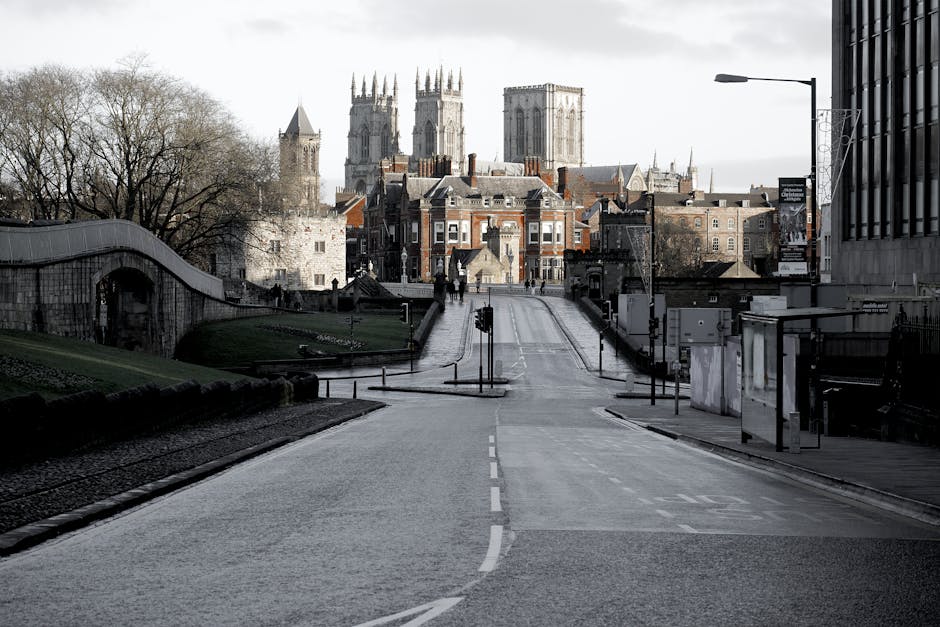
Uncover the secrets of Roman Eboracum on this self-guided walk through York’s ancient fortress walls, hidden towers, and legendary haunted basements.
 Easy
EasyYork, United Kingdom
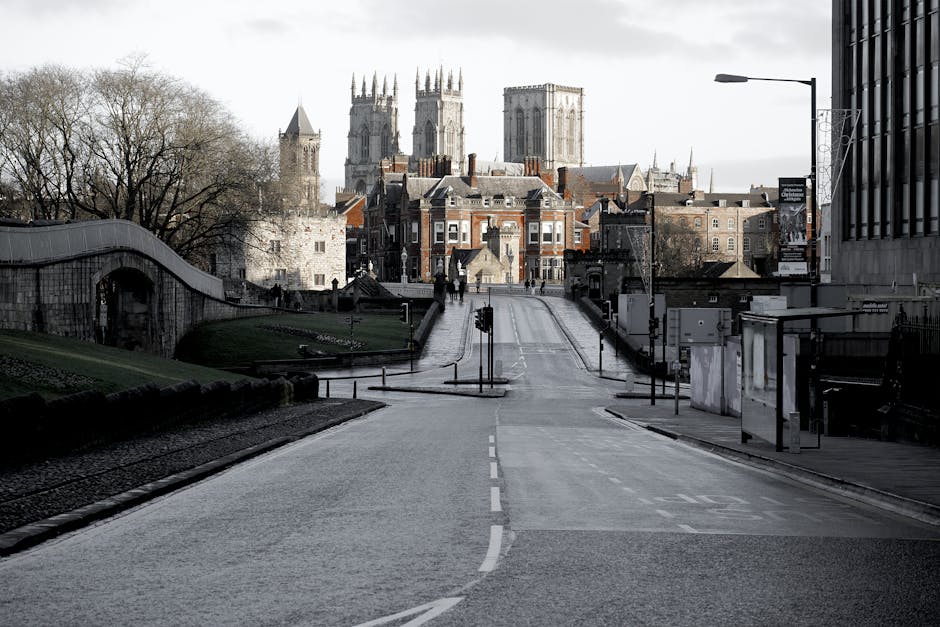
Explore the architectural wonders of York’s Minster Quarter at your own pace with this independent audio walk through Gothic history.
 Easy
EasyYork, United Kingdom
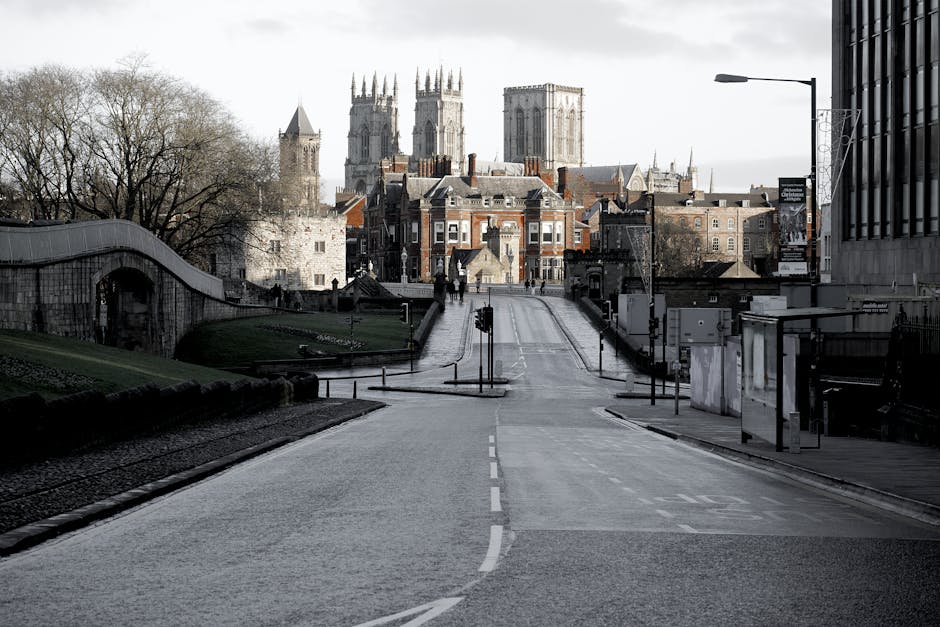
Explore York's delicious artisan food scene on this self-guided walking route through medieval streets and modern creative hubs.
 Easy
EasyYork, United Kingdom
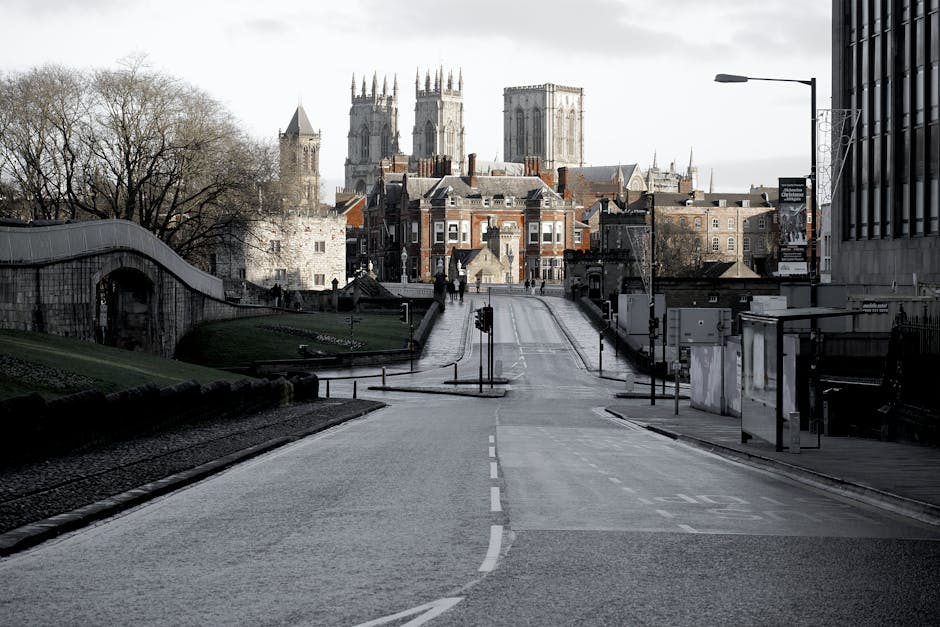
Explore the literary soul of York on a self-guided walk through historic libraries, ancient bookshops, and the haunts of famous poets.
 Easy
EasyWarsaw, Poland
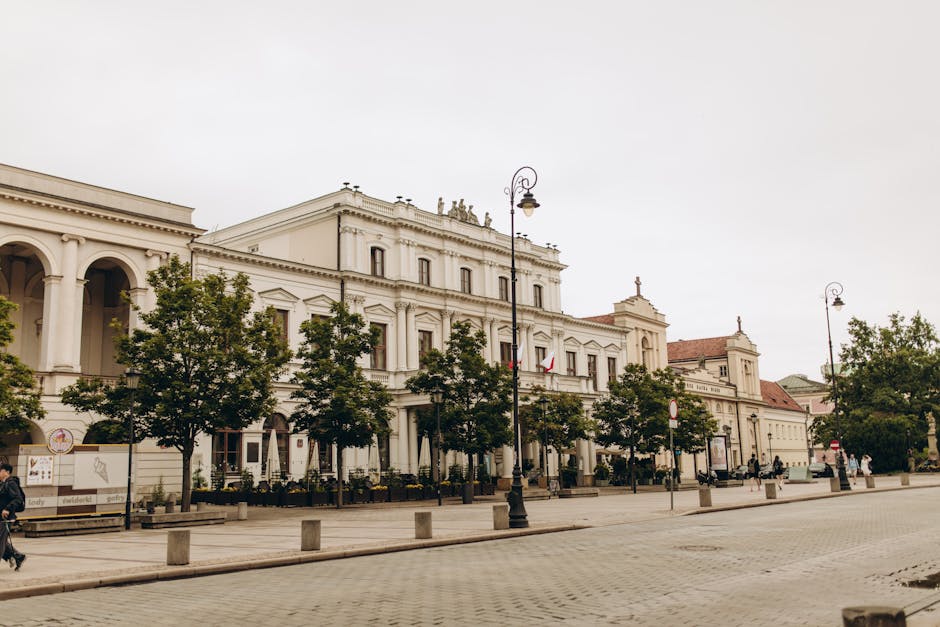
Explore the 'Polish Versailles' at your own pace. Discover Baroque architecture, royal history, and stunning gardens on this self-guided walk.
 Easy
EasyNairobi, Kenya
Explore Nairobi's architectural evolution from colonial-era landmarks to iconic Brutalist skyscrapers on this historic self-guided walking route.
 Easy
EasyNairobi, Kenya
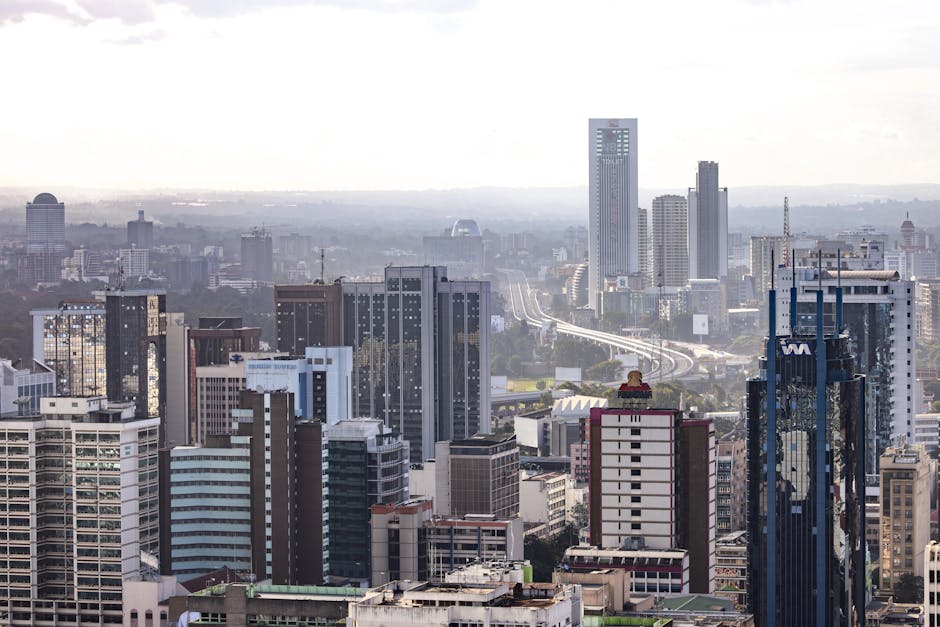
Discover Nairobi's iconic skyline on this self-guided architecture walk through the CBD’s most famous modernist and Brutalist landmarks.
 Moderate
Vienna, Austria
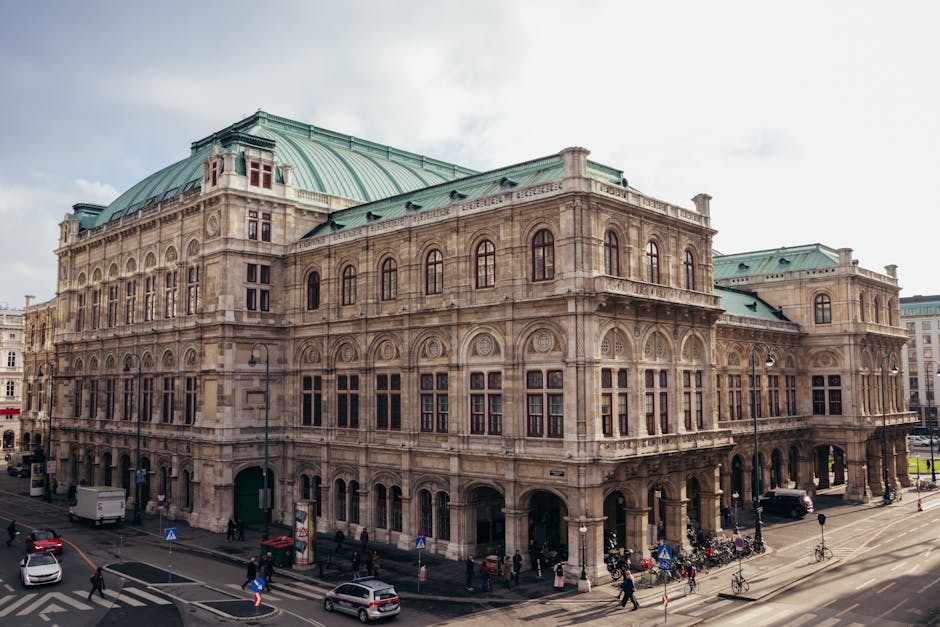
Follow the footsteps of Mozart and Strauss through Vienna’s historic center on this self-guided walk through the city's rich musical history.
 Easy
EasyEdinburgh, United Kingdom
Explore Edinburgh's historic Royal Mile at your own pace, from the heights of the Castle to the royal Palace of Holyroodhouse.
 Easy
EasyEdinburgh, United Kingdom
Capture the magic of Edinburgh on this self-guided stroll through the fairy-tale Dean Village, floral Circus Lane, and the scenic Water of Leith.
 Easy
EasyEdinburgh, United Kingdom
Explore Edinburgh's creative soul on this self-guided walk from historic museums to the stylish galleries and boutiques of the West End.
 Challenging
Edinburgh, United Kingdom
Ascend an ancient volcano and discover royal history on this challenging self-guided walk through Edinburgh's iconic Holyrood Park.
