Ghent is a city where the Middle Ages and the 21st century do not just coexist; they collide in spectacular fashion. This self-guided walk invites you to explore the fascinating evolution of Ghent's skyline, moving from the ornate Baroque gateways of the old fish market to the minimalist, modernist concrete of the University Quarter. While many travelers stick to the medieval core, this walking route pushes further, revealing how Ghent has reinvented itself as a hub of contemporary art and innovative architecture. You will discover how industrial ruins have been transformed into tech hubs and how a controversial glass-and-wood pavilion became a modern icon in the shadow of ancient cathedrals. The journey begins at the Oude vismijn, a gateway that perfectly captures the city's maritime history before leading you toward the heart of the city’s architectural debate: the Stadshal. From there, the route follows the water toward the University Quarter, a neighborhood pulsating with youthful energy and intellectual history. You will encounter De Krook, a library that looks like a stack of rusted steel plates, and the Wintercircus, a former circus-turned-garage-turned-innovation-center. The walk concludes at the Book Tower, a masterpiece of modernism that stands as a silent sentinel over the city. This neighborhood stroll is perfect for those who want to see the 'real' Ghent—a city that respects its past but is never afraid to build a bold future. Whether you are an architecture enthusiast or a casual traveler, this exploration offers a unique perspective on one of Europe's most visually dynamic cities.
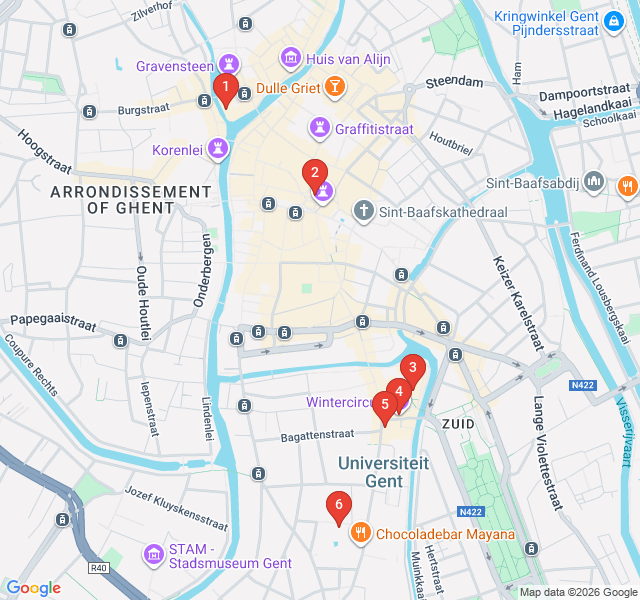
Numbers indicate the order of stops on the tour
Welcome to the Old Fish Market, or Oude vismijn. Look up at the grand Baroque gateway, where a statue of Neptune keeps watch over the Scheldt and Leie rivers. Built in the late 17th century, this was the bustling heart of Ghent's fish trade. Notice the intricate carvings representing the city's relationship with water. After a devastating fire in the 19th century, much of it was rebuilt, and today it serves as a gateway between the medieval Gravensteen castle and the city’s evolving center. It is a perfect starting point to see how Ghent preserves its historical shell while repurposing the interior for modern life.
Locally known as 'De Schaapstal' or the Sheepfold, the Stadshal is one of Ghent's most debated pieces of modern architecture. Designed by Robbrecht en Daem and Marie-José Van Hee, this massive canopy of wood, glass, and steel was completed in 2012. It sits boldly between the historic Belfry and Saint Nicholas' Church. While controversial at first, it has become a beloved public space. Look closely at the ceiling; thousands of small windows allow light to filter through, creating a shimmering effect. It is a masterclass in how to insert contemporary design into a sensitive, UNESCO-protected medieval landscape.
As you approach the water's edge, the landscape shifts dramatically. De Krook is Ghent’s 'Library of the Future,' opened in 2017. The name refers to the 'bend' in the river Scheldt where it sits. Its architecture, a collaboration between Catalan and Flemish firms, features horizontal layers of weathered steel that mimic the city's industrial past. Step inside to see how the building integrates a library, university labs, and a radio station. The open staircases and panoramic views of the city offer a moment of quiet reflection amidst the steel and glass. It is a symbol of Ghent’s shift from an industrial power to a knowledge-driven city.
Just a stone's throw from the library lies the Wintercircus. This building has lived many lives: originally a permanent circus in the late 1800s, it later became a massive multi-story garage for the Mahy car collection. For decades, it sat derelict, a hidden 'urban ruin' in the center of town. Recently, it has been painstakingly renovated into a hub for technology and startups. While the exterior remains somewhat unassuming, the interior retains the circular shape of the original circus arena. It stands as a testament to Ghent's ability to recycle its urban fabric for the digital age.
The VIERNULVIER building, traditionally known as the Vooruit, is a temple of Ghent's social and cultural history. Built between 1911 and 1914, it served as a festival hall for the city's socialist labor movement. It was a place where workers could enjoy theater, cinema, and libraries—luxuries previously reserved for the elite. Architecturally, it is an eclectic mix of Art Nouveau and Art Deco elements. Today, it remains the beating heart of Ghent’s arts scene. Take a moment to appreciate the grand facade and the bustling terrace, which has been a local meeting spot for over a century.
Your walk ends at the Boekentoren, or Book Tower. Designed by the famous Belgian architect Henry van de Velde in the 1930s, this is a masterpiece of modernism. Standing 64 meters tall, it is often called the 'Fourth Tower' of Ghent, joining the three medieval towers of the city center. It houses over three million books belonging to the University of Ghent. Van de Velde designed everything from the concrete structure to the window handles. Its minimalist, functionalist style was revolutionary at the time and continues to influence architects today. It is the perfect final stop to reflect on Ghent's journey from medieval spires to modernist heights.
Download Zigway to experience "Ghent's Architectural Contrast" with AI-powered audio narration. Walk at your own pace while stories unfold around you.
 Challenging
Ghent, Belgium
Explore Ghent's gritty past and modern rebirth on this self-guided walking route through the historic Northern Docks and industrial heritage sites.
 Easy
EasyGhent, Belgium
Discover the sugary secrets of Ghent on this self-guided stroll through historic bakeries, candy shops, and artisanal chocolatiers.
 Easy
EasyGhent, Belgium
Explore Ghent's historic Patershol district, a medieval maze of narrow alleys, legendary Jenever bars, and the city's finest culinary hidden gems.
 Easy
EasyGhent, Belgium
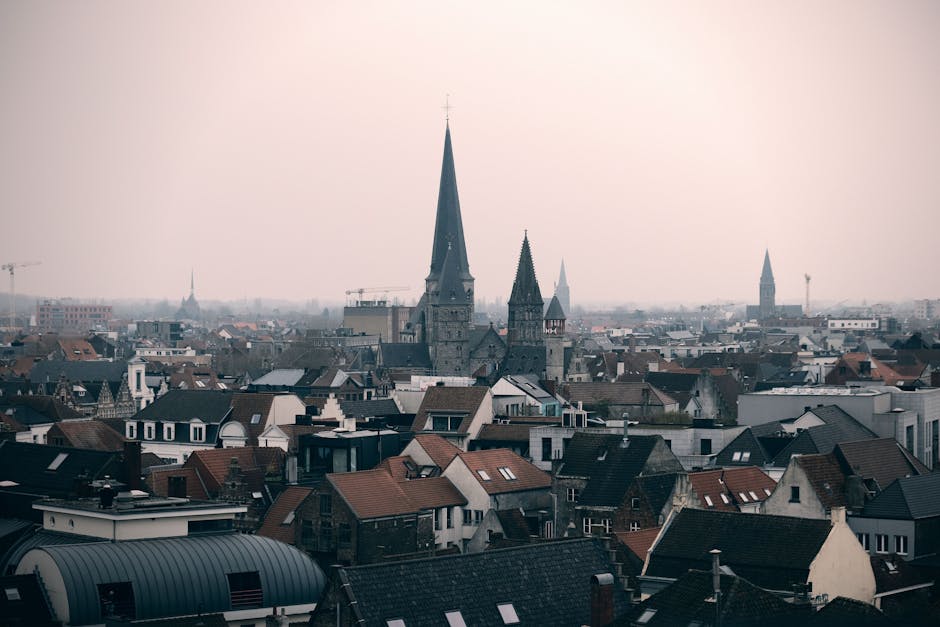
Discover the scenic riverside of Ghent, from the iconic Graslei to the historic Rabot towers, on this atmospheric self-guided walk.
 Easy
EasyGdansk, Poland
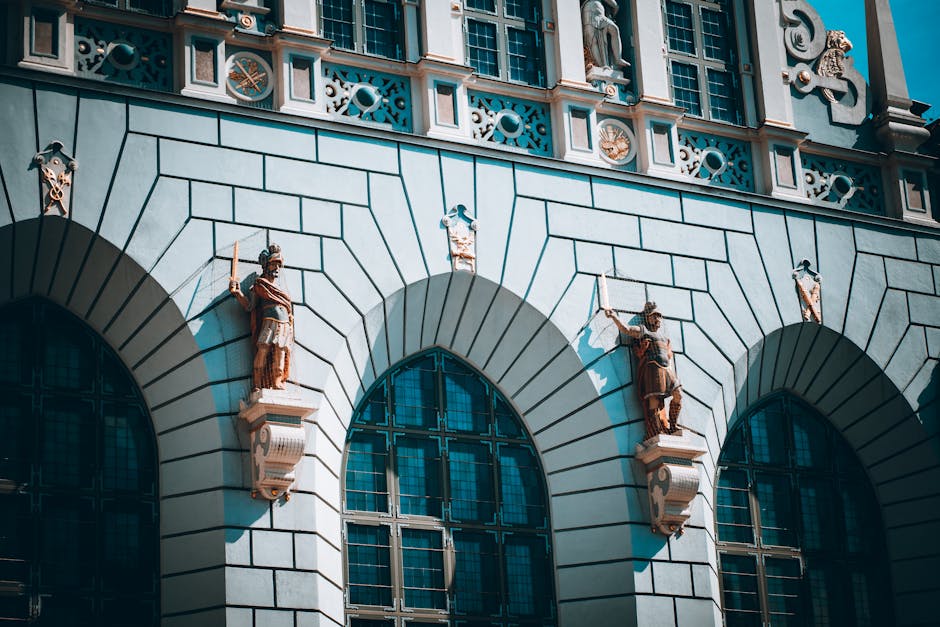
Discover the opulent Royal Way of Gdansk at your own pace. Explore Hanseatic history, gilded architecture, and the iconic Neptune's Fountain.
 Easy
EasyGdansk, Poland
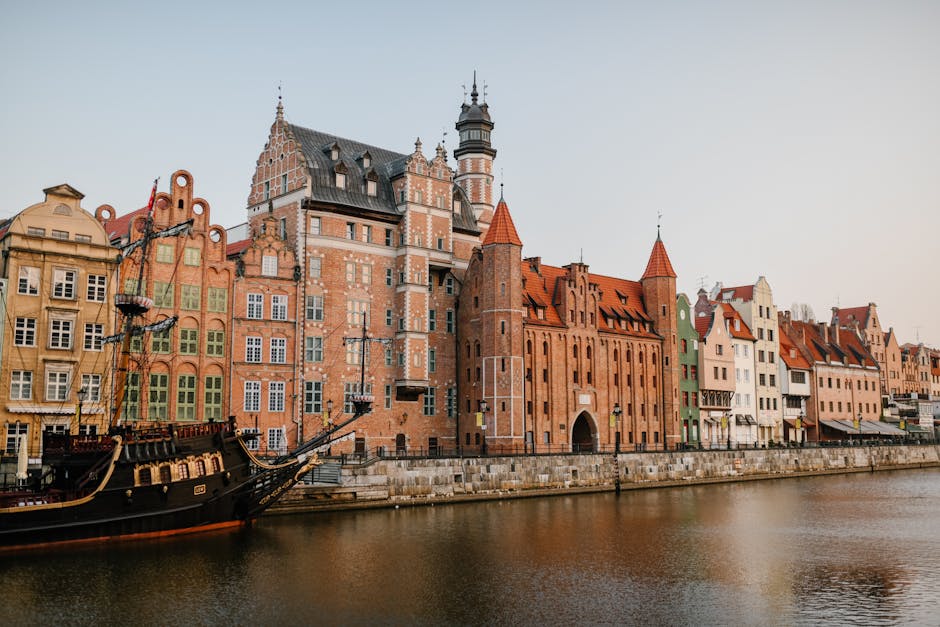
Discover the 'Baltic Gold' on this self-guided walk through Gdansk's historic mills, massive cathedrals, and the magical Mariacka Street.
 Easy
EasyGothenburg, Sweden
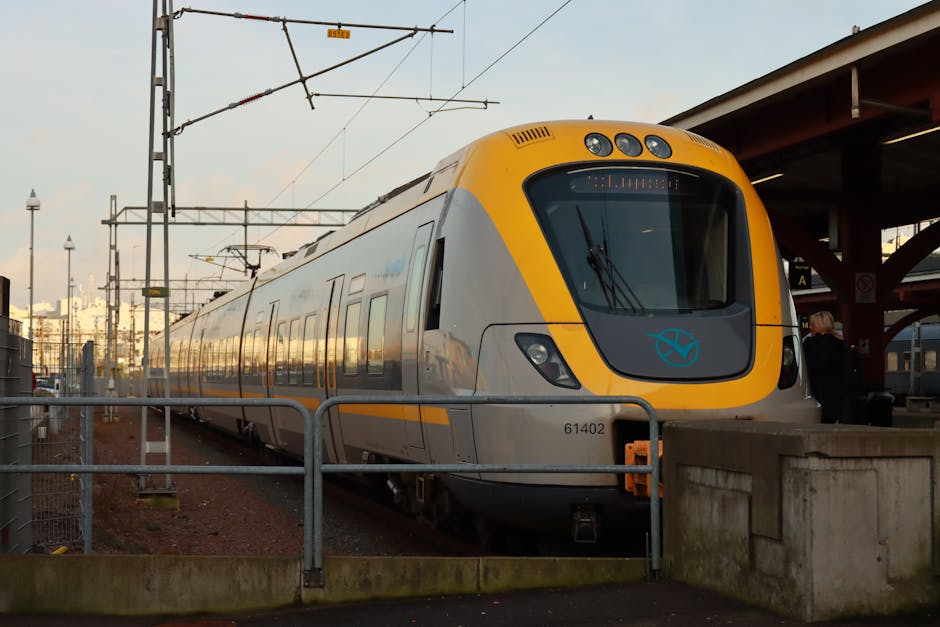
Explore Gothenburg's elegant academic district, featuring grand 19th-century stone architecture and the iconic cultural hub of Götaplatsen.
 Easy
EasyGothenburg, Sweden
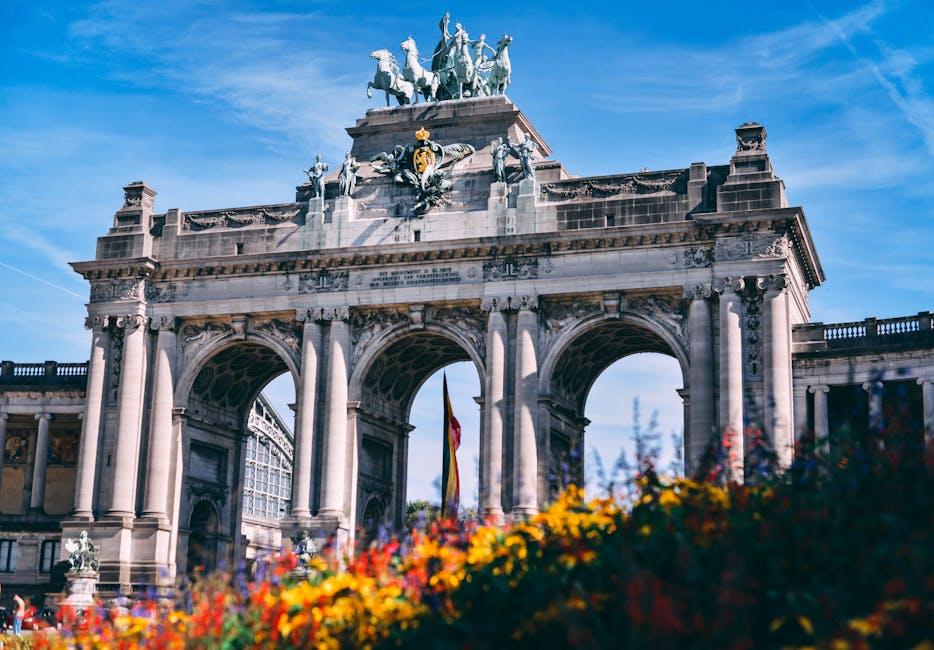
Discover Gothenburg’s 17th-century Dutch foundations, historic canals, and military fortifications on this self-guided architectural walk.
 Easy
EasyBrussels, Belgium
Discover the colorful world of Belgian comics on this independent walking route through the creative streets and murals of central Brussels.
 Moderate
Brussels, Belgium
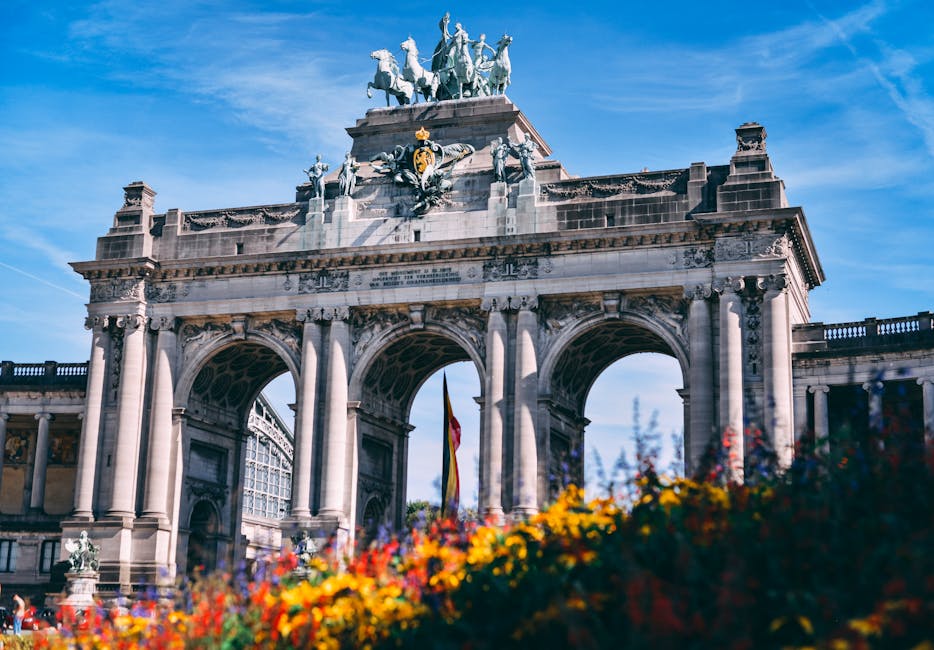
Explore the majestic Royal Quarter, from Art Nouveau gems to the King's Palace and the iconic views of Mont des Arts on this self-guided walk.
 Moderate
Brussels, Belgium
Explore Brussels' industrial heart and artistic rebirth on this self-guided walk through Molenbeek and the Canal district's iconic landmarks.
 Moderate
Brussels, Belgium
Discover Brussels' Art Nouveau masterpieces at your own pace, from Victor Horta's UNESCO sites to the flamboyant Maison Saint-Cyr.
