Step into the winding, medieval streets of El Born, a neighborhood where Barcelona’s past and present collide in a vibrant display of culture, gastronomy, and craftsmanship. This self-guided walk invites you to explore the heart of the old Ribera district, once the center of the city’s maritime trade and now a hub for trendsetting boutiques and culinary innovation. Your journey begins at the striking Mercat de Santa Caterina, famous for its undulating, colorful ceramic roof, where you can experience the authentic pulse of a local market away from the typical tourist trails. As you navigate the narrow alleys, you will discover the architectural grandeur of Carrer de Montcada, a street lined with medieval palaces that now house world-class art collections. This walking route Barcelona enthusiasts love focuses on the stories behind the stones. You will encounter the Basílica de Santa Maria del Mar, an iconic example of pure Catalan Gothic architecture built by the local community in the 14th century. Nearby, the somber beauty of the Fossar de les Moreres serves as a reminder of the city's resilience. The neighborhood stroll continues along the Passeig del Born, a former site of medieval jousting tournaments that has transformed into a lively social corridor filled with artisan workshops and tapas bars. Finally, you will reach the El Born Centre de Cultura i Memòria, a converted 19th-century market that now preserves the excavated ruins of the city as it stood before the Siege of 1714. Whether you are a history buff or a food lover, this self-guided adventure offers the flexibility to stop for a glass of vermouth or browse handmade leather goods at your own pace. By following this route, you gain a deeper understanding of how El Born evolved from a medieval artisan quarter into one of Europe’s most stylish neighborhoods. This walking tour Barcelona experience is designed to be immersive, providing historical context while leaving you free to choose your own culinary detours along the way. **Note:** This area is known for its ever-changing character. Street art, pop-up venues, and temporary exhibitions may differ from what's described. That's part of the adventure - you might discover something entirely new!
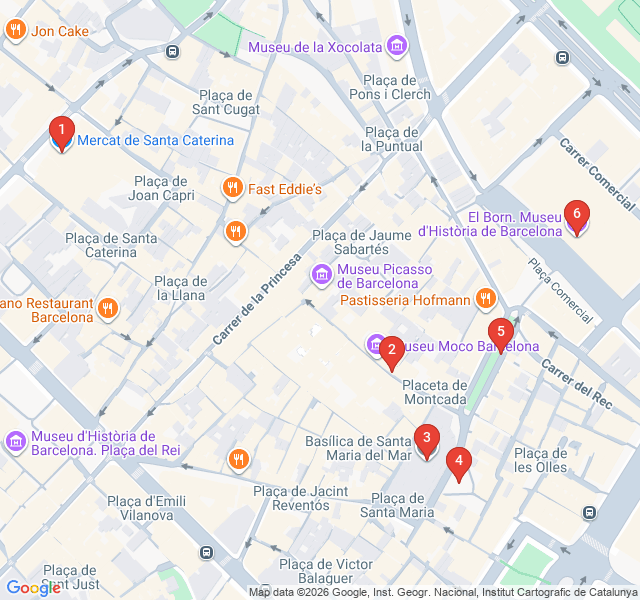
Numbers indicate the order of stops on the tour
Welcome to the Mercat de Santa Caterina, easily recognized by its spectacular, wavy roof covered in 325,000 colorful ceramic pieces. Built on the site of a former convent, this was the city's first covered market, though the modern renovation you see today was completed in 2005. Unlike the more famous Boqueria, this market remains a favorite for locals. As you step inside, you'll find a feast for the senses with stalls offering fresh Mediterranean seafood, cured meats, and seasonal produce. It is a perfect place to observe the daily life of the neighborhood. The market also houses an archaeological space where you can see the remains of the original convent foundations, blending modern design with ancient history.
Walking down Carrer de Montcada is like stepping back into the 14th century. This was once the most prestigious street in Barcelona, where the city’s wealthy merchants and nobility built their grand palaces. Look up to see the characteristic stone courtyards, external staircases, and gothic windows. Many of these buildings have been beautifully preserved and now serve as museums, most notably the Picasso Museum. While the exhibits inside change, the architecture of the palaces themselves—such as Palau Aguilar and Palau Meca—remains a constant testament to Barcelona's golden age of trade. Take a moment to peek into the open courtyards to see the intricate stonework that defined medieval luxury.
Standing before the Basílica de Santa Maria del Mar, you are looking at the finest example of Catalan Gothic architecture. Unlike the Cathedral in the Gothic Quarter, which was funded by the monarchy, this 'Cathedral of the Sea' was built by and for the local people—the sailors and merchants of the Ribera district. Construction took only 54 years in the 14th century, resulting in a remarkably consistent style. Note the massive octagonal columns and the sense of immense internal space. A local legend tells of the 'bastaixos', the dockworkers who carried the heavy stones from the royal quarry on Montjuïc on their backs to build this church. Look for their image carved into the main bronze doors.
Just outside the basilica lies the Fossar de les Moreres, a place of deep historical significance for Catalans. This plaza is built over a former cemetery where the defenders of the city were buried following the Siege of Barcelona in 1714. At the center stands a tall, curved red steel pedestal topped with an eternal flame, symbolizing the memory of those who fell. The surrounding walls are inscribed with a poem by Frederic Soler, stating that 'in the graveyard of the mulberry trees, no traitor is buried.' It is a quiet, contemplative spot that serves as a powerful memorial to the loss of Catalan independence, contrasting with the lively cafes and shops nearby.
The Passeig del Born is the social spine of the neighborhood. During the Middle Ages, this wide promenade was the site of jousting tournaments, festivals, and public executions. Today, the atmosphere is considerably more festive. The street is lined with historic buildings that now house independent boutiques, artisan workshops, and some of the city's best cocktail bars and tapas spots. It’s a great place to stop and browse for unique local crafts. The 'born' in the name actually refers to a jousting field. As you walk toward the large iron structure at the end of the street, imagine the medieval crowds that once gathered here to cheer on their favorite knights.
Your walk concludes at the El Born Centre de Cultura i Memòria. This magnificent cast-iron building was once a thriving wholesale market. During renovations in the early 2000s, workers discovered remarkably preserved ruins of the city streets destroyed after the 1714 Siege. Instead of continuing the renovation as a library, the city decided to preserve the site as a cultural center. You can walk around the perimeter of the excavation for free to see the layout of 18th-century homes, shops, and sewer systems. It provides a unique 'X-ray' view of Barcelona's history. The center frequently hosts temporary exhibitions and events, so check the local listings for current programming during your visit.
Download Zigway to experience "El Born Tapas and Artisans" with AI-powered audio narration. Walk at your own pace while stories unfold around you.
 Moderate
Barcelona, Spain
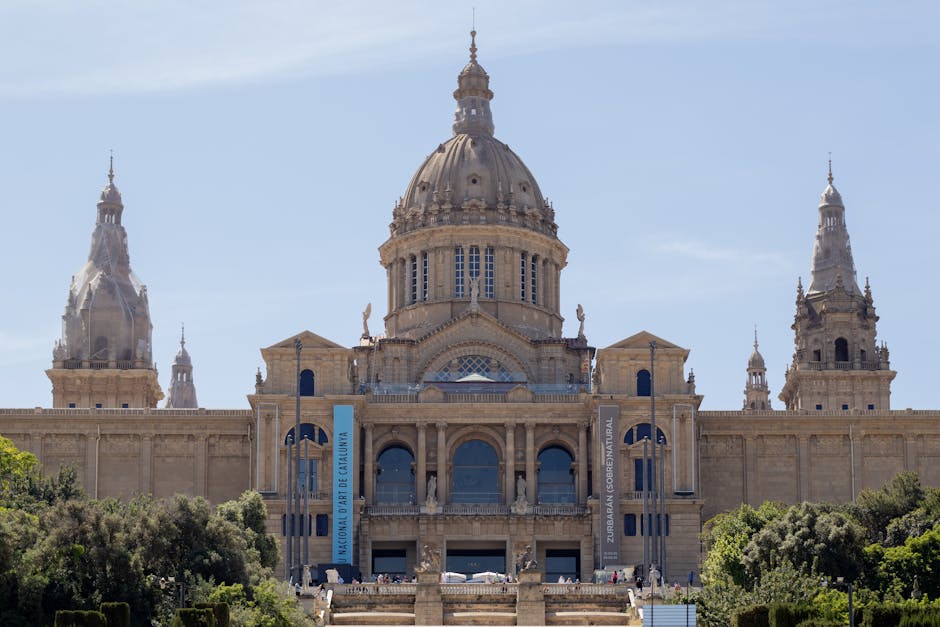
Explore the elegant 'village' of Sarrià, where Gothic monasteries and Gaudí's hidden gems meet charming local markets and narrow streets.
 Moderate
Barcelona, Spain
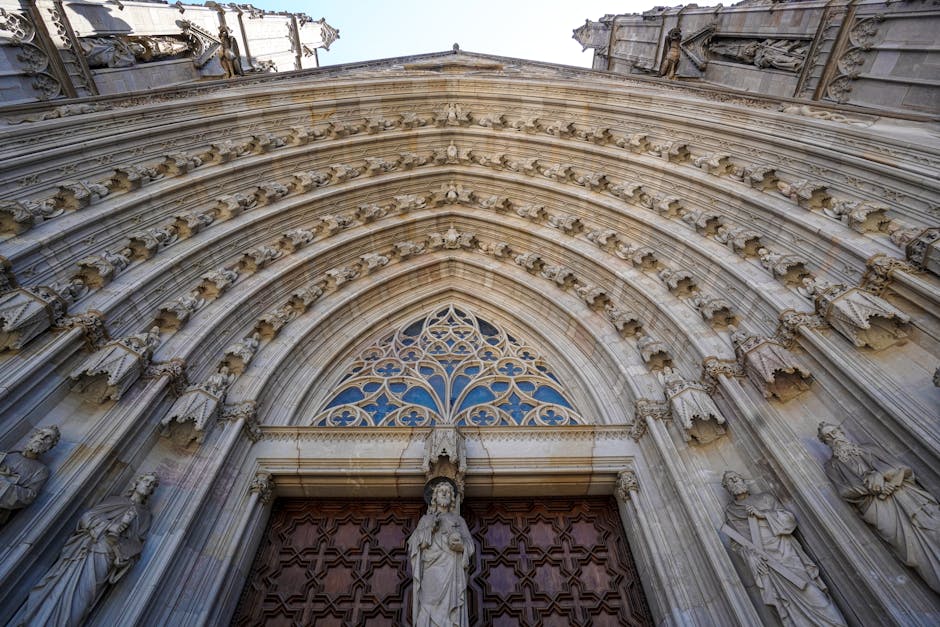
Discover the revolutionary history and haunting scars of the Spanish Civil War on this self-guided walk through Barcelona's historic streets.
 Easy
EasyBarcelona, Spain
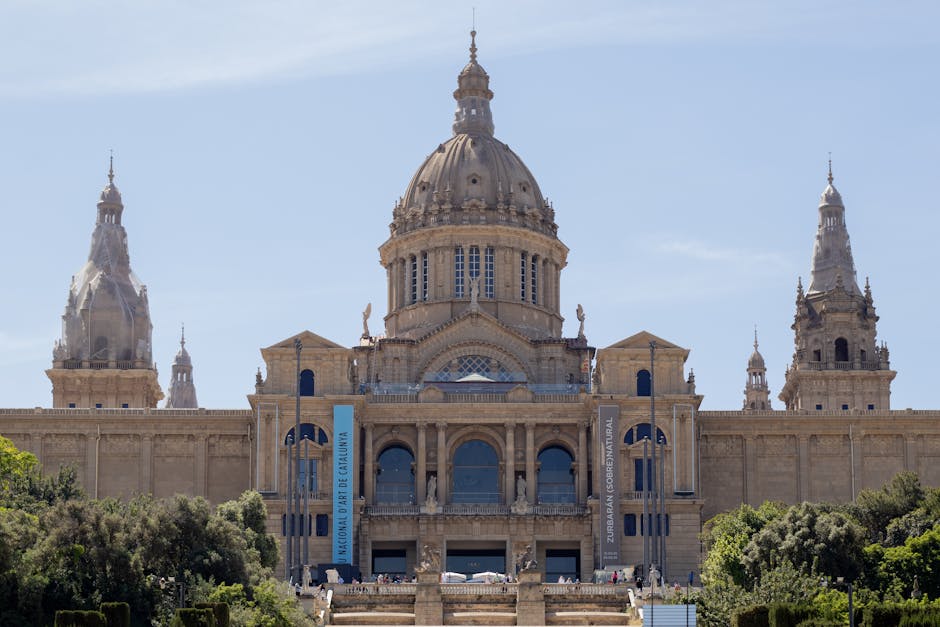
Discover the architectural wonders of Barcelona's Golden Square on this self-guided stroll through Eixample's most luxurious Modernista streets.
 Challenging
Barcelona, Spain
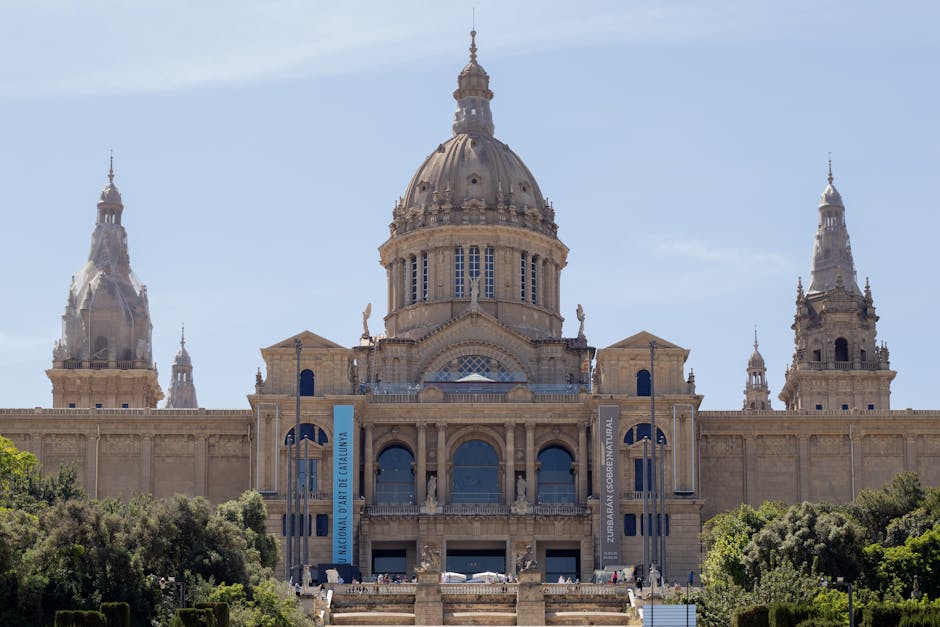
Explore Montjuïc’s lush gardens, historic fortress, and iconic Olympic venues on this scenic self-guided walk with panoramic Mediterranean views.
 Easy
EasySalzburg, Austria
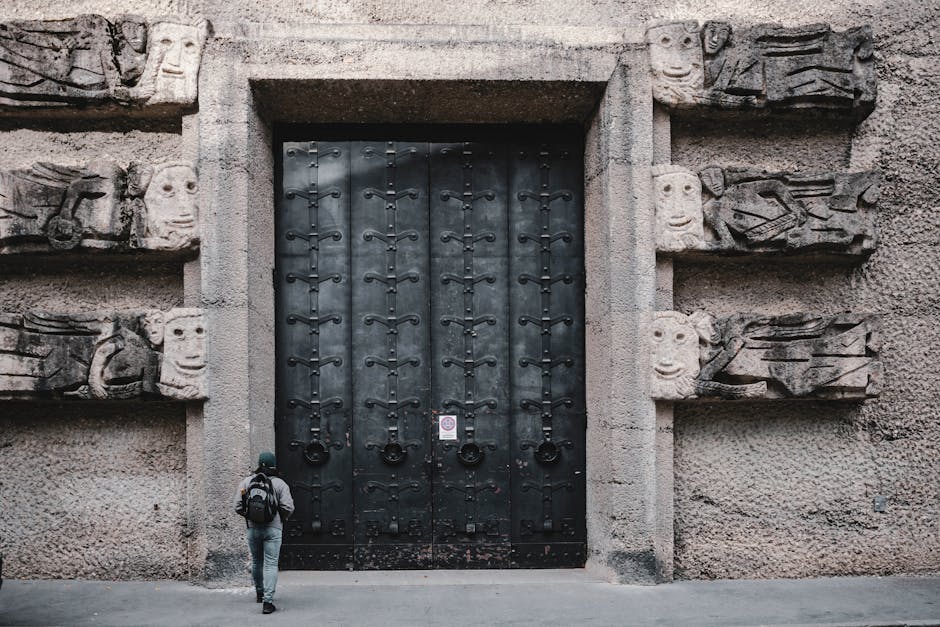
Discover the 'Rome of the North' on this self-guided walk through the Baroque squares and monumental legacy of Salzburg’s Prince-Archbishops.
 Easy
EasyWarsaw, Poland
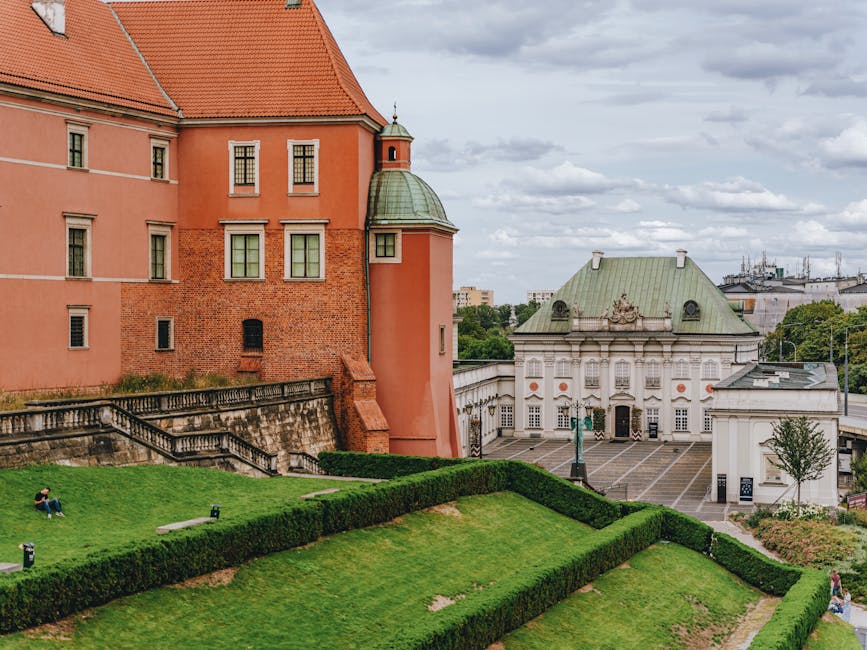
Explore the miracle of Warsaw's reconstructed Old Town on this self-guided walk through royal squares, medieval walls, and heroic monuments.
 Easy
EasyGothenburg, Sweden
Explore Gothenburg's elegant academic district, featuring grand 19th-century stone architecture and the iconic cultural hub of Götaplatsen.
 Easy
EasyGothenburg, Sweden
Discover Gothenburg’s 17th-century Dutch foundations, historic canals, and military fortifications on this self-guided architectural walk.
 Easy
EasyMadrid, Spain
Explore Madrid's 'Landscape of Light' on this self-guided walk through the world-renowned Golden Triangle of Art, from Cibeles to the Reina Sofía.
 Moderate
Madrid, Spain
Explore Madrid's most diverse neighborhood on this self-guided walk through street art, historic markets, and multicultural squares.
 Easy
EasyMadrid, Spain
Explore the royal legacy and medieval alleys of Madrid's historic Habsburg district on this immersive self-guided walk through the city's heart.
 Easy
EasyMadrid, Spain
Discover the rebellious spirit of Malasaña on this self-guided walk through Madrid's best street art, historic squares, and counter-culture hubs.
