Galway, famously known as the City of the Tribes, was once a heavily fortified Anglo-Norman stronghold. Behind the colorful shopfronts and buskers of the modern city lies a medieval skeleton of limestone and mortar. This self-guided walk invites you to explore the remnants of the ancient city walls, which were constructed to protect the merchant families—the 14 Tribes—from the surrounding Gaelic Irish clans. This route is unique because it takes you through the unexpected ways Galway has preserved its past; you will find yourself wandering through modern shopping centers where 13th-century stone bastions still stand tall, and visiting archaeological sites that lay hidden for centuries. Starting at the bustling Eyre Square, the walking route leads you through the heart of the city's commercial district, revealing the strategic architecture that once defined the borders of medieval Galway. You will encounter the Browne Doorway, a relocated piece of aristocratic history, and the Hall of the Red Earl, the city’s earliest municipal building. The journey concludes at the iconic Spanish Arch, where the walls met the sea to guard the lucrative trade routes of the Atlantic. Whether you are a history enthusiast or a curious traveler, this neighborhood stroll offers a fascinating glimpse into the evolution of an Irish city from a defensive outpost to a cultural capital. Exploring independently allows you to pause and appreciate the intricate stonework and the layers of history that coexist with daily life in Galway today. This walking tour Galway experience is designed for those who want to uncover the hidden narratives of the West of Ireland at their own pace.
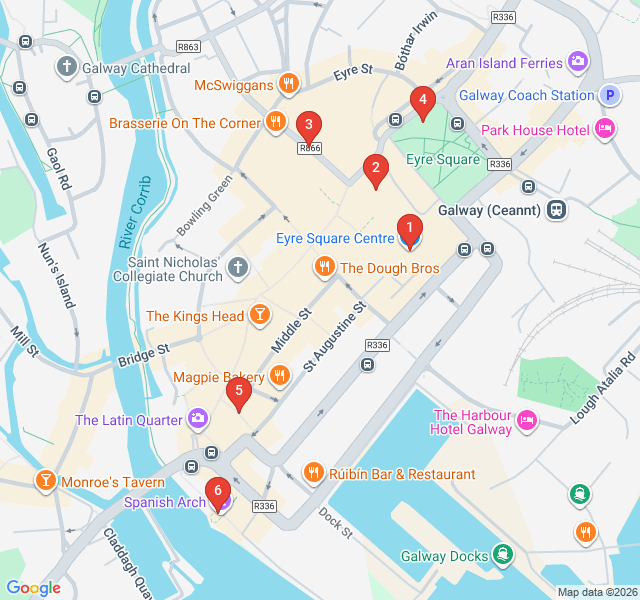
Numbers indicate the order of stops on the tour
Welcome to the start of your self-guided adventure. It might seem strange to begin a history walk inside a shopping mall, but the Eyre Square Centre contains one of the best-preserved sections of Galway's medieval defenses. Look for the massive limestone walls and the Shoemaker’s Tower. These fortifications were built in the late 1200s by the Anglo-Normans to protect their settlement. As you stand here, imagine this wall as the edge of the known world, separating the organized town of the 14 Tribes from the 'wild' Gaelic territories outside. The preservation of these walls within a modern retail space is a testament to Galway's commitment to its layered heritage.
Continuing through the interconnected shopping complexes, you arrive at Corbett Court. Here, the medieval wall continues to serve as a literal foundation for the modern city. This section of the wall was once part of the northern defenses. Notice how the ancient stonework has been integrated into the shop layouts. These walls were built using local limestone and were often twenty feet high. The de Burgo family, who founded the town, oversaw the construction to ensure their merchant interests were safe from raids. It is a rare opportunity to see how medieval engineering survives alongside contemporary commerce.
Step outside onto Eglinton Street to see where the wall once marked the city's perimeter. While much of the wall here is now below street level or incorporated into buildings like the post office, this area was strategically vital. In the 17th century, the walls were reinforced with bastions to withstand artillery fire during the Cromwellian siege. As you walk down this street, you are tracing the path of the original town ditch, which would have been a deep, water-filled trench running parallel to the stone fortifications, adding an extra layer of security against any potential invaders.
Located at the edge of Eyre Square, the Browne Doorway is a magnificent example of 17th-century Renaissance architecture. Though it looks like a standalone monument, it was originally the entrance to the townhouse of the Browne family, one of the 14 Tribes, located on Lower Abbeygate Street. It was moved here in 1905 to preserve it. Look closely at the coat of arms carved into the stone, which displays the Browne and Lynch family crests. This doorway represents the immense wealth and social status of the merchant princes who lived within the safety of the city walls during Galway's Golden Age.
This archaeological site on Custom House Cross was only rediscovered in 1997 during a routine survey for an office extension. The Hall of the Red Earl dates back to the 13th century and was the city’s first municipal building. It served as a courthouse, a tax office, and a banquet hall for the powerful de Burgo family. The 'Red Earl' refers to Richard de Burgo, the Earl of Ulster. The ruins here show the sheer scale of early Norman Galway and provide a tangible link to the administrative heart of the medieval city that the walls were built to protect.
Your walking route ends at the Spanish Arch, perhaps Galway's most famous landmark. Built in 1584, it was actually an extension of the city walls known as the Ceann an Bhalla (the Head of the Wall). Its purpose was to protect the quays where Spanish galleons unloaded wine and spices. In 1755, a massive tsunami triggered by the Lisbon earthquake partially destroyed the structure. Today, it stands as a symbol of Galway's historic trade links with Europe. Take a moment to look out at the Claddagh across the water, which remained a separate Gaelic fishing village outside the walls for centuries.
Download Zigway to experience "Defending the Tribes: Galway's Ancient City Walls" with AI-powered audio narration. Walk at your own pace while stories unfold around you.
 Easy
EasyGalway, Ireland
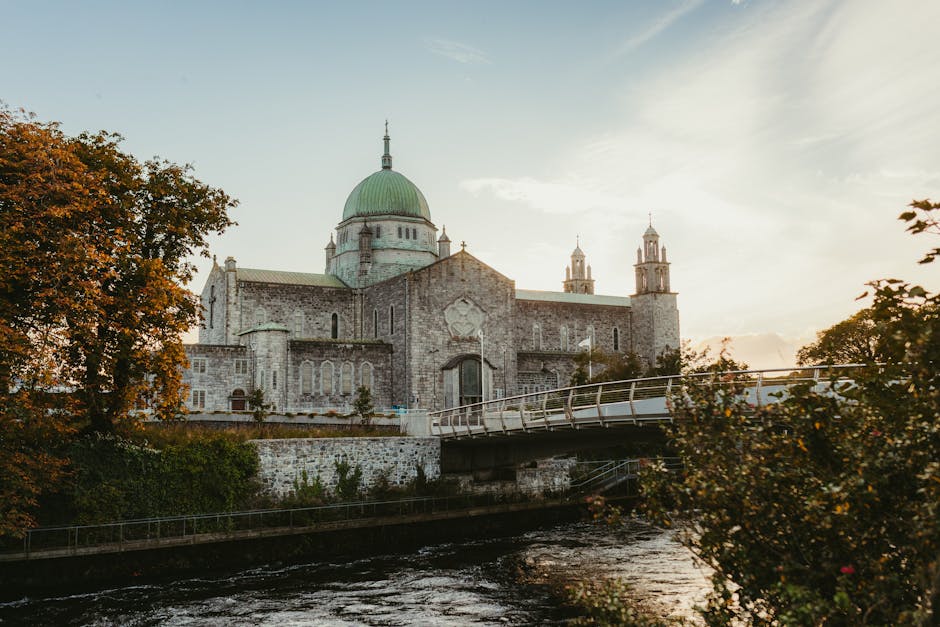
Explore Galway’s literary soul on this self-guided walk through historic bookshops, legendary theaters, and the haunts of Joyce and Wilde.
 Easy
EasyGalway, Ireland
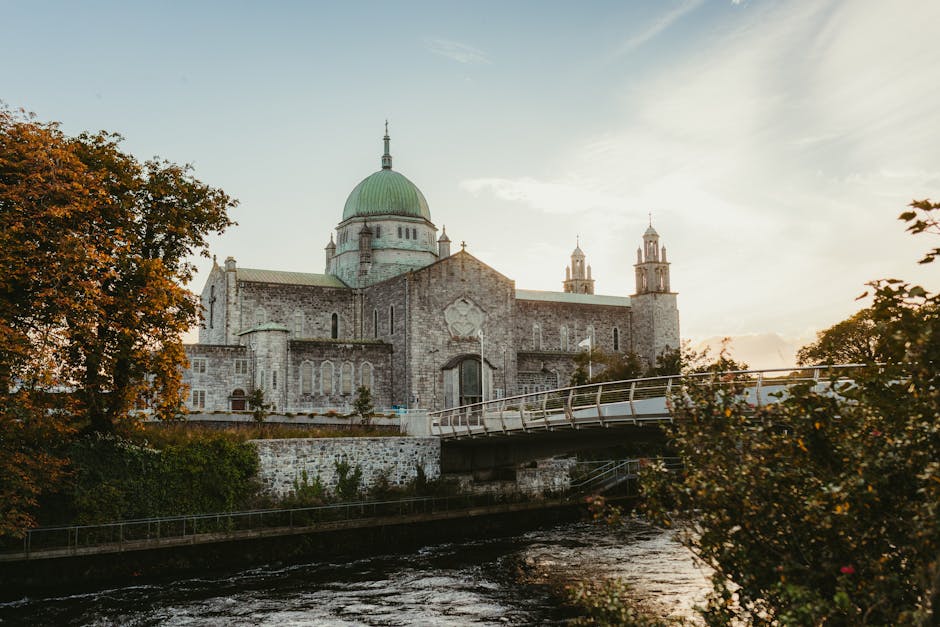
Explore Galway’s vibrant street art, contemporary galleries, and scenic photography spots on this independent neighborhood stroll.
 Easy
EasyGalway, Ireland
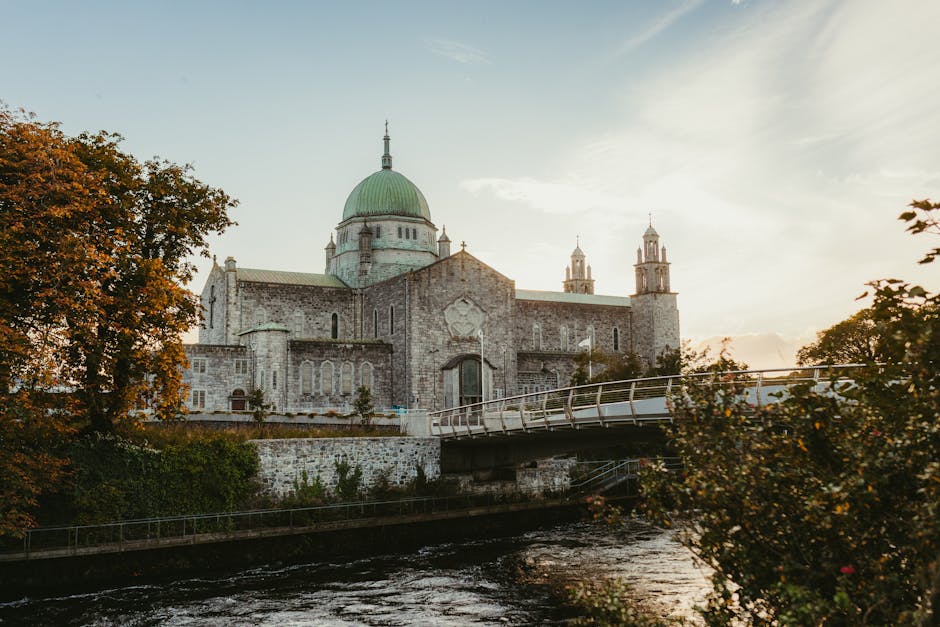
Capture Galway's most iconic views on this self-guided stroll through the Claddagh and along the vibrant Long Walk.
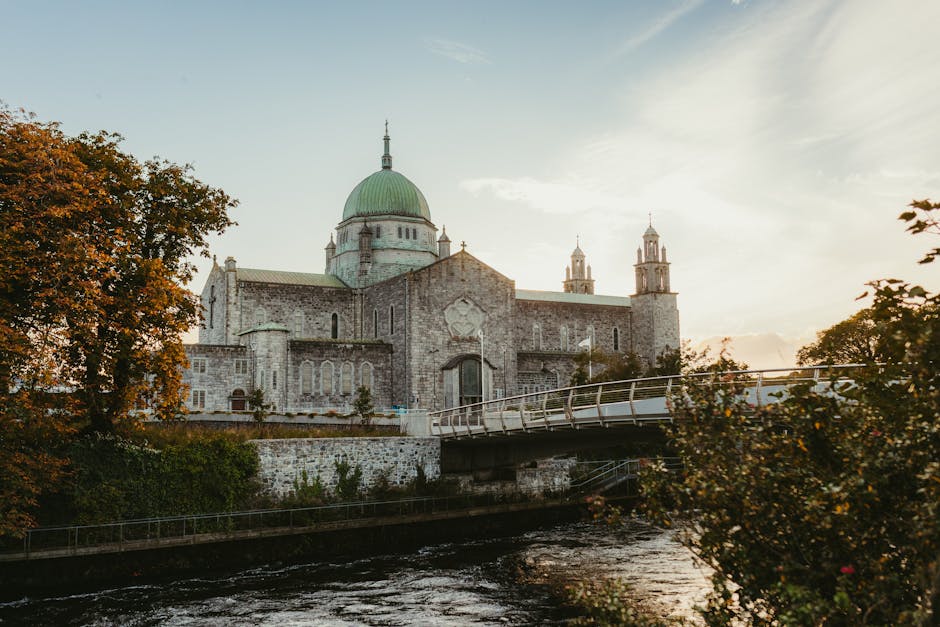 Easy
EasyGalway, Ireland
Explore Salthill’s iconic promenade, discover local traditions, and enjoy stunning Atlantic views on this refreshing self-guided seaside walk.
 Easy
EasyGothenburg, Sweden
Discover Gothenburg’s 17th-century Dutch foundations, historic canals, and military fortifications on this self-guided architectural walk.
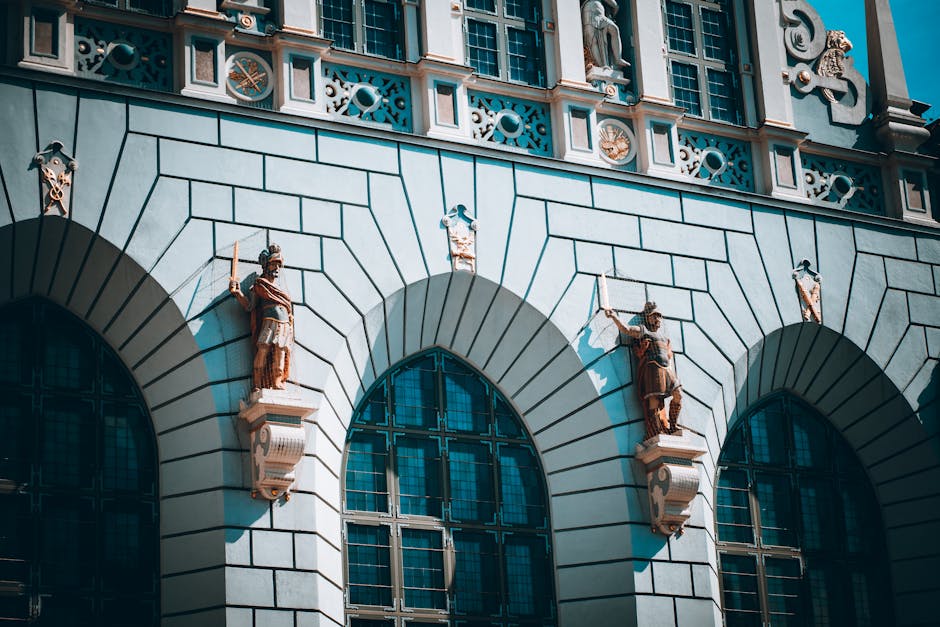 Easy
EasyGdansk, Poland
Discover the opulent Royal Way of Gdansk at your own pace. Explore Hanseatic history, gilded architecture, and the iconic Neptune's Fountain.
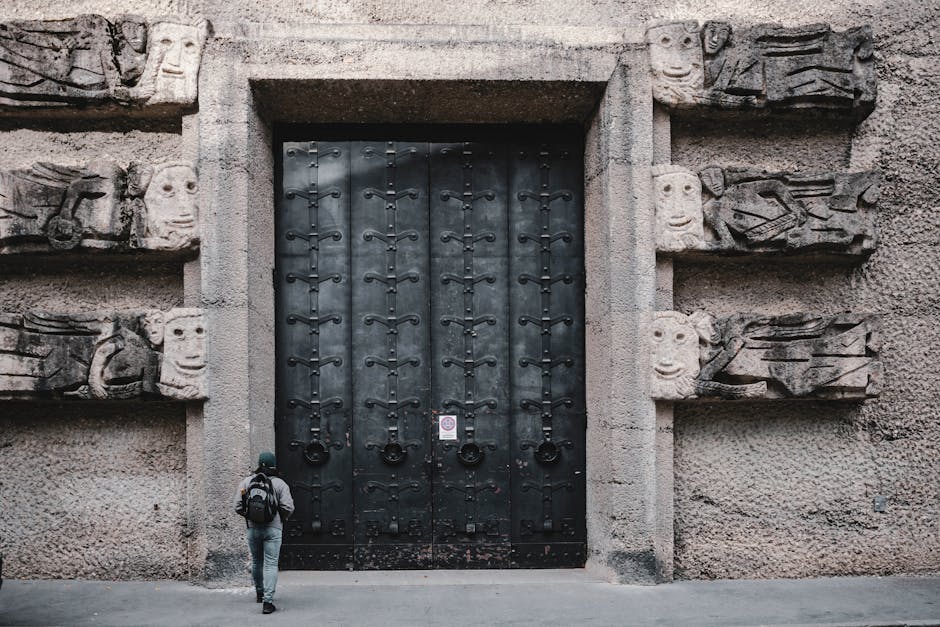 Easy
EasySalzburg, Austria
Discover the 'Rome of the North' on this self-guided walk through the Baroque squares and monumental legacy of Salzburg’s Prince-Archbishops.
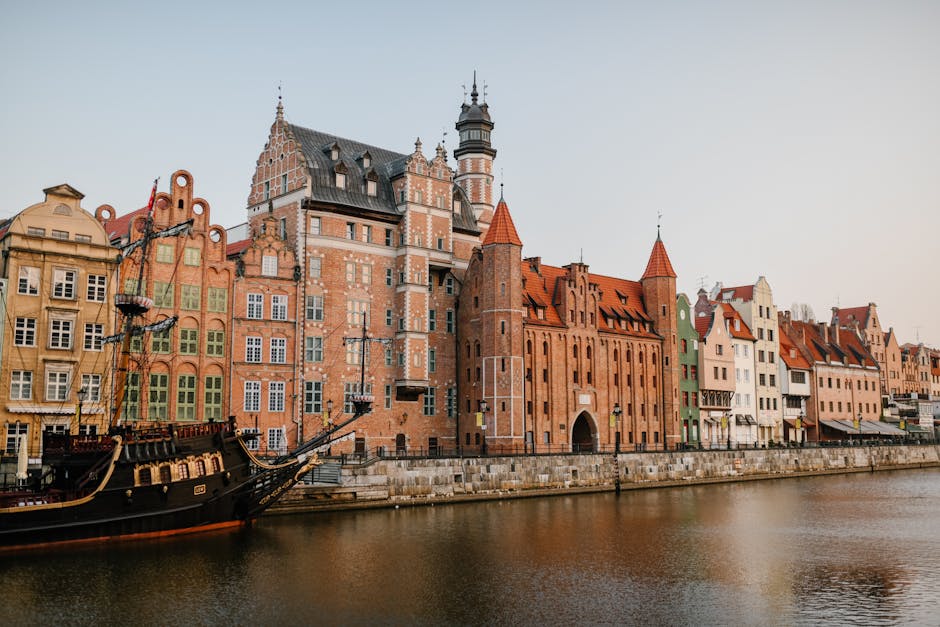 Easy
EasyGdansk, Poland
Discover the 'Baltic Gold' on this self-guided walk through Gdansk's historic mills, massive cathedrals, and the magical Mariacka Street.
 Easy
EasyDublin, Ireland
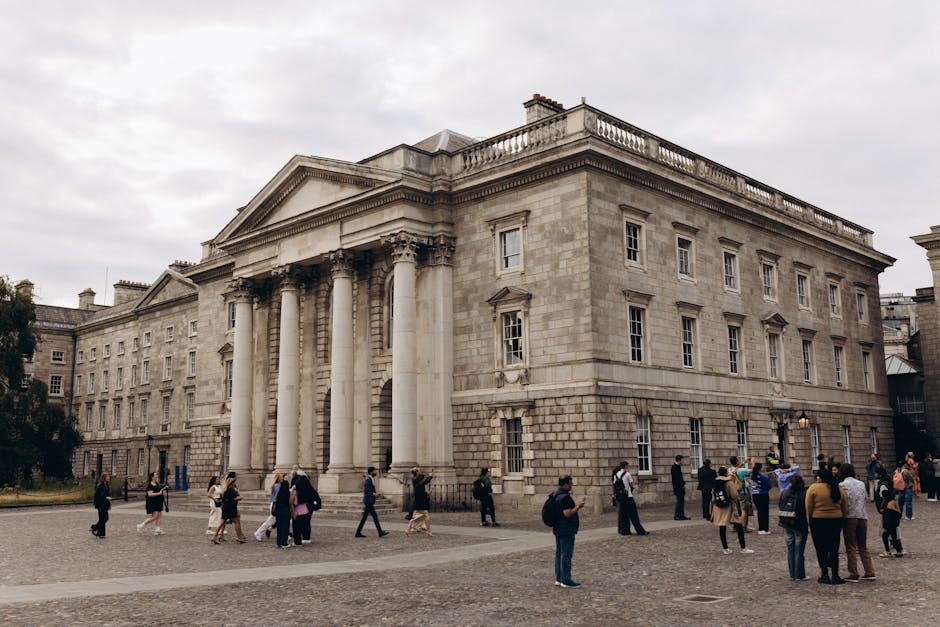
Explore Dublin's 'Silicon Docks' on this self-guided walk featuring futuristic bridges, famine history, and world-class modern architecture.
 Moderate
Dublin, Ireland
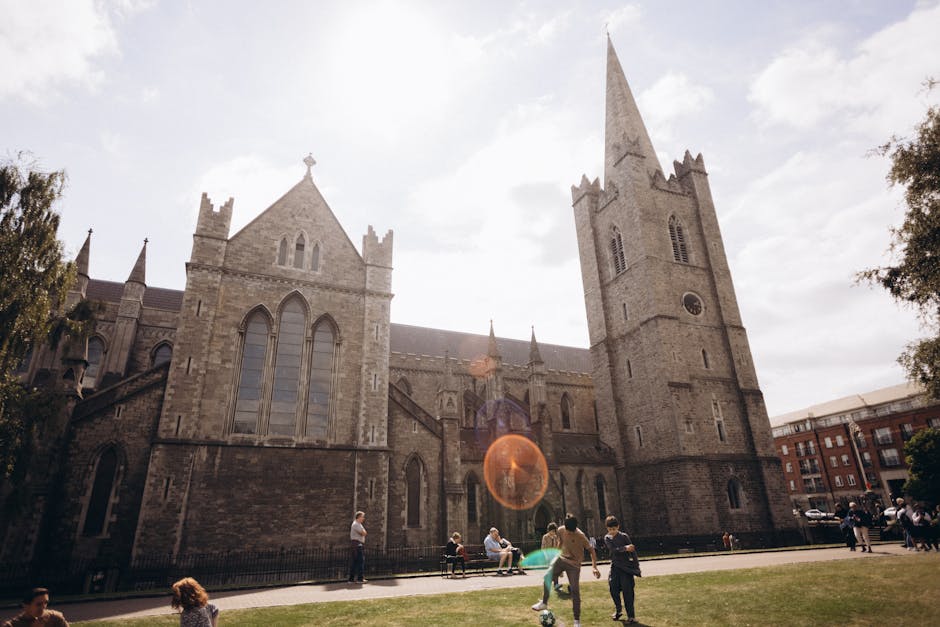
Uncover Dublin’s macabre history on this self-guided walk featuring mummies, medieval rebels, and the city’s most infamous legends.
 Moderate
Dublin, Ireland
Discover Dublin's poetic waterways and modern docks on this self-guided walk through leafy canals and glass-fronted tech hubs.
 Easy
EasyDublin, Ireland
Explore Dublin's storied streets at your own pace on this self-guided literary walk, from Joyce’s statues to Wilde’s colorful memorial.
