Wan Chai is a neighborhood of striking contrasts, where glass-and-steel skyscrapers loom over century-old temples and narrow alleys steeped in local folklore. This self-guided walk invites you to peel back the layers of one of Hong Kong's most misunderstood districts. While many visitors see only the modern commercial hub, this walking route reveals a world of literary inspiration, colonial history, and chilling ghost stories that still whisper through the red-brick ruins of the hillside. Your journey begins in the Star Street precinct, an area that once housed the city's first power plant and now serves as a chic enclave with streets named after the Three Character Classic. As you explore independently, you will move from these poetic beginnings to the eerie silence of Nam Koo Terrace, a site long considered one of the most haunted locations in the city. The contrast between the futuristic Hopewell Centre and the preserved heritage of the Old Wan Chai Post Office highlights the unique urban planning of Hong Kong. This neighborhood stroll also takes you to the iconic Blue House, a vibrant example of 'Tong Lau' architecture that represents the resilient spirit of the local community. Finally, you will find peace at the Pak Tai Temple, where ancient traditions continue amidst the urban bustle. Whether you are a history buff or a fan of urban legends, this walking tour Hong Kong experience offers a unique perspective on the city's evolution. By following this walking route, you can discover hidden gems that even many locals overlook, all at your own pace without the pressure of a fixed schedule. It is a travel experience that perfectly captures the 'East meets West' soul of the territory, making it a must-do neighborhood stroll for anyone wanting to truly understand the heritage of Hong Kong island.
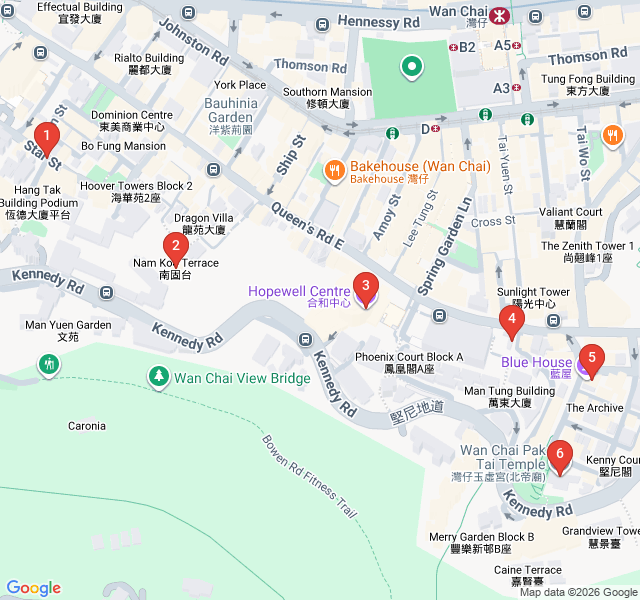
Numbers indicate the order of stops on the tour
Begin your self-guided adventure in the Star Street precinct. This area was the site of Hong Kong's first power station, commissioned in 1890. The street names here—Star, Moon, and Sun—were inspired by the 'Three Character Classic,' a traditional Chinese text used for teaching children. Today, the industrial grit has been replaced by elegant boutiques and cafes, but the layout remains a testament to the early colonial urban planning. As you walk, notice how the narrow lanes create a quiet sanctuary just steps away from the heavy traffic of Queen's Road East. It is a perfect example of how Wan Chai blends its poetic past with modern urban living.
Tucked away on a hillside is the imposing red-brick mansion known as Nam Koo Terrace. Built around 1918 for a wealthy merchant family, this Grade I historic building is now famous for a darker reason: it is widely believed to be haunted. During the Japanese occupation in WWII, it was reportedly used as a military brothel, leading to numerous tragic stories. Local legends tell of green lights appearing in the windows and eerie sounds echoing from the empty rooms. While the building is currently closed to the public for preservation, its grand colonial facade and the surrounding overgrown greenery provide a hauntingly beautiful stop on your walking route.
Standing in sharp contrast to the historic ruins nearby is the Hopewell Centre. When it was completed in 1980, it was the tallest building in Hong Kong and the second tallest in Asia. Its circular design was a feat of engineering, intended to withstand typhoon-force winds. One of the best ways to experience this landmark is by taking the external glass elevator from the 17th floor to the 62nd. It offers a spectacular, free view of the Wan Chai district and the harbor beyond. Interestingly, the building's 'pencil' shape was once criticized by feng shui masters, leading the owners to add a circular swimming pool on the roof to 'balance' the energy.
Located at the junction of Queen's Road East and Wan Chai Gap Road, this L-shaped building is the oldest surviving post office in Hong Kong. Built between 1912 and 1913, it served the local community for over 80 years before being declared a monument. Notice the traditional pitched roof and the simple, functional colonial architecture. Today, it houses an environmental resource center, but the exterior remains largely unchanged from the days when it was the heart of communication for the district. It stands as a humble reminder of a time before the digital age, when handwritten letters were the only connection to the outside world.
The Blue House is perhaps the most recognizable landmark in Wan Chai. This four-story 'Tong Lau' (tenement house) was built in the 1920s and is famous for its brilliant blue color—reportedly chosen because the government had leftover blue paint when they were renovating the exterior. Unlike many other historic buildings in Hong Kong, the Blue House was preserved with its original residents still living inside, winning a UNESCO Award for Cultural Heritage Conservation. It represents a 'living heritage' where traditional community ties are maintained. Take a moment to look at the wooden balconies and the small museum on the ground floor that showcases local life from decades past.
Your final stop is the Pak Tai Temple, the largest of its kind on Hong Kong Island. Built in 1863 by local residents, the temple is dedicated to Pak Tai, the 'Northern Emperor' and a powerful Taoist deity believed to have the power to avert disasters. Inside, you will find a three-meter-tall copper statue of Pak Tai that dates back to 1603, during the Ming Dynasty. The air is thick with the scent of burning incense, and the intricate roof carvings tell stories of ancient Chinese mythology. It is a peaceful conclusion to your walk, offering a space for reflection amidst the high-energy environment of modern-day Wan Chai.
Download Zigway to experience "Haunted Tales and Literary Trails of Wan Chai" with AI-powered audio narration. Walk at your own pace while stories unfold around you.
 Moderate
Hong Kong, China
Explore the historic typhoon shelters, vibrant fish markets, and maritime heritage of Aberdeen on this immersive self-guided neighborhood stroll.
 Easy
EasyHong Kong, China
Discover North Point’s soul on this self-guided walk through bustling wet markets, historic cinemas, and hidden art spaces in Hong Kong.
 Easy
EasyHong Kong, China
Explore Quarry Bay's industrial past and cinematic architecture on this self-guided walk through Hong Kong's eastern district.
 Challenging
Hong Kong, China
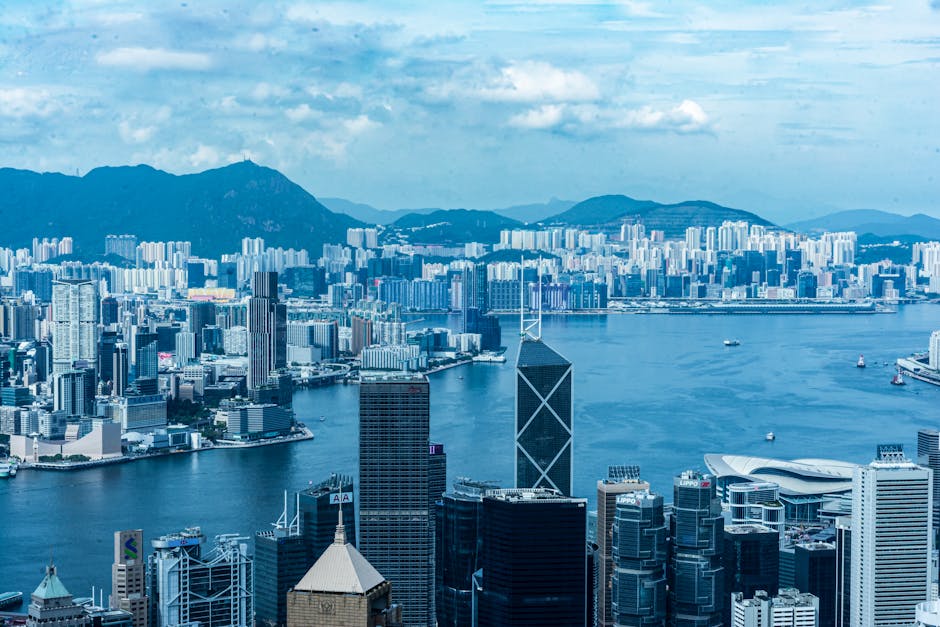
Explore Sai Ying Pun’s steep historic streets, vibrant ArtLane murals, and the mysterious 'Haunted House' on this challenging self-guided walk.
 Easy
EasyKrakow, Poland
Explore the prestigious Jagiellonian University district, featuring Neo-Gothic architecture, Baroque churches, and Krakow's hidden scholarly gems.
 Easy
EasyWarsaw, Poland
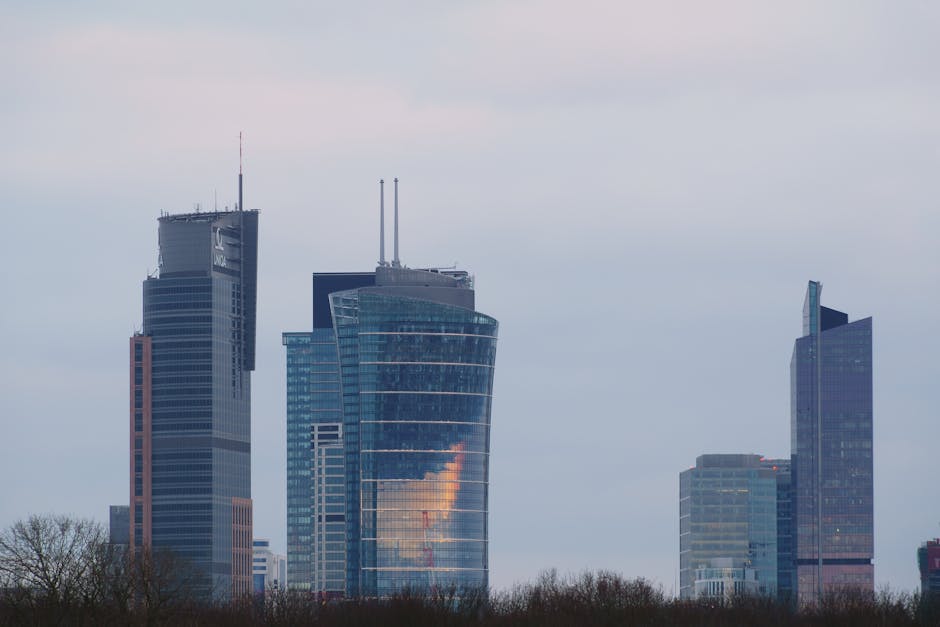
Discover the hidden courtyards and grand pre-war architecture of Warsaw's most atmospheric neighborhood on this self-guided stroll.
 Easy
EasySalzburg, Austria
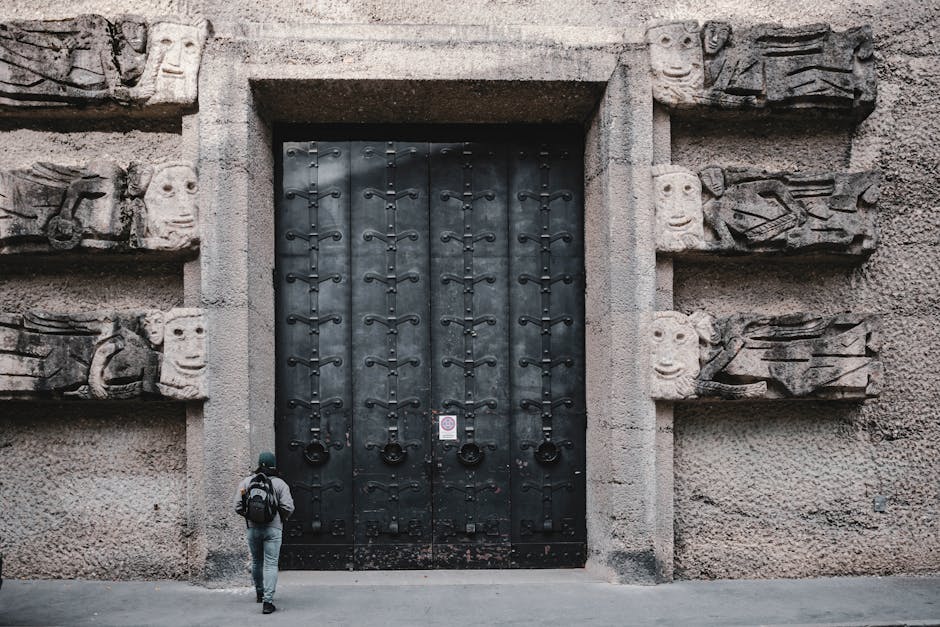
Discover Salzburg's oldest medieval alley, the birthplace of the 'Silent Night' author, and breathtaking views on this quiet self-guided walk.
 Easy
EasyHelsinki, Finland
Discover Helsinki's oldest neighborhood on this self-guided audio walk through Kruununhaka’s historic streets, hidden courtyards, and scenic shores.
 Easy
EasyBeijing, China
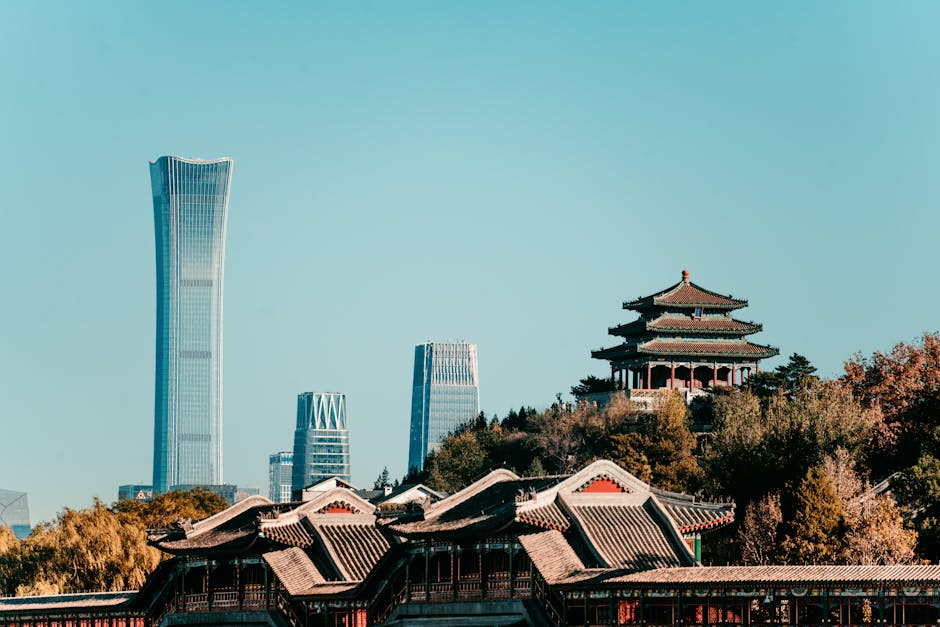
Explore Beijing's premier art district on this self-guided walk through the industrial-chic 798 Art Zone and the massive tanks of 751 D・PARK.
 Moderate
Beijing, China
Explore the majestic red walls, imperial moats, and hilltop vistas of Beijing's Forbidden City on this self-guided architectural walking route.
 Moderate
Beijing, China
Explore the spiritual heart of Beijing on this self-guided walk through the Temple of Heaven's iconic altars, ancient pines, and vibrant park life.
 Easy
EasyBeijing, China
A culinary and cultural self-guided walk through Beijing's historic Dongsi neighborhood, featuring ancient mosques, hutongs, and iconic local eats.
