Harlem is more than a neighborhood; it is a global symbol of Black excellence, creativity, and resilience. This self-guided walk invites you to explore the 'Black Capital of the World' during its most transformative era. In the 1920s and 30s, the Harlem Renaissance redefined American culture, giving birth to legendary jazz, groundbreaking literature, and a new political consciousness. This neighborhood stroll takes you through the heart of Upper Manhattan, where the echoes of Duke Ellington, Langston Hughes, and Billie Holiday still resonate along the wide boulevards. Your independent journey begins at the cultural anchor of the community, the Studio Museum in Harlem, before leading you down 125th Street. This thoroughfare serves as the pulse of the neighborhood, home to the iconic Apollo Theater. You will discover the stories behind the 'Waldorf of Harlem,' the Hotel Theresa, which hosted everyone from Fidel Castro to Muhammad Ali. As you move through these streets, the route transitions from the neon lights of the theater district to the spiritual and political power of the Abyssinian Baptist Church. What makes this walking route New York City special is the ability to witness history in layers. You will see the sites of former speakeasies that birthed bebop, the restaurants that fueled the Civil Rights movement with soul food, and the majestic parks that offer a respite from the urban rush. This walking tour New York City experience is designed for those who want to understand the deep roots of American music and art. Whether you are a first-time visitor or a local, this self-guided adventure offers a profound connection to the spirits of the past and the vibrant energy of Harlem today.
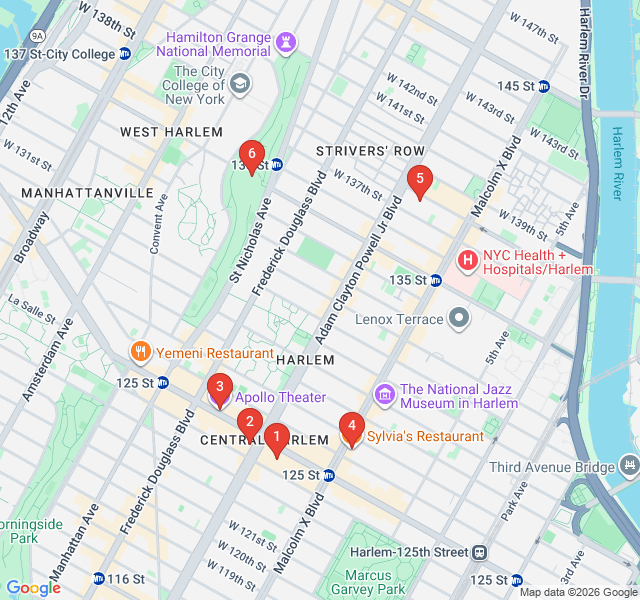
Numbers indicate the order of stops on the tour
Begin your self-guided adventure at the Studio Museum in Harlem. Founded in 1968, this institution was the first of its kind in the nation—a museum dedicated entirely to the work of artists of African descent. It has served as a critical platform for artists like Kehinde Wiley and Lorna Simpson. While the museum is currently undergoing a massive architectural transformation to create a state-of-the-art home, its presence remains the spiritual anchor of the Harlem art scene. It represents the neighborhood's commitment to self-expression and the preservation of Black identity through visual storytelling. From here, you are standing at the gateway to 125th Street, the commercial and cultural heart of the community.
Look up at the white terracotta facade of the Hotel Theresa. Known as the 'Waldorf of Harlem,' this building was once the tallest in the neighborhood and served as a glamorous social hub. In an era of segregation, it was one of the few luxury hotels where Black celebrities, politicians, and intellectuals could stay. In 1960, Fidel Castro famously moved his delegation here from Midtown, attracting world leaders like Nikita Khrushchev and Malcolm X to its lobby. Today, the building serves as office space, but its legacy as a site of international diplomacy and Civil Rights history remains etched into its grand architecture.
No location embodies the rhythm of Harlem like the Apollo Theater. Since opening its doors to Black performers in 1934, it has become the most famous club in the world for launching careers. This is where a young Ella Fitzgerald won 'Amateur Night' and where James Brown recorded his legendary live album. The Apollo wasn't just a theater; it was a proving ground. If you could make it here, you could make it anywhere. Notice the 'Walk of Fame' beneath your feet, honoring the legends who have graced this stage. The theater continues to be a vibrant center for music, dance, and community activism today.
Continue your neighborhood stroll to Sylvia's, the 'Queen of Soul Food.' Founded by Sylvia Woods in 1962, this restaurant started as a small lunch counter and expanded into a global landmark. It has hosted presidents, international dignitaries, and generations of Harlem residents. Sylvia’s is more than a place to eat; it is a community living room where the flavors of the American South meet the energy of New York. The smell of fried chicken and cornbread here is a reminder of the Great Migration, which brought millions of African Americans to northern cities, bringing their rich culinary traditions with them.
As you walk north, you reach the Abyssinian Baptist Church, a masterpiece of Gothic Revival architecture. Founded in 1808, it is one of the oldest African American Baptist churches in the United States. Under the leadership of Adam Clayton Powell Jr., the church became a powerhouse for political and social change. Powell used the pulpit to organize boycotts and fight for employment rights, eventually becoming the first African American from New York elected to Congress. The church remains a vital center for spiritual life and social justice, famous for its world-class gospel choir and its historic stained-glass windows.
Conclude your independent exploration at St. Nicholas Park. This sloping green space offers a beautiful transition from the urban grid to the rolling hills of Upper Manhattan. From the park's paths, you can see the Gothic spires of City College and the historic Hamilton Grange—the home of Founding Father Alexander Hamilton, which was moved to this site in 2008. The park provides a peaceful vantage point to look back over the Harlem rooftops and reflect on the incredible history you’ve traversed. It’s a perfect spot to rest and appreciate the enduring spirit of this legendary neighborhood.
Download Zigway to experience "Harlem Renaissance and Jazz Roots" with AI-powered audio narration. Walk at your own pace while stories unfold around you.
 Easy
EasyNew York City, United States
Explore the golden age of Manhattan architecture on this self-guided walk through Midtown's iconic Art Deco skyscrapers and historic landmarks.
 Easy
EasyNew York City, United States
Discover the literary legends, jazz haunts, and revolutionary history of Greenwich Village on this immersive self-guided walking route.
 Easy
EasyNew York City, United States
Explore Manhattan's transformation on this self-guided walk from the High Line to Hudson Yards.
 Easy
EasyNew York City, United States
Discover the world's finest cast-iron architecture and the evolution of fashion on this self-guided walking route through NYC's iconic SoHo district.
 Moderate
Vienna, Austria
Follow the footsteps of Mozart and Strauss through Vienna’s historic center on this self-guided walk through the city's rich musical history.
 Moderate
Gdansk, Poland
Discover the origins of WWII in Gdansk on this self-guided walk through heroic last stands, massive museums, and strategic hilltop fortifications.
 Moderate
Warsaw, Poland
Explore the resilient spirit of Warsaw's Muranów district on this self-guided walk through the history and landmarks of the former Jewish Ghetto.
 Moderate
Warsaw, Poland
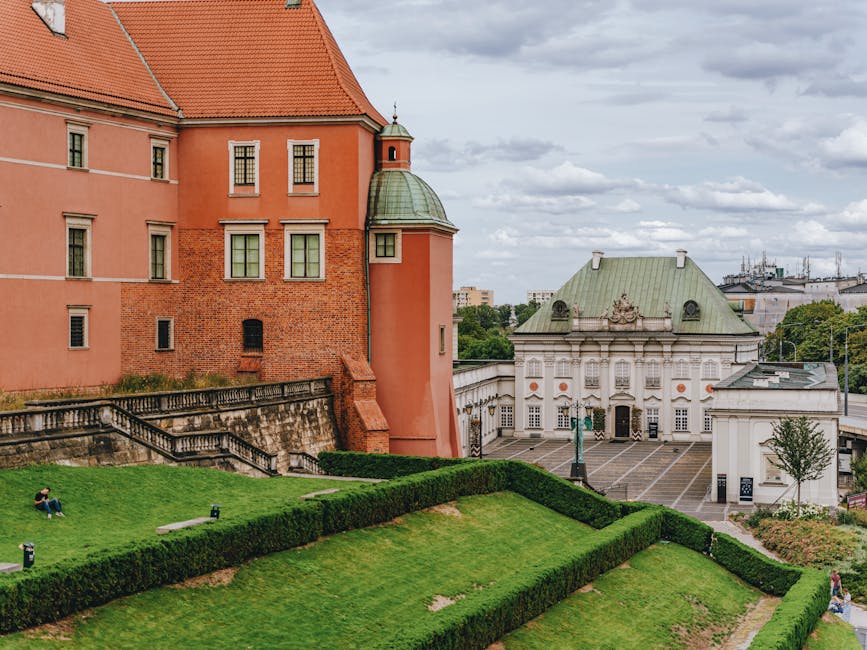
A powerful self-guided walk through Warsaw's WWII history, tracking the 1944 Uprising from ruined skyscrapers to solemn memorials.
 Easy
EasySan Francisco, United States
Explore the epicenter of LGBTQ+ history on this self-guided walk through San Francisco's Castro district, from Harvey Milk's legacy to iconic cinema.
 Easy
EasySan Francisco, United States
Explore the historic Barbary Coast waterfront, from the iconic Ferry Building to the vintage arcades and sea lions of the Embarcadero.
 Moderate
San Francisco, United States
Discover hidden art, cinematic history, and historic forts on this self-guided walk through the Presidio’s lush forests and coastal trails.
 Easy
EasySan Francisco, United States
Explore San Francisco’s architectural evolution from historic Art Deco gems to modern glass skyscrapers on this self-guided walking route.
