Central Park is often called the lungs of New York City, but beyond the crowded lawns lies a world of intricate design and quiet contemplation. This walking route invites you to uncover the secret sanctuaries of Manhattan’s backyard, exploring the intentional balance between wild nature and Victorian architecture. Designed by Frederick Law Olmsted and Calvert Vaux in the mid-19th century, the park was intended as a democratic space where every citizen could find respite from the industrial city. On this self-guided walk, you will move from the grand elegance of Bethesda Terrace to the hidden, winding paths of The Ramble, a 38-acre woodland that feels worlds away from the surrounding skyscrapers. This neighborhood stroll is more than just a visit to a park; it is a journey through the history of landscape architecture and urban planning. You will see how the designers used natural topography to create 'rooms' that evoke different moods, from the romantic sweep of Bow Bridge to the solemn peace of Strawberry Fields. Whether you are a first-time visitor or a long-time resident, this walking tour New York City experience offers a fresh perspective on iconic landmarks and tucked-away corners. As you explore independently, you can take your time at the Shakespeare Garden or climb the stairs of Belvedere Castle for panoramic views of the Great Lawn. This walking route is perfect for those who want to escape the grid and immerse themselves in the stories of the city’s most beloved green space. By following this audio walk, you can discover the park at your own pace, stopping to bird-watch in the Ramble or reflecting at the 'Imagine' mosaic. This walking tour New York City provides a comprehensive look at the heart of the park, blending history, botany, and art into a single afternoon adventure. Experience the tranquility that has made these grounds a sanctuary for generations.
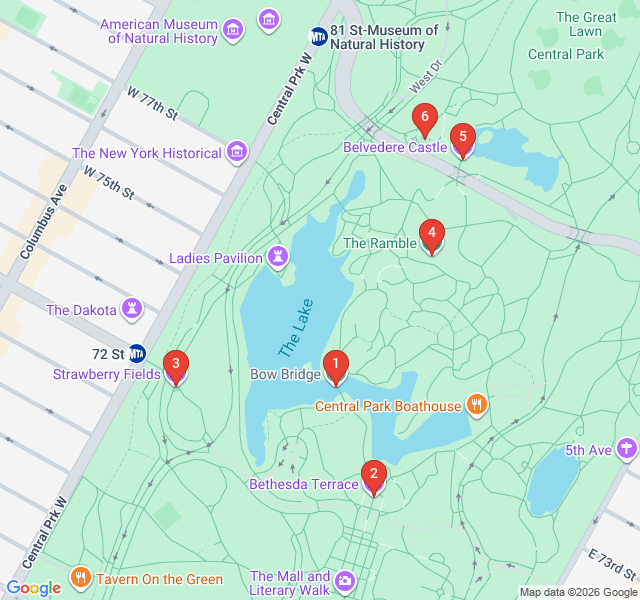
Numbers indicate the order of stops on the tour
Completed in 1862, Bow Bridge is the second oldest cast-iron bridge in America and perhaps the most romantic spot in Central Park. Its name comes from its graceful shape, reminiscent of an archer's bow. As you stand here, notice how the bridge connects the manicured Cherry Hill with the wilder Ramble. The low-lying design was intentional; Olmsted and Vaux wanted the bridge to appear as if it were floating on the water of the Lake. It has appeared in countless films, from 'Manhattan' to 'The Way We Were'. Take a moment to look across the water at the San Remo apartments; their twin towers are one of the most famous silhouettes on the Upper West Side skyline.
Bethesda Terrace is often called the 'Heart of Central Park'. This grand architectural feature was designed as a social hub, where the city’s various social classes could mingle. The lower passage is famous for its ceiling of 1,587 Minton encaustic tiles, which are usually found in European cathedrals. At the center of the terrace stands the 'Angel of the Waters' fountain, the only sculpture commissioned as part of the park's original design. Created by Emma Stebbins, it was the first public artwork by a woman in New York City. The angel carries a lily, representing purity, and commemorates the 1842 opening of the Croton Aqueduct, which brought fresh water to the city.
This 2.5-acre international garden is a living memorial to John Lennon, who lived in the nearby Dakota Building. Named after the Beatles song 'Strawberry Fields Forever', the area was officially dedicated on what would have been Lennon's 45th birthday in 1985. The center of the memorial is the 'Imagine' mosaic, a gift from the city of Naples, Italy. This is a designated 'Quiet Zone' in the park, intended for reflection and peace. You will often find flowers or candles left by fans from around the world. The landscape is filled with plants donated by various countries, symbolizing Lennon’s vision of global harmony.
Step into the Ramble and you’ll feel as though you’ve left Manhattan for the Adirondacks. This 38-acre 'wild garden' was painstakingly constructed to look completely natural, though every tree and stream was placed by design. It is a labyrinth of winding paths, rustic bridges, and the 'Gill', a man-made stream that cascades over rocks. Because of its dense canopy and water sources, the Ramble is one of the best bird-watching locations in the United States, attracting over 230 species annually. It offers a sense of seclusion that is rare in a city of millions, providing the 'refreshment of the mind' that the park's creators championed.
Perched atop Vista Rock—the second-highest natural point in the park—Belvedere Castle is a Victorian folly built in 1869. While it looks like a medieval fortress, it was originally designed as an open-air lookout for park visitors. Since 1919, the castle has served as a weather station for the National Weather Service, measuring wind speed and rainfall from its towers. The name 'Belvedere' translates to 'beautiful view' in Italian, and for good reason. From the balconies, you can see the Great Lawn to the north and the Turtle Pond directly below. It’s a perfect spot to appreciate the park’s scale and the surrounding city skyline.
This four-acre hillside garden is a tribute to the plants and flowers mentioned in the works of William Shakespeare. Originally known as the 'Garden of the Heart' when it opened in 1913, it was renamed in 1916 to mark the 300th anniversary of the Bard's death. As you walk the winding stone paths, you might spot columbine, primrose, or wormwood, all of which appear in his plays and sonnets. Look for small bronze plaques featuring quotes from Shakespeare that correspond to the flora. The garden is designed to be in bloom for much of the year, offering a quiet, fragrant conclusion to your walk through Central Park’s sanctuaries.
Download Zigway to experience "Central Park's Secret Sanctuaries" with AI-powered audio narration. Walk at your own pace while stories unfold around you.
 Easy
EasyNew York City, United States
Explore the golden age of Manhattan architecture on this self-guided walk through Midtown's iconic Art Deco skyscrapers and historic landmarks.
 Easy
EasyNew York City, United States
Discover the literary legends, jazz haunts, and revolutionary history of Greenwich Village on this immersive self-guided walking route.
 Easy
EasyNew York City, United States
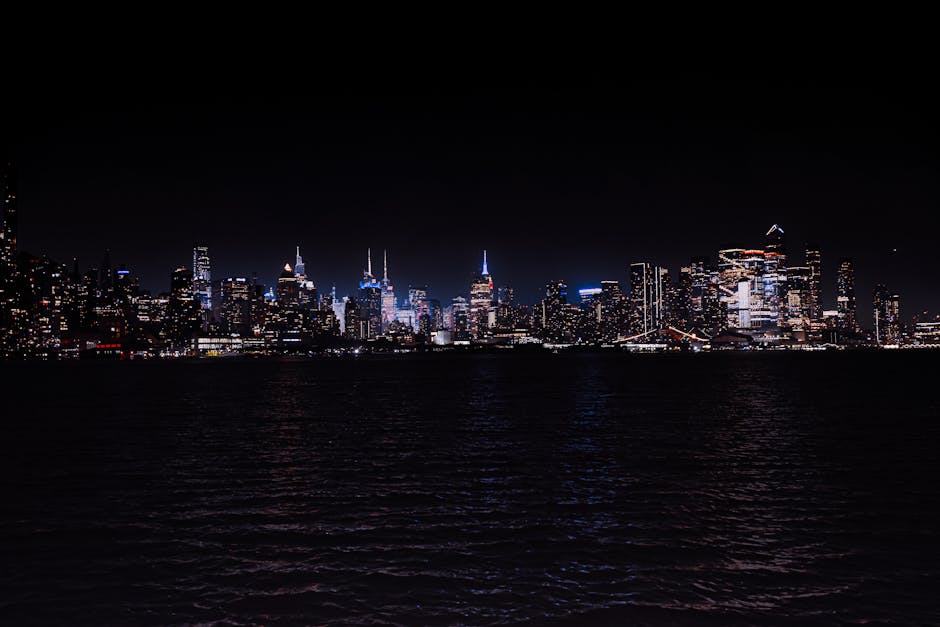
Explore Manhattan's transformation on this self-guided walk from the High Line to Hudson Yards.
 Easy
EasyNew York City, United States
Discover the world's finest cast-iron architecture and the evolution of fashion on this self-guided walking route through NYC's iconic SoHo district.
 Moderate
Nairobi, Kenya
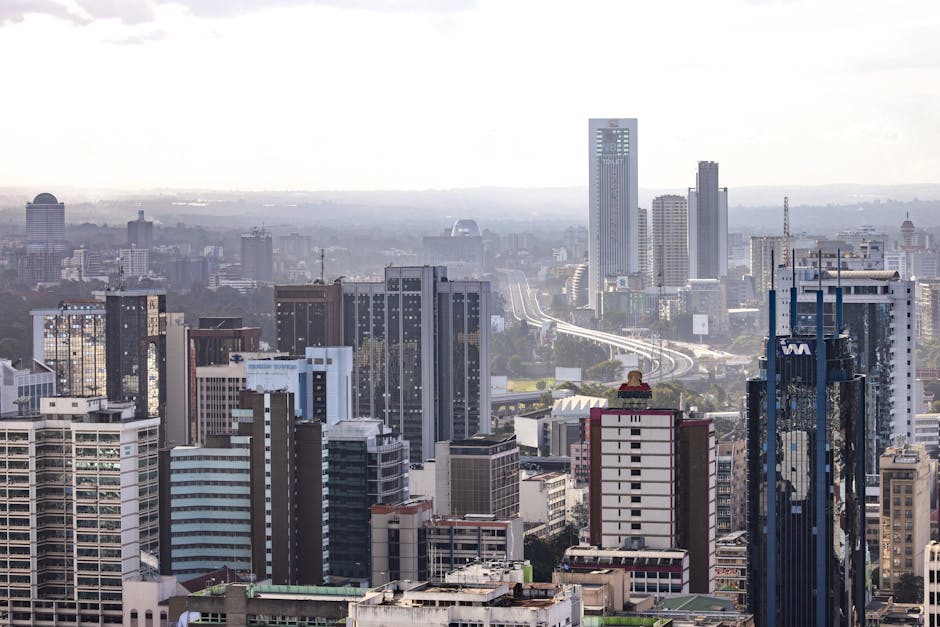
Discover Nairobi's lush side on this self-guided walk through botanical gardens, historic memorials, and vibrant local markets.
 Moderate
Helsinki, Finland
Explore the 'Gibraltar of the North' on this independent walking route through the historic bastions and hidden gardens of Suomenlinna Sea Fortress.
 Moderate
Gothenburg, Sweden
Explore Gothenburg’s lush "Green Lung" on this self-guided walk through the Botanical Garden, Slottsskogen park, and rugged Änggård Mountains.
 Moderate
Krakow, Poland
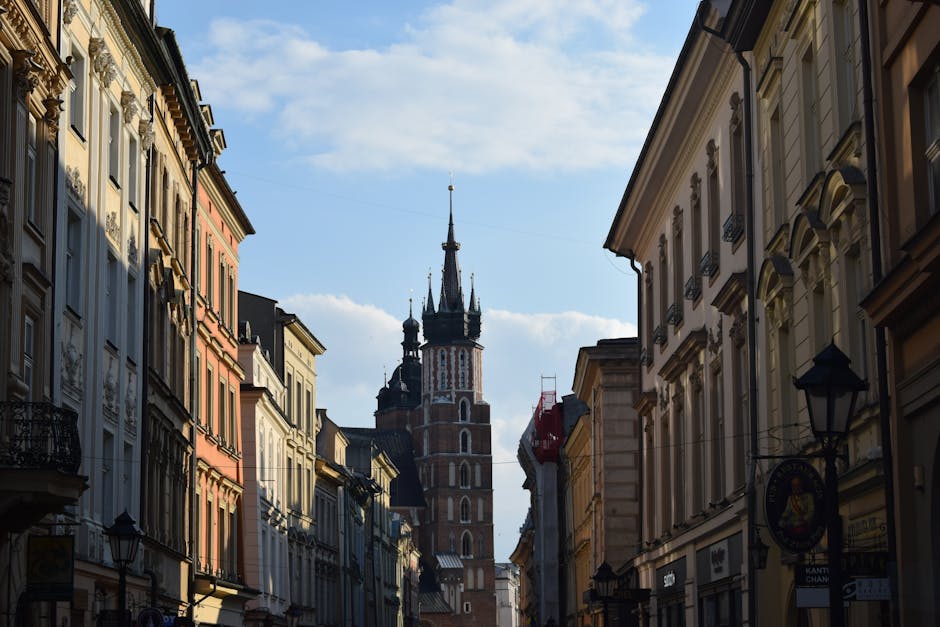
Discover Krakow’s stunning skyline and riverside charm on this self-guided audio walk through scenic viewpoints and historic mounds.
 Easy
EasySan Francisco, United States
Explore the epicenter of LGBTQ+ history on this self-guided walk through San Francisco's Castro district, from Harvey Milk's legacy to iconic cinema.
 Easy
EasySan Francisco, United States
Explore the historic Barbary Coast waterfront, from the iconic Ferry Building to the vintage arcades and sea lions of the Embarcadero.
 Moderate
San Francisco, United States
Discover hidden art, cinematic history, and historic forts on this self-guided walk through the Presidio’s lush forests and coastal trails.
 Easy
EasySan Francisco, United States
Explore San Francisco’s architectural evolution from historic Art Deco gems to modern glass skyscrapers on this self-guided walking route.
