Step into the epicenter of 20th-century European history with this self-guided walk through the Gdansk Shipyard. For decades, this industrial landscape was more than just a place of production; it was the cradle of the Solidarity movement that eventually toppled communist rule in Poland and sent ripples across the Iron Curtain. This walking route takes you through the Mlyniska neighborhood, where the rhythmic clang of metal and the towering silhouettes of cranes set the stage for one of the most significant peaceful revolutions in modern history. As you explore independently, you will witness the juxtaposition of gritty industrial heritage and bold new cultural spaces. The journey begins at the towering Monument to the Fallen Shipyard Workers of 1970, a somber reminder of the price paid for freedom. From there, you will pass through the iconic Gate No. 2, the very spot where Lech Wałęsa addressed thousands of striking workers. The route then leads you past the rusted-steel architecture of the European Solidarity Centre and into the hallowed BHP Hall, where the historic August Agreements were signed. Beyond the political milestones, this neighborhood stroll reveals the 'Shipyard Spirit'—a resilient blend of labor, art, and transformation. You will wander through the Imperial Shipyard, the oldest part of the complex, where 19th-century brickwork meets the massive scale of maritime engineering. The walk concludes at the vibrant WL4 Mleczny Piotr, an art space that proves the shipyard's story is still being written by a new generation of creators. This is not just a history lesson; it is an immersive experience of a living, breathing district that refused to be silenced. Whether you are a history buff or a fan of industrial aesthetics, this audio walk offers a profound look at how a group of workers changed the world from the docks of Gdansk.
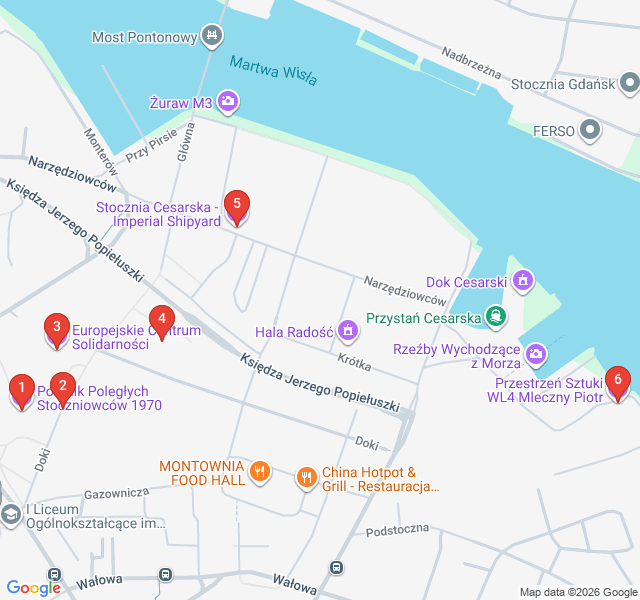
Numbers indicate the order of stops on the tour
Your self-guided adventure begins at Solidarity Square, dominated by three soaring steel crosses known as the Monument to the Fallen Shipyard Workers of 1970. Each cross stands 42 meters high and weighs nearly 40 tons, anchored by symbols of hope. This site commemorates the shipyard workers who were killed during the 1970 protests against rising food prices. It was the first monument to victims of communist oppression allowed in a communist country, a testament to the power of the workers' demands during the 1980 strikes. Take a moment to look at the base, where you will see bronze reliefs depicting the lives and struggles of the dockworkers. The monument was erected in just 100 days, a feat of collective will that signaled the beginning of the end for the old regime.
Walk toward the historic Gate No. 2, the most famous entrance to the Gdansk Shipyard. In August 1980, this gate became the focal point of global news. It was here that Lech Wałęsa, a fired electrician who climbed over the shipyard fence, stood to announce the end of the strike and the birth of 'Solidarność'—the first independent labor union in the Soviet bloc. The gate was often covered in flowers, religious icons, and portraits of the Pope during the strikes, transforming it into a makeshift altar of resistance. Today, it remains a powerful symbol of peaceful protest. Notice the nearby replicas of the 21 Demands written on plywood boards, which outlined the workers' call for civil rights and better conditions.
Before you stands the European Solidarity Centre (ECS), a masterpiece of modern architecture designed to look like a rusting ship's hull. This building is not just a museum; it is a library, archive, and research center dedicated to the history of Solidarity and other opposition movements in Eastern Europe. The walls are clad in Corten steel, which oxidizes over time to create a deep orange-brown patina that echoes the industrial character of the shipyard. Even if you don't go inside the permanent exhibition, the winter garden and the views from the terrace are worth a visit. It serves as a bridge between the shipyard's industrial past and its future as a cultural heart of Gdansk.
Step inside the BHP Hall (Health and Safety Hall), a historic building that served as the headquarters for the Inter-Enterprise Strike Committee in 1980. This is the very room where the historic August Agreements were signed between the striking workers and the government. Unlike the modern ECS, the BHP Hall retains a raw, authentic atmosphere. You can see the original long wooden table where the negotiators sat and the pens used to sign the document. The hall was originally built as a torpedo warehouse in the late 19th century, but its legacy is forever tied to the birth of the Solidarity movement and the peaceful transition to democracy in Poland.
As you continue your walking route, you enter the Imperial Shipyard (Stocznia Cesarska), the oldest part of the entire complex dating back to 1844. This area is characterized by beautiful red-brick workshops and administrative buildings that contrast with the massive green cranes on the horizon. For decades, this was a restricted zone, but it is now opening up as a 'Shipyard of the Future.' Look for the 'Rozbitkowie' (The Castaways) sculptures—iron figures integrated into the landscape. This part of the yard feels like an open-air museum of maritime engineering, where the sheer scale of the docks and the history of the German and later Polish naval industry come to life.
Finish your neighborhood stroll at Mleczny Piotr (Milky Peter), a historic warehouse turned art space. Located at the edge of the Imperial Shipyard where the Motława River meets the Dead Vistula, this building now houses the WL4 Art Space. It is a hub for local painters, sculptors, and performers, proving that the shipyard’s creative energy has shifted from heavy industry to the arts. The name 'Mleczny Piotr' refers to an old 17th-century inn that once stood nearby. From this vantage point, you can enjoy a unique view of the shipyard cranes and the passing ships, reflecting on the incredible transformation of this district from a site of labor and revolution to a center of modern culture.
Download Zigway to experience "Solidarity and the Shipyard Spirit" with AI-powered audio narration. Walk at your own pace while stories unfold around you.
 Moderate
Gdansk, Poland
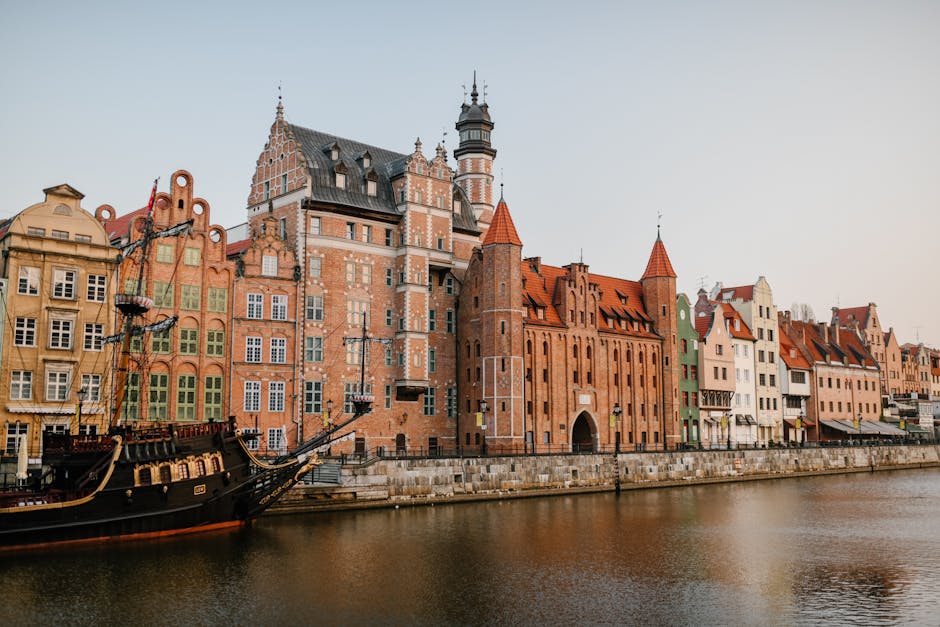
Discover the bohemian soul of Gdańsk. Explore the literary landmarks of Günter Grass, Prussian villas, and the trendy cafes of historic Wrzeszcz.
 Easy
EasyGdansk, Poland
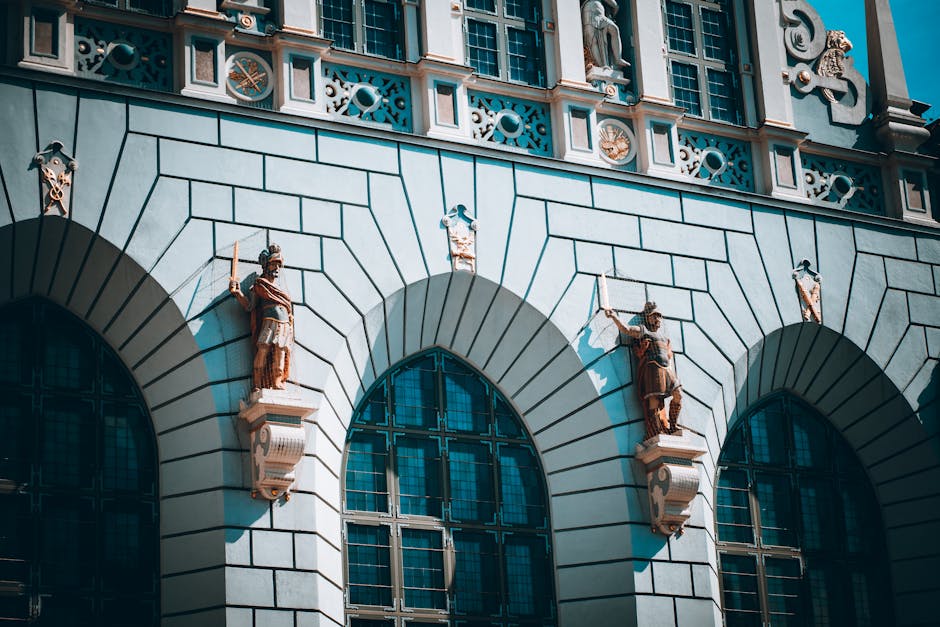
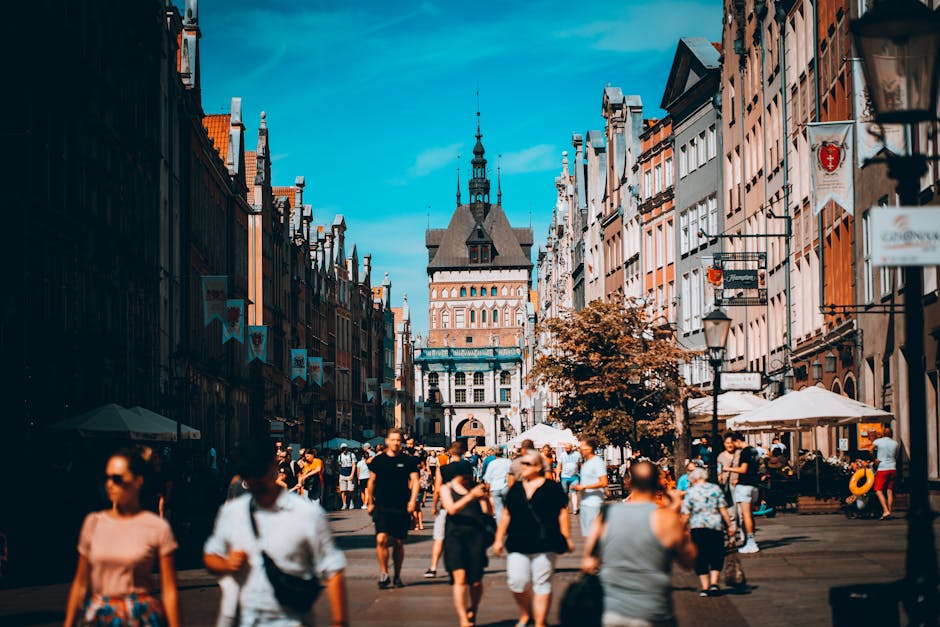
Discover the opulent Royal Way of Gdansk at your own pace. Explore Hanseatic history, gilded architecture, and the iconic Neptune's Fountain.
 Easy
EasyGdansk, Poland
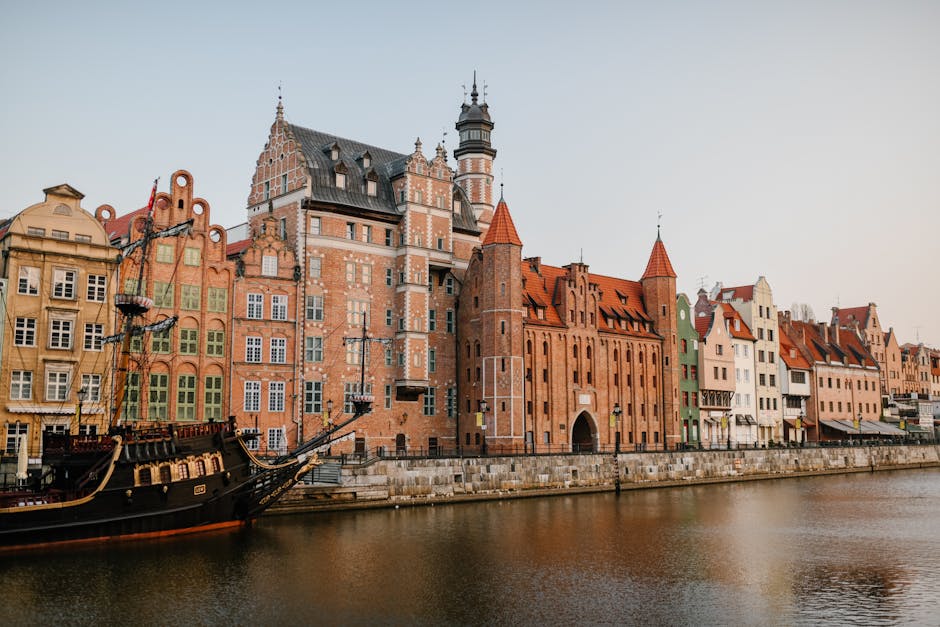
Discover the monastic heritage, world-famous organs, and lush botanical gardens of Oliwa on this peaceful self-guided neighborhood stroll.
 Easy
EasyGdansk, Poland
Taste the history of the Baltic. Explore Gdansk's culinary heritage from medieval markets to gold-flecked liqueurs on this self-guided walk.
 Moderate
Gothenburg, Sweden
Discover Gothenburg’s maritime soul on this self-guided walk from the historic Central Station to the scenic riverfront at Stenpiren.
 Moderate
Vienna, Austria
Discover the noir world of The Third Man and Cold War Vienna on this atmospheric self-guided audio walk through the historic Innere Stadt.
 Moderate
Warsaw, Poland
Explore the resilient spirit of Warsaw's Muranów district on this self-guided walk through the history and landmarks of the former Jewish Ghetto.
 Moderate
Warsaw, Poland
A powerful self-guided walk through Warsaw's WWII history, tracking the 1944 Uprising from ruined skyscrapers to solemn memorials.
 Easy
EasyKrakow, Poland
Explore the prestigious Jagiellonian University district, featuring Neo-Gothic architecture, Baroque churches, and Krakow's hidden scholarly gems.
 Easy
EasyKrakow, Poland
Explore Krakow's hidden nightlife with this self-guided walk through medieval cellars, jazz clubs, and bohemian bars in the Old Town and Kazimierz.
 Easy
EasyKrakow, Poland
Discover Krakow’s creative soul in Zabłocie, exploring industrial heritage, contemporary art museums, and avant-garde architecture at your own pace.
 Easy
EasyKrakow, Poland
Explore the historic heart of Kazimierz on this self-guided walk through synagogues, ancient cemeteries, and vibrant squares.
