Step away from the modern glass and steel of Oslo's waterfront and enter a world of cobblestones, colorful timber, and medieval history. This self-guided walk through the St. Hanshaugen neighborhood reveals a side of the Norwegian capital that many visitors miss. Here, the city feels more like a sleepy village from a Hans Christian Andersen story than a bustling Scandinavian hub. The route focuses on the preserved wooden architecture of the 18th and 19th centuries, specifically the iconic lanes of Damstredet and Telthusbakken, where charming cottages lean against one another in a vibrant display of historical preservation. Beyond the architecture, this neighborhood stroll connects you with the deep roots of the city at Old Aker Church, the oldest standing building in Oslo, and offers a quiet moment of reflection among Norway's most famous figures at Our Savior's Cemetery. Whether you are a photography enthusiast looking for the perfect shot of flower-draped fences or a history buff eager to see the medieval foundations of the city, this walking route provides a peaceful escape into Oslo's past. You will experience the dramatic contrast between the grand Egebergslottet, once the city's largest private residence, and the humble, tiny dwellings that once housed the city's working class. This is a journey through time that showcases how Oslo has evolved while fiercely protecting its most enchanting corners. Exploring independently allows you to linger at the viewpoints overlooking the city's allotments or spend extra time finding the graves of Henrik Ibsen and Edvard Munch. This walking tour Oslo residents love highlights the authentic, quiet charm of the city's hidden residential gems.
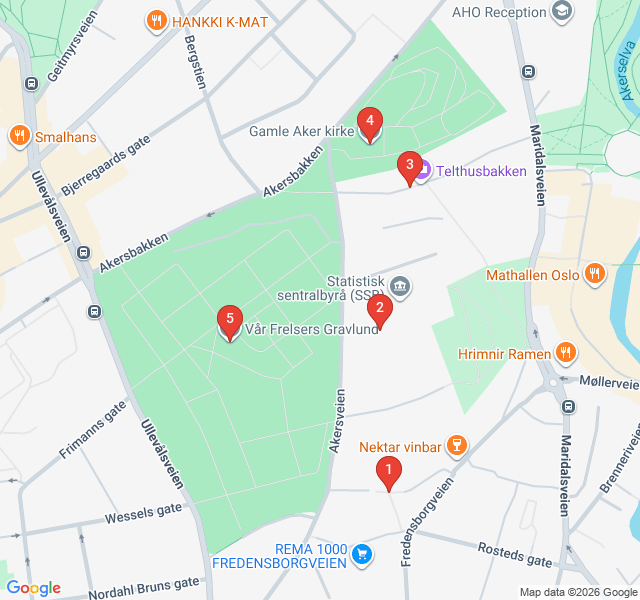
Numbers indicate the order of stops on the tour
Start your journey at Damstredet, one of Oslo's most picturesque streets. This narrow, winding lane is lined with well-preserved wooden houses dating back to the late 1700s and early 1800s. Originally a suburban area for the city's working class, these colorful timber buildings have survived the urban modernization that claimed much of Oslo's old wooden architecture. As you walk, notice the uneven cobblestones and the tiny gardens tucked between the houses. It is a remarkable example of 'Empire style' architecture and provides a glimpse into the humble lifestyle of 18th-century residents. Today, it is a protected area, serving as a living museum where people still reside in these historic gems.
Look up toward the imposing building known as Egebergslottet, or the Egeberg Castle. Built at the turn of the 20th century for Westye Egeberg, it was once the largest private residence in Oslo. The architecture is grand and classical, reflecting the immense wealth of the timber merchant family that commissioned it. Though it was later converted into luxury apartments, it remains a dominant landmark on the hillside. From this vantage point, you can appreciate the elevation of the St. Hanshaugen district, which offered the city's elite fresh air and sweeping views away from the industrial smoke of the lower city.
Telthusbakken is perhaps the most photographed street in Oslo, and for good reason. On one side of the steep hill, you have a row of vibrant, multi-colored wooden houses from the 1800s. On the other side, you will see the 'parsellhager' or allotment gardens, where locals grow vegetables and flowers. This combination of historic architecture and urban greenery creates a unique atmosphere. The houses here were once considered slums, but today they are among the most sought-after residences in the city. The contrast between the brightly painted wood and the lush green allotments perfectly captures the Norwegian love for combining urban life with nature.
At the top of the hill stands Old Aker Church (Gamle Aker kirke), a Romanesque stone basilica that is officially the oldest building in Oslo. Constructed around 1080 during the reign of King Olav Kyrre, it has survived centuries of fire, lightning strikes, and plunder. The church is built over an ancient silver mine, and local legends even suggest that dragons once guarded treasures in the tunnels beneath its foundations. Its thick stone walls and simple, sturdy design are a sharp contrast to the delicate wooden houses you just passed, representing the enduring power of the medieval church in Norwegian history.
Conclude your walk at Vår Frelsers gravlund, or Our Savior's Cemetery. This is not just a graveyard, but a beautiful park and a national monument. Established in 1808, it became the final resting place for Norway's most prominent citizens during the 19th and early 20th centuries. The 'Grave of Honor' section is where you will find the resting places of world-renowned playwright Henrik Ibsen and the pioneering painter Edvard Munch. The atmosphere here is one of quiet dignity, with grand monuments and mature trees, making it a perfect place to reflect on the cultural history of the nation before heading back into the modern city center.
Download Zigway to experience "Fairytale Lanes and Wooden Houses" with AI-powered audio narration. Walk at your own pace while stories unfold around you.
 Easy
EasyOslo, Norway
Discover Oslo's stunning modern waterfront on this self-guided walk through the innovative Bjørvika district and its iconic architecture.
 Easy
EasyOslo, Norway
Explore Oslo's 'Thief Island' on this self-guided walk through cutting-edge architecture, world-class galleries, and stunning fjord-side sculptures.
 Moderate
Oslo, Norway
Discover Oslo's 1,000-year history on this self-guided walk from the medieval Akershus Fortress to the ancient ruins of the Old Town.
 Moderate
Oslo, Norway
Step into Harry Hole's shoes on this self-guided walk through the gritty streets and iconic haunts of Oslo’s most famous fictional detective.
 Easy
EasySalzburg, Austria
Discover Salzburg's oldest medieval alley, the birthplace of the 'Silent Night' author, and breathtaking views on this quiet self-guided walk.
 Easy
EasyHelsinki, Finland
Discover Helsinki's oldest neighborhood on this self-guided audio walk through Kruununhaka’s historic streets, hidden courtyards, and scenic shores.
 Easy
EasyNairobi, Kenya
Discover Nairobi's iconic skyline on this self-guided architecture walk through the CBD’s most famous modernist and Brutalist landmarks.
 Easy
EasyKrakow, Poland
Explore the prestigious Jagiellonian University district, featuring Neo-Gothic architecture, Baroque churches, and Krakow's hidden scholarly gems.
 Easy
EasyBergen, Norway
Explore Bergen's vibrant craft beer scene and historic pubs on this self-guided audio walk through the atmospheric Sentrum district.
 Easy
EasyBergen, Norway
Discover Bergen's rich literary heritage on this self-guided walk through the city's historic theaters, libraries, and monuments of great writers.
 Easy
EasyBergen, Norway
Explore Bergen's charming Nordnes peninsula at your own pace, featuring narrow wooden alleys, historic fortresses, and stunning fjord views.
 Moderate
Bergen, Norway
Explore Bergen’s steepest alleys and hidden wooden neighborhoods on this self-guided photography walk through the historic Fjellsiden district.
