Lyon is often celebrated for its world-class gastronomy and Renaissance architecture, but look closer at its building facades and you will discover an extraordinary open-air gallery. This self-guided walk explores the 'Painted City,' where massive trompe-l'œil murals turn blank walls into windows through time. Lyon's tradition of mural painting began in the 1970s as a way to reclaim urban spaces, and today, the city boasts over 150 giant frescoes that celebrate its history, famous residents, and industrial heritage. This walking route takes you through the heart of the Presqu'île, across the Saône into the medieval streets of Vieux Lyon, and up to the silk-weaving district of Croix-Rousse. On this neighborhood stroll, you will encounter the famous Fresque des Lyonnais, where thirty of Lyon's most influential figures—from the Roman Emperor Claudius to the legendary chef Paul Bocuse—gaze down from their painted balconies. You will also see the Library of the City, a mural so detailed it appears as a multi-story bookstore, and the Fresque du Cinéma, which pays homage to the Lumière brothers, who invented cinematography right here in Lyon. Beyond the painted walls, the route highlights architectural marvels like the Hôtel-Dieu and the futuristic Musée des Confluences, bridging the gap between historical heritage and modern artistic expression. Whether you are a photography enthusiast or a history buff, this walking tour Lyon offers a unique perspective on urban storytelling. By following this route, you can explore independently at your own pace, stopping for a café or a praline brioche whenever you choose. Because many of these murals are located in residential neighborhoods, you will experience the authentic side of Lyon away from the typical tourist crowds. This audio walk is designed to be flexible; while the full route covers several districts, the dense concentration of art in the city center makes it easy to see the highlights even if you are short on time. Discover why Lyon is considered the European capital of murals on this immersive self-guided adventure through its colorful streets.
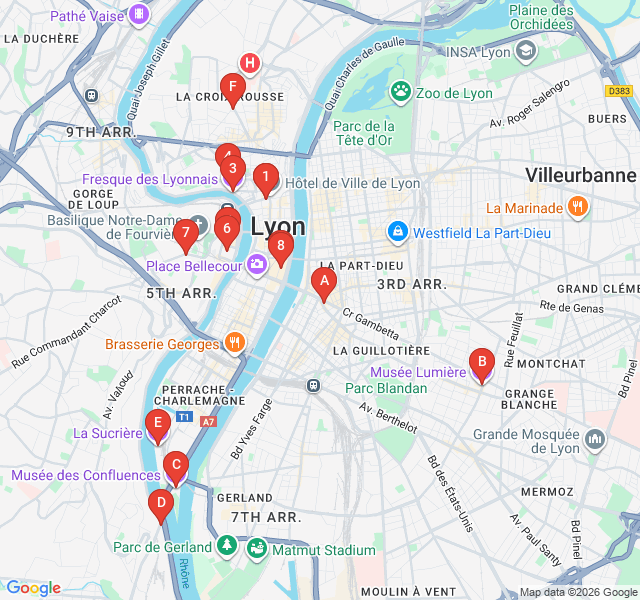
Numbers indicate the order of stops on the tour
Start exploring with Zigway at the Place des Terreaux, the heart of Lyon's Presqu'île. The Museum of Fine Arts, housed in a former 17th-century Benedictine abbey, is one of Europe's largest art galleries. While the interior holds masterpieces from ancient Egypt to modern painting, the building itself is a work of art. Take a moment to enter the peaceful cloister garden, a hidden oasis of sculptures and greenery. This museum sets the stage for our walk, reminding us that in Lyon, art is not just confined to frames; it spills out into the public squares and onto the very walls of the city.
Located at the corner of Quai de la Pêcherie, 'La Bibliothèque de la Cité' is a stunning example of the trompe-l'œil technique. This 400-square-meter mural depicts a massive library filled with books by Lyonnais authors, including Louise Labé and Frédéric Dard. The detail is so precise that from a distance, it looks like a real multi-story bookstore. This mural honors Lyon's long-standing relationship with the written word and the printing industry, which flourished here during the Renaissance. It serves as a literal 'open book' on the city's literary history.
This is perhaps the most famous mural in Lyon. The Fresque des Lyonnais covers an entire building facade and features thirty prominent figures from the city’s 2,000-year history. Look for the Little Prince and his creator Antoine de Saint-Exupéry on a balcony, or the Lumière brothers with their early camera. At street level, you’ll see the legendary chef Paul Bocuse entering his painted restaurant. This mural isn't just a painting; it's a neighborhood meeting point that connects the contemporary residents of Lyon with the giants who came before them.
Moving toward a more modern interpretation of the mural tradition, the Fresque Végétale Lumière combines painting with actual vegetation and light. Created by the Cité Création cooperative, this mural changes appearance depending on the time of day and the season. It reflects Lyon's commitment to urban greening and sustainable art. The mural uses a special lighting system that makes it glow after dark, turning a simple street corner into a luminous dreamscape. It’s a bridge between the traditional painted walls and the innovative light festivals Lyon is famous for.
As you cross the river into Vieux Lyon, you reach the Musée Cinéma et Miniature, housed in the historic 'Maison des Avocats.' This stop highlights the artistry of the small-scale. The museum contains over 100 hyper-realistic miniature scenes and a vast collection of original movie props. This connects deeply to our theme of visual trickery; while the murals use trompe-l'œil to make flat surfaces look 3D, these miniatures use forced perspective to make small objects look life-sized. It’s a celebration of the craftsmanship that goes into creating believable fictional worlds.
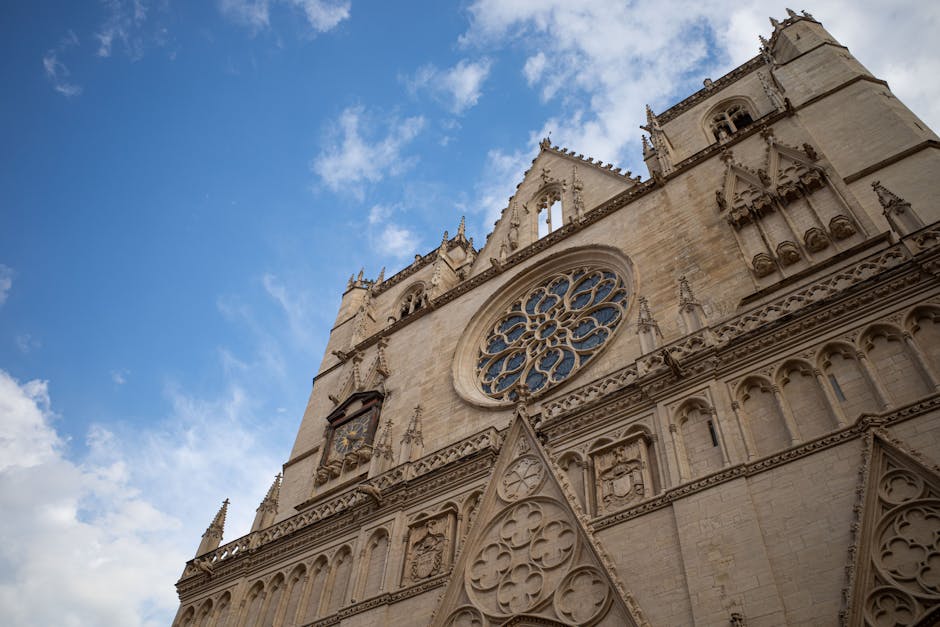
The Cathédrale Saint-Jean-Baptiste is the spiritual heart of Vieux Lyon. Built between 1180 and 1480, it showcases a blend of Romanesque and Gothic styles. Inside, you’ll find a 14th-century astronomical clock that is a marvel of medieval engineering. Every day, the clock’s mechanical figures perform a small play when the hour strikes. The cathedral’s stained glass windows provide a different kind of 'painted' light, using colored glass to tell biblical stories to the faithful, much like the murals outside tell the secular stories of the city.
To understand the foundation of the 'Painted City,' one must look at Lugdunum, the Roman capital of Gaul. This museum, built into the side of the Fourvière hill, is nearly invisible from the outside but opens into a vast subterranean space. It overlooks the ancient theaters where performances have been held for millennia. The mosaics found here are the ancestors of Lyon’s murals—ancient artists used stones to create the same visual narratives that modern artists now create with paint. The museum’s brutalist architecture provides a sharp, striking contrast to the ancient ruins it protects.
Back across the river on the Presqu'île, the Musée de l'illusion is a playful stop that explores the science of perception. This fits perfectly with the trompe-l'œil theme of our walk. Here, you can experience firsthand how your brain can be fooled by colors, patterns, and angles. It’s an interactive way to understand the techniques muralists use to create the illusion of depth on a flat wall. From the 'Ames room' to holograms, this space proves that seeing isn't always believing, especially in a city as visually deceptive as Lyon.
The Grand Hôtel-Dieu is one of Lyon's most majestic landmarks. For eight centuries, it served as a hospital before being transformed into a luxury shopping and dining complex. Its massive dome, designed by Jacques-Germain Soufflot, dominates the Rhône riverbank. As you walk through its courtyards, notice the meticulous restoration of the stone and the integration of modern design. It represents Lyon’s ability to reinvent its historic structures without losing their soul—a philosophy mirrored in the way the city uses murals to revitalize old, blank building walls.
Located in the 7th arrondissement, the Fresque du Cinéma is a sprawling tribute to the birth of the motion picture. Lyon is the cradle of cinema, where Auguste and Louis Lumière filmed 'Workers Leaving the Lumière Factory' in 1895. This mural depicts various scenes from film history and the technical evolution of the camera. It’s a cinematic trompe-l'œil that makes you feel as though you’ve stepped onto a 20th-century film set. It serves as a reminder that Lyon’s visual culture isn't just about static paintings, but also about the moving image.
Located at the Villa Lumière, the former home of the Lumière family, this museum is hallowed ground for film lovers. The museum showcases the brothers' inventions, including the Cinématographe and early color photography known as Autochrome. The surrounding neighborhood of Monplaisir is filled with references to their legacy. Standing here, you are at the exact spot where the first movie in history was projected. The spirit of innovation that drove the Lumières to capture reality on film is the same spirit that drives Lyon’s muralists to recreate reality on the city's walls.
At the southern tip of the Presqu'île, where the Rhône and Saône rivers meet, stands the Musée des Confluences. This futuristic structure, made of glass and steel, looks like a landed spaceship. It is a science and anthropology museum that explores the 'confluence' of knowledge. While it doesn't feature traditional murals, its bold design is a form of architectural art that redefines the city's skyline. It marks the transition from the 'Painted City' to the 'Modern City,' showing that Lyon’s visual identity is constantly evolving and looking toward the future.
Located just across the river from the Confluences district, the Aquarium of Lyon offers a different kind of visual immersion. Here, the 'murals' are living tanks filled with vibrant fish and coral reefs. It’s a peaceful stop that highlights the colors and patterns of the natural world. In a city where so much art is man-made and urban, the aquarium serves as a reminder of the biological beauty that often inspires artistic form and color palettes. It’s a great spot to rest and reflect on the diverse visual textures you’ve encountered so far.
La Sucrière is a former sugar warehouse in the trendy Confluence docks, now transformed into a major center for contemporary art and culture. It is one of the main venues for the Lyon Biennale of Contemporary Art. The building has kept its industrial character, including the massive silos that now serve as canvases for temporary art installations. This site exemplifies how Lyon’s industrial heritage is repurposed for the arts, ensuring that the city’s working-class history remains a visible and vibrant part of its modern cultural landscape.
Our self-guided adventure concludes in the Croix-Rousse district at the Mur des Canuts. This is the largest trompe-l'œil mural in Europe, covering 1,200 square meters. It depicts the daily life of the 'Canuts,' or silk weavers, who once inhabited this hill. The mural is unique because it is updated every decade to reflect the changing neighborhood—figures age, new shops appear, and the fashion changes. It is a living, breathing piece of art that perfectly captures the soul of Lyon: a city that honors its past while constantly moving forward. From here, you can explore the 'traboules' or secret passageways of Croix-Rousse to finish your walk.
Download Zigway to experience "The Painted City: Lyon's Giant Murals" with AI-powered audio narration. Walk at your own pace while stories unfold around you.
 Easy
EasyLyon, France
Discover Lyon's culinary soul on this self-guided walk from historic Presqu'île to the legendary Halles Paul Bocuse food market.
 Easy
EasyLyon, France
Explore Lyon’s futuristic waterfront! A self-guided walk through Confluence’s bold architecture and reclaimed industrial docks.
 Easy
EasyLyon, France
Discover the multicultural soul and industrial heritage of Lyon's 7th arrondissement on this vibrant self-guided walking route.
 Moderate
Lyon, France
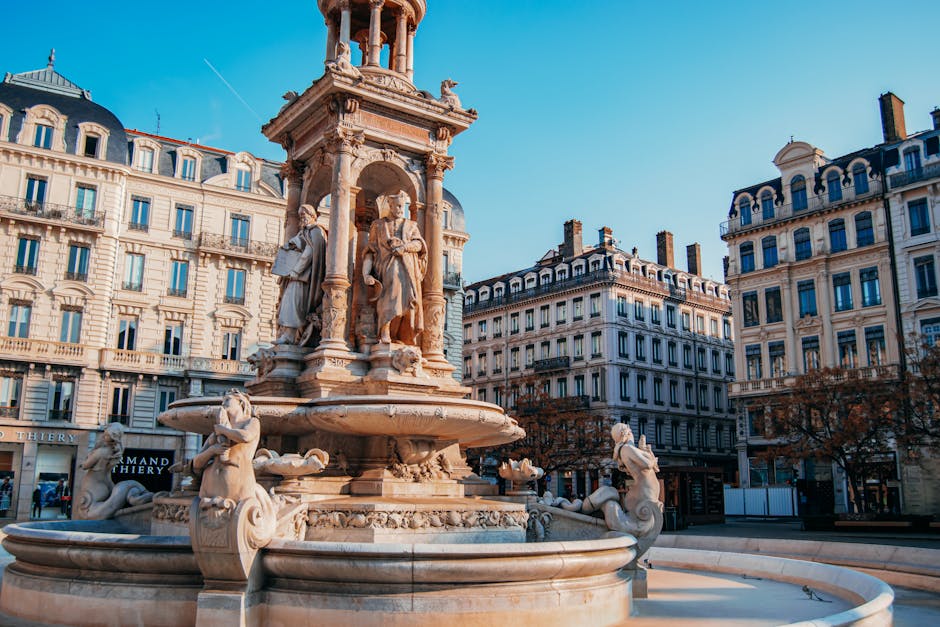
Ascend the 'Hill that Prays' to explore Roman ruins, a shimmering basilica, and secret panoramic gardens on this historic self-guided walk in Lyon.
 Easy
EasyNairobi, Kenya
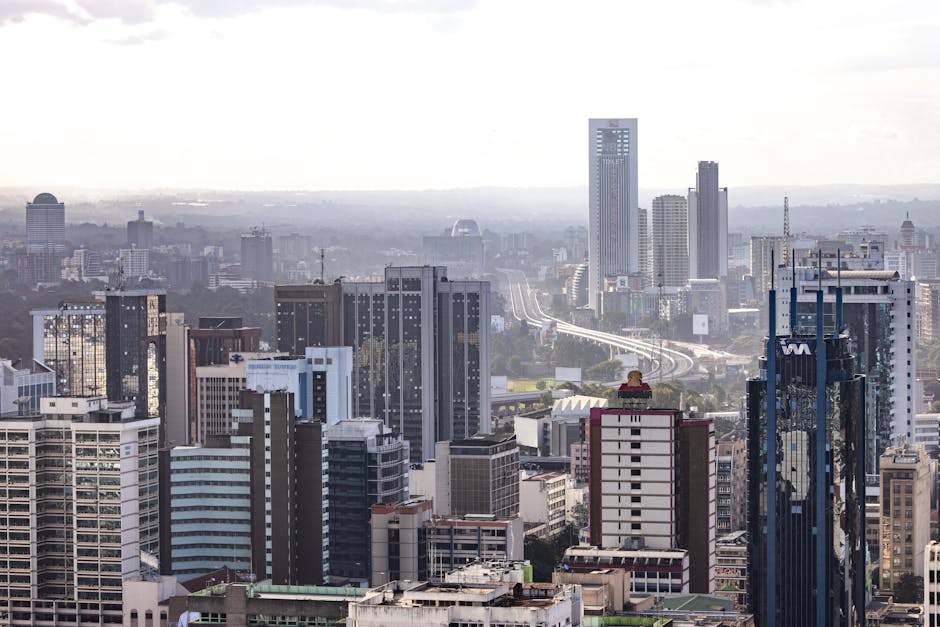
Explore the history of Kenya’s independence through the statues, monuments, and parks that define Nairobi’s political heart on this self-guided walk.
 Moderate
Vienna, Austria
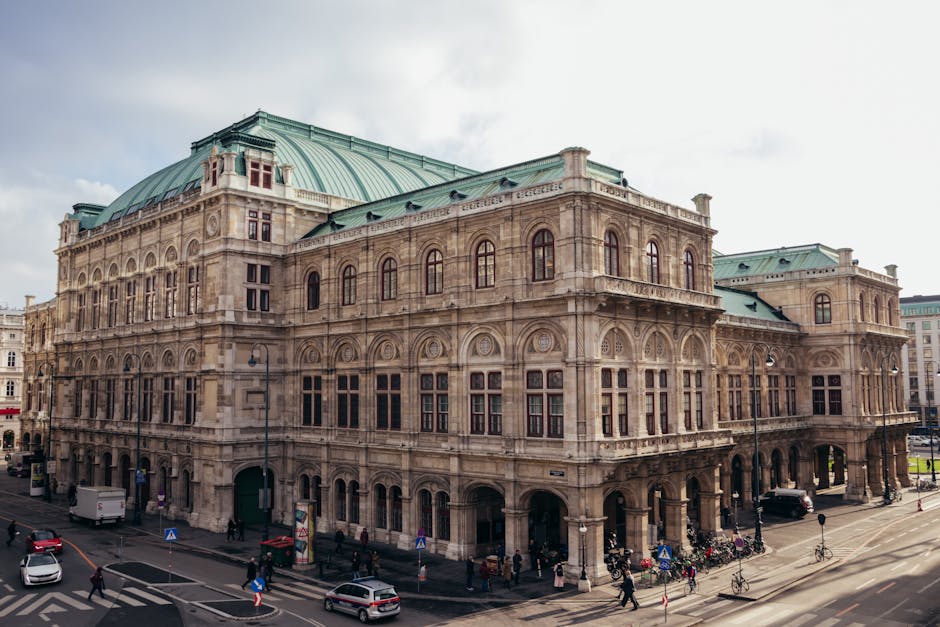
Discover the noir world of The Third Man and Cold War Vienna on this atmospheric self-guided audio walk through the historic Innere Stadt.
 Moderate
Gdansk, Poland
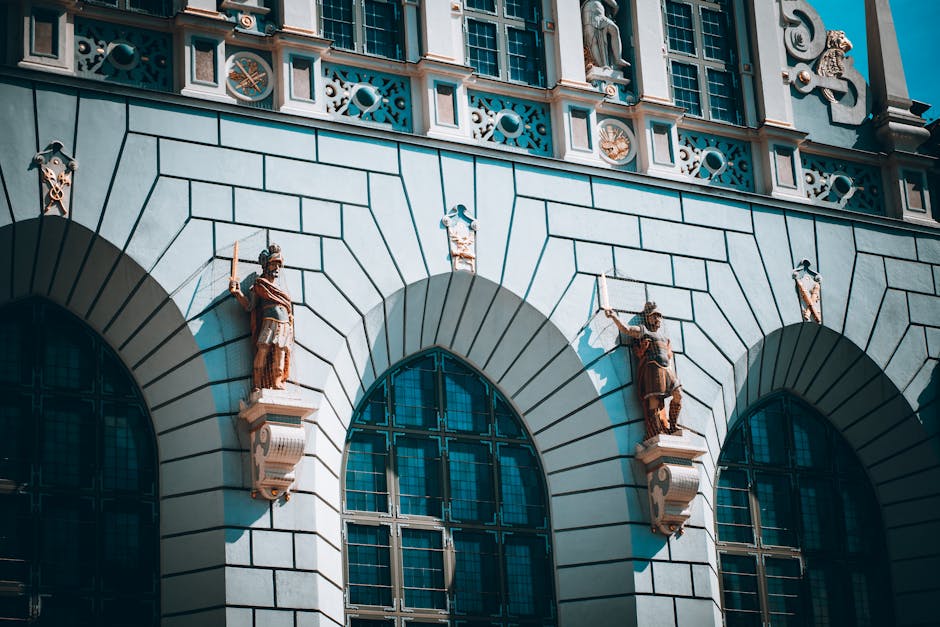
Discover Zaspa, a massive open-air gallery where grey housing blocks are transformed by over 60 monumental murals. Explore at your own pace.
 Moderate
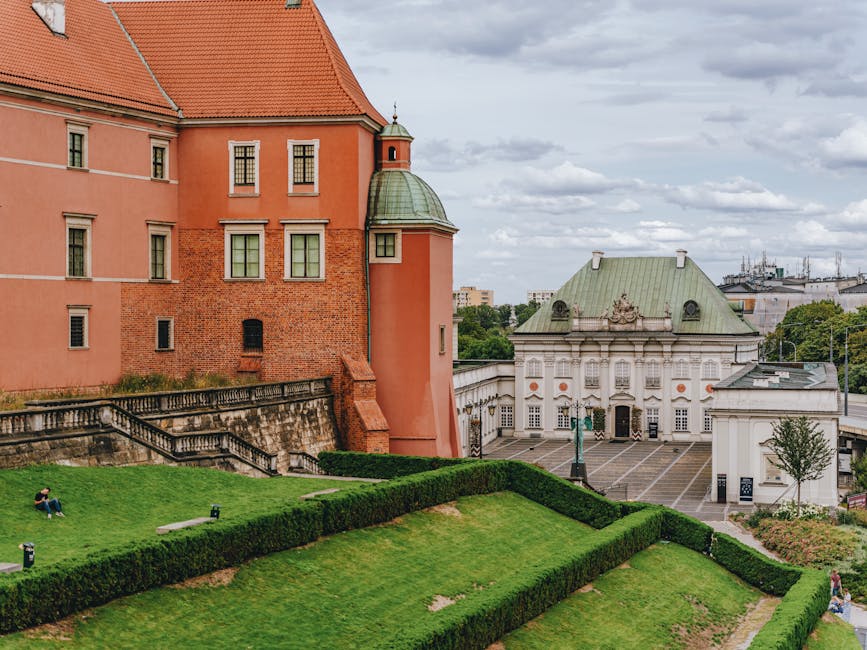
Warsaw, Poland
Explore the resilient spirit of Warsaw's Muranów district on this self-guided walk through the history and landmarks of the former Jewish Ghetto.
 Challenging
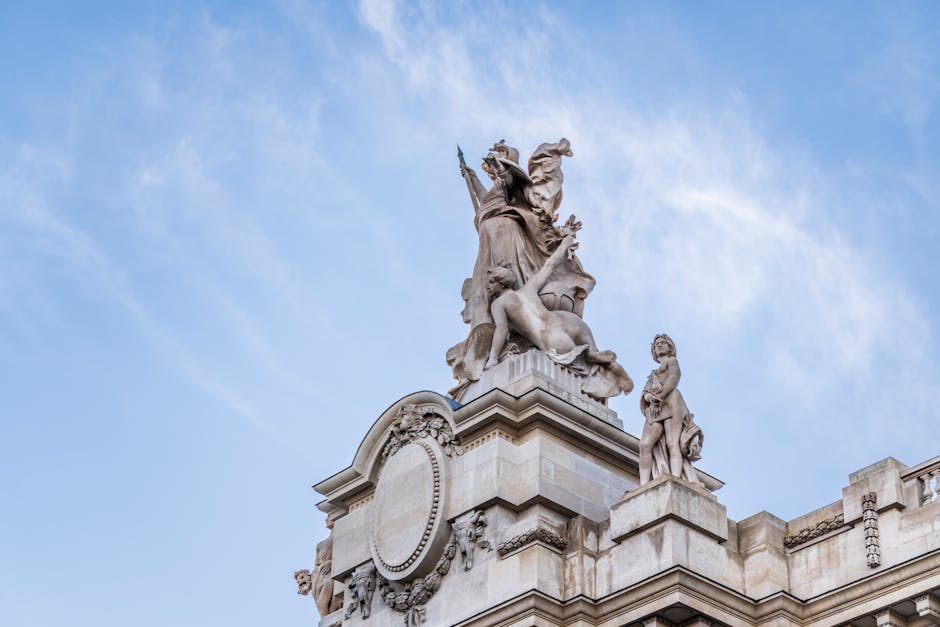
Paris, France
Explore the secret vineyards, legendary artist studios, and hidden squares of Paris's iconic hilltop on this self-guided bohemian walking route.
 Easy
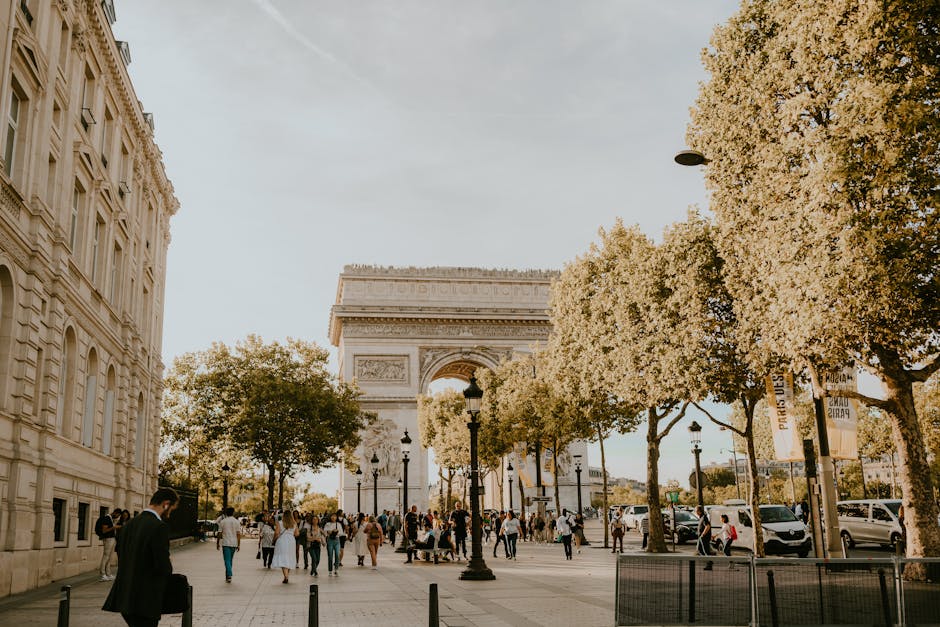
EasyParis, France
Explore the evolution of Parisian design from Art Nouveau whimsy to Le Corbusier's Modernist masterpieces on this self-guided architectural walk.
 Easy
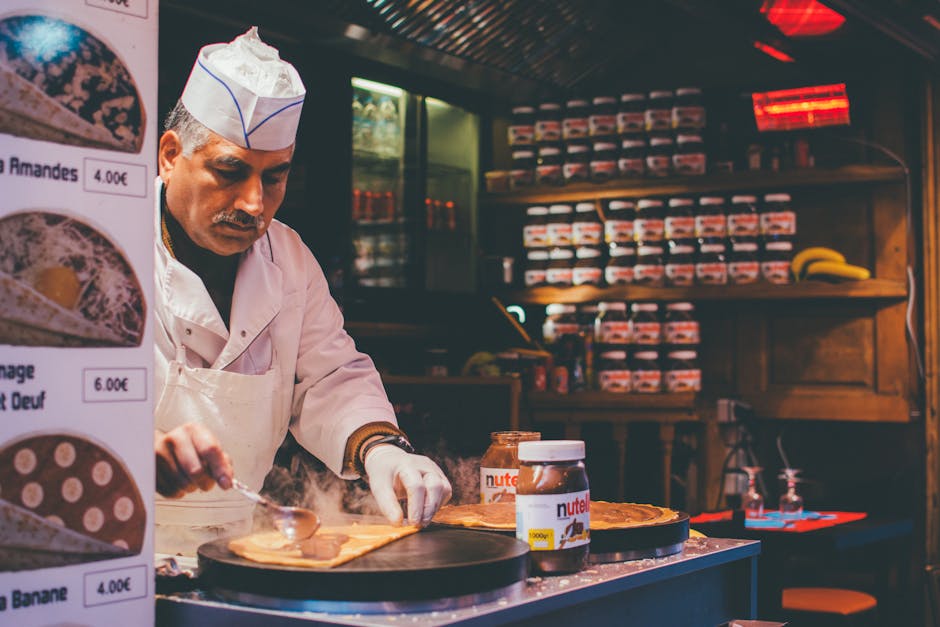
EasyParis, France
Explore the flavors and history of Bastille on this self-guided walk through the legendary Aligre Market and the scenic Coulée Verte.
 Easy
EasyParis, France
Discover aristocratic mansions, secret medieval courtyards, and royal history on this self-guided walk through the enchanting Marais district.
