Step back in time to the golden age of the Duchy of Aquitaine on this self-guided walk through the heart of Bordeaux’s Saint-Pierre district. Long before the grand 18th-century limestone facades defined the city's riverfront, Bordeaux was a dense thicket of medieval lanes, fortified gates, and bustling marketplace squares. This walking route invites you to explore the remnants of that era, starting in the vibrant Place Fernand Lafargue, once the site of the city’s medieval pillory and now a hub for local social life. As you wander, you will discover the architectural evolution of a city that transitioned from a strategic military outpost to a thriving commercial port. The route highlights the two most iconic survivors of the city’s ancient walls: the Grosse Cloche and the Porte Cailhau. These aren't just mere gates; they are monuments to civic pride and royal history. You will walk along Rue Saint-James, a legendary path for pilgrims heading toward Santiago de Compostela, and explore the hidden plazas where the city's medieval identity is still palpable in the timber-framed details and narrow stone corridors. This neighborhood stroll offers a different perspective on the city, moving away from the wide boulevards to the intimate, atmospheric corners where history feels alive. Whether you are a history buff or an architecture enthusiast, this audio walk provides the context needed to appreciate the layers of Bordeaux. You can explore independently and at your own pace, stopping for a coffee in a hidden square or photographing the intricate carvings of a 15th-century triumphal arch. By the time you reach the Église Saint-Pierre, you will have a deep understanding of how this 'Port of the Moon' grew from its Roman foundations into the magnificent UNESCO World Heritage city it is today. This is the perfect introduction for anyone wanting to see the medieval side of a walking tour Bordeaux experience.
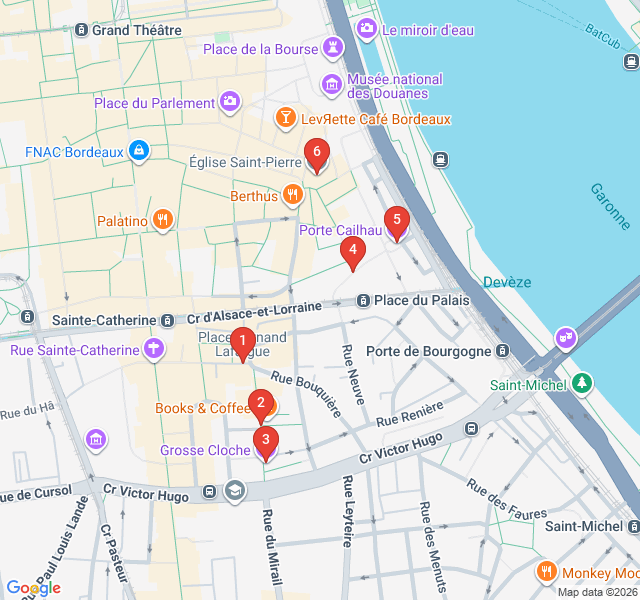
Numbers indicate the order of stops on the tour
Welcome to the starting point of your self-guided walk. Today, Place Fernand Lafargue is one of the most popular spots for locals to grab a bite, but in the Middle Ages, it had a much more somber reputation. This square was the site of the 'pilori,' or the city pillory, where criminals were publicly shamed. It was also the location of the old market, the heart of the city's commerce before the city expanded. Look around at the surrounding buildings; while many facades were updated in later centuries, the layout of the square remains distinctly medieval, with narrow streets branching off like spokes on a wheel. This plaza serves as the perfect introduction to the Saint-Pierre district, the oldest part of Bordeaux located within the original Roman walls.
As you walk down Rue Saint-James, you are following in the footsteps of thousands of medieval travelers. This street is named after Saint James—or 'Saint Jacques' in French—because it formed part of the legendary pilgrimage route to Santiago de Compostela in Spain. In the 12th and 13th centuries, this was a major thoroughfare for pilgrims arriving by boat and heading south. Today, it is a hub for independent boutiques and artisan shops, but the medieval spirit remains in the narrowness of the street and the height of the stone buildings. Notice how the street perfectly frames the upcoming Grosse Cloche, creating one of the most photographed vistas in the city. It is a transition point between the commercial life of the city and its ancient defensive fortifications.
Standing before you is the Grosse Cloche, or the 'Great Bell.' Built in the 15th century on the remains of the 13th-century Porte Saint-Éloi, this was once the belfry of the town hall. The bell itself, cast in 1775 and weighing over seven tons, was only rung to signal major events, such as the start of the grape harvest or to warn of fires. Interestingly, the bell has a name: Armande-Louise. Below the bell, you’ll see a clock featuring a central dial that shows the phases of the moon—a nod to Bordeaux's identity as the 'Port of the Moon.' The gate also served as a prison for minor offenders; look closely at the windows in the towers where the 'guests' of the city were once held. It remains one of the few surviving pieces of the city's medieval ramparts.
You have arrived at Place du Palais, a square that once served as the courtyard for the Palais de l'Ombrière. From the 10th to the 16th century, this palace was the residence of the Dukes of Aquitaine, including the famous Eleanor of Aquitaine. Imagine the grand processions and royal visitors that once occupied this space. Although the palace was eventually demolished and replaced by the Parliament of Bordeaux, the square retains its regal proportions. Today, it is a peaceful spot filled with café terraces, offering a stunning view of the Porte Cailhau. This square represents the intersection of royal power and public life in medieval Bordeaux, where the city’s elite would have lived in close proximity to the bustling riverfront just a few meters away.
The Porte Cailhau is perhaps the most beautiful gateway in France. Built in 1494, it was designed as a triumphal arch to commemorate King Charles VIII’s victory at the Battle of Fornovo in Italy. Unlike the defensive Grosse Cloche, this gate was intended to impress. If you look at the niches on the river-facing side, you can see a statue of the King himself. The architecture is a fascinating blend of Gothic and Renaissance styles, featuring conical roofs, decorative turrets, and intricate carvings of soldiers and mythical creatures. In the Middle Ages, this was the primary entrance to the city for those arriving from the Garonne river. It stood as a symbol of the city’s loyalty to the French crown and its growing architectural ambition.
Our final stop is the Église Saint-Pierre, located in the heart of the district that bears its name. This church was built between the 14th and 15th centuries on the site of the ancient Roman port. During the Middle Ages, the river actually reached this far inland, and this was where the ships would dock to unload their cargo. Saint Peter, the patron saint of fishermen, was the natural choice for the church's dedication. The building features a beautiful Gothic portal and a stunningly ornate interior. The surrounding square, Place Saint-Pierre, was the center of the city’s administrative life for centuries. As you conclude your neighborhood stroll here, take a moment to appreciate how the city has grown around this spiritual and commercial anchor of the old port.
Download Zigway to experience "Medieval Gateways and Hidden Plazas" with AI-powered audio narration. Walk at your own pace while stories unfold around you.
 Easy
EasyBordeaux, France
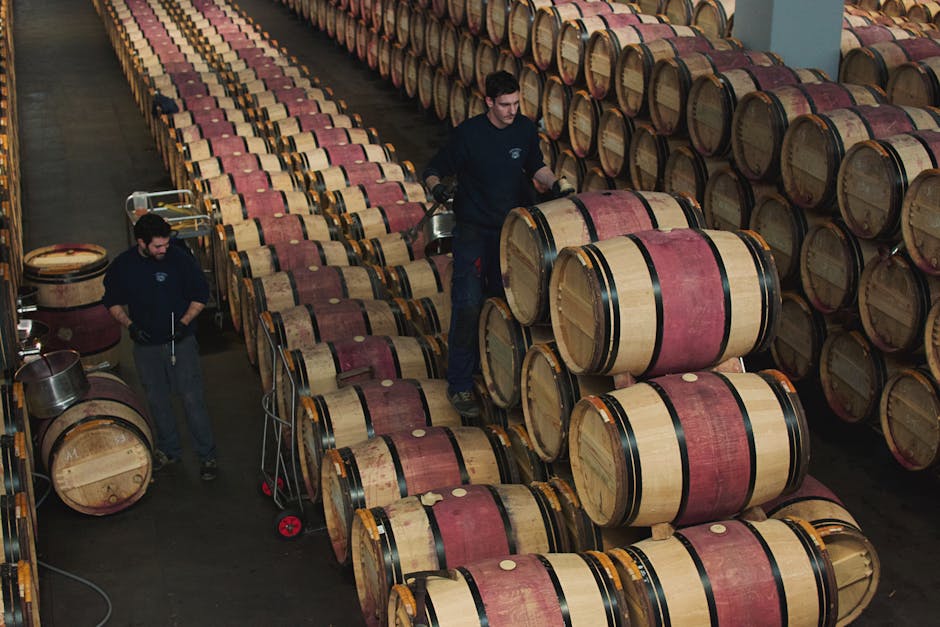
Explore the vibrant Saint-Michel district and the legendary Marché des Capucins on this self-guided food and culture walk through Bordeaux.
 Easy
EasyBordeaux, France
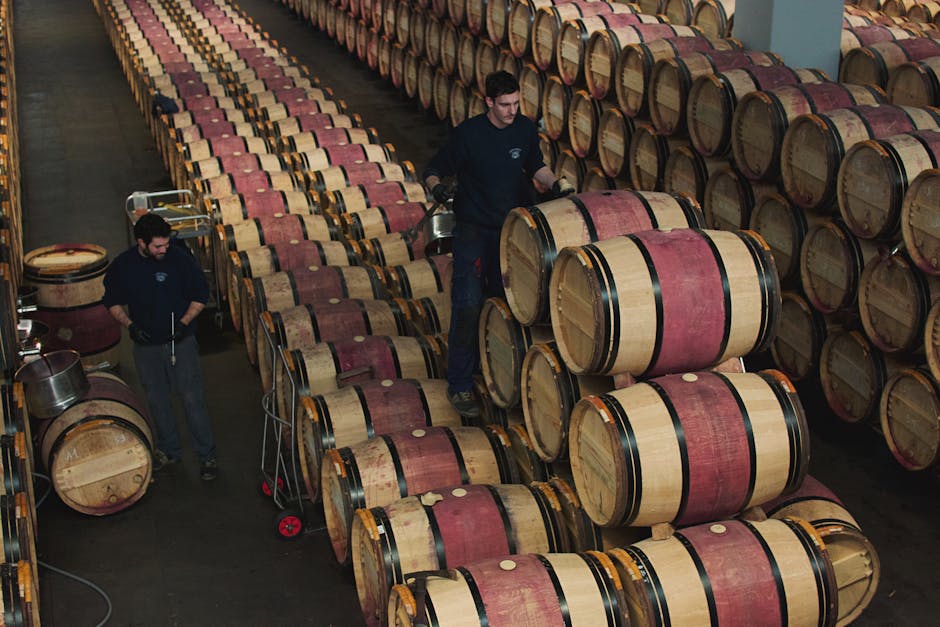
Discover the intellectual soul of Bordeaux on this self-guided walk through the haunts of legendary philosophers and writers.
 Moderate
Bordeaux, France
Explore the bold Brutalist architecture of Bordeaux's Mériadeck district on this self-guided walk through 1970s urban design and hanging gardens.
 Moderate
Bordeaux, France
Explore Bordeaux's creative edge on this self-guided walk from classic museums to the vibrant Darwin Ecosystem and industrial ruins.
 Easy
EasyGothenburg, Sweden
Discover Gothenburg’s 17th-century Dutch foundations, historic canals, and military fortifications on this self-guided architectural walk.
 Easy
EasyGdansk, Poland
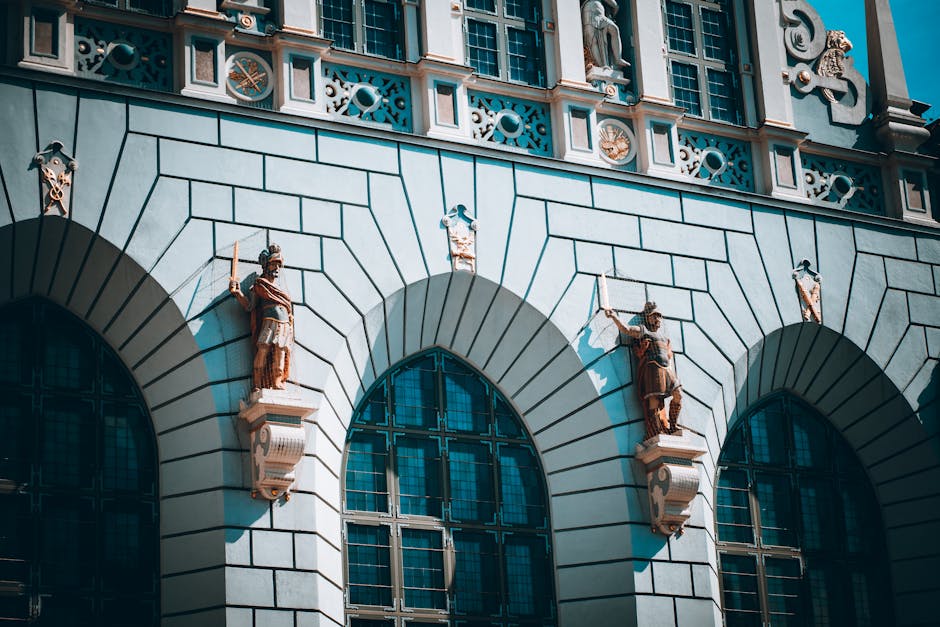
Discover the opulent Royal Way of Gdansk at your own pace. Explore Hanseatic history, gilded architecture, and the iconic Neptune's Fountain.
 Easy
EasySalzburg, Austria
Discover the 'Rome of the North' on this self-guided walk through the Baroque squares and monumental legacy of Salzburg’s Prince-Archbishops.
 Easy
EasyGdansk, Poland
Discover the 'Baltic Gold' on this self-guided walk through Gdansk's historic mills, massive cathedrals, and the magical Mariacka Street.
 Challenging
Paris, France
Explore the secret vineyards, legendary artist studios, and hidden squares of Paris's iconic hilltop on this self-guided bohemian walking route.
 Easy
EasyParis, France
Explore the evolution of Parisian design from Art Nouveau whimsy to Le Corbusier's Modernist masterpieces on this self-guided architectural walk.
 Easy
EasyParis, France
Explore the flavors and history of Bastille on this self-guided walk through the legendary Aligre Market and the scenic Coulée Verte.
 Easy
EasyParis, France
Discover aristocratic mansions, secret medieval courtyards, and royal history on this self-guided walk through the enchanting Marais district.
