Discover the unexpected harmony between childhood whimsy and avant-garde design on this self-guided walk through Utrecht. This route bridges the gap between the world-famous illustrations of Dick Bruna and the radical architectural shifts of the 20th century. Utrecht is a city where medieval canals meet the primary colors of the De Stijl movement, and this walking route invites you to explore that unique intersection at your own pace. You will begin in the historic Museum Quarter, where the legacy of Miffy (Nijntje) and Gerrit Rietveld is preserved, before heading east through the lush Wilhelminapark toward the iconic Rietveld Schröder House. The journey doesn't stop at the classics; it continues into the futuristic landscape of the Utrecht Science Park, showcasing how modernism evolved into the bold experimentation of the late 20th century. This neighborhood stroll is more than just a sightseeing path; it is a deep dive into the creative DNA of a city that values both simplicity and innovation. Whether you are an architecture enthusiast or a fan of Dutch graphic design, the transition from the Gothic Domkerk to the sleek Educatorium offers a fascinating perspective on urban evolution. While many might look for a walking tour Utrecht offers plenty of history, this independent route allows you to linger at the Miffy statue or contemplate the rigid lines of the Schröder House without a crowd. This exploration of Modernism and its masters provides a comprehensive look at how Utrecht became a hub for world-class design and architecture.
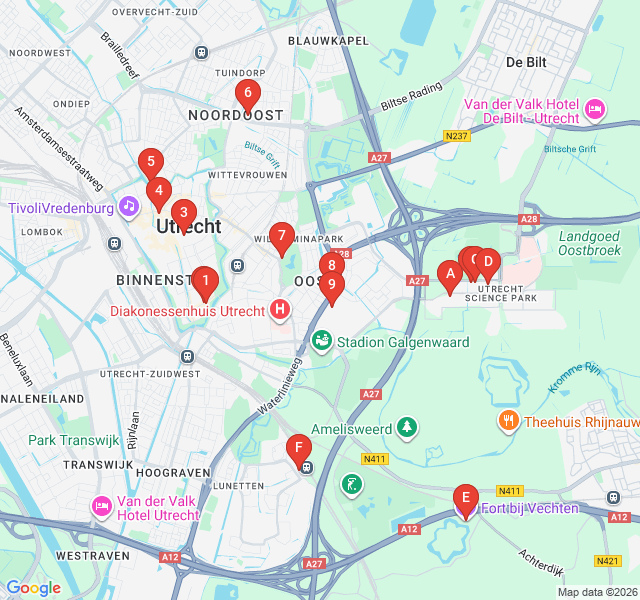
Numbers indicate the order of stops on the tour
The journey begins at the Centraal Museum, the oldest municipal museum in the Netherlands. Located in a former medieval convent, this museum serves as the guardian of Utrecht’s artistic heritage. It holds the world's largest collection of works by Gerrit Rietveld, the pioneer of the De Stijl movement. Within these walls, the evolution of local art is on display, ranging from the Utrecht Caravaggisti to contemporary designs. The museum also houses the original studio of Dick Bruna, the creator of Miffy, offering a glimpse into the disciplined yet playful mind that gave the world its most famous rabbit. It is the perfect starting point to understand how Utrecht balances its deep history with revolutionary modern ideas.
Just across the street stands the Nijntje Museum, a space dedicated entirely to the world of Miffy. While often associated with children, the museum highlights the sophisticated graphic design principles used by Dick Bruna. Bruna’s work is characterized by bold lines and a limited palette of primary colors—a philosophy that shares surprising similarities with the De Stijl movement. The simplicity of Miffy is not accidental; it is a masterclass in minimalism. This site celebrates how a simple character became a global icon of Dutch design, proving that great art can be accessible to all ages and remains a cornerstone of Utrecht's cultural identity.
Walking toward the city center, the skyline is dominated by the Domkerk and its massive tower. This Gothic cathedral was once the largest in the Netherlands, but a devastating storm in 1674 collapsed the nave, leaving the tower standing separate from the choir. This architectural void created the Domplein square we see today. The intricate stone carvings and soaring arches represent the medieval foundation upon which the modern city was built. It serves as a stark, beautiful contrast to the minimalist structures you will encounter later on the route, reminding us that even the most radical modernists were operating in the shadow of this centuries-old giant.
The Utrecht Library at Neude is a spectacular example of the Amsterdam School style of architecture. Formerly the city's main post office, the building was designed by Joseph Crouwel and completed in 1924. Inside, the barrel-vaulted ceiling and yellow brickwork create a sense of monumental space. The exterior features sculptures representing the different continents, reflecting the building's original global purpose. Today, it has been repurposed as a vibrant public library and cultural hub. It stands as a bridge between the traditional Gothic style of the Dom and the functionalist modernism that would soon take over the city's outskirts.
At the northern end of the Oude Gracht lies a small, quiet square known as Nijntje pleintje. Here, you will find a modest bronze statue of Miffy, created by Dick Bruna’s son, Marc Bruna. This spot is a pilgrimage site for fans of the character. Unlike the grand monuments of the city center, this statue is small and approachable, mirroring the personality of the character herself. It marks the transition from the medieval core of Utrecht toward the residential neighborhoods of the East, where the influence of 20th-century design becomes more apparent in the streetscapes and housing.
The Marnix Academie represents the mid-century educational architecture of Utrecht. As a teacher training college, the building reflects the post-war emphasis on light, air, and functional space. The design focuses on creating an environment conducive to learning and community, moving away from the heavy, ornate styles of the past. It serves as a subtle reminder of how architecture was used to rebuild and reshape Dutch society in the 1950s and 60s, prioritizing the needs of the individual and the collective over mere decoration.
Wilhelminapark is one of the most prestigious urban parks in the Netherlands, designed in the English landscape style in 1898. As you walk through, notice the winding paths, the large pond, and the stately villas that line its edges. This park was a response to the industrialization of the city, providing a 'green lung' for residents. It represents the late 19th-century ideal of the city-as-a-garden. The park acts as a transition zone between the traditional 19th-century luxury housing of the Oost district and the radical modernist experiment that lies just a few blocks ahead.
This is the crown jewel of Utrecht’s modern architecture. Built in 1924 by Gerrit Rietveld for Truus Schröder, this house is the only building ever realized entirely according to the principles of the De Stijl movement. It is a radical explosion of primary colors—red, blue, and yellow—combined with white, grey, and black. The house features a flexible interior with sliding walls, challenging the very idea of how a home should function. A UNESCO World Heritage site, it remains a shocking and beautiful sight even a century later. It is the physical manifestation of a desire to break with the past and live in a completely new, rational way.
Located on the former Kromhout Kazerne, a 19th-century military barracks, University College Utrecht is a fascinating example of adaptive reuse. The red-brick buildings, once used to house soldiers, now serve as a residential honors college. This site demonstrates Utrecht’s ability to preserve its military history while modernizing its function for the 21st century. The campus layout retains a formal, disciplined feel, but the atmosphere is now one of academic inquiry and international exchange, marking another step in the eastward expansion of the city's intellectual and architectural boundaries.
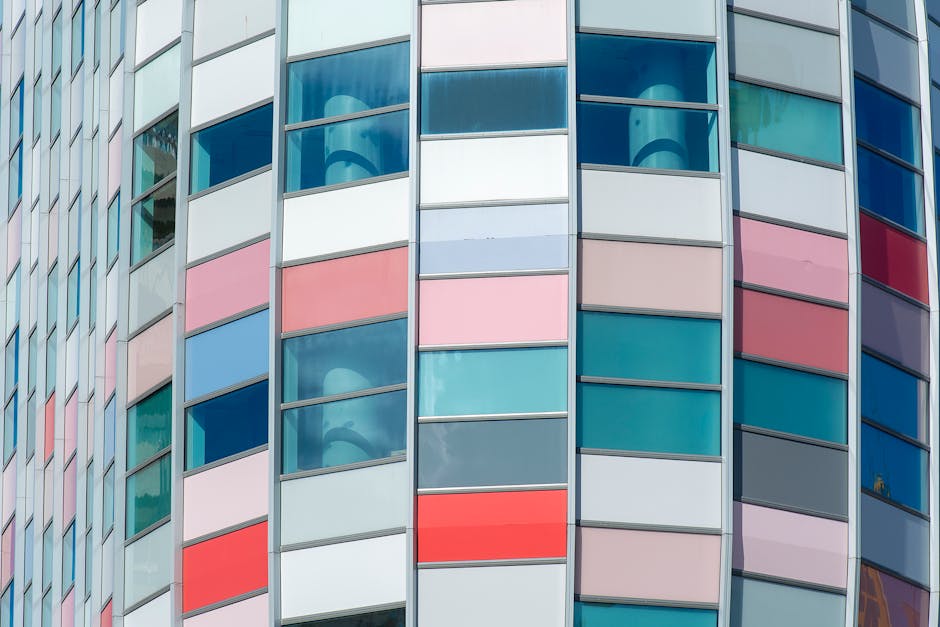
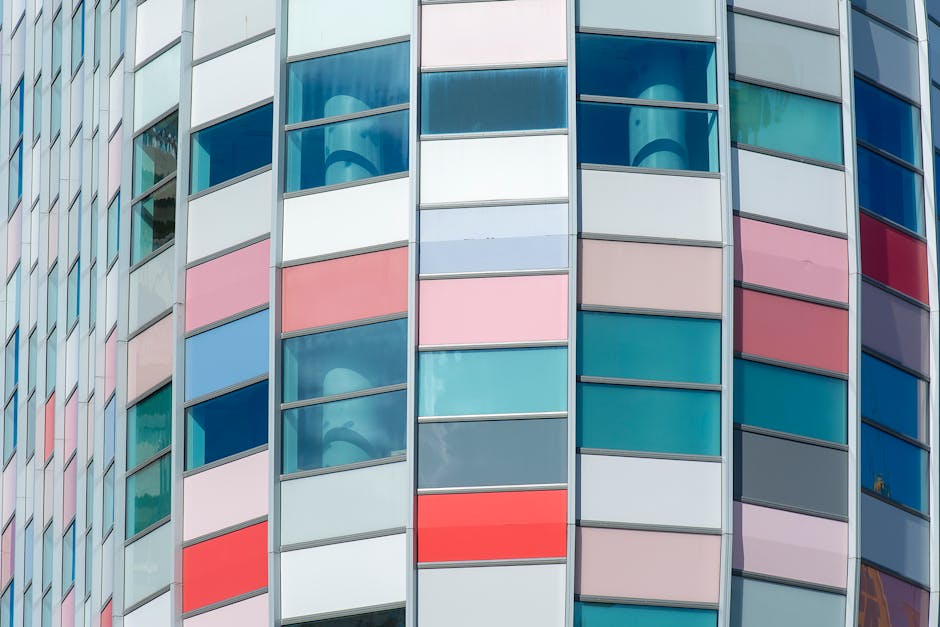
As we enter the Utrecht Science Park, also known as De Uithof, the architecture becomes decidedly more experimental. The Hogeschool Utrecht building at Padualaan 97 is a testament to contemporary educational design. With its colorful facade and complex internal geometry, it reflects the multi-disciplinary nature of modern higher education. The Science Park serves as a laboratory for famous architects, where they were given the freedom to create bold, sometimes controversial structures that look toward the future. It is a far cry from the medieval cobblestones of the city center.
The Faculty of Veterinary Medicine at Utrecht University is one of the most respected in Europe, and its buildings reflect the functional requirements of high-level scientific research. The architecture here is characterized by its scale and its integration with the surrounding landscape. In the Science Park, buildings are often designed as 'objects in space,' allowing for a dialogue between the built environment and the open fields of the nearby countryside. This area represents the ultimate extension of Utrecht’s modernist ambitions, where utility and aesthetics meet at a massive scale.
Designed by the world-renowned architect Rem Koolhaas and his firm OMA, the Educatorium is a landmark of late 20th-century architecture. Completed in 1997, the building is famous for its 'folded' floor plate, where the floor literally curves up to become the ceiling. This design was intended to create a seamless flow between different functions—lecture halls, a cafeteria, and study areas. It is a masterpiece of 'supermodernism,' using glass and concrete to create a space that feels both industrial and fluid. It remains one of the most studied buildings in the Netherlands for its innovative approach to social interaction within a campus.
The Ruppertgebouw was the first building constructed in the Science Park back in the 1960s. It represents the initial 'Brutalist' phase of the campus development, characterized by raw concrete and a focus on modularity. While it may seem stark compared to the colorful buildings nearby, it was a revolutionary step in moving the university out of the cramped city center into a purpose-built academic city. It serves as the anchor for the entire district, showing where the dream of a modern, centralized university campus first began.
A short walk or bike ride from the Science Park brings you to Fort bij Vechten, part of the New Dutch Waterline. This 19th-century fortification was designed to protect the country by flooding vast areas of land. Today, it houses the Waterline Museum. The architecture here is hidden—earth-covered bunkers and brick vaults designed to withstand cannon fire. It is a fascinating juxtaposition to the glass and steel of the university buildings nearby, showing how the Dutch have historically used both nature and engineering to shape and defend their landscape.
The final stop brings us to the Lunetten district, a residential area developed in the 1970s. The Aristo center and the surrounding neighborhood reflect the 'humanist' urban planning of that era, which emphasized greenery, pedestrian paths, and community-focused layouts. This area was designed to be the antithesis of the high-rise modernist blocks seen elsewhere in Europe. From here, you are conveniently located near the Lunetten train station, providing an easy return to the city center and a chance to reflect on the diverse architectural journey from the medieval Dom to the futuristic Science Park.
Download Zigway to experience "Miffy and the Modernist Masters" with AI-powered audio narration. Walk at your own pace while stories unfold around you.
 Easy
EasyUtrecht, Netherlands
Explore Utrecht's 2,000-year history from Roman fortresses to medieval cathedrals on this self-guided audio walk through the city center.
 Easy
EasyUtrecht, Netherlands
Explore Utrecht's industrial evolution on this self-guided walk from the medieval Dom Tower to the creative warehouses and design hubs of Rotsoord.
 Easy
EasyUtrecht, Netherlands
Explore Utrecht’s liquid history on this self-guided walk from historic canal-side cafes to modern craft breweries.
 Easy
EasyUtrecht, Netherlands
Discover the dramatic world of the Utrecht Caravaggisti on this self-guided walk through the historic Museumkwartier and its artistic landmarks.
 Easy
EasyNairobi, Kenya
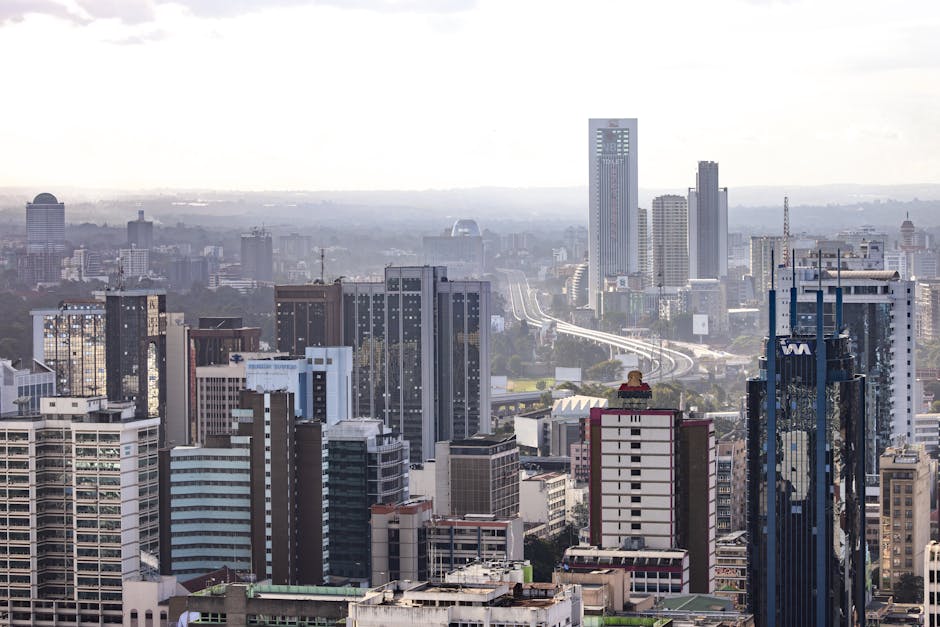
Discover Nairobi's iconic skyline on this self-guided architecture walk through the CBD’s most famous modernist and Brutalist landmarks.
 Moderate
Vienna, Austria
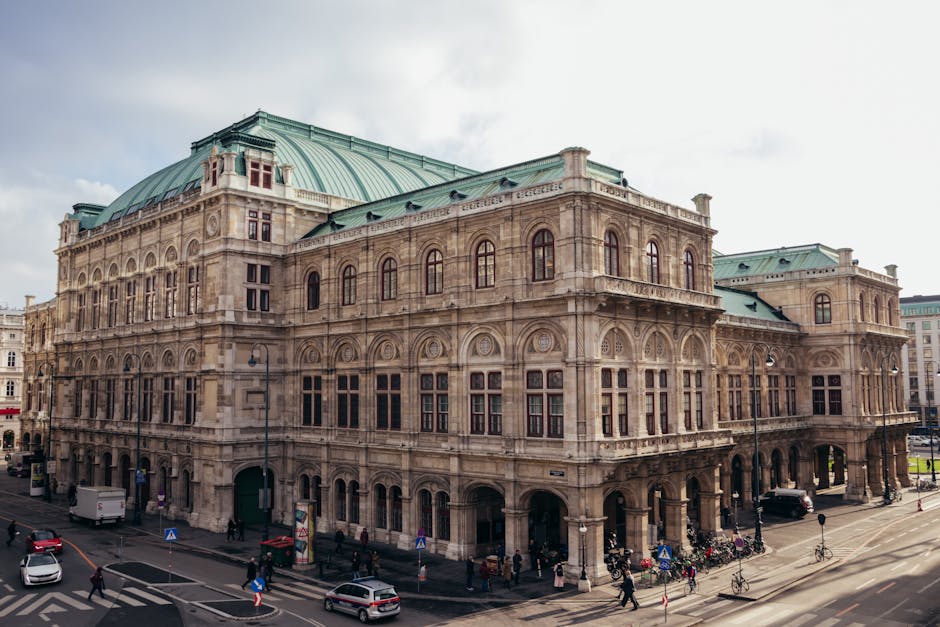
Discover the noir world of The Third Man and Cold War Vienna on this atmospheric self-guided audio walk through the historic Innere Stadt.
 Moderate
Nairobi, Kenya
Discover the pulse of Nairobi's contemporary art scene on this self-guided walk through the galleries and creative spaces of Kilimani.
 Moderate
Krakow, Poland
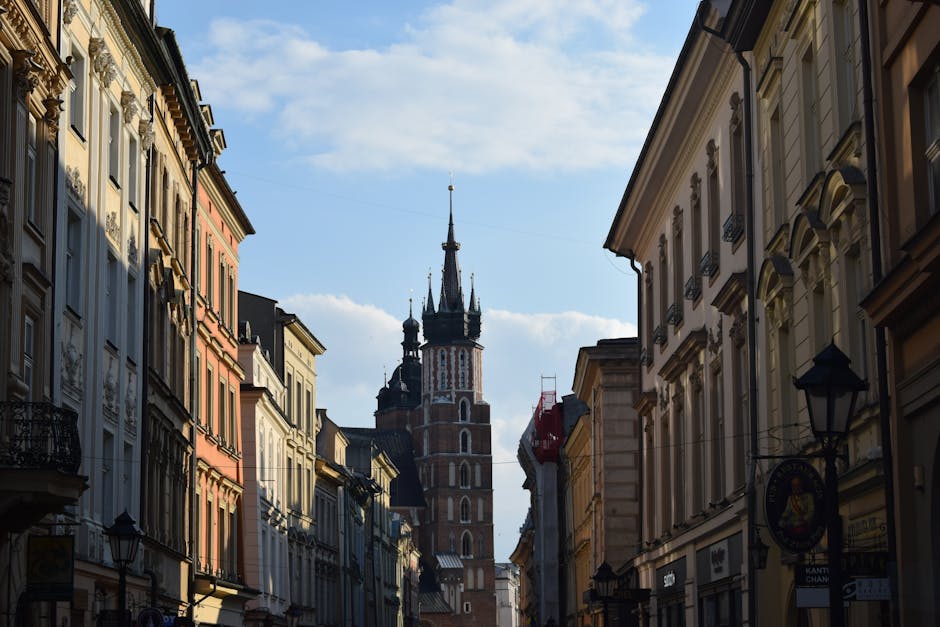
Discover Krakow’s stunning skyline and riverside charm on this self-guided audio walk through scenic viewpoints and historic mounds.
 Easy
EasyAmsterdam, Netherlands
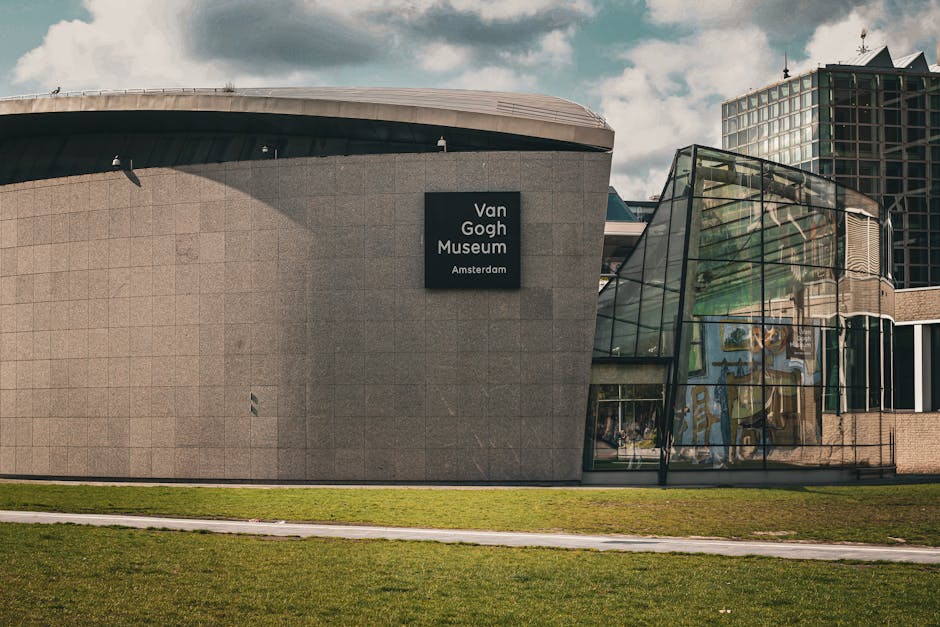
Discover Amsterdam's cultural heart on this self-guided walk from the iconic Museumplein to the serene blooming gardens of Vondelpark.
 Easy
EasyAmsterdam, Netherlands
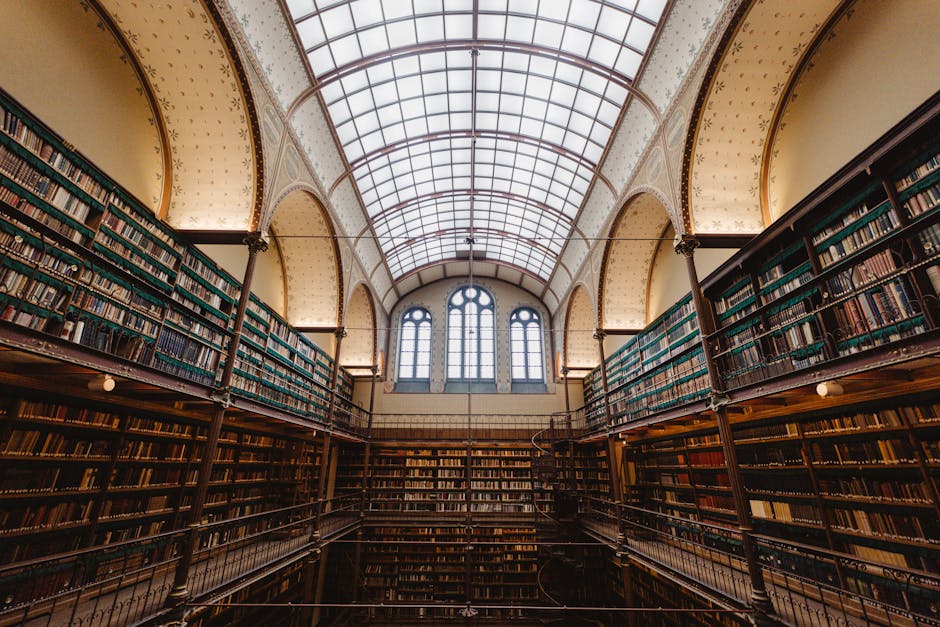
Discover Amsterdam's literary heart on this self-guided walk through historic bookshops, writers' haunts, and the homes of revolutionary thinkers.
 Easy
EasyAmsterdam, Netherlands
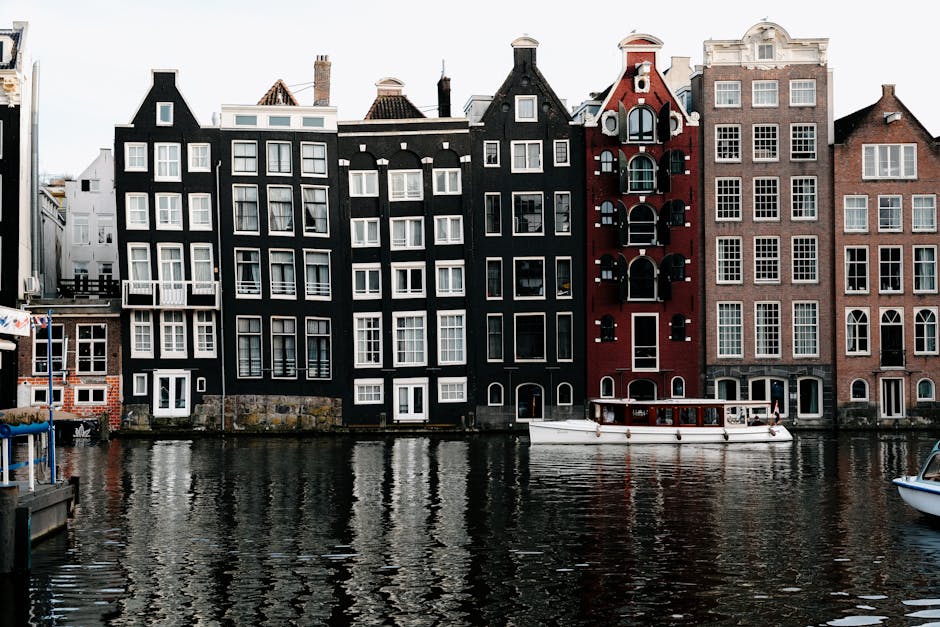
Capture the magic of Amsterdam with this self-guided photography walk across the iconic bridges and scenic banks of the Amstel River.
 Easy
EasyAmsterdam, Netherlands
Discover the opulent 17th-century mansions and rich history of Amsterdam's famous Canal Belt on this self-guided architectural walking route.
