Step away from the crowded historic center of Seville and cross the river to Isla de la Cartuja, a unique island where 15th-century monastic silence meets the bold optimism of the 1992 Universal Exposition. This self-guided walk explores one of the city's most fascinating transformations, taking you through a landscape of avant-garde bridges, lush botanical gardens, and historical monuments that have been repurposed for the modern age. The route begins at the iconic Alamillo Bridge, a masterpiece of structural engineering that redefined the city's skyline, and leads you through the heart of the Expo 92 site. As you follow this walking route, you will discover how a former Carthusian monastery—once a retreat for Christopher Columbus—became a world-renowned ceramics factory and eventually the Andalusian Center for Contemporary Art. The island is a living museum of late 20th-century architecture, featuring pavilions that showcase the creative heights of international design. You will explore the Jardín Americano, a quiet green oasis filled with exotic species brought to Spain for the world's fair, and conclude your journey at the base of the Sevilla Tower, the city's first true skyscraper. This neighborhood stroll is perfect for those interested in the intersection of history and modernity. While many visitors stick to the Giralda and the Alcázar, this audio walk offers a deeper look at Seville’s contemporary identity. You will learn about the massive urban planning project that redirected the Guadalquivir River and prepared the city for the global stage. Whether you are an architecture enthusiast or a history buff, this self-guided adventure provides the context needed to understand Seville's evolution from a colonial gateway to a modern European hub. Because the island is vast and open, this route allows for a peaceful, independent exploration far from the typical tourist trails.
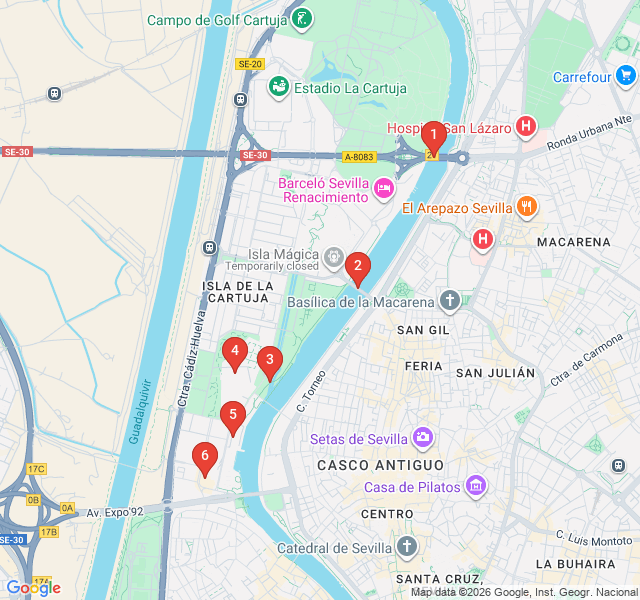
Numbers indicate the order of stops on the tour
Welcome to the northern gateway of Isla de la Cartuja. Standing before you is the Puente del Alamillo, designed by the renowned architect Santiago Calatrava for the 1992 Universal Exposition. This bridge isn't just a way to cross the water; it's a structural revolution. It is a cable-stayed bridge with a single pylon, tilted at 58 degrees to counterbalance the weight of the 200-meter span without the need for back stays. At the time of its construction, it was a symbol of the 'New Spain'—forward-looking, daring, and technologically advanced. From here, you can see how the bridge acts as a focal point for the city's northern expansion, connecting the old city with the once-isolated island.
As you move south along the riverbank, you encounter the Puente de la Barqueta. While the Alamillo Bridge is about height and tension, the Barqueta is about the elegance of the arch. Originally built in a workshop and floated down the river into position, this bridge served as the main entrance for visitors arriving at the Expo from the city center. Its name comes from the 'Barqueta' gate that once stood in the city walls nearby. Notice the large suspended deck; the design allows for completely unobstructed views of the river, symbolizing the transparency and openness that the 1992 world's fair aimed to project to the international community.
Take a moment to enjoy the shade of the Jardín Americano. This botanical garden was created specifically for Expo 92 as a tribute to the plants of the New World. It contains over 350 species, many of which were gifts from American nations. As you wander the paths, you are walking through a living legacy of the age of exploration. The garden was neglected for many years after the Expo but was beautifully restored in 2010. It represents the 'green' ambition of the island, providing a habitat for local birdlife and a cooling microclimate against the intense Seville sun. It’s a peaceful transition point between the technical bridges and the historic monastery ahead.
You are now at the Monasterio de la Cartuja, perhaps the most layered site on the island. Founded in the 15th century, these walls have seen Carthusian monks in silent prayer and served as a retreat for Christopher Columbus. In the 19th century, an Englishman named Charles Pickman bought the abandoned monastery and turned it into a world-famous ceramics factory. You can still see the iconic bottle-shaped brick kilns rising into the sky alongside the Gothic chapel. Today, it houses the CAAC, Seville’s contemporary art museum. This site perfectly encapsulates the theme of our walk: the constant reinvention of space where the medieval, the industrial, and the modern coexist.
Looking toward the river again, you see the Pavilion of Navigation. Designed by architect Guillermo Vázquez Consuegra, this building was one of the most popular attractions during Expo 92. Its sleek, metallic roof resembles the hull of a ship, a nod to Seville's golden age as the monopoly port for trade with the Americas. The pavilion was designed to tell the story of maritime exploration, from the first wooden caravels to modern oceanic research. Even if you don't enter the museum today, take a moment to admire the Schindler Tower nearby—the slender observation deck that offers one of the best perspectives of the river's original path.
Your journey ends at the base of the Torre Sevilla, designed by César Pelli. Standing 180 meters tall, it is the tallest building in Andalusia. Its construction was highly controversial, as many feared it would overshadow the historic Giralda tower across the river. However, it now serves as the anchor for the southern end of the island, housing offices, a hotel, and a shopping center. It represents the final chapter in the island's transformation: the shift from a temporary fairground into a permanent business and cultural district. From here, you are just a short walk across the Isabel II bridge back into the heart of the city.
Download Zigway to experience "Isla de la Cartuja: From Monasteries to Expo 92" with AI-powered audio narration. Walk at your own pace while stories unfold around you.
 Moderate
Seville, Spain
Explore Seville's artistic soul in Macarena, featuring ancient walls, vibrant markets, and bohemian workshops on this independent audio walk.
 Easy
EasySeville, Spain
Discover the independent spirit of Triana on this self-guided walk through flamenco history, ceramic traditions, and riverside charm.
 Easy
EasySeville, Spain
Discover Seville's modern side! Explore the iconic Setas, Roman ruins, and trendy boutiques on this self-guided walking route through the city center.
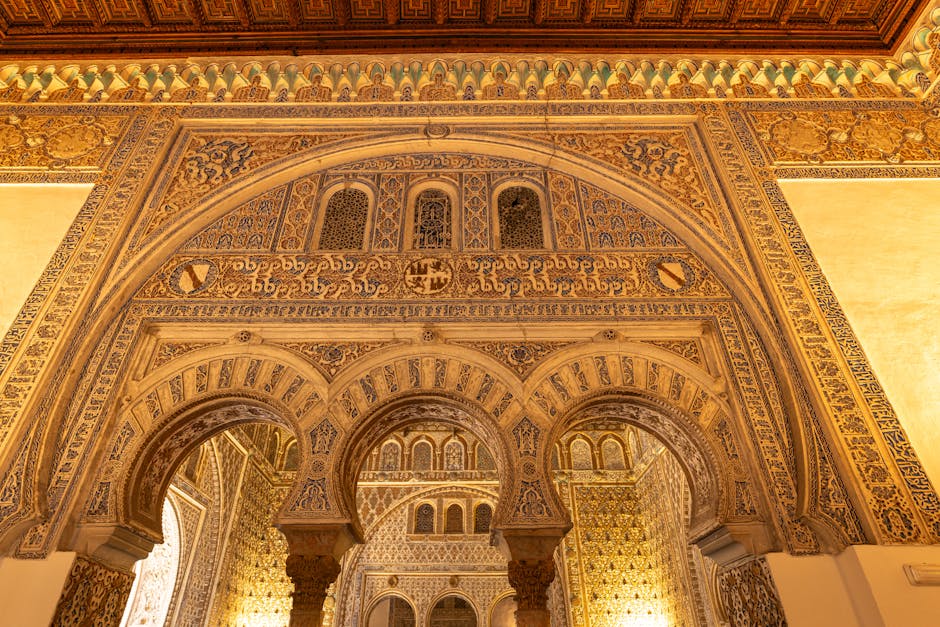 Easy
EasySeville, Spain
Discover Seville’s ancient Roman roots and Baroque splendor on this self-guided stroll through the vibrant Alfalfa neighborhood.
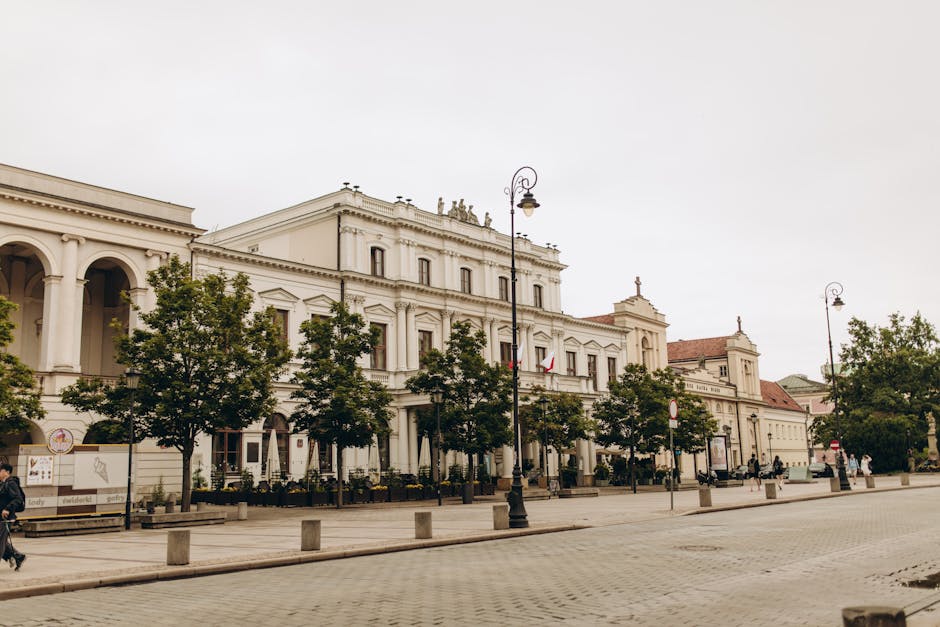 Easy
EasyWarsaw, Poland
Explore the 'Polish Versailles' at your own pace. Discover Baroque architecture, royal history, and stunning gardens on this self-guided walk.
 Moderate
Nairobi, Kenya
Discover the creative soul of Nairobi on this self-guided walk through the city's premier art galleries, markets, and artisan workshops.
 Easy
EasyKrakow, Poland
Explore the prestigious Jagiellonian University district, featuring Neo-Gothic architecture, Baroque churches, and Krakow's hidden scholarly gems.
 Easy
EasySalzburg, Austria
Discover Salzburg's oldest medieval alley, the birthplace of the 'Silent Night' author, and breathtaking views on this quiet self-guided walk.
 Moderate
Barcelona, Spain
Explore the elegant 'village' of Sarrià, where Gothic monasteries and Gaudí's hidden gems meet charming local markets and narrow streets.
 Moderate
Barcelona, Spain
Discover the revolutionary history and haunting scars of the Spanish Civil War on this self-guided walk through Barcelona's historic streets.
 Easy
EasyBarcelona, Spain
Discover the architectural wonders of Barcelona's Golden Square on this self-guided stroll through Eixample's most luxurious Modernista streets.
 Challenging
Barcelona, Spain
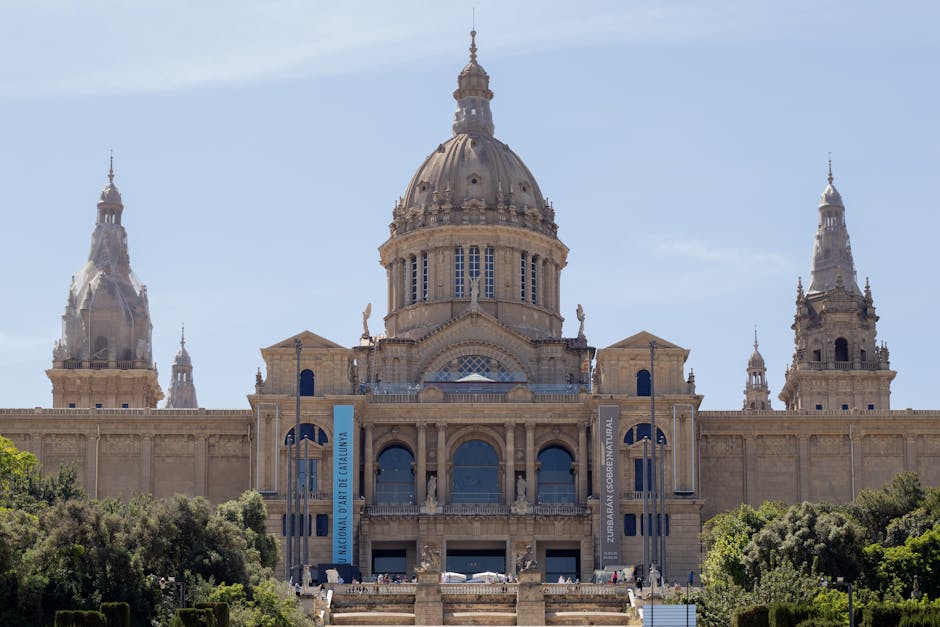
Explore Montjuïc’s lush gardens, historic fortress, and iconic Olympic venues on this scenic self-guided walk with panoramic Mediterranean views.
