Step into the heart of Seville’s oldest quarters with this self-guided walk through the Alfalfa neighborhood, a place where the city’s ancient Roman foundations literally peek through the modern pavement. This walking route is designed for those who want to peel back the layers of time at their own pace, moving from the towering granite pillars of the Roman Empire to the gilded excesses of the Spanish Baroque. The Alfalfa district is one of Seville's most authentic pockets, a maze of narrow streets that has served as a center of commerce and social life for over two millennia. Your journey begins at the hidden Roman Columns of Calle Mármoles, some of the last remaining vestiges of the city’s imperial past. From there, you will navigate toward the Plaza de la Alfalfa, a vibrant square that remains a local favorite for tapas and morning coffee, but which once served as the Roman Forum and later a bustling medieval market. As you progress through this neighborhood stroll, the architecture shifts. You will encounter the Iglesia Colegial del Divino Salvador, a monumental church built directly over the footprint of Seville's main mosque. Its pink facade and intricate interior carvings represent the pinnacle of Sevillian Baroque art. Further along, the route takes you to the Palace of the Countess of Lebrija, often called the 'best paved palace in Europe' due to its staggering collection of Roman mosaics salvaged from the nearby ruins of Italica. This self-guided adventure concludes in the sensory-rich world of flamenco at the Casa de la Memoria, situated in a beautifully restored 16th-century courtyard. Whether you are a history buff or an architecture lover, this walking route Seville offers a seamless blend of ancient heritage and modern Andalusian life without the rigid schedule of a guided tour Seville. Explore independently and discover why Alfalfa remains the soul of the city.
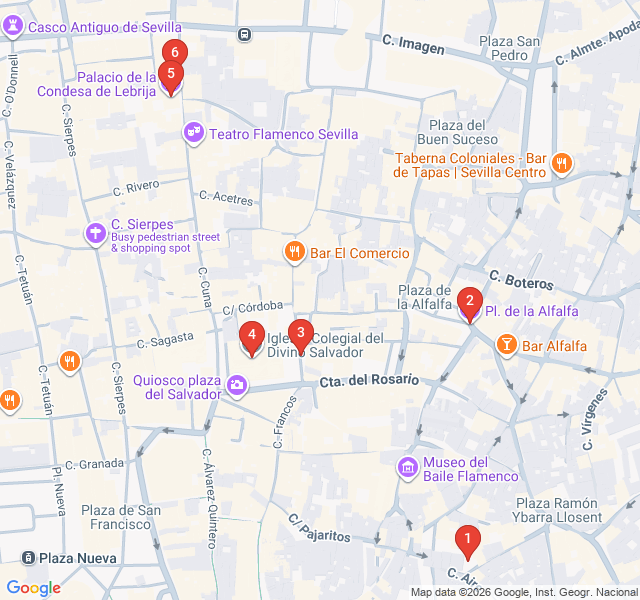
Numbers indicate the order of stops on the tour
Hidden in a narrow side street, these three massive granite columns are the silent giants of Seville’s Roman past. Dating back to the 1st century AD, they likely formed part of a grand temple in the city of Hispalis. Standing nearly 15 meters tall, it is incredible to think they have remained in this very spot for two millennia while the city rose around them. Originally there were six columns; two were moved to the Alameda de Hércules in the 16th century, and one was broken during transport. Notice how the modern street level is much higher than the base of the columns, a literal illustration of how Seville is built on layers of history.
Plaza de la Alfalfa is the beating heart of this neighborhood. Historically, this was the site of the Roman Forum, the center of public life in Hispalis. During the Moorish era and later the Christian reconquest, it evolved into a major market for silk and alfalfa—the latter giving the square its modern name. Today, it is a local-favorite spot where children play and residents gather at traditional bars. The architecture here is a patchwork of styles, but the vibe is purely Sevillian. It is the perfect place to pause and observe the daily rhythm of the city, away from the more crowded tourist hubs near the Cathedral.
Formerly known as Plaza del Pan (Bread Square), this space sits in the shadow of the great Salvador Church. It was once the center of the city's bakery trade. The square is dominated by a statue of Martínez Montañés, the master sculptor of the Spanish Golden Age whose lifelike religious figures are still carried through these streets during Holy Week. The atmosphere here changes from the commercial bustle of the nearby shopping streets to a more contemplative, historic feel. Look up at the traditional balconies and the ochre-and-white color palette that defines the Sevillian aesthetic.
This is the second largest church in Seville, surpassed only by the Cathedral. Its scale is breathtaking, but its history is even more fascinating. It stands on the site of the Ibn Adabbas Mosque, Seville’s first Great Mosque. If you look at the base of the bell tower, you can still see parts of the old minaret. The current Baroque structure, completed in the early 18th century, is a masterpiece of light and gold. The interior features some of the most spectacular 'retablos' (altarpieces) in Spain. It represents the triumph of the Counter-Reformation, designed to awe and inspire through sheer architectural scale and artistic detail.
This 16th-century manor house is a hidden gem of Seville. In the early 1900s, the Countess of Lebrija purchased the building and spent years filling it with archaeological treasures. Most notably, she paved the ground floor with stunning Roman mosaics salvaged from the nearby ruins of Italica. Walking through the rooms, you are literally stepping on ancient history. The palace is a unique blend of Mudéjar, Renaissance, and Baroque styles, featuring a beautiful central courtyard and a library of over 4,000 volumes. It offers a rare glimpse into the private life of the Spanish aristocracy and their passion for preserving the past.
Our journey concludes at this cultural center housed in a late 16th-century building. While many associate flamenco with the Triana district, Alfalfa has long been a hub for the traditional arts. The Casa de la Memoria is dedicated to preserving the purity of flamenco, away from the commercial 'dinner shows.' The building itself features a classic Andalusian patio with horseshoe arches and vibrant tiles. It serves as a reminder that Seville’s history isn't just in its stones and mosaics, but in the living, breathing music and dance that still echo through these ancient streets today.
Download Zigway to experience "The Alfalfa Trail: Roman Roots and Baroque Heights" with AI-powered audio narration. Walk at your own pace while stories unfold around you.
 Challenging
Seville, Spain
Explore the futuristic legacy of Expo 92 and the ancient secrets of a Carthusian monastery on this self-guided walk through Isla de la Cartuja.
 Moderate
Seville, Spain
Explore Seville's artistic soul in Macarena, featuring ancient walls, vibrant markets, and bohemian workshops on this independent audio walk.
 Easy
EasySeville, Spain
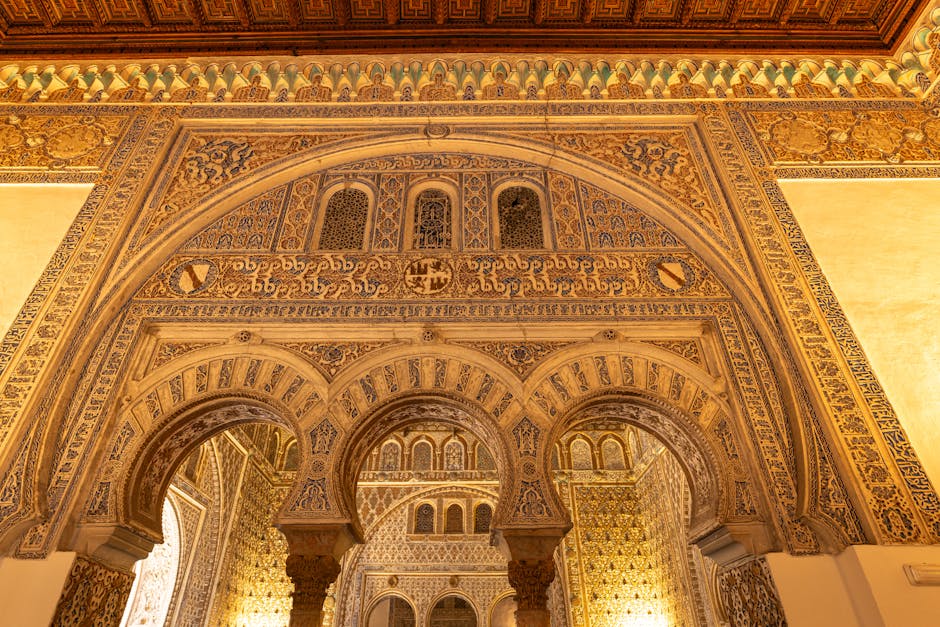
Discover the independent spirit of Triana on this self-guided walk through flamenco history, ceramic traditions, and riverside charm.
 Easy
EasySeville, Spain
Discover Seville's modern side! Explore the iconic Setas, Roman ruins, and trendy boutiques on this self-guided walking route through the city center.
 Easy
EasyGothenburg, Sweden
Discover Gothenburg’s 17th-century Dutch foundations, historic canals, and military fortifications on this self-guided architectural walk.
 Easy
EasyGdansk, Poland
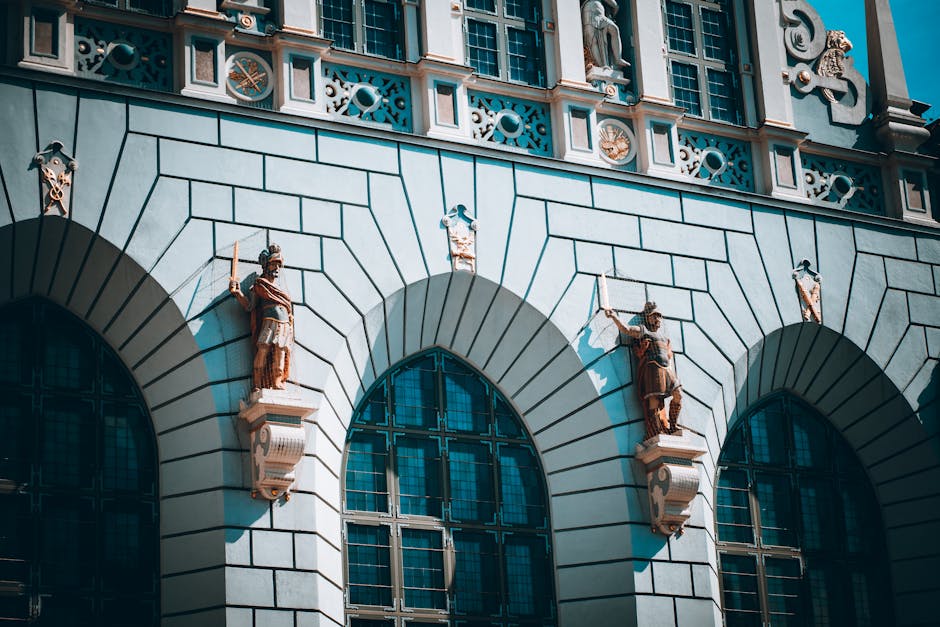
Discover the opulent Royal Way of Gdansk at your own pace. Explore Hanseatic history, gilded architecture, and the iconic Neptune's Fountain.
 Easy
EasySalzburg, Austria
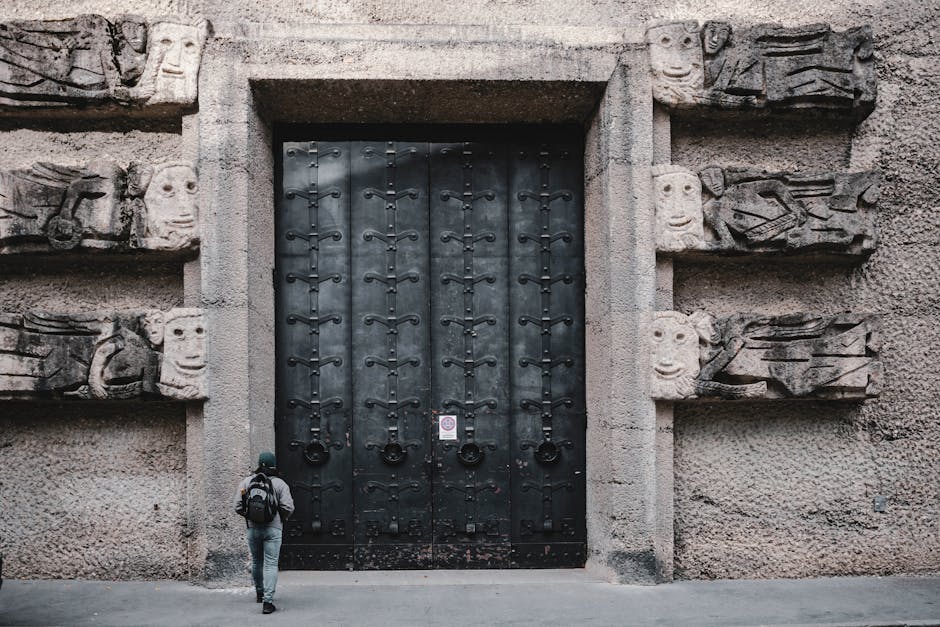
Discover the 'Rome of the North' on this self-guided walk through the Baroque squares and monumental legacy of Salzburg’s Prince-Archbishops.
 Easy
EasyGdansk, Poland
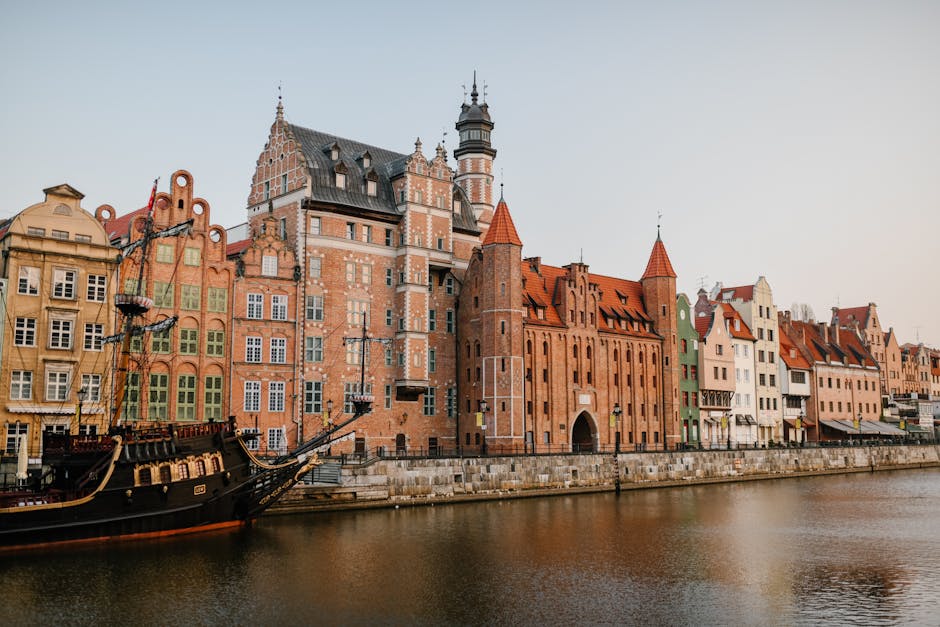
Discover the 'Baltic Gold' on this self-guided walk through Gdansk's historic mills, massive cathedrals, and the magical Mariacka Street.
 Moderate
Barcelona, Spain
Explore the elegant 'village' of Sarrià, where Gothic monasteries and Gaudí's hidden gems meet charming local markets and narrow streets.
 Moderate
Barcelona, Spain
Discover the revolutionary history and haunting scars of the Spanish Civil War on this self-guided walk through Barcelona's historic streets.
 Easy
EasyBarcelona, Spain
Discover the architectural wonders of Barcelona's Golden Square on this self-guided stroll through Eixample's most luxurious Modernista streets.
 Challenging
Barcelona, Spain
Explore Montjuïc’s lush gardens, historic fortress, and iconic Olympic venues on this scenic self-guided walk with panoramic Mediterranean views.
