Gran Vía is often referred to as the Spanish Broadway, a street that never sleeps and serves as a living museum of early 20th-century architectural ambition. This self-guided walk invites you to explore the evolution of Madrid’s most famous thoroughfare, where the city shed its medieval skin to embrace modernity. As you begin your self-guided adventure, you will encounter a stunning array of styles, from the ornate French-inspired Beaux-Arts of the early 1900s to the sleek, streamlined Art Deco and Rationalist designs of the 1930s. The route captures the essence of a period when architects were looking toward New York and Paris to redefine the Spanish capital’s skyline. This neighborhood stroll takes you past the iconic Metropolis Building, the massive stone towers of the Fundación Telefónica, and the neon-lit curves of the Edificio Carrión. You will learn about the engineering marvels that allowed these structures to rise, the social changes they represented, and the scars of the Spanish Civil War that some still carry. Beyond the facades, this walking route Madrid highlights the vibrant energy of the Callao district and the monumental scale of Plaza de España. Whether you are an architecture enthusiast or a first-time visitor, this walking tour Madrid provides the context needed to appreciate the 'Golden Age' of Spanish urban planning. Discover at your own pace how a series of daring demolitions carved this grand boulevard through the heart of the city, creating the cosmopolitan center that remains Madrid’s beating heart today.
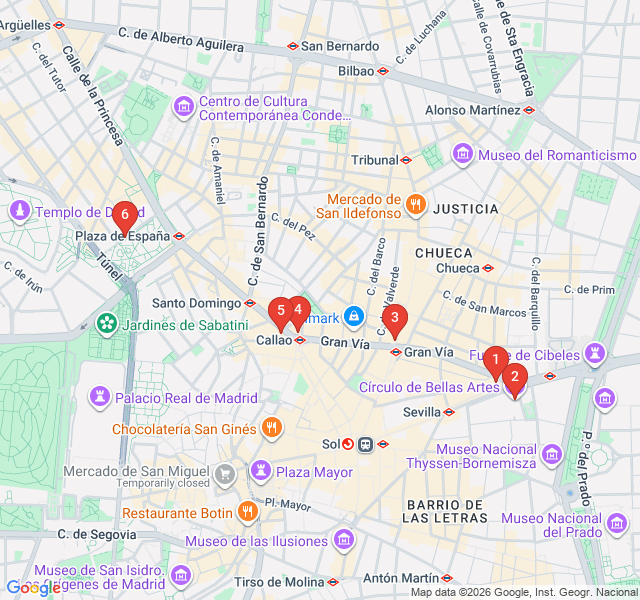
Numbers indicate the order of stops on the tour
Standing at the corner of Calle de Alcalá and Gran Vía, the Metropolis Building is perhaps the most photographed landmark in Madrid. Completed in 1911, it was designed by French architects Jules and Raymond Février for the Unión y el Fénix insurance company. Its style is distinctly Beaux-Arts, a nod to the Parisian influence that dominated urban planning at the time. Look up at the stunning slate dome, which is adorned with 30,000 leaves of 24-carat gold. The statue atop the dome hasn't always been there; the original was a bronze phoenix, the symbol of the insurance company. It was replaced in the 1970s by the Winged Victory statue you see today. This building marks the official start of Gran Vía and set the standard for the luxury and grandeur that would define the street.
Just a few steps away is the Círculo de Bellas Artes, a cultural powerhouse designed by the legendary Antonio Palacios. Completed in 1926, this building is a masterpiece of eclectic architecture, blending monumentalism with fine decorative arts. Notice the massive statue of Minerva, the Roman goddess of wisdom and war, presiding over the facade. Palacios was instrumental in shaping the look of modern Madrid, and this building was one of his most ambitious projects. While the interior houses galleries and a historic theater, the building itself is a celebration of the city's intellectual 'Golden Age.' Its tiered terraces and distinctive tower make it an unmistakable silhouette on the Madrid skyline, bridging the gap between the traditional 19th-century city and the modern metropolis.
As you move into the second stretch of Gran Vía, you encounter the Fundación Telefónica. When it opened in 1929 as the headquarters for the national telephone company, it was the first true skyscraper in Europe, standing 89 meters tall. The design was heavily influenced by the American skyscrapers of the era, particularly those in New York, but it retains Spanish flair with its Baroque-inspired doorway. During the Spanish Civil War, this building served a grim but vital purpose; its sturdy construction and basement made it a primary bomb shelter, and its height made it a vantage point for foreign journalists like Ernest Hemingway to watch the front lines. It represents a pivot point in the street’s history, moving away from French elegance toward American-style functionalism and height.
Reaching the Plaza de Callao, you find the Palacio de la Prensa. Designed by Pedro Muguruza and finished in 1928, this building was originally intended to house the press association. It is a fantastic example of the transition to brick-based architecture, influenced by the Chicago School. The building was multifunctional from the start, containing a cinema, offices, and even apartments. Its red-brick facade and classicist details provide a warmer, more industrial feel compared to the white stone of the earlier Gran Vía buildings. Callao was the entertainment heart of the city, and this building served as its anchor, hosting major film premieres and serving as a hub for the journalists who chronicled the rapidly changing Spanish capital during the 1920s and 30s.
Directly across from the Palacio de la Prensa stands the Edificio Carrión, often called the Capitol Building. Completed in 1933, it is the pinnacle of Art Deco in Madrid. Its streamlined, aerodynamic curves were meant to evoke the speed and modernity of a great ocean liner. The building is most famous for the massive Schweppes neon sign that has glowed from its upper floors since the late 1960s, becoming an inseparable part of Madrid’s visual identity. The architects, Martínez-Feduchi and Eced, designed it as a 'multi-use' complex, featuring a grand cinema, a hotel, and a café. It was a revolutionary concept for the time, emphasizing efficiency and urban excitement. Notice how the building occupies its triangular plot perfectly, acting as a gateway to the final section of Gran Vía.
The walk concludes at Plaza de España, a massive open space that marks the end of Gran Vía’s architectural journey. The square is dominated by the Cervantes Monument, featuring bronze statues of Don Quixote and Sancho Panza. However, the architectural stars here are the two skyscrapers flanking the square: the Edificio España and the Torre de Madrid. Built in the 1940s and 50s, these buildings represent the Neo-Baroque and International styles of the post-war era. The Edificio España, with its symmetrical wings and brickwork, was for years the tallest building in Spain. The Torre de Madrid, once the tallest concrete building in the world, signaled Spain's reentry into the modern global architectural scene. This square serves as a grand finale, showcasing the monumental scale of Madrid’s 20th-century expansion.
Download Zigway to experience "Gran Vía’s Golden Age Architecture" with AI-powered audio narration. Walk at your own pace while stories unfold around you.
 Easy
EasyMadrid, Spain
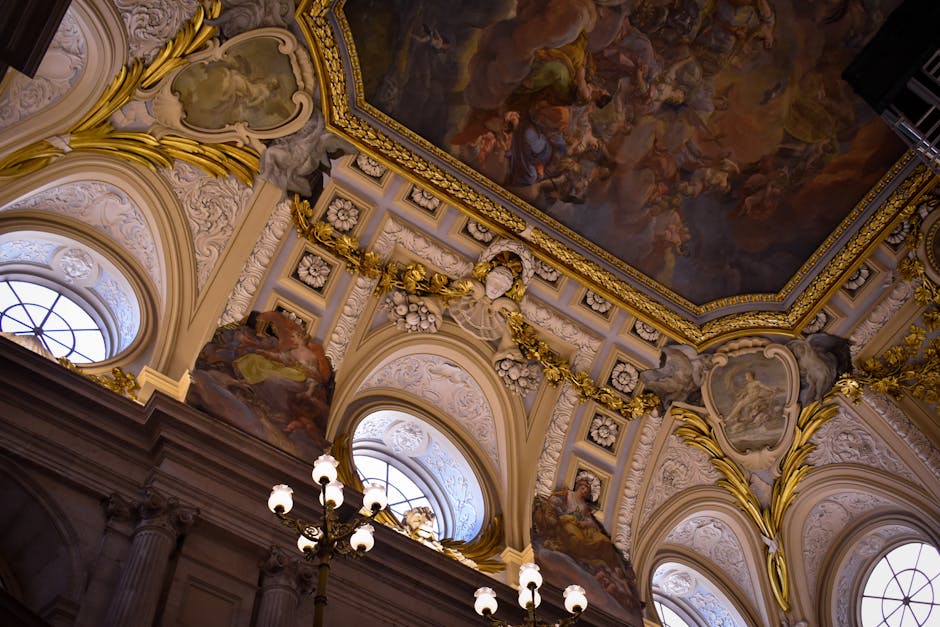
Explore Madrid's 'Landscape of Light' on this self-guided walk through the world-renowned Golden Triangle of Art, from Cibeles to the Reina Sofía.
 Moderate
Madrid, Spain
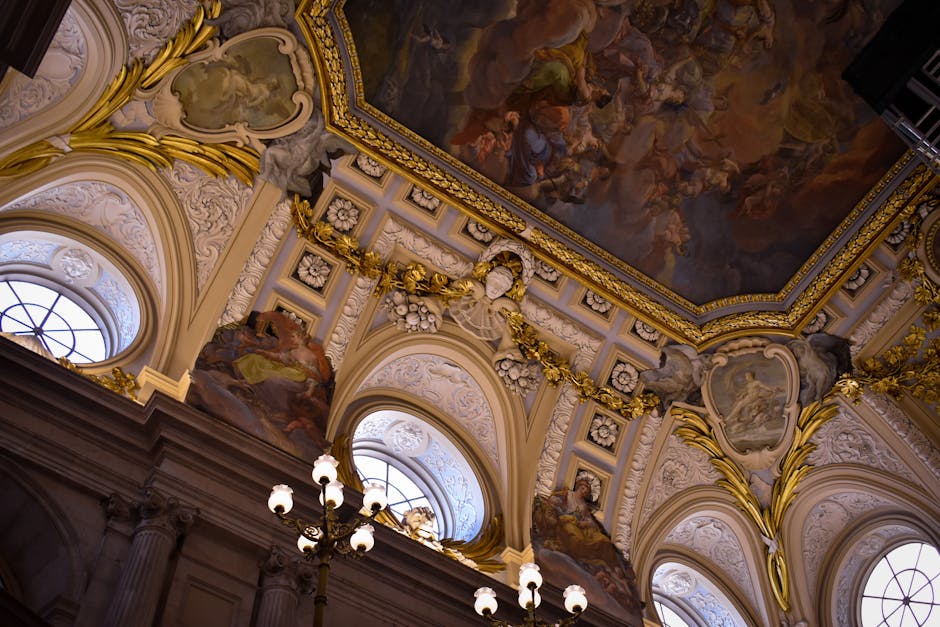
Explore Madrid's most diverse neighborhood on this self-guided walk through street art, historic markets, and multicultural squares.
 Easy
EasyMadrid, Spain
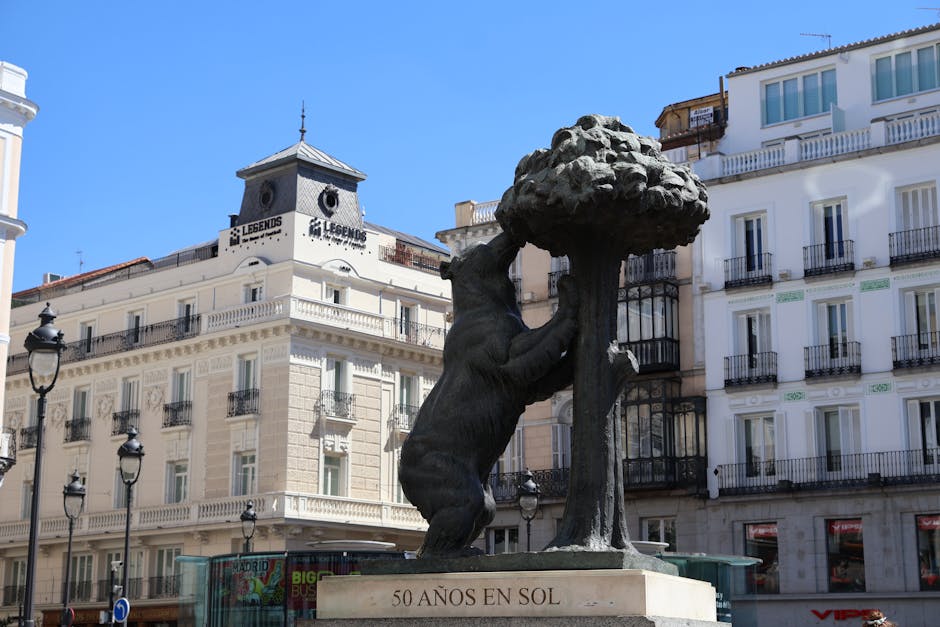
Explore the royal legacy and medieval alleys of Madrid's historic Habsburg district on this immersive self-guided walk through the city's heart.
 Easy
EasyMadrid, Spain
Discover the rebellious spirit of Malasaña on this self-guided walk through Madrid's best street art, historic squares, and counter-culture hubs.
 Easy
EasyGdansk, Poland
Discover the opulent Royal Way of Gdansk at your own pace. Explore Hanseatic history, gilded architecture, and the iconic Neptune's Fountain.
 Easy
EasyNairobi, Kenya
Discover Nairobi's iconic skyline on this self-guided architecture walk through the CBD’s most famous modernist and Brutalist landmarks.
 Easy
EasyGdansk, Poland
Discover the 'Baltic Gold' on this self-guided walk through Gdansk's historic mills, massive cathedrals, and the magical Mariacka Street.
 Easy
EasyWarsaw, Poland
Explore the miracle of Warsaw's reconstructed Old Town on this self-guided walk through royal squares, medieval walls, and heroic monuments.
 Moderate
Barcelona, Spain
Explore the elegant 'village' of Sarrià, where Gothic monasteries and Gaudí's hidden gems meet charming local markets and narrow streets.
 Moderate
Barcelona, Spain
Discover the revolutionary history and haunting scars of the Spanish Civil War on this self-guided walk through Barcelona's historic streets.
 Easy
EasyBarcelona, Spain
Discover the architectural wonders of Barcelona's Golden Square on this self-guided stroll through Eixample's most luxurious Modernista streets.
 Challenging
Barcelona, Spain
Explore Montjuïc’s lush gardens, historic fortress, and iconic Olympic venues on this scenic self-guided walk with panoramic Mediterranean views.
