Step back into the 12th century, a time when Bologna’s skyline rivaled the modern skyscrapers of Manhattan. In the heart of the Emilia-Romagna region, medieval families engaged in a vertical arms race, building soaring stone towers to showcase their wealth and power. This self-guided walk invites you to look upward and discover the remaining giants of the 'City of Towers.' At its peak, Bologna boasted nearly 100 of these structures, and while many have succumbed to fire, war, or urban renewal, those that remain offer a breathtaking glimpse into the city's prestigious past. On this neighborhood stroll, you will explore the dense network of streets in the Centro Storico where these stone sentinels still stand. You will encounter the 'Three Sisters'—a trio of towers hidden in plain sight—before heading toward the world-famous Two Towers, the undisputed symbols of the city. Along the way, this walking route delves into the architectural ingenuity required to build such massive structures on marshy ground and the social rivalries that fueled their construction. Beyond the stone and mortar, you will see how these medieval skyscrapers have been repurposed over the centuries, serving as defensive fortresses, grim prisons, and even commercial storefronts. Whether you are a fan of medieval history or simply want to capture the most Instagram-worthy angles of the city, this audio walk provides the context you need to appreciate Bologna's unique vertical heritage. Because this is an independent exploration, you can take your time in the narrow alleys of the former Jewish Ghetto or pause for a coffee under the porticos whenever you choose. This walking tour Bologna experience is designed to be flexible, allowing the stories of the Azzoguidi, Prendiparte, and Asinelli families to come alive at your own pace. Discover the secrets of the 'Fat and Learned' city from a perspective few travelers take the time to truly see.
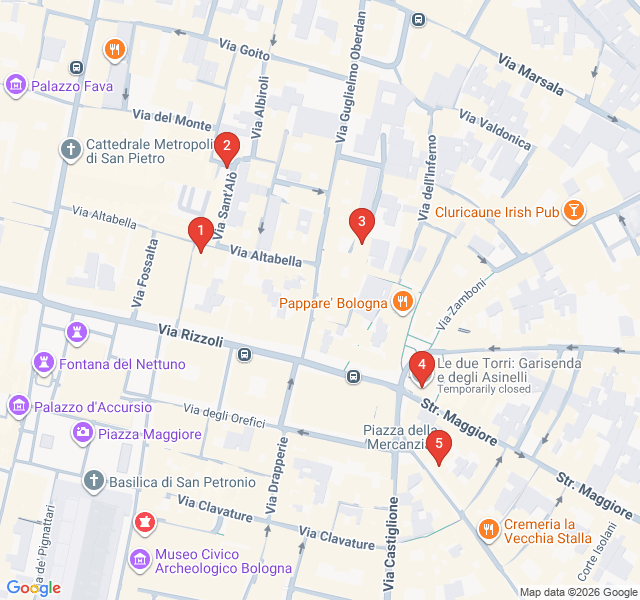
Numbers indicate the order of stops on the tour
Welcome to the start of your medieval journey. Standing before you is Torre Azzoguidi, also known as Torre Altabella. Reaching a height of 61 meters, it is the second tallest in the city after the Asinelli. Notice how perfectly vertical and slender it is; the Azzoguidi family were leaders of the Guelph faction, and this tower was a clear statement of their dominance. The base is reinforced with blocks of selenite, a translucent gypsum stone common in this region. Unlike many other towers that were shortened or demolished, the Azzoguidi remains largely in its original 12th-century form, serving as a pristine example of the 'Three Sisters' towers that clustered in this prestigious neighborhood.
Just a short walk away is the Torre Prendiparte, often called the 'Coronata' because of the crown-like narrowing at its summit. Built in the 12th century, it stands 60 meters tall. While it began as a defensive home for a powerful family, its history took a darker turn in the 1700s when the Cardinal Legate converted it into a prison for crimes against the Church. If you look closely at the interior walls today, you can still see inscriptions left by prisoners. Today, it has been beautifully restored and even hosts a bed and breakfast, proving that even the most formidable medieval fortresses can find a new life in the modern age.
As you enter the narrow streets of the former market district, you find Torre Uguzzoni. This tower is unique because it retains much of its original medieval context. Look at the base, and you will see the remains of a 'casa-torre' or tower-house. In the Middle Ages, these structures weren't just for show; they were fortified residences. The Uguzzoni family was noble but less prominent than the owners of the giants you just saw. This stop highlights the reality of medieval life in Bologna: a dense, vertical city where every square inch of ground was precious, and safety meant living high above the street level.
You are now standing at the undisputed heart of Bologna: the Two Towers. The taller one is the Asinelli, standing at 97 meters, while its shorter, leaning companion is the Garisenda. The Garisenda is so famously tilted that Dante Alighieri mentioned it in his 'Divine Comedy,' comparing it to the giant Antaeus. Construction began around 1109. Interestingly, the Garisenda had to be shortened in the 14th century because the ground was sinking, creating the dramatic lean you see today. These towers served as military lookouts and symbols of extreme family rivalry. They are the survivors of a skyline that once contained dozens of similar structures.
To conclude our route, look at Torre Alberici. While it may seem modest compared to the Asinelli, it holds a special record. At its base, you will find a shop that has been in continuous operation since 1273, making it one of the oldest commercial spaces in Italy. Notice the large square holes in the brickwork; these are called 'buche pontaie.' Medieval builders used them to support wooden scaffolding or to extend balconies and walkways between buildings. The Alberici family was among the first to allow shops to be built into the base of their tower, showing the early transition of Bologna from a feudal fortress city to a bustling commercial hub.
Download Zigway to experience "The Medieval Skyscrapers Walk" with AI-powered audio narration. Walk at your own pace while stories unfold around you.
 Moderate
Bologna, Italy
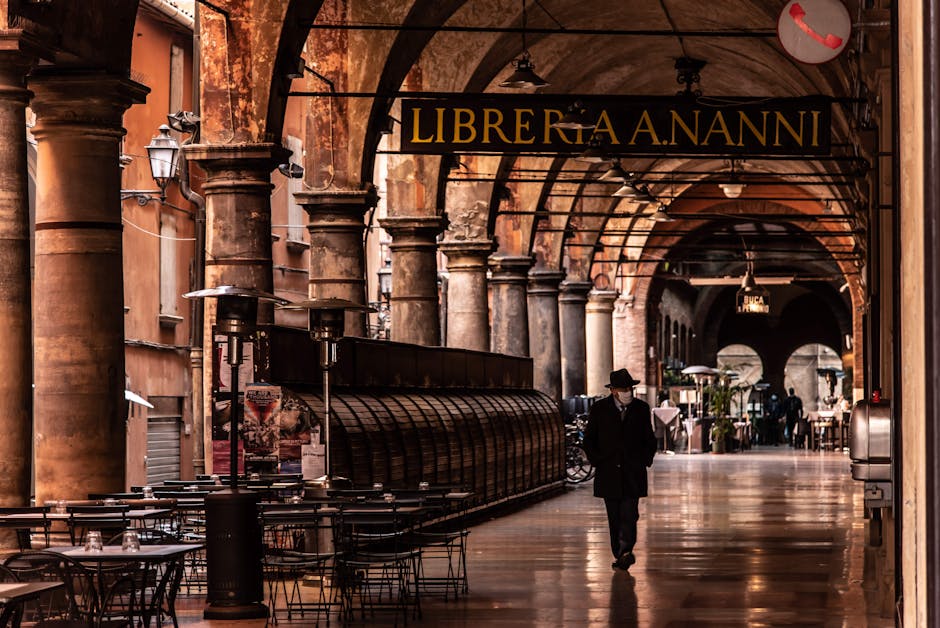
Explore Bologna's UNESCO-listed porticoes on this self-guided architectural stroll through historic streets and grand, frescoed arches.
 Easy
EasyBologna, Italy
Uncover Bologna's secret 'Little Venice' on this self-guided walk through hidden canals, ancient mills, and the city's industrial past.
 Easy
EasyBologna, Italy
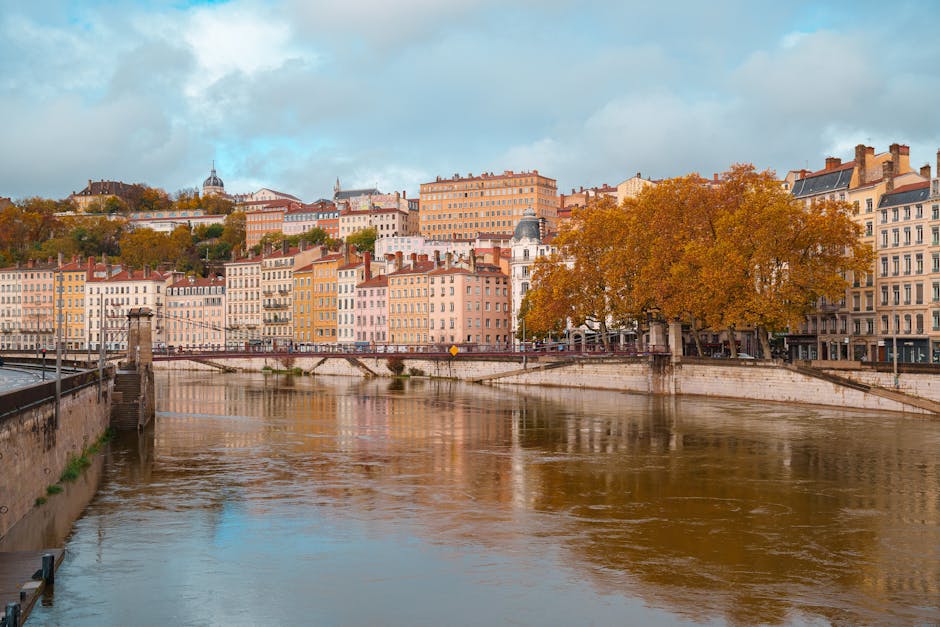
Uncover the legends and hidden architectural wonders of medieval Bologna on this self-guided stroll through the historic city center.
 Easy
EasyBologna, Italy
Discover the rebellious soul of Bologna with a self-guided stroll through the bars, street art, and bohemian history of the iconic Pratello district.
 Easy
EasyNairobi, Kenya
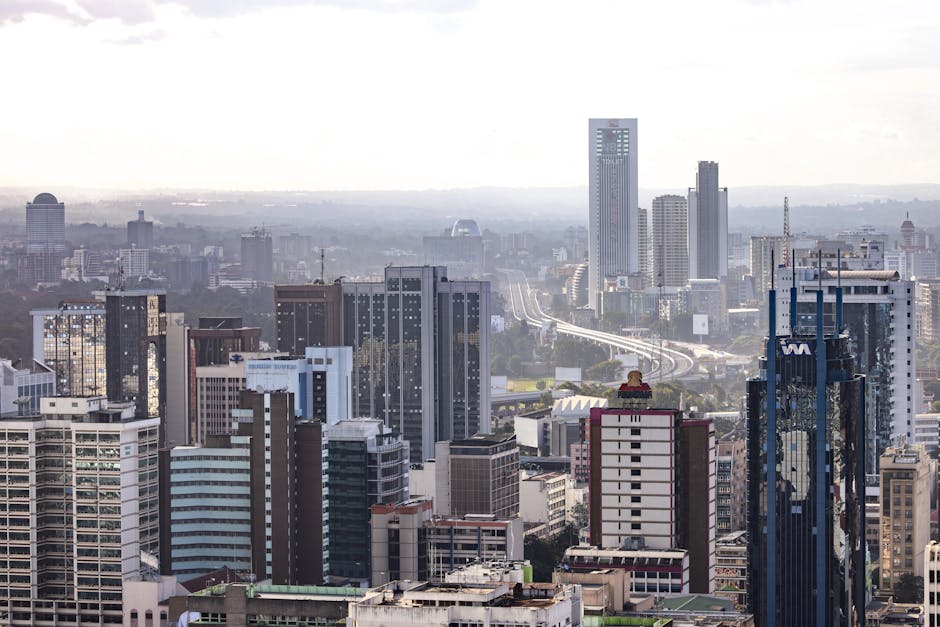
Discover Nairobi's iconic skyline on this self-guided architecture walk through the CBD’s most famous modernist and Brutalist landmarks.
 Easy
EasyNairobi, Kenya
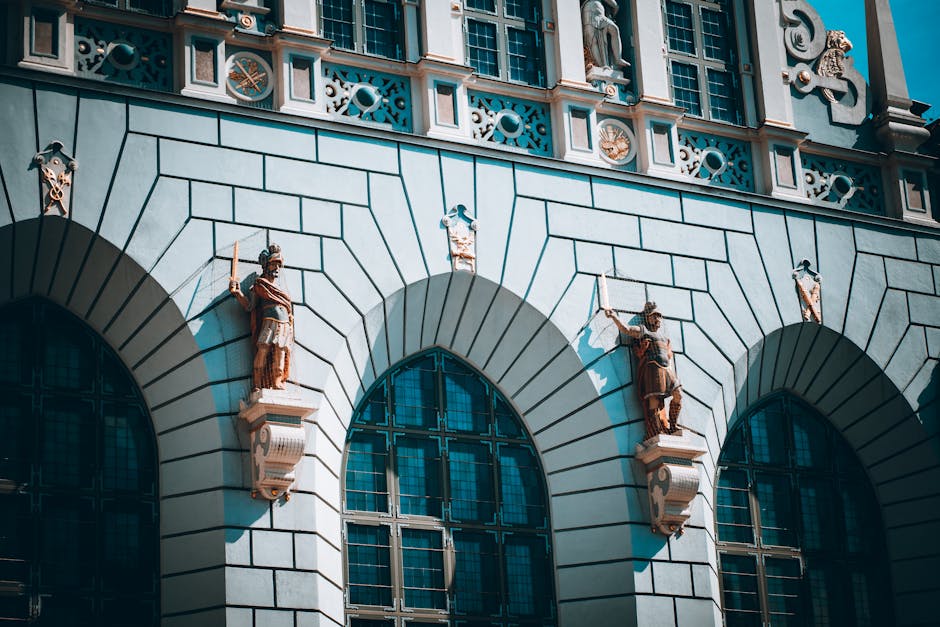
Explore Nairobi's architectural evolution from colonial-era landmarks to iconic Brutalist skyscrapers on this historic self-guided walking route.
 Easy
EasyGdansk, Poland
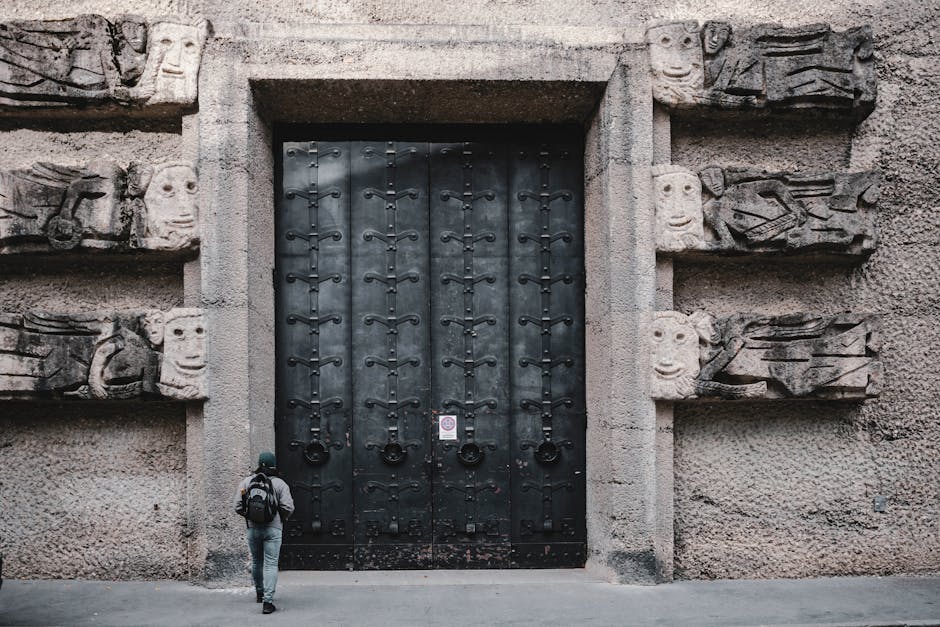
Discover the opulent Royal Way of Gdansk at your own pace. Explore Hanseatic history, gilded architecture, and the iconic Neptune's Fountain.
 Easy
EasySalzburg, Austria
Discover the 'Rome of the North' on this self-guided walk through the Baroque squares and monumental legacy of Salzburg’s Prince-Archbishops.
 Easy
EasyRome, Italy
Explore Rome’s industrial heart on this self-guided walk featuring massive murals, the 'Iron Colosseum,' and unique industrial archaeology.
 Easy
EasyRome, Italy
Explore Rome’s whimsical Fairytale District. A self-guided walk through Art Nouveau palaces, mythical fountains, and the magical Coppedè architecture.
 Moderate
Rome, Italy
Uncover Rome's hidden history on this self-guided walk through ancient gladiator pits, subterranean temples, and buried Roman houses.
 Challenging
Rome, Italy
Walk the 'Queen of Roads.' Explore ancient catacombs, imperial villas, and historic basalt stones on this scenic self-guided Roman adventure.
