Step into the epicenter of the Venetian Republic, a place where architectural splendor masks a history of complex political maneuvering and secret justice. This self-guided walk through the San Marco district invites you to explore the legacy of the Serenissima, the 'Most Serene' Republic that ruled the Mediterranean for centuries. As you navigate the marble-clad corridors of power, you will discover how Venice balanced its immense wealth with a rigorous system of law and order. This neighborhood stroll focuses on the monumental heart of the city, where every arch and statue tells a story of triumph, betrayal, or spiritual devotion. The route highlights the dual nature of Venice: the public face of the glorious Doge and the hidden world of the Venetian Inquisition. You will see the iconic Bridge of Sighs, not as a romantic landmark, but as a somber transition between the halls of justice and the cells of the New Prisons. The architectural evolution of the city is on full display here, from the Byzantine gold of Saint Mark's Basilica to the Renaissance symmetry of the Biblioteca Marciana. This walking route is designed for those who want to peel back the layers of history at their own pace, moving away from the crowded souvenir stalls to appreciate the intricate details of the Doge's Palace and the vast, open stage of Piazza San Marco. Whether you are a first-time visitor or a seasoned traveler, this exploration of power and intrigue offers a deeper understanding of how a city built on water became one of the most stable and formidable empires in history. This walking tour Venice experience allows you to soak in the atmosphere of the 'Drawing Room of Europe' without the constraints of a group, giving you the freedom to pause and reflect on the artistry and ambition that defined the Venetian spirit.
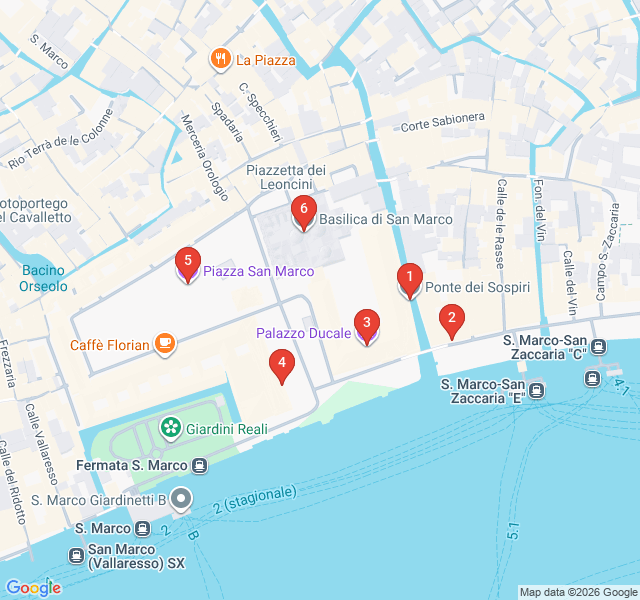
Numbers indicate the order of stops on the tour
Begin your journey at the Ponte dei Sospiri, or the Bridge of Sighs. Built in 1600, this enclosed white limestone bridge connects the Doge's Palace to the New Prisons. While popular legend suggests the name comes from the sighs of lovers, it actually refers to the heavy sighs of prisoners catching their last glimpse of the Venetian Lagoon through the small stone-grated windows before being led to their cells. The bridge is a prime example of the Venetian Baroque style, designed by Antonio Contino. Its beauty is a stark contrast to its grim purpose, embodying the efficiency and severity of the Venetian Republic's legal system. As you look up, notice the intricate carvings that adorn the exterior, a testament to the city's commitment to aesthetic excellence even in its most functional structures.
Directly adjacent to the bridge stands the Palazzo delle Prigioni Nuove. Completed in the early 17th century, this was one of the first buildings in the world designed specifically to serve as a prison. Before its construction, prisoners were often kept in the cramped, humid 'piombi' (leads) under the roof of the Doge's Palace or the 'pozzi' (wells) in the basement. This new structure offered slightly more 'humane' conditions, though it remained a place of high security. The fortress-like facade, with its heavy rustication and small windows, was intended to project the absolute authority of the state. Interestingly, the prison also housed the 'Signori di Notte,' the officials responsible for policing the city's streets after dark, ensuring that the Republic's peace was never disturbed.
The Palazzo Ducale, or Doge's Palace, is the ultimate symbol of Venetian power and stability. This Gothic masterpiece was not just the residence of the Doge, the elected leader of Venice, but also the seat of the government, the courts, and the city's archives. The unique design, with its heavy upper floor resting on delicate open arcades, seems to defy gravity—much like the city itself. Inside these walls, the Great Council met to decide the fate of the empire. The palace was designed to impress foreign dignitaries with the wealth and artistic patronage of the Republic. Look closely at the capitals of the columns on the ground floor; they are decorated with allegorical figures, animals, and scenes of daily life, serving as a stone encyclopedia for the citizens of Venice.
Facing the Doge's Palace across the Piazzetta is the Biblioteca Nazionale Marciana. Designed by Jacopo Sansovino in the mid-16th century, this building marked the arrival of the High Renaissance style in Venice. It was built to house the priceless collection of Greek and Latin manuscripts donated to the Republic by Cardinal Bessarion. The architecture is a study in classical harmony, featuring a rhythmic series of Doric and Ionic columns topped by a balustrade with statues of mythological figures. This library represented Venice's claim to be the 'New Rome' and a center of humanistic learning. The building's elegance helped transform the area around Saint Mark's into a unified, monumental space that reflected the city's intellectual and cultural sophistication.
Step into Piazza San Marco, the only square in Venice titled a 'piazza'—all others are 'campi.' This vast space has served as the city's political, religious, and social stage for over a millennium. Napoleon famously called it the 'drawing room of Europe,' and it remains the city's primary gathering point. The piazza is surrounded by the Procuratie, the long buildings that once housed the offices and residences of the Procurators of Saint Mark, the highest officials of the Republic after the Doge. As you walk across the Istrian stone pavement, imagine the grand processions, festivals, and executions that have taken place here. The square's trapezoidal shape is a clever architectural trick designed to make the Basilica at the far end appear even more massive and imposing as you approach.
Your walk concludes at the Basilica di San Marco, a stunning example of Italo-Byzantine architecture. Originally the Doge's private chapel, it became the city's cathedral in 1807. The Basilica was built to house the relics of Saint Mark the Evangelist, which were smuggled out of Alexandria in 828 AD. The exterior is a riot of domes, spires, and marble brought from across the Mediterranean, often as spoils of war. The four bronze horses above the main portal were taken from the Hippodrome of Constantinople during the Fourth Crusade. Inside, over 8,000 square meters of gold mosaics cover the walls and ceilings, earning it the nickname 'Chiesa d'Oro' or the Church of Gold. These mosaics tell the story of the Christian faith and the Venetian state, forever intertwined in this magnificent structure.
Download Zigway to experience "Power and Intrigue: The Heart of the Serenissima" with AI-powered audio narration. Walk at your own pace while stories unfold around you.
 Easy
EasyVenice, Italy
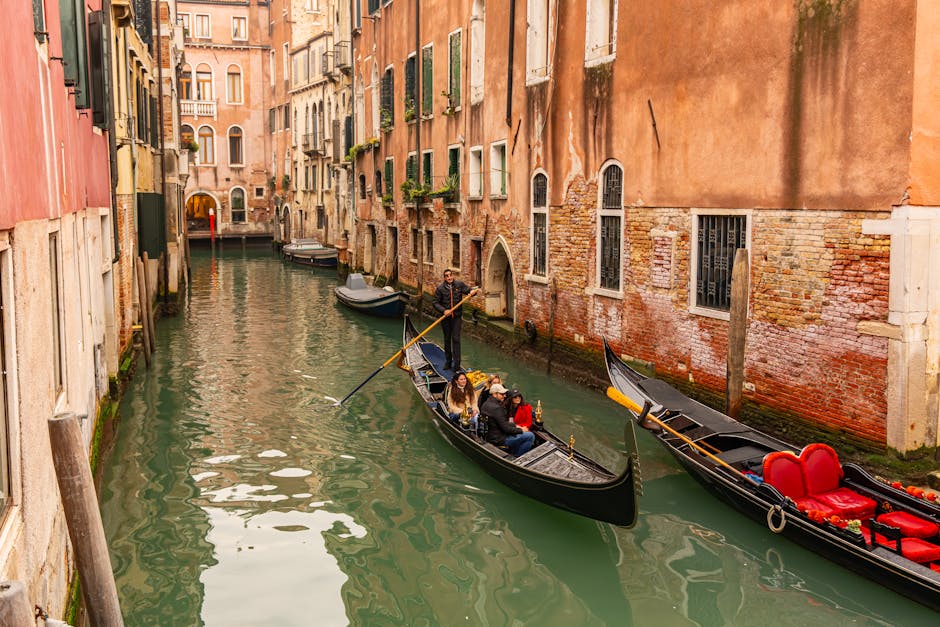
Explore the world’s first Ghetto in Cannaregio. Discover hidden synagogues, high-rise history, and the resilient spirit of Venice’s Jewish community.
 Easy
EasyVenice, Italy
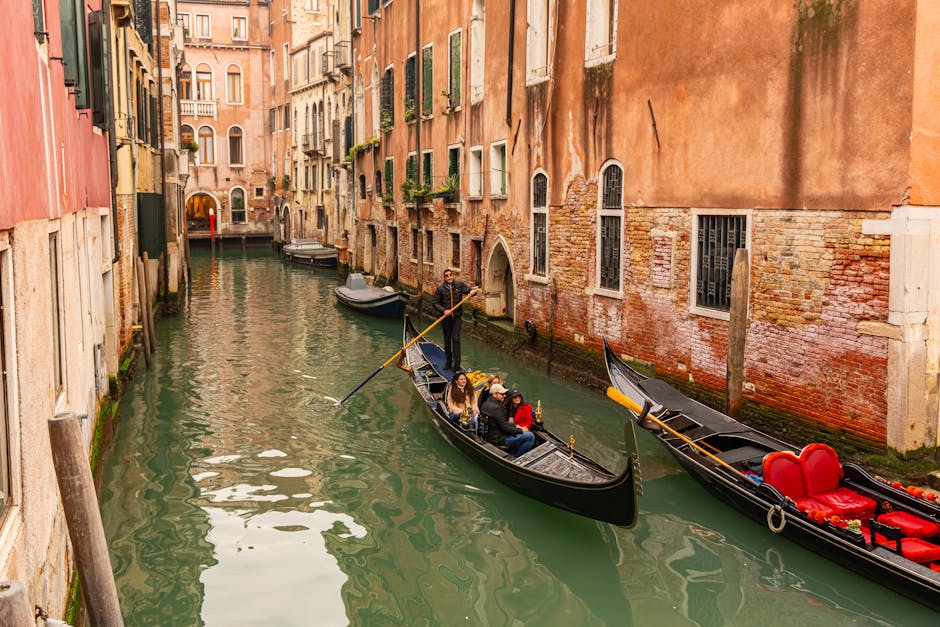
Discover the golden light of Venice's Dorsoduro district with this self-guided stroll along the scenic Zattere promenade.
 Easy
EasyVenice, Italy
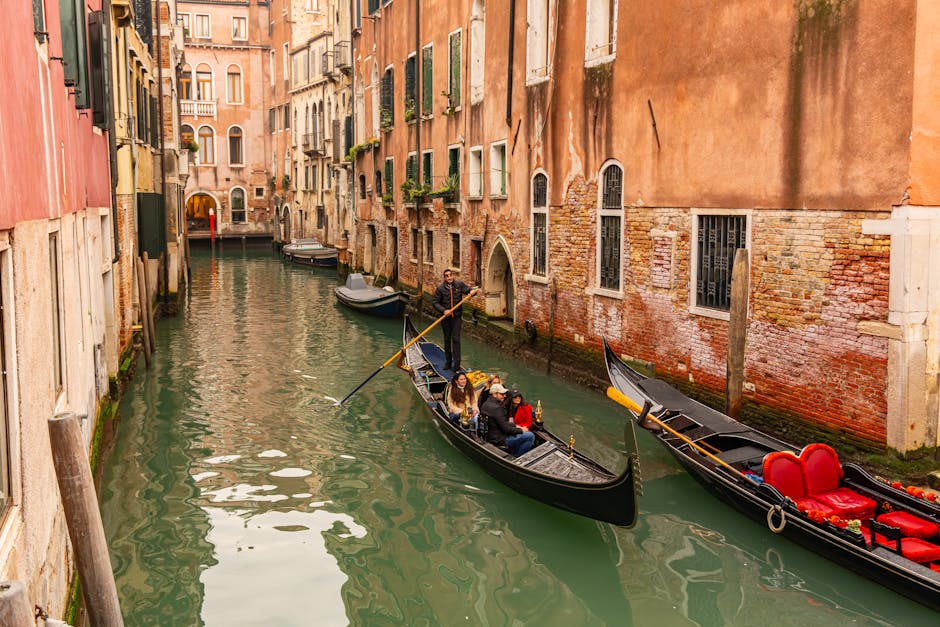
Discover the soul of Venice through its artisans. Explore mask-making, gondola shipyards, and modern art on this self-guided Dorsoduro stroll.
 Easy
EasyVenice, Italy
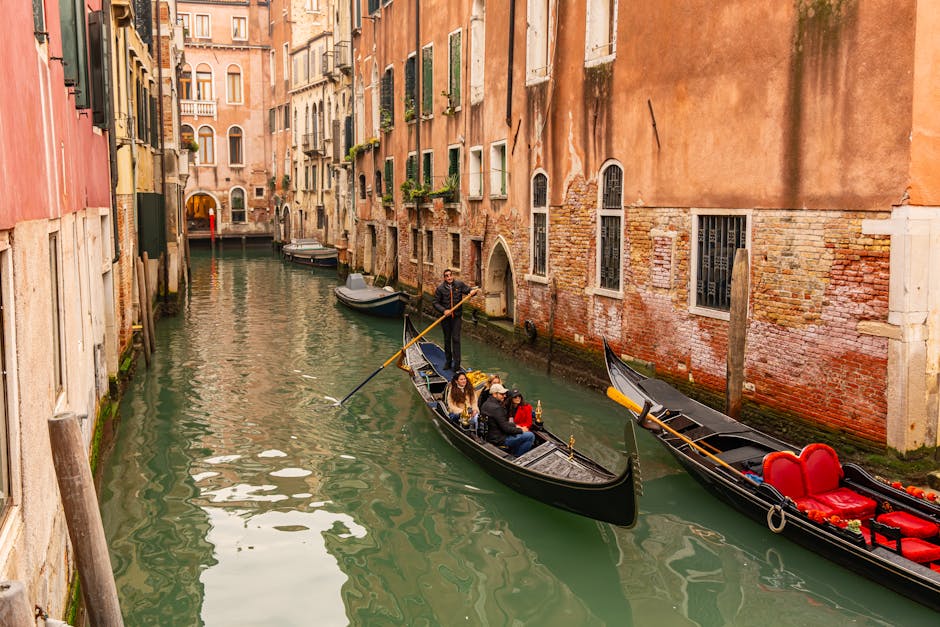
Trace the lives of Byron, Hemingway, and Dickens on this self-guided literary adventure through Venice’s historic San Marco district.
 Easy
EasyNairobi, Kenya
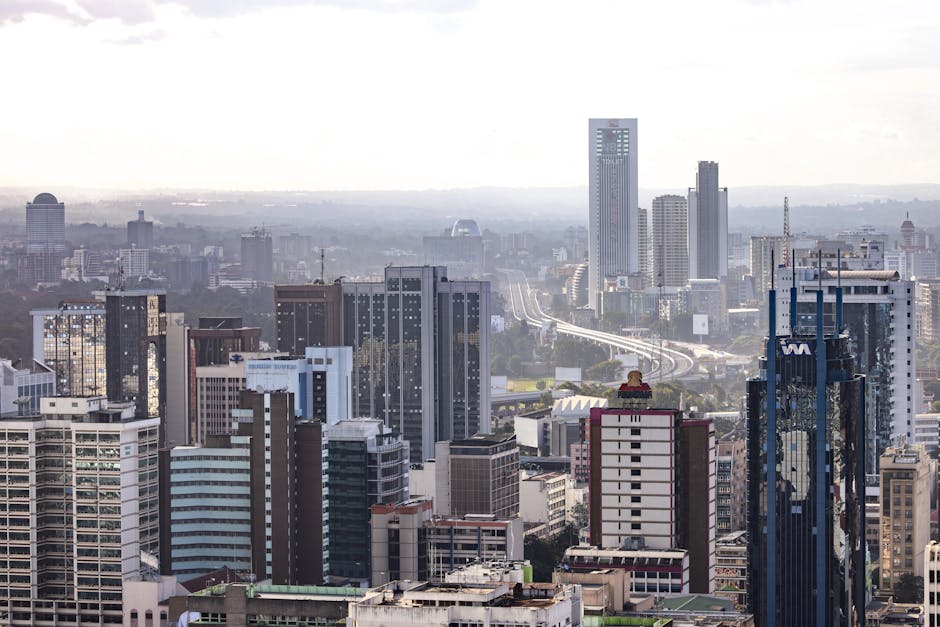
Explore Nairobi's architectural evolution from colonial-era landmarks to iconic Brutalist skyscrapers on this historic self-guided walking route.
 Easy
EasyNairobi, Kenya
Discover Nairobi's iconic skyline on this self-guided architecture walk through the CBD’s most famous modernist and Brutalist landmarks.
 Easy
EasySalzburg, Austria
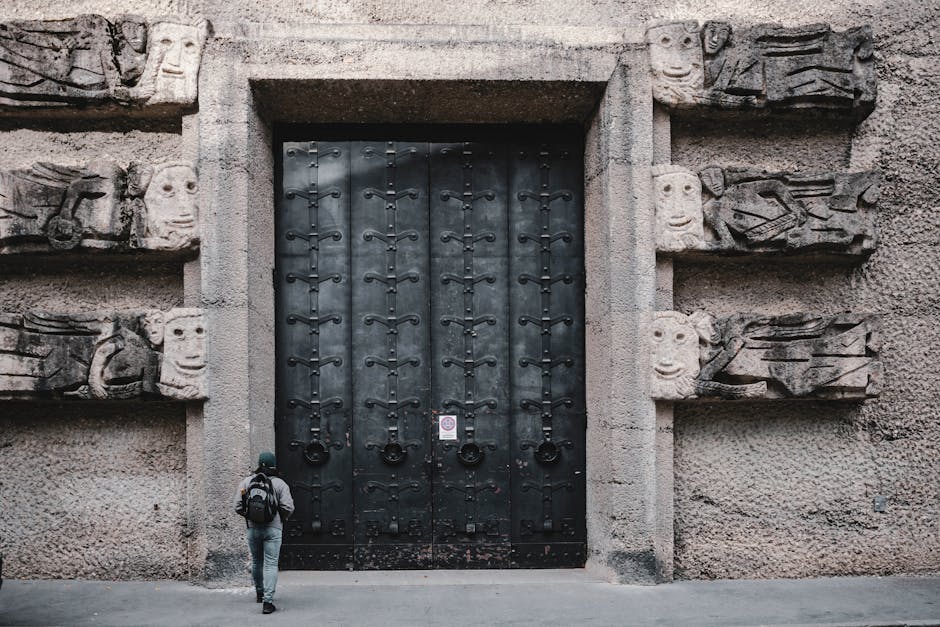
Discover the 'Rome of the North' on this self-guided walk through the Baroque squares and monumental legacy of Salzburg’s Prince-Archbishops.
 Easy
EasyGothenburg, Sweden
Discover Gothenburg’s 17th-century Dutch foundations, historic canals, and military fortifications on this self-guided architectural walk.
 Easy
EasyRome, Italy
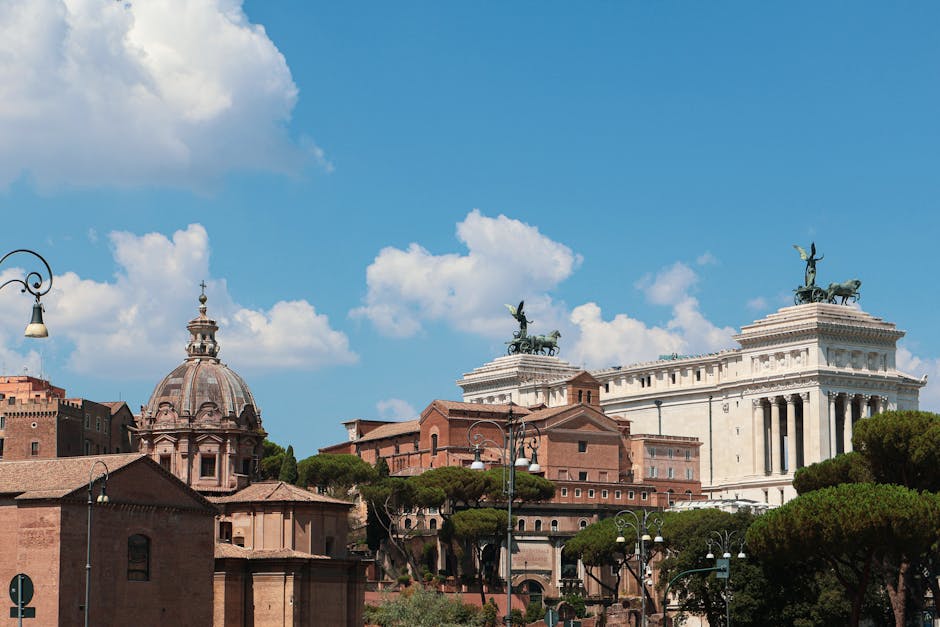
Explore Rome’s industrial heart on this self-guided walk featuring massive murals, the 'Iron Colosseum,' and unique industrial archaeology.
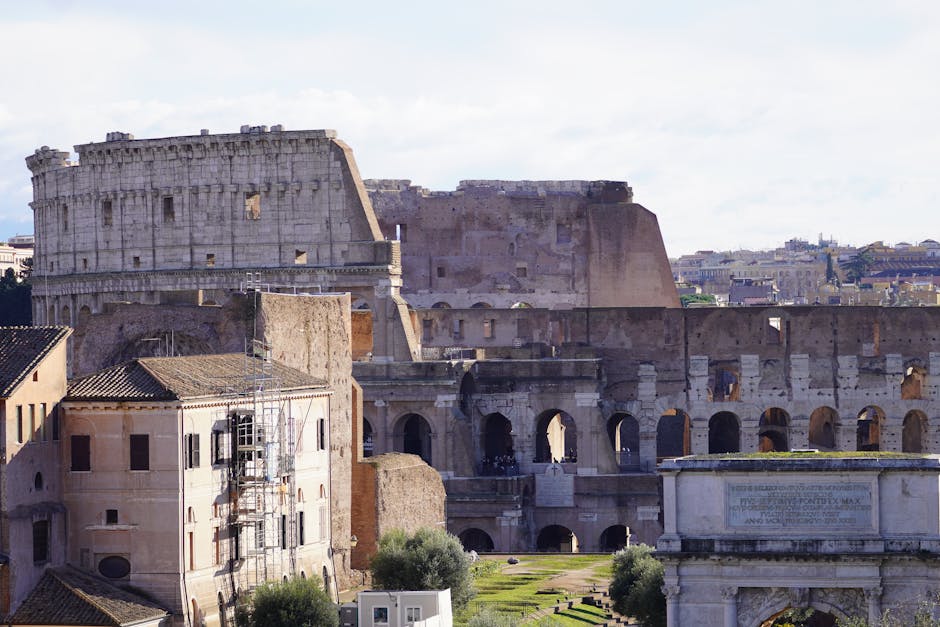 Easy
EasyRome, Italy
Explore Rome’s whimsical Fairytale District. A self-guided walk through Art Nouveau palaces, mythical fountains, and the magical Coppedè architecture.
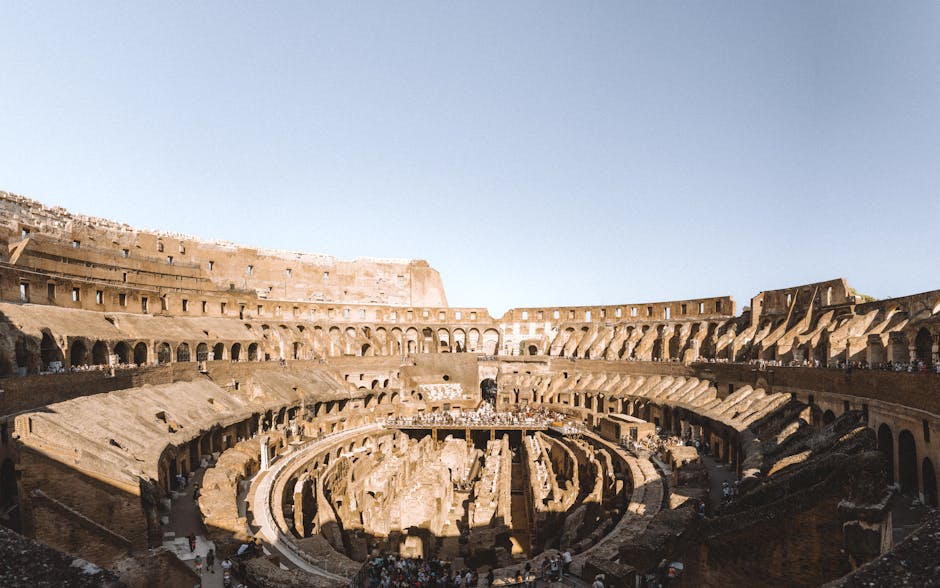 Moderate
Rome, Italy
Uncover Rome's hidden history on this self-guided walk through ancient gladiator pits, subterranean temples, and buried Roman houses.
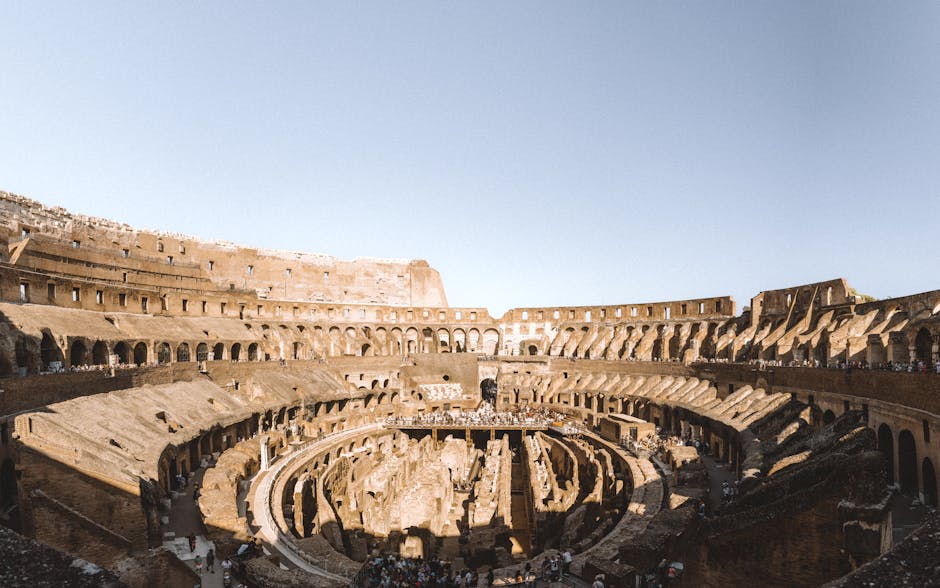 Challenging
Rome, Italy
Walk the 'Queen of Roads.' Explore ancient catacombs, imperial villas, and historic basalt stones on this scenic self-guided Roman adventure.
