Step into a living postcard where time seems to have paused in the 15th century. This self-guided walk through Bern’s UNESCO World Heritage Old Town invites you to explore one of Europe’s best-preserved medieval city centers at your own pace. Encircled by the turquoise waters of the Aare River, the city’s sandstone buildings and covered arcades—known locally as 'Lauben'—create a unique atmosphere that feels both grand and intimate. As you follow this walking route, you will discover why Bern is often called the city of fountains and towers. Your independent journey begins at the Zytglogge, the iconic clock tower that has served as the heartbeat of the city for over 800 years. From here, you will stroll down the Kramgasse, a street famous for its six kilometers of arcaded walkways that offer shelter from rain and sun alike. This neighborhood stroll isn't just about architecture; it’s about the people who shaped history here. You will pass the very apartment where Albert Einstein revolutionized our understanding of space and time during his 'miracle year' in 1905. This walking tour Bern experience highlights the city’s dual identity as a political powerhouse and a medieval masterpiece. You will visit the Berner Münster, Switzerland’s tallest cathedral, where the intricate 'Last Judgment' sculpture above the portal tells a vivid story of faith and folklore. Moving toward the river, you will encounter the Rathaus (City Hall), a seat of government for over 600 years, before ending your travel at the Nydeggbrücke. This bridge offers panoramic views of the Aare River and the famous Bear Park. Whether you are a history buff or a photography enthusiast, this walking tour Bern route provides the perfect introduction to the Swiss capital's timeless charm, allowing you to stop for a coffee in a cellar cafe or admire the colorful Renaissance fountains whenever you choose.
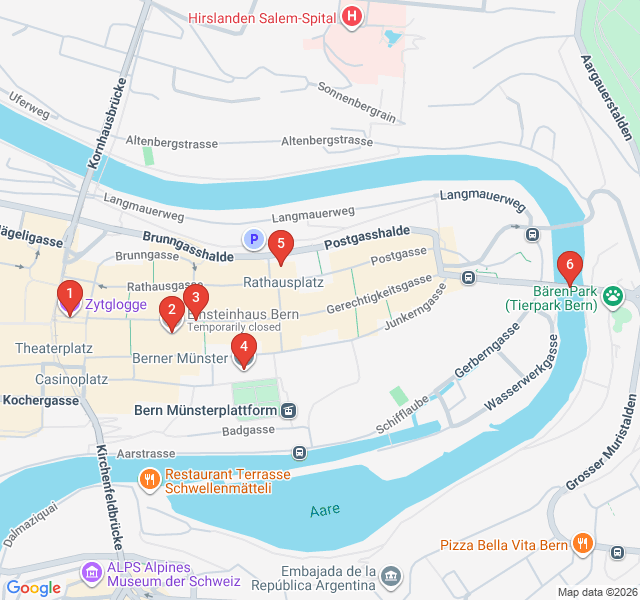
Numbers indicate the order of stops on the tour
The Zytglogge, or Clock Tower, is the undisputed symbol of Bern. Originally built in the early 13th century as a city gate, it has served as a prison, a guard tower, and finally, a horological masterpiece. The astronomical clock you see today was installed in 1530. If you arrive four minutes before the hour, you can watch the mechanical puppet show: a sequence featuring a crowing rooster, a parade of bears, and Chronos, the god of time, turning his hourglass. This clock was once the master clock for the entire region, and it is said that Albert Einstein used to watch these very movements from his nearby apartment, perhaps sparking his early thoughts on the nature of time itself.
Located at Kramgasse 49, this modest apartment is where a young patent clerk named Albert Einstein lived from 1903 to 1905. It was during his time in Bern that he published his four 'Annus Mirabilis' papers, including his work on the Special Theory of Relativity and the famous equation E=mc². The building itself is a classic example of Bernese architecture, featuring the high ceilings and narrow floor plans typical of the Old Town. While the interior is now a museum, the exterior remains much as it did when Einstein lived here, offering a quiet moment to reflect on how a simple walk through these streets helped reshape modern physics.
As you walk down Kramgasse, you are standing in the heart of the UNESCO World Heritage site. This street is famous for the 'Lauben'—the six kilometers of covered arcades that make Bern one of the longest weather-protected shopping promenades in Europe. Look down at the street level and you will notice cellar doors leading into basement shops and bars; these were once storage areas for medieval merchants. Don't forget to look up at the fountains. These colorful Renaissance structures, such as the Zahringer Fountain, were once the city's primary water source and social hubs, each topped with a statue representing local myths or historical figures.
The Berner Münster is Switzerland’s largest and most important church from the late Middle Ages. Construction began in 1421, but the spire—the tallest in the country—wasn't completed until 1893. The most striking feature is the main portal, which depicts the 'Last Judgment.' This collection of 234 figures is one of the most complete Late Gothic sculpture groups in Europe. It vividly illustrates the separation of the righteous from the wicked. Inside, the stained-glass windows and the intricate choir stalls offer a peaceful retreat from the city buzz. The cathedral square outside, the Münsterplattform, was once a cemetery but now serves as a beautiful terrace overlooking the river.
The Rathaus, or City Hall, has been the political center of Bern for over 600 years. Built between 1406 and 1415 in the Late Gothic style, it survived the Great Fire of 1405 and remains the meeting place for the cantonal parliament today. Notice the grand external staircase and the coat of arms decorating the facade. This building represents the power and independence of the old City-Republic of Bern. The square in front of it, the Rathausplatz, is often quieter than the main shopping streets, allowing you to appreciate the orderly, rhythmic sandstone architecture that defines the city's aesthetic.
Your walk concludes at the Nydeggbrücke, a bridge built in the 1840s to connect the old city with the newer districts across the Aare. From this vantage point, you have the best view of the river’s horseshoe bend, which provided a natural defense for the early city. Below you lies the Nydeggkirche, built on the site of the former Nydegg Castle. Just across the bridge is the Bärenpark (Bear Park), home to the city's heraldic animals. Looking back toward the Old Town from here, you can see the tiered layout of the houses and the dominance of the Cathedral spire, perfectly capturing the medieval silhouette of Bern.
Download Zigway to experience "Medieval Masterpieces of Bern Old Town" with AI-powered audio narration. Walk at your own pace while stories unfold around you.
 Moderate
Bern, Switzerland
Explore Bern's historic lower city, a riverside district of secret dialects, industrial heritage, and alternative culture on this self-guided walk.
 Easy
EasyBern, Switzerland
Follow Albert Einstein’s footsteps through Bern’s Old Town on this self-guided walk exploring the birthplace of the Theory of Relativity.
 Easy
EasyBern, Switzerland
Discover Bern's cultural heart in Kirchenfeld. Explore world-class museums and stunning views on this self-guided walk.
 Easy
EasyBern, Switzerland
Explore Bern's iconic 16th-century Renaissance fountains and uncover the legends behind the city's most famous statues on this self-guided walk.
 Easy
EasyGdansk, Poland
Discover the opulent Royal Way of Gdansk at your own pace. Explore Hanseatic history, gilded architecture, and the iconic Neptune's Fountain.
 Easy
EasyNairobi, Kenya
Discover Nairobi's iconic skyline on this self-guided architecture walk through the CBD’s most famous modernist and Brutalist landmarks.
 Easy
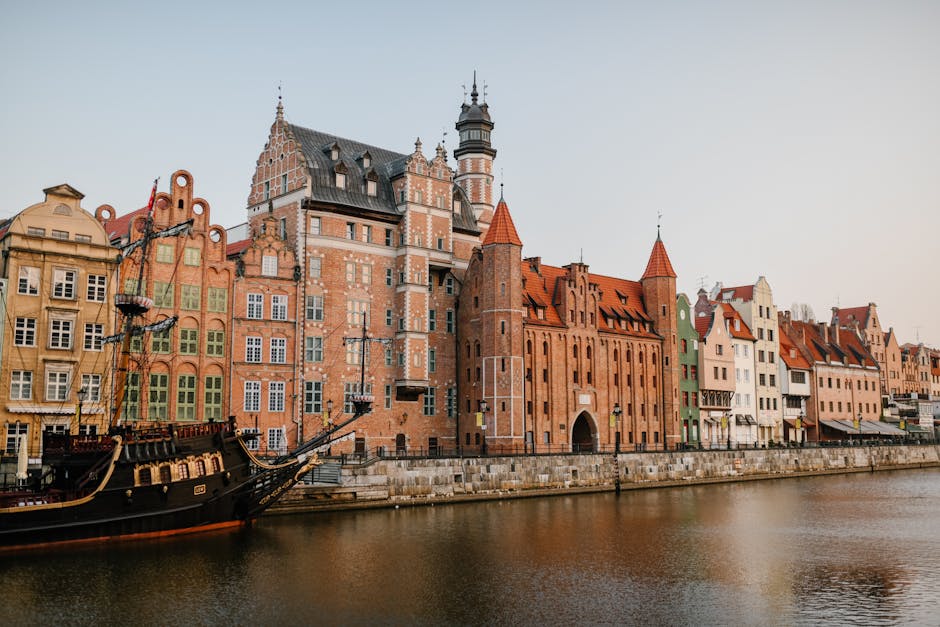
EasyGdansk, Poland
Discover the 'Baltic Gold' on this self-guided walk through Gdansk's historic mills, massive cathedrals, and the magical Mariacka Street.
 Easy
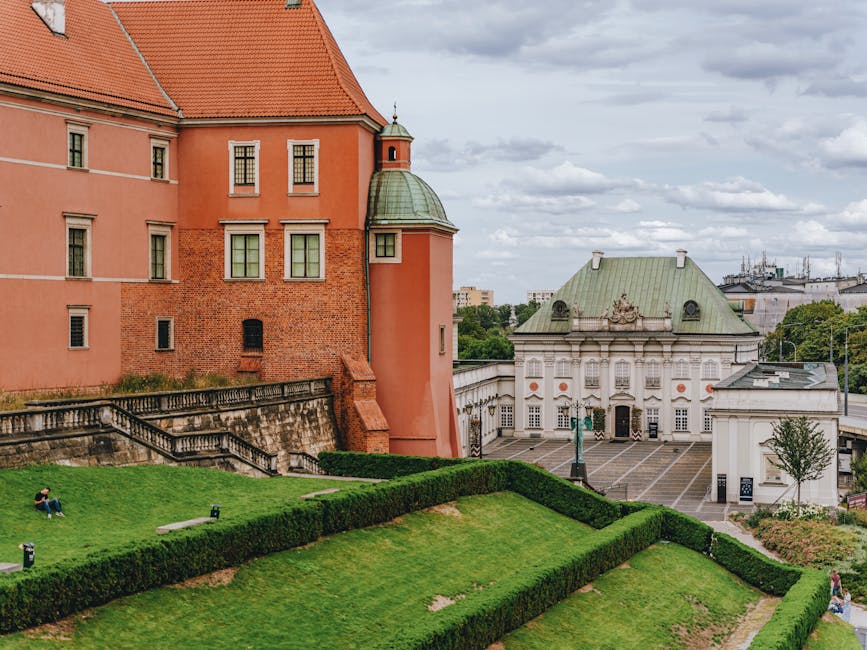
EasyWarsaw, Poland
Explore the miracle of Warsaw's reconstructed Old Town on this self-guided walk through royal squares, medieval walls, and heroic monuments.
 Easy
EasyGeneva, Switzerland
Explore Geneva's bohemian heart on this self-guided walk through flea markets, contemporary art galleries, and literary landmarks.
 Easy
EasyGeneva, Switzerland
Discover the lives of Rousseau and Voltaire on this self-guided literary walking route through the historic heart of Enlightenment-era Geneva.
 Moderate
Geneva, Switzerland
Uncover Geneva’s secrets on this self-guided walk through the Old Town’s historic streets, from the Reformation Wall to medieval cathedrals.
 Easy
EasyGeneva, Switzerland
Discover the Mediterranean soul of Geneva. Explore Carouge’s Sardinian architecture, artisan workshops, and hidden gardens on this self-guided walk.
