Step into a world where the mystical chants of Sufi saints meet the architectural precision of the Mughal Empire. This self-guided walking route through Delhi’s Nizamuddin district offers a profound journey through 700 years of living history. You will begin in the heart of Nizamuddin Basti, a medieval settlement that remains one of the city's most spiritually vibrant neighborhoods. The air here is often thick with the scent of rose petals and incense, echoing the devotion that has centered around the shrine of Saint Nizamuddin Aulia for centuries. This neighborhood stroll captures the essence of Delhi’s layered past, transitioning from narrow, bustling alleys to the expansive, symmetrical beauty of Persian-inspired gardens. As you explore independently, you will encounter the resting places of legendary poets and powerful nobles. The route highlights the evolution of Indo-Islamic architecture, showcasing how the heavy stone structures of the Lodi era transformed into the delicate marble and red sandstone masterpieces of the Mughals. You will see the Chausath Khambha, a serene marble pavilion, and the tomb of Mirza Ghalib, the Shakespeare of the Urdu language. The grand finale of this walking tour Delhi experience is the magnificent Humayun’s Tomb. Often cited as the primary inspiration for the Taj Mahal, this UNESCO World Heritage site is a masterclass in the Charbagh garden layout, representing a terrestrial paradise. Whether you are a history buff, a photography enthusiast, or a spiritual seeker, this walking route provides a deep dive into the soul of old Delhi. By following this audio walk, you can discover the hidden stories behind these monuments at your own pace, away from the constraints of a rigid schedule. From the turquoise tiles of Sabz Burj to the octagonal elegance of Isa Khan’s Tomb, every stop reveals a different facet of the city's artistic and cultural heritage.
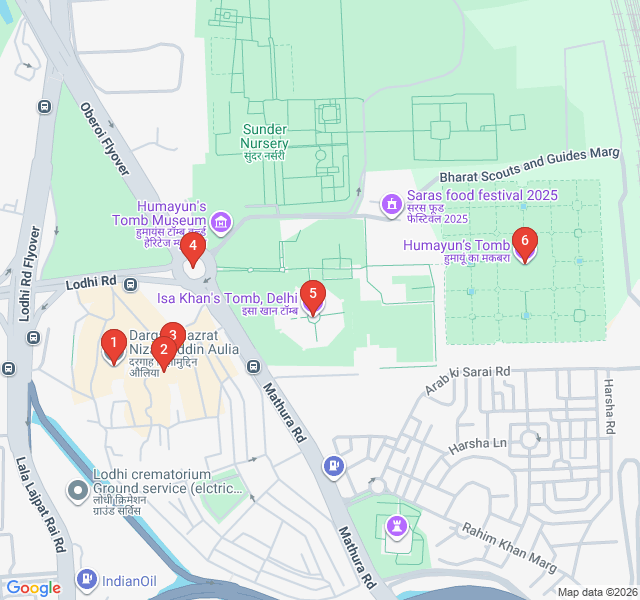
Numbers indicate the order of stops on the tour
Welcome to the spiritual heart of Delhi. This shrine is dedicated to the 14th-century Sufi saint Hazrat Nizamuddin Aulia, who preached a message of love and humanity that transcended religious boundaries. As you walk through the narrow entry lanes, notice the vendors selling 'chaddars' (ceremonial cloths) and rose petals. The atmosphere here is a living tradition; for over 700 years, devotees have gathered here. If you visit on a Thursday evening, you might hear the soul-stirring Qawwali music, a form of Sufi devotional singing. Remember to remove your shoes and cover your head as a sign of respect before entering the inner courtyard.
A short walk from the Dargah brings you to Chausath Khambha, which translates to '64 Pillars.' This 17th-century tomb is unique because it is built entirely of white marble and resembles a pavilion rather than a traditional tomb. It was built by Mirza Aziz Koka, a high-ranking noble in Emperor Akbar's court. The structure is celebrated for its architectural geometry; the 64 pillars support 25 square bays, each topped with a dome. The serene, monochromatic beauty of the marble provides a stark and peaceful contrast to the vibrant chaos of the surrounding Basti.
Adjacent to Chausath Khambha lies the final resting place of Mirza Ghalib, arguably the most famous poet of the Mughal era. Ghalib lived through the decline of the Mughal Empire and the rise of British rule, and his poetry captures the melancholy and beauty of that era. His tomb is housed within a small, elegant marble enclosure. Literature lovers from across the world come here to pay homage to the man who gave Urdu poetry its modern soul. Take a moment to appreciate the inscription of his verses, which continue to be quoted in homes and films across South Asia today.
As you exit the narrow lanes of the Basti toward the main road, you will see the striking Sabz Burj. This 'Green Tower' is actually one of Delhi’s earliest Mughal-era tombs. Despite its name, the dome is now famous for its brilliant blue Persian tiles, which were meticulously restored to their original 16th-century glory. It sits at a busy traffic intersection, serving as a colorful gateway to the Humayun’s Tomb complex. The structure reflects the strong Timurid architectural influence brought from Central Asia, characterized by its high drum and vibrant ceramic tile work.
Located just inside the entrance of the Humayun’s Tomb complex, Isa Khan’s Tomb predates the main attraction by about 20 years. Built in 1547, it is the tomb of a noble in the court of Sher Shah Suri. This structure is a prime example of the Lodi-style octagonal tomb. Notice the sunken garden surrounding it—this is actually one of the oldest surviving sunken garden designs in India. The use of grey quartzite and red sandstone, decorated with colorful tiles, marks the transition point between Sultanate architecture and the upcoming Mughal grandeur.
You are now standing before the first grand garden-tomb of the Indian subcontinent. Built in the 1560s for the second Mughal Emperor, Humayun, this monument was commissioned by his senior widow, Bega Begum. It introduced the 'Charbagh'—a four-part Persian garden symbolizing paradise. The symmetry, the use of the double dome, and the high arched alcoves (pishtaqs) were revolutionary for the time. As you walk around the red sandstone platforms, you can see why this building served as the architectural blueprint for the Taj Mahal, built nearly a century later. It is not just a tomb, but a dynastic necropolis housing over 150 Mughal family members.
Download Zigway to experience "Sufi Souls and Persian Gardens" with AI-powered audio narration. Walk at your own pace while stories unfold around you.
 Challenging
Delhi, India
Explore the legendary flavors of Old Delhi on this self-guided audio walk through the historic markets and hidden food stalls of the Walled City.
 Easy
EasyDelhi, India
Explore where 14th-century ruins meet high-end fashion in Delhi's most creative urban village on this self-guided neighborhood stroll.
 Moderate
Delhi, India
Explore Delhi's soul from the markets of Janpath to the hidden alleys of Little Tibet on this culture-rich, self-guided food and neighborhood stroll.
 Challenging
Delhi, India
Experience the sensory magic of Old Delhi on this self-guided walk through historic spice markets, silver lanes, and grand Mughal monuments.
 Moderate
Warsaw, Poland
Explore the resilient spirit of Warsaw's Muranów district on this self-guided walk through the history and landmarks of the former Jewish Ghetto.
 Moderate
Vienna, Austria
Follow the footsteps of Mozart and Strauss through Vienna’s historic center on this self-guided walk through the city's rich musical history.
 Moderate
Vienna, Austria
Discover the noir world of The Third Man and Cold War Vienna on this atmospheric self-guided audio walk through the historic Innere Stadt.
 Easy
EasyKrakow, Poland
Explore the historic heart of Kazimierz on this self-guided walk through synagogues, ancient cemeteries, and vibrant squares.
 Easy
EasyMumbai, India
Explore Mumbai's stunning UNESCO Art Deco heritage on this self-guided walking route along the iconic Marine Drive promenade.
 Challenging
Mumbai, India
Experience the sensory explosion of Mumbai's historic markets on this challenging self-guided walk through Kalbadevi and Crawford Market.
 Easy
EasyMumbai, India
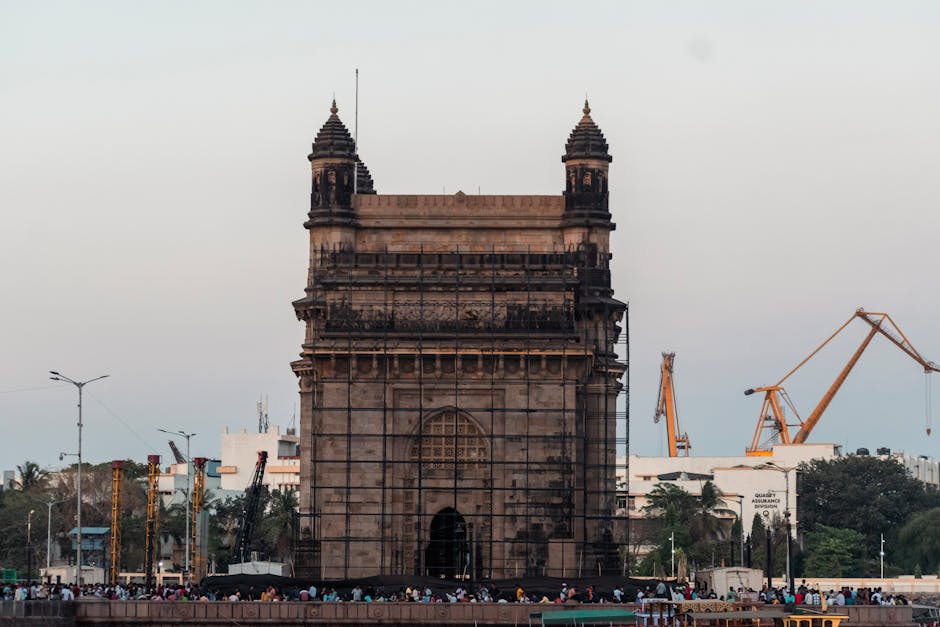
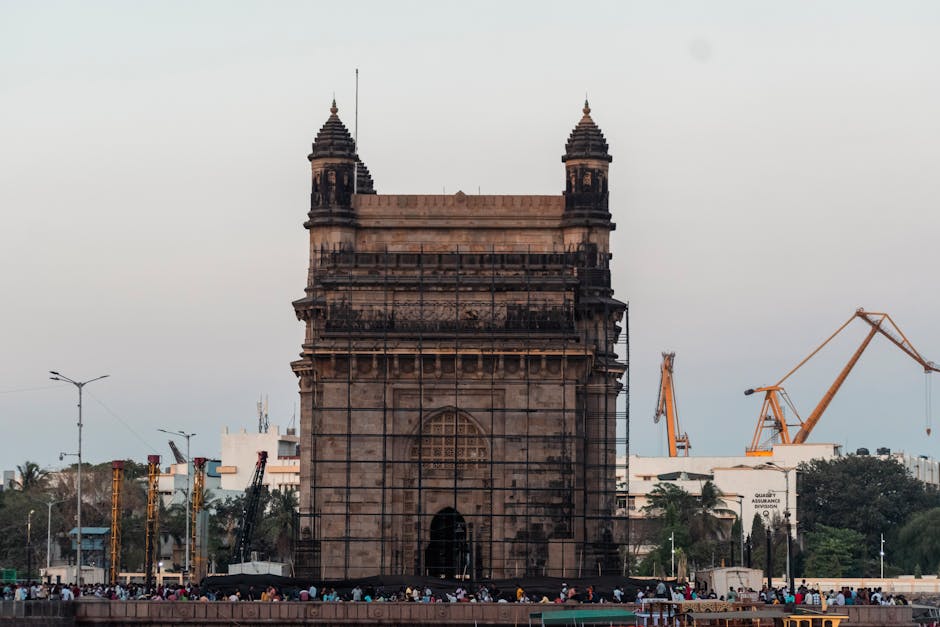
Explore Mumbai's colonial legacy on this self-guided walk through Colaba's iconic landmarks, from the Gateway of India to grand Art Deco palaces.
 Moderate
Mumbai, India
Explore the ancient fishing village of Worli Koliwada, historic forts, and stunning sea views on this self-guided cultural walking route.
