Step back into the 'Paris of the East' with this self-guided walk through Hanoi’s French Quarter. While the Old Quarter is famous for its narrow, bustling lanes, the area surrounding Hoan Kiem Lake offers a starkly different atmosphere—one of wide boulevards, manicured gardens, and grand yellow-hued buildings that tell the story of the French colonial era. This neighborhood stroll focuses on the architectural transformation of Hanoi between the late 19th and mid-20th centuries, showcasing how European styles like Beaux-Arts, Art Deco, and Neo-Gothic were adapted to the humid tropical climate of Southeast Asia. Along this walking route, you will encounter the crowning jewels of the Indochina period. The journey begins at the Vietnam National Museum of History, a masterpiece of the 'Indochinese' style that blended Western structure with Eastern ornamentation. From there, you will explore the opulent Hanoi Opera House, modeled after the Palais Garnier in Paris, and the Sofitel Legend Metropole, where history was written by guests like Charlie Chaplin and Graham Greene. This architecture-focused walking tour Hanoi is designed for those who want to discover the city’s complex past at their own pace. You will see how the French sought to recreate a European capital in the heart of Vietnam, from the high-end shopping at Trang Tien Plaza to the imposing facade of the State Bank of Vietnam. The experience concludes at the majestic St. Joseph Cathedral, a Neo-Gothic landmark that serves as a focal point for Hanoi's Catholic community. Whether you are a fan of photography, a history enthusiast, or simply a traveler looking to escape the chaotic traffic of the Old Quarter, this self-guided adventure provides a sophisticated lens through which to view Hanoi. This walking tour Hanoi provides the flexibility to stop for a French pastry or a Vietnamese egg coffee whenever you choose, making it the perfect way to spend a morning or afternoon exploring the elegance and legacy of the Indochina influence.
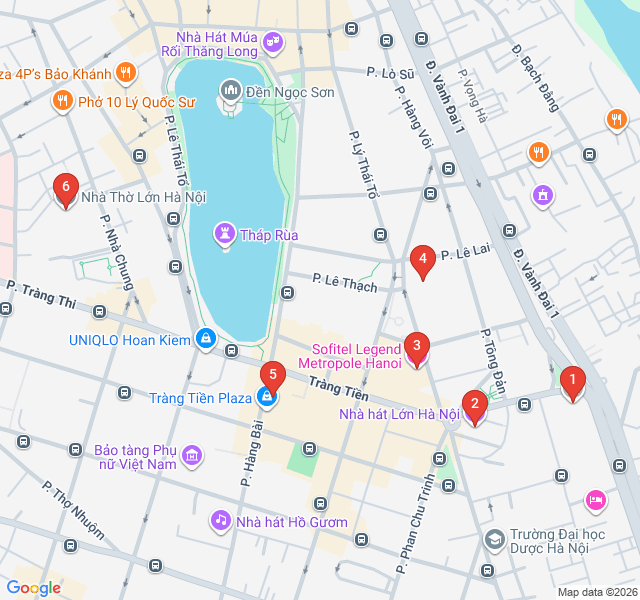
Numbers indicate the order of stops on the tour
Start your self-guided walk at one of Hanoi's most architecturally significant buildings. Designed by French architect Ernest Hébrard and completed in 1932, this was formerly the École Française d’Extrême-Orient. It represents the 'Indochinese' style, a deliberate attempt to fuse European construction with traditional Vietnamese and Chinese design elements. Notice the multi-layered roof, which mimics the style of ancient Vietnamese temples, and the use of yellow walls, a color associated with royalty in the East and colonial administration in the West. This building was revolutionary because it incorporated ventilation and shade techniques suited for a tropical climate, rather than simply transplanting a Parisian design. It serves as a reminder of the intellectual exchange, however lopsided, that occurred during the colonial era.
A short walk brings you to the centerpiece of French colonial grandeur: the Hanoi Opera House. Completed in 1911 after ten years of construction, this Beaux-Arts masterpiece was modeled after the Palais Garnier in Paris. It was built to serve as the cultural heart for the French elite living in Indochina. Look up at the shutters, the wrought-iron balconies, and the Corinthian columns that define its facade. The square in front of the Opera House, now a bustling intersection, has been the site of major historical events, including the 1945 revolution. Today, it remains a premier venue for classical music and traditional Vietnamese performances, standing as a symbol of the city's enduring appreciation for the arts and its complex relationship with its colonial past.
Just around the corner sits the Sofitel Legend Metropole, a hotel that has been a bastion of luxury since 1901. Walking past its white facade and green shutters is like stepping back in time. The Metropole has hosted everyone from Somerset Maugham and Charlie Chaplin to world leaders and war correspondents. During the Vietnam War, the hotel even built a bomb shelter beneath its bar to protect guests from air raids—a bunker that was rediscovered in 2011. The hotel is divided into the original 'Heritage Wing' and the more modern 'Opera Wing.' Take a moment to appreciate the vintage Citroën cars often parked outside, which complete the mid-century atmosphere of this legendary establishment.
As you continue, you will encounter the State Bank of Vietnam, originally the Bank of Indochina. This building is a prime example of Art Deco architecture in Hanoi, characterized by its geometric lines and imposing presence. Built in the 1930s, it was designed to project the financial power and stability of the French administration. Unlike the ornate Opera House, the bank features more streamlined aesthetics and subtle decorative motifs, including stylized lotus flowers—a nod to local culture within a modern Western framework. It remains a functional government building today, standing as a silent witness to the economic shifts that have transformed Vietnam from a colonial territory into a rapidly growing global economy.
This corner has been a hub of commerce for over a century. Originally the site of the 'Grands Magasins Réunis,' a French department store established in the early 1900s, it was the place where the colonial elite shopped for imported European goods. The building underwent a massive renovation in the early 2000s to become the luxury shopping mall you see today, Trang Tien Plaza. While the interior is now filled with modern high-end brands, the exterior maintains its colonial-inspired proportions and prestige. It marks the transition between the French Quarter's wide boulevards and the more traditional Vietnamese commercial areas near Hoan Kiem Lake, representing the evolution of Hanoi's consumer culture from the colonial era to the present day.
Your walking route concludes at St. Joseph Cathedral, the oldest church in Hanoi. Dedicated in 1886, the cathedral was built in the Neo-Gothic style, clearly drawing inspiration from Notre Dame de Paris. Its twin bell towers and stained-glass windows were a dramatic addition to the city's skyline at the time. Interestingly, the cathedral was built on the site of the former Bao Thien Pagoda, which was one of the most important Buddhist temples in the city, symbolizing the displacement of local traditions by colonial influence. Today, the square in front of the cathedral is a vibrant meeting place where locals and visitors gather at pavement cafes to enjoy 'tra chanh' (lemon tea) while admiring the weathered, atmospheric stone walls of this historic landmark.
Download Zigway to experience "French Colonial Grandeur: The Indochina Influence" with AI-powered audio narration. Walk at your own pace while stories unfold around you.
 Moderate
Hanoi, Vietnam
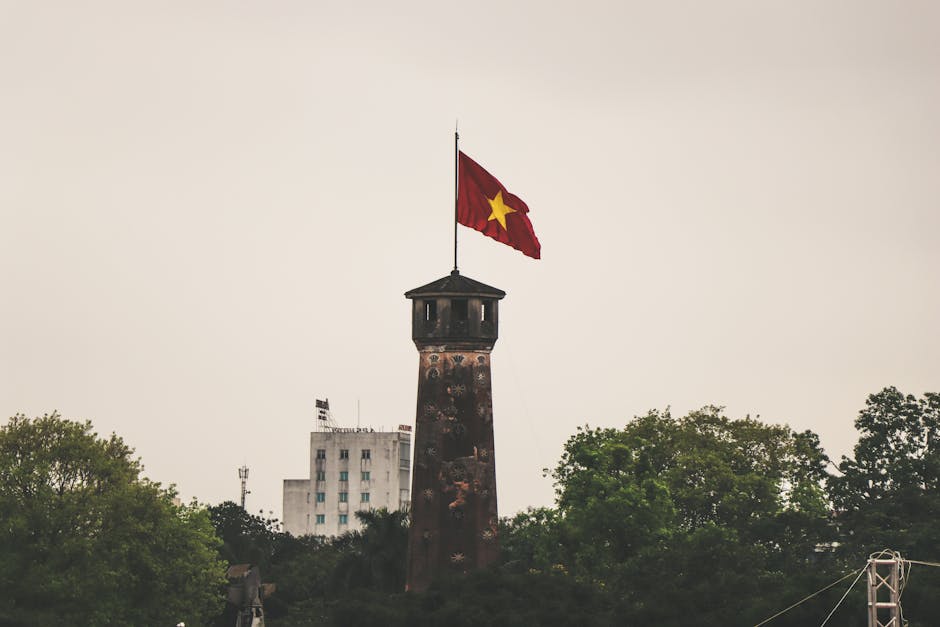
Discover Hanoi's resilient spirit on this self-guided audio walk through wartime bunkers, historic prisons, and military landmarks.
 Easy
EasyHanoi, Vietnam
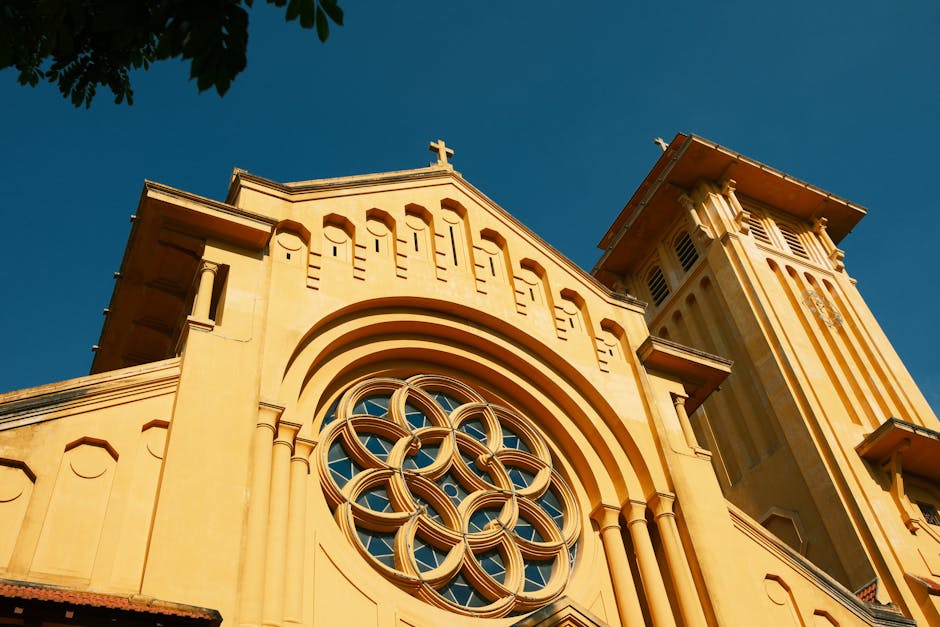
Discover Hanoi's spiritual heart and scenic vistas on an independent stroll featuring ancient pagodas, colonial architecture, and sunset lake views.
 Easy
EasyHanoi, Vietnam
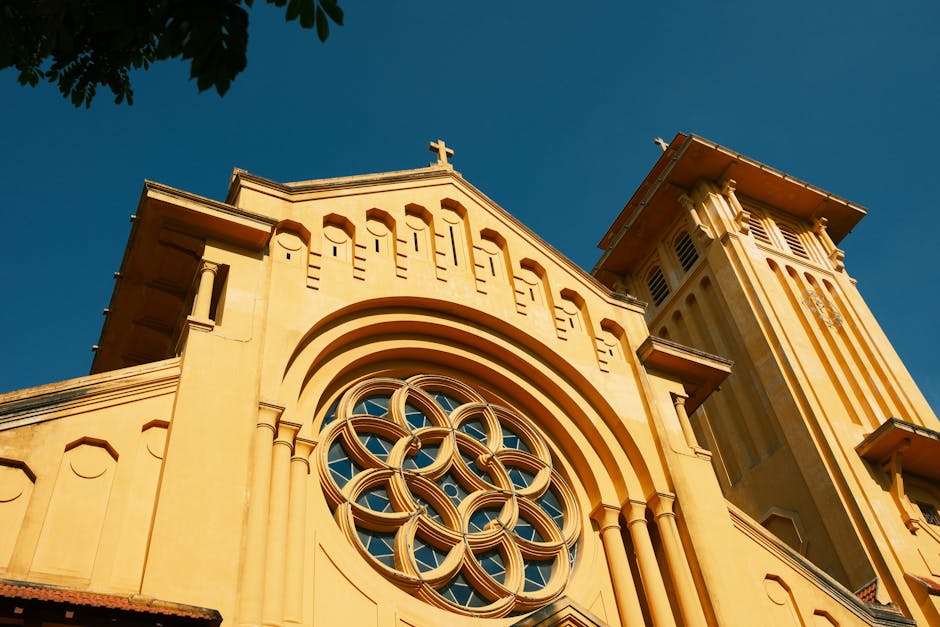
Explore Hanoi's diverse spiritual heritage on this self-guided walk through historic pagodas, a Neo-Gothic cathedral, and lakeside temples.
 Easy
EasyHanoi, Vietnam
Discover Hanoi's vibrant soul through railway-side murals, historic tracks, and the record-breaking Ceramic Road on this self-guided walk.
 Easy
EasyNairobi, Kenya
Discover Nairobi's iconic skyline on this self-guided architecture walk through the CBD’s most famous modernist and Brutalist landmarks.
 Easy
EasyNairobi, Kenya
Explore Nairobi's architectural evolution from colonial-era landmarks to iconic Brutalist skyscrapers on this historic self-guided walking route.
 Easy
EasyGdansk, Poland
Discover the opulent Royal Way of Gdansk at your own pace. Explore Hanseatic history, gilded architecture, and the iconic Neptune's Fountain.
 Easy
EasySalzburg, Austria
Discover the 'Rome of the North' on this self-guided walk through the Baroque squares and monumental legacy of Salzburg’s Prince-Archbishops.
 Moderate
Ho Chi Minh City, Vietnam
Explore the history of the Vietnam War at your own pace through iconic landmarks and hidden clandestine sites in Districts 1 and 3.
 Moderate
Ho Chi Minh City, Vietnam
Explore Saigon’s coffee evolution from 1930s clay-pot brews to modern specialty roasters on this self-guided walk through District 1 and 3.
 Moderate
Ho Chi Minh City, Vietnam
Explore the soul of Ho Chi Minh City's Chinatown on this self-guided walk through historic markets and ornate Cantonese assembly halls.
 Easy
EasyHo Chi Minh City, Vietnam
Discover the vibrant spirituality and stunning architecture of District 3, from serene pagodas to the iconic Pink Church.
