Thessaloniki is a city built on layers of time, where the modern streets often mask a darker, more turbulent past. This self-guided walk invites you to peel back those layers and explore the Shadows of the Past. From the blood-stained history of the waterfront to the mystical ruins nestled in the hills of the Upper Town, you will encounter the myths and dark legends that define the city's soul. As you navigate this walking route, the stories of martyrs, cursed mansions, and legendary prisoners come to life. This isn't just a history lesson; it's an immersion into the atmospheric and sometimes eerie side of the Bride of the Thermaic. You'll begin at the Holy Church of Saint Demetrius, where the air in the underground crypt still feels heavy with the weight of ancient secrets. Moving toward the bustling Agias Sofias Square, the imposing Red House stands as a silent witness to family tragedies and rumors of hauntings. The journey continues to the Catacomb of Saint John, a hidden subterranean world that served as a refuge for early Christians. No exploration of Thessaloniki’s dark side would be complete without the White Tower, once known as the Tower of Blood due to the Ottoman executions that took place within its walls. As you ascend toward the Old Town, the Pasha’s Gardens offer a surreal, mystical landscape rumored to be a meeting place for secret societies. Finally, the walk concludes at the Heptapyrgion, the formidable Seven Towers fortress that served as a brutal prison for centuries. This walking tour Thessaloniki offers a unique perspective on the city, far from the typical tourist trails. Whether you are a fan of ghost stories or a history buff seeking the untold tales of the Aegean, this neighborhood stroll provides a deep dive into the mysteries that linger in the shadows. Explore at your own pace and let the stones of Thessaloniki tell their own haunting stories. Using a self-guided walk allows you the freedom to linger in the most atmospheric corners of the city, making this walking tour Thessaloniki a truly personal adventure.
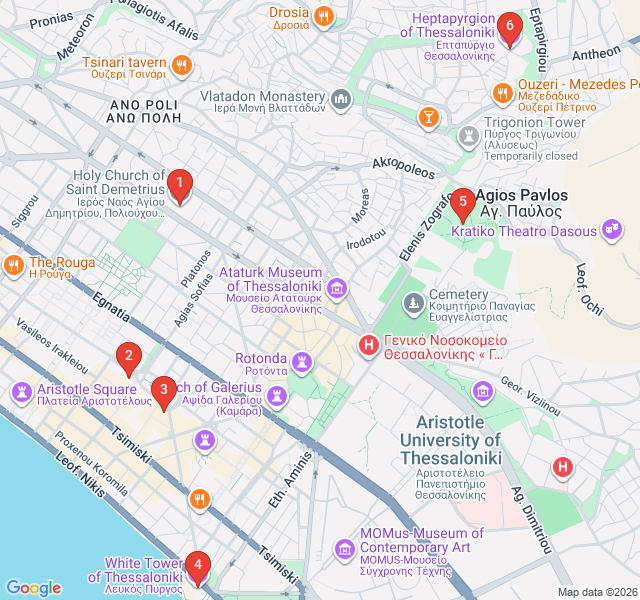
Numbers indicate the order of stops on the tour
Welcome to the spiritual heart of Thessaloniki. This church honors the city's patron saint, but its most compelling stories lie beneath your feet. In the 4th century, this was the site of a Roman bath where Demetrius, a Roman officer turned Christian, was imprisoned and eventually martyred by spear. The underground crypt, rediscovered after the Great Fire of 1917, is where his body was reportedly hidden. As you explore the cool, vaulted chambers, you are standing in the very place where the cult of Saint Demetrius began. The atmosphere here is thick with centuries of devotion and the dark memory of his execution, making it a perfect starting point for our journey into the city's shadows.
Standing prominently on the corner of Agias Sofias Square is the Megaro Longou, better known as the Red House. Built in 1926 for a wealthy industrialist, its striking red brick and intricate Art Nouveau details hide a darker reputation. Legend says the house is cursed; shortly after its completion, the Longos family's textile factory in Naoussa was destroyed by fire, leading to their financial ruin. For decades, the building stood empty and decaying, fueling local rumors of ghosts and paranormal activity. While it has recently seen restoration, many locals still look at its windows with a sense of unease, wondering if the misfortunes of the past still linger within its walls.
Hidden in plain sight near the Church of Saint John the Baptist, this catacomb is a portal to the city's early Christian era. Thessaloniki is honeycombed with underground passages, and this is one of the most significant. Originally part of a Roman water system, it was repurposed as a secret place of worship and a burial site during times of persecution. As you descend, the modern city noise fades, replaced by the damp silence of the earth. These narrow corridors and small chambers served as a refuge for those living in fear, a subterranean world where faith was practiced in the dark, away from the prying eyes of the Roman authorities.
The White Tower is the city's most famous landmark, but its name is a relatively modern attempt to whitewash a bloody history. During the Ottoman period, it was known as the Tower of Blood or the Janissary Tower. It served as a grim prison and a place of mass executions. The most infamous event occurred in 1826, when Sultan Mahmud II ordered the massacre of the rebellious Janissaries within these walls. The tower was literally stained red with blood. It was only in the late 19th century that a Jewish prisoner was said to have whitewashed the tower in exchange for his freedom, giving it the cleaner appearance and name it carries today.
Tucked away behind the Agios Dimitrios Hospital lies one of Thessaloniki's most enigmatic spots: Pasha's Gardens. Created in 1904, these bizarre, organic stone structures look like something out of a Gaudi fever dream. Their purpose remains a mystery. Some believe they were a place of relaxation for a high-ranking Ottoman official, while more persistent legends claim they were a meeting ground for Thessaloniki's Freemasons or other secret societies. The symbols carved into the stone and the strange orientation of the ruins have led many to believe the gardens were designed for mystical rituals. Today, it remains a quiet, slightly eerie place where the line between history and myth is beautifully blurred.
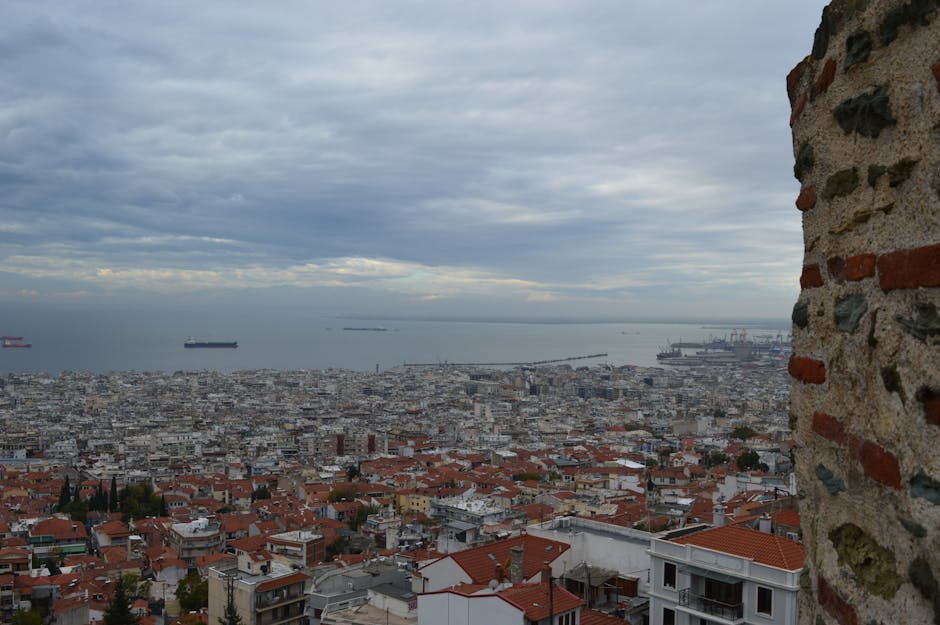
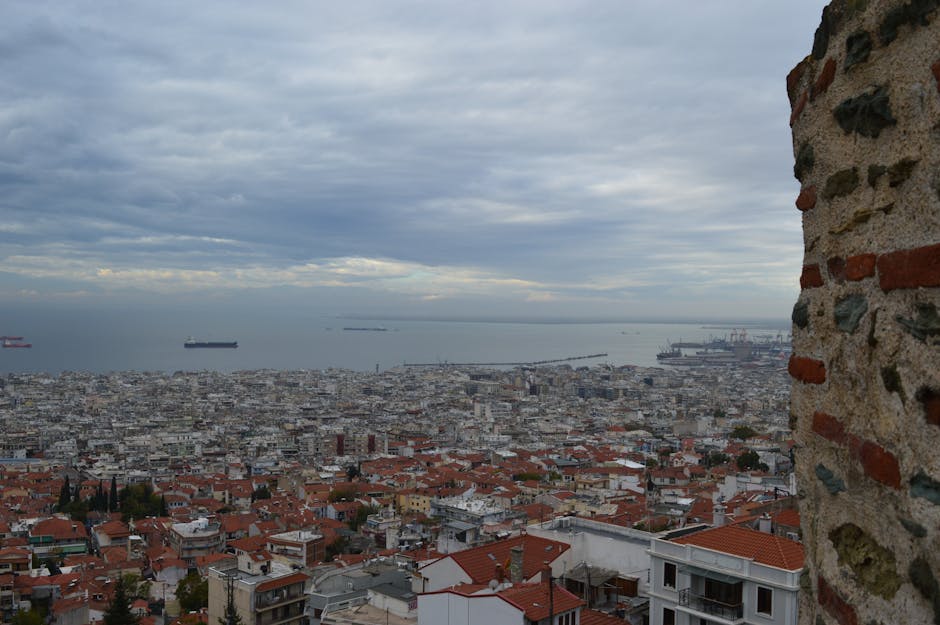
We conclude our walk at the highest point of the city, the Heptapyrgion, or Yedi Kule. This fortress, with its seven towers, has watched over Thessaloniki since the Byzantine era. However, its most chilling chapter began in the 1890s when it was converted into a high-security prison. For nearly a century, it was a place of suffering for both common criminals and political dissidents. The harsh conditions here inspired many rebetiko songs—the Greek blues—which spoke of the isolation and despair of the inmates. As you walk around the perimeter, you can see the imposing walls that once held thousands of secrets. From here, the view of the city is breathtaking, but the stones themselves remember a much darker reality.
Download Zigway to experience "Shadows of the Past: Myths and Dark Legends" with AI-powered audio narration. Walk at your own pace while stories unfold around you.
 Moderate
Thessaloniki, Greece
Discover Thessaloniki’s creative soul on this self-guided walk through hidden alleys, vibrant murals, and iconic modern art installations.
 Easy
EasyThessaloniki, Greece
Uncover the hidden Ottoman soul of Thessaloniki. Explore ancient bathhouses, vibrant markets, and historic mosques on this self-guided audio walk.
 Easy
EasyThessaloniki, Greece
Discover how the 1917 Great Fire transformed Thessaloniki into a modern European masterpiece on this self-guided architectural walking route.
 Easy
EasyThessaloniki, Greece
Explore the heart of Thessaloniki on this self-guided walk, discovering Roman ruins and Byzantine masterpieces at your own pace.
 Moderate
Vienna, Austria
Discover the noir world of The Third Man and Cold War Vienna on this atmospheric self-guided audio walk through the historic Innere Stadt.
 Moderate
Krakow, Poland
Discover Krakow’s stunning skyline and riverside charm on this self-guided audio walk through scenic viewpoints and historic mounds.
 Moderate
Gdansk, Poland
Discover the raw beauty of Gdansk’s Lower Town. Explore industrial ruins, hidden sluices, and riverside bastions on this self-guided walk.
 Easy
EasyWarsaw, Poland
Discover the hidden courtyards and grand pre-war architecture of Warsaw's most atmospheric neighborhood on this self-guided stroll.
 Easy
EasyAthens, Greece
Explore the intersection of ancient history and industrial art on this self-guided walk through Kerameikos and the vibrant Gazi district.
 Moderate
Athens, Greece
Ascend the Hill of the Muses for breathtaking Acropolis views and ancient democratic sites on this scenic self-guided walking route in Athens.
 Moderate
Athens, Greece
Discover a hidden Cycladic village and ancient monuments on this self-guided walking route through the enchanting alleys of Plaka and Anafiotika.
 Challenging
Athens, Greece
Conquer the highest peak in Athens on this self-guided walking route through chic Kolonaki to the stunning 360-degree summit of Mount Lycabettus.
